
Overcoming These 3 Common Money Issues

Everyone experiences a certain degree of money woes. The differences depend on how we deal with each financial issue. On that note, here are just three of the most common ones that we may all face at some points in our lives.

#1: ADJUSTING TO THE POSTNATAL BUDGET

Congratulations to you and your spouse! You just added life to the thriving population of Singapore. The next challenges at hand are the costs that come with it. Raising children, as expensive as it is, causes multiple changes to your household budget. New categories include medical costs, newborn clothes, and insurance contributions.

The significant cost of delivering the baby (about S$10,000) is just the beginning! Tackle each day with ease by knowing how much you will be spending in the next couple of months. You need to repeatedly feed, clothe, and nurture your children for at least 21 years. Preparing a financial checklist will help you fulfill your expected costs.

Related Article: Financial Checklist For Expectant Parents

#2: EARNING AN INSUFFICIENT SALARY

Whether you want to believe it or not, there is a particular cohort that is at risk of earning insufficient salary. This is none other than the elderly working-class women. The 2014 Labour Force Survey highlighted that more than 7 in 10 participants (i.e., 100,000 Singaporean women aged 60 and above) made less than S$2,000 per month.

Lower earnings adversely affects one’s retirement adequacy as the country operates on the salary-based pension system. These seniors are still working because they need the money and they did not have enough money saved.

Image Credits: pixabay.com

Image Credits: pixabay.com

There are two ways to deal with this financial situation. First, you may negotiate a pay raise. If you do not ask then you will not get it. Employers know that they play a part in ensuring that older workers return to the workforce with decent wages.

Secondly, you may get another job on the side. With our access to modern tools, you can make extra money by creating an online business. Free websites such as Carousell and Tictail enables you to showcase your products.

#3: RISING ABOVE UNEMPLOYMENT

Unemployment is a worldwide phenomenon. The economy continues to narrow down jobs at an alarming rate. This means that you need to get in line with about a hundred of job seekers for the same post. A good place to start making connections is LinkedIn (i.e., a professional networking site). Moreover, you may ask your family and friends if they can recommend you to work for their companies. Do not be shy!

Absorb the words of Nancy Collamer, creator of Layoffsurvivalguide.com.

“You need to figure out what it is that you want to do and are most qualified to do, then identify employers and companies where there appears to be some level of growth or opportunity and identify ways to network your way into the company.”

Image Credits: pixabay.com


Image Credits: pixabay.com


Sources: 1, 2, & 3

Read More...

What On Earth Is An Insurance Premium?

I believe it is safe to say that “Insurance” is an unfamiliar territory for most Singaporeans. For young adults who recently joined the workforce, it is a necessity that comes with the new responsibilities of adulthood. Weighing your insurance options is just the start!

You may have encountered policy terms such as premiums and deductibles. However, do you know what each term means? I shall focus on the former.

DEFINING INSURANCE PREMIUM

In its simplest form, an insurance premium is the amount that an individual or an institution must for upon signing on a policy. It represents a bind that the insurer must provide coverage for the claims made against the policy. More so, it is the income earned by the insurance company.

HOW INSURANCE PREMIUM IS CALCULATED

There are many interacting factors that affect the prices of the insurance premium. For starters, the price heavily depends on the type of insurance (e.g., Critical Illness policy or Car Insurance policy). Other factors include the area where the policyholder lives, the likelihood of claims being made, the behavior of the policyholder, and the amount of premium offered by the competition.

Let us take the Life Insurance policy as an example. Various factors affecting your specific premium include the:

a. policyholder’s age at present time,
b. scope of coverage that the policyholder buys,
c. length of the policy,
d. and the policyholder’s life and health expectancy.

WAYS TO ACCOMPLISH PAYMENT

Singaporeans were blessed with a number of options when it comes to paying for the insurance premiums. Some insurers require the policyholder to pay for the total amount before the coverage starts. While, others offer installments (e.g, semi-annual payments).

It is vital to highlight that you may encounter situations that entail the increase of insurance premium. Firstly, it may increase after the policy period ends. Secondly, it may increase if you made claims during the previous period. Lastly, it may increase if the risk associated to the type of insurance gets more pervasive.

Image Credits: pixabay.com

Image Credits: pixabay.com

THE BOTTOM-LINE

In summary, the insurance premium is the amount of money charged by the insurer for an active coverage. The total amount depends on multiple factors including age and address. Individuals may pay premiums annually or in smaller amounts over a year. Also, this amount changes over time. The policy is usually voided when the insurance premiums are not paid.

Sources: 1, 2, & 3

Read More...

Worst Things To Purchase At Dollar Stores

Dollar stores or variety stores house a myriad of inexpensive goods. Examples of dollar stores include Daiso, Japan Home, and Value Dollar. Seeing S$1 on the price tag does not make it an instant bargain! Sometimes, these products are actually cheaper elsewhere.

Consider these 4 Worst Things To Purchase At Dollar Stores:

BATTERIES

My sister asked for the Fujifilm Instax Mini 8 for her birthday. To her surprise, her wish was granted. This instant camera required two AA batteries. She was delighted that it came with a free (and seemingly cheap) set of batteries. She stored the device in her cabinet after using it for several months. The next day, she saw the battery leaked and seeped into the device. It is important to note that used batteries are more prone to leakage than new ones. Furthermore, this is dangerous for the skin.

Image Credits: pixabay.com

Image Credits: pixabay.com

As tempting as a dollar for a pack of AA batteries sounds like, its longevity is mediocre compared to the branded alkaline batteries. It may even leak and damage your devices. Let my sister’s story serve as an example.

WET WIPES

Savvy marketing strategies apply to dollar stores too! Notice the vast counters at Daiso’s queuing area. These are filled with items that you can conveniently pick up. For instance, it sells 10 pieces of wipes for S$2. For a single pack, that is not cheap at all!

Weigh your options as you can get 3 packs of Kleenex wipes for only S$2.85. This promo is valid until July 31, 2017.

TOOLS

Similar to the reasons why you must not buy batteries at dollar stores, you must not purchase your tools there. The quality of said tools are seemingly low. You would have to buy the same thing again and again.

Imagine hitting your hands by mistake because your hammer broke after a few strikes! Safety is a good reason why you must purchase your tools at the nearby hardware. Some hardwares offer life guarantee for their items. Moreover, you can wait for the Father’s Day deals around June.

MARKERS AND OTHER STATIONARY

Students with tight pockets frequent Daiso or Value Dollar for stationary items such as pens and markers. They often re-purchase due to its poor quality. You shall not expect the markers to have sufficient ink or stay on the surfaces as advertised.

Image Credits: pixabay.com

Image Credits: pixabay.com

Take time to shop around or to ask about the bookstore’s membership fees.

Sources: 1, 2, & 3

Read More...

Here’s How You Can Save Money When Visiting Thailand

As an adolescent, my passion for travelling the world ignited. One of the places that I looked forward to marking off my list was Thailand. I was captivated by its historically untouched character. Why did I say so? In the 19th until the early 20th century, Thailand was the only Southeast Asian country to avoid the European colonization. It was treated as a neutral territory by the French and the British people.

A tourist’s heart will be filled with glee as he or she explores its tropical beaches, ancient ruins, majestic palaces, and religious temples. Make the most out of your experience with these several tips.

VISIT DURING OFF-PEAK SEASON

No matter what season you are booked for, you will always find something interesting in the “Land of Smiles”. It is best to book your stay during the low season to save more money. Remember that people usually flock between October to March, especially in the renowned areas. Accommodation, motorbike rentals, and air fares are more expensive during these months.

It is easier to chance upon a bargain during the off-peak season between April to September. Furthermore, food is cheaper during said period.

EAT LIKE THE LOCALS

As obvious as this may sound, dining places geared toward the tourists are heftier. Singaporeans without food concerns may acquire the eating habits of the locals. We are no strangers to the goodness of Thai food. Oh! Imagine munching on genuine Pad Thai and Tom Yum. Thailand’s markets and roadside stalls are filled with these and more.

Roadside stalls are everywhere! They are incredibly diverse and cheap. One store may sell a dish for around THB 60 (SGD 2.44) while the other may sell the same for THB 25 (SGD 1). Weigh your options.

STAY VIGILANT

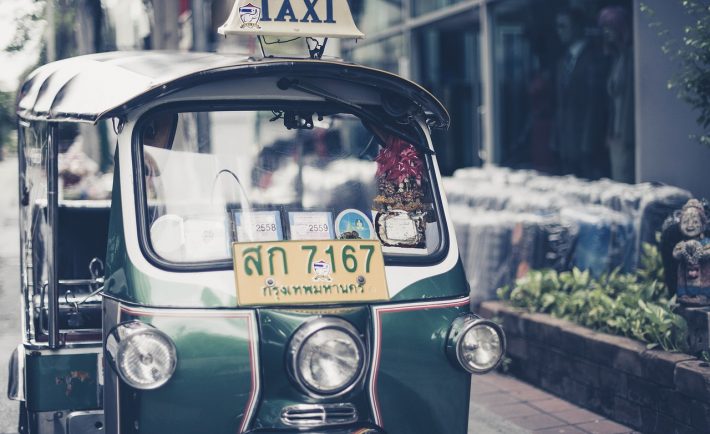
Before riding the Tuk-tuks (three-wheeled vehicles) or purchasing jewelry, develop the practice of researching online. Research the real prices of the items that you wish to spend for. Also, you may ask your Thai friends to help you to bargain with the store owners and communicate with the drivers. Ensure to agree upon a price for any service before doing anything or going anywhere. Lastly, protect your valuables at all times.

Do not make yourself an easy target! Read about the common scams that are circulating in the city.

MAKE THE MOST OF THE FREEBIES

It comes as no surprise that the rich culture of Thailand paved for free entertainment. Street performances are prevalent, especially around the holidays. You may indulge on exercise facilities at the local parks too. Not to mention, you must embrace its natural surroundings.

I shall illustrate the abundance of freebies by putting a spotlight at Bangkok. Here are just some of the free entertainment that you can maximize during your stay there:

a. Visit Soi Wat Thong Sala Ngarm, Phasi Charoen

Witness a traditional performance of Thai puppetry as you head down to the Artist’s House (daily except on Wednesdays). Enjoy the performance of a team who controls the delicate puppets.

b. Explore Wat Chakrawatrachawat Woramahawihan

Get personal with crocodiles at the bustling streets of Chinatown. Spot the three giant crocodiles in the grounds of Wat Chakrawatrachawat Woramahawihan!

NEGOTIATE OVER THE PRICES

Thailand welcomes the art of bargaining with open arms. For instance, some places allow negotiation of the room prices during the off-peak season. From Tuk-tuks to tattoos, almost everything is up for a negotiation. Those with visible prices on the products (e.g., sodas found in the convenience store) are fixed.

You must be reasonable when haggling for a better deal. It is not worth to bargain over a few cents! The vendor probably needs the money more than you.

Image Credits: pixabay.com

Image Credits: pixabay.com

May these tips help you stretch your dollar while having an unforgettable trip! 🙂

Sources: 1,  2,  3, 4 & 5

Read More...

Financial Checklist For Expectant Parents

The late Janet Reno once said: “I have learned that raising children is the single most difficult thing in the world to do. It takes hard work, love, luck, and a lot of energy. It is the most rewarding experience that you can ever have.”

Creating and nurturing a baby in Singapore is no walk in the park! Encountering sleepless nights, medical scares, and embarrassing moments are unavoidable. One is never completely prepared for what is about to come. However, you can start planning for your future by considering this financial checklist.

#1: DRAFT YOUR PRENATAL BUDGET

You are about to bring life into this exciting and challenging world. Tackle each day with ease by knowing how much you will be spending in the next couple of months. There are many lifestyle adjustments that come with having a baby. Include the food expenses, medical costs, insurance contributions, and so on.

Be honest with yourself when shopping for baby items. Do you really need a trendy stroller with an LCD control panel? Set a tangible line between what is necessary and what is forgivable. For instance, you can save on the disposable diapers by converting to the cloth diapers. Or, you may revamp an old drawer into a changing table. Use your creativity when maximizing your dollars and spend within your bounds.

#2: DETERMINE THE AMOUNT OF YOUR RESERVE

Becoming a preschool teacher made me realize that significant things can happen when you leave a toddler for several seconds. I am not exaggerating. One student may be chewing on the toys while you are trying to get groom the other. I can still recall when I was curious about the air conditioner and ended up with several cuts on my fingers. Being prepared for your baby’s potential accidents is a must!

I recommend that you take a look at your financial reservoir (or emergency fund). Having at least six months’ worth of living expenses covered is a good start point.

#3: UNDERSTAND THE HEALTH INSURANCE’S SCOPE

It is no secret that having a baby in Singapore is expensive, even if you have health insurance. Navigate your attention into the prenatal care, labor, and newborn costs. You need to understand which expenses your insurance will pay for you. There are diverse maternity insurance packages available on the market now! One is the OCBC MaxMaternity Care. It is the first maternity insurance plan that covers its clients as early as 13 weeks into their pregnancy. They will cover your costs for specific types of pregnancy complications.

Aside from understanding the scope of your policy, you must include your baby in your primary health insurance. You can typically change your records within 30 to 60 days after delivery. Do it as soon as possible as you do not want to be caught with an ill newborn and no coverage!

#4: IDENTIFY YOUR CHILDCARE ARRANGEMENTS

We are lucky to be blessed with childcare options ranging from a conservative preschool to an eclectic day care centre. If both you and your spouse are working full-time, recognize that a large number of your monthly costs will go to childcare (i.e., sometimes even more than your rent). This is why you must weigh your options and alternatives. By alternatives, I am pertaining to the relatives that can aid you along the way.

It is an acceptable idea for Asian families to ask for help from their parents. The grandparents-to-be may be available for two days a week. This could help you lessen the financial load. If you wish to hire a nanny, be sure to check the government fees and regulations surrounding it.

Image Credits: pixabay.com

Image Credits: pixabay.com

The cost of having a baby does not stop when he or she goes to school! So, consider formulating a long-term financial plan beyond the first few years.

Sources:1,2,3 &4

Read More...