Do these things to bring down your cost of living

a man holding on to his car key

The term “cost of living” can be translated as the money needed to uphold our current lifestyle habits.

When finances are on a stretch, lowering the cost of living can weigh heavily on our minds. If you’re ready to hit the pause button on your spendings or make lifestyle changes because of a recent job loss or pay cut, that’s not impossible.

Try doing these things to bring down your cost of living.

Move to a smaller home

Downgrading can be a powerful punch in the face for the prideful. But when it comes to finances, it’s a massive boost for maintenance. Take a good look at your money matters right now and decide if it makes sense for you to downsize. Remember that selling your property takes time, so plan ahead and get started early.

But sometimes, selling your home can be made secondary by getting rid of your car instead. With most of us shifting back to working from home, maybe you don’t really need a vehicle to add to your existing financial burdens?

Rent out rooms
a room with a double bed

Image Credits: ohmyhome.com

For peeps who are not so keen on selling their house, see if you can empty a room or two to rent out. This presents a quick solution to bring in extra cash every month, on top of your salary.

Alternatively, you can also choose to downsize and then rent out a small room for someone to occupy temporarily. But this method might only be suitable for people who don’t mind sharing their living spaces with an outsider. Be sure to discuss thoroughly with your family members beforehand.

Minimise your energy consumption

Your current electricity appliances can be the culprit contributing to your steep monthly bills. Check to see if they are energy-efficient and make the switch if they aren’t. Since they are products you use for a long time to come, be sure to do your research and ask the salesperson about the specs before buying.

Another factor to consider is your air-conditioner. Yes, we get how Singapore’s weather is so humid and unbearable at times, but if you want to bring down your cost of living significantly, learn how to embrace the warmness. Can’t seem to give up on that? Use the timer setting to work your way around it when you hit the sack.

Rework your budget
budgeting with a calculator

Image Credits: procurementexpress.com

As we approach mid-year, maybe it’s time that you take a look at the budget you’ve drawn at the start of 2021. Changes are inevitable, and it’s okay to replan your spreadsheet to accommodate your income changes.

Study the spendings closely you have each month and maybe let go of a few inactive subscriptions. Examine if you genuinely require multiple content streaming services, or you could just do with one for the time being.

Singapore is undoubtedly a city with a high cost of living and seems to rise a little more each year. Unless you’re planning to move to another country with a lower cost of living, consider the above strategies to cut your money outputs.

Read More...

Here are some investment-worthy gemstones according to a Singapore-based Italian jeweller

diamonds

What are the gemstones that come to mind when we mention “investment-worthy”?

Maybe some of you might be thinking of rubies, emeralds, and diamonds. While the three are definitely high in value, they are not the only stones deserving of all your attention.

According to Danilo Giannoni, a Singapore-based Italian jeweller, there are other sparkly rocks likely to grow in value. So, stay on this page if you want to work out your next investment move.

#1: Royal blue sapphire
a blue sapphire ring

Image Credits: Arte Oro

Since a saturated royal blue sapphire is internationally recognised and highly sought after, an investment in that would be considered “safe”. Expect to spend in the range of US$50,000 per carat if you’re looking to purchase a decent-grade blue sapphire.

However, it’s also worth noting that other colours are quickly gaining popularity. You will want to spend some time researching the saturation and tones to find the right sapphire for investment.

#2: Scarcely precious tanzanite
A pair of unheated tanzanites

Image Credits: Arte Oro / Client’s private collection

When something is in short supply compared to the demand for it, its value shoots up. This is a simple concept most of us understand, especially since the early days of the pandemic has led to high prices of face masks being sold.

Similarly, since tanzanite can only be sourced from a small area in Tanzania, supplies are limited. The prices are currently reasonable at US$1,000 to US$5,000 per carat, way lower than sapphires. But still, it’s forecasted to rise sharply in price should interests peak.

#3: Mid-range toned Paraiba tourmaline
A pure and almost luminous turquoise tourmaline

Image Credits: Arte Oro

Speaking of rarity, the Paraiba tourmaline wins the comparison against tanzanite. They can only be extracted from three mines situated in the remote areas of northeastern Brazil.

Thus, you can expect its high price tag of up to US$100,000 per carat, though its exact figure greatly depends on tones and colours. While clarity is essential, it’s not the top deciding factor for the best returns.

#4: Beautifully reactive alexandrite
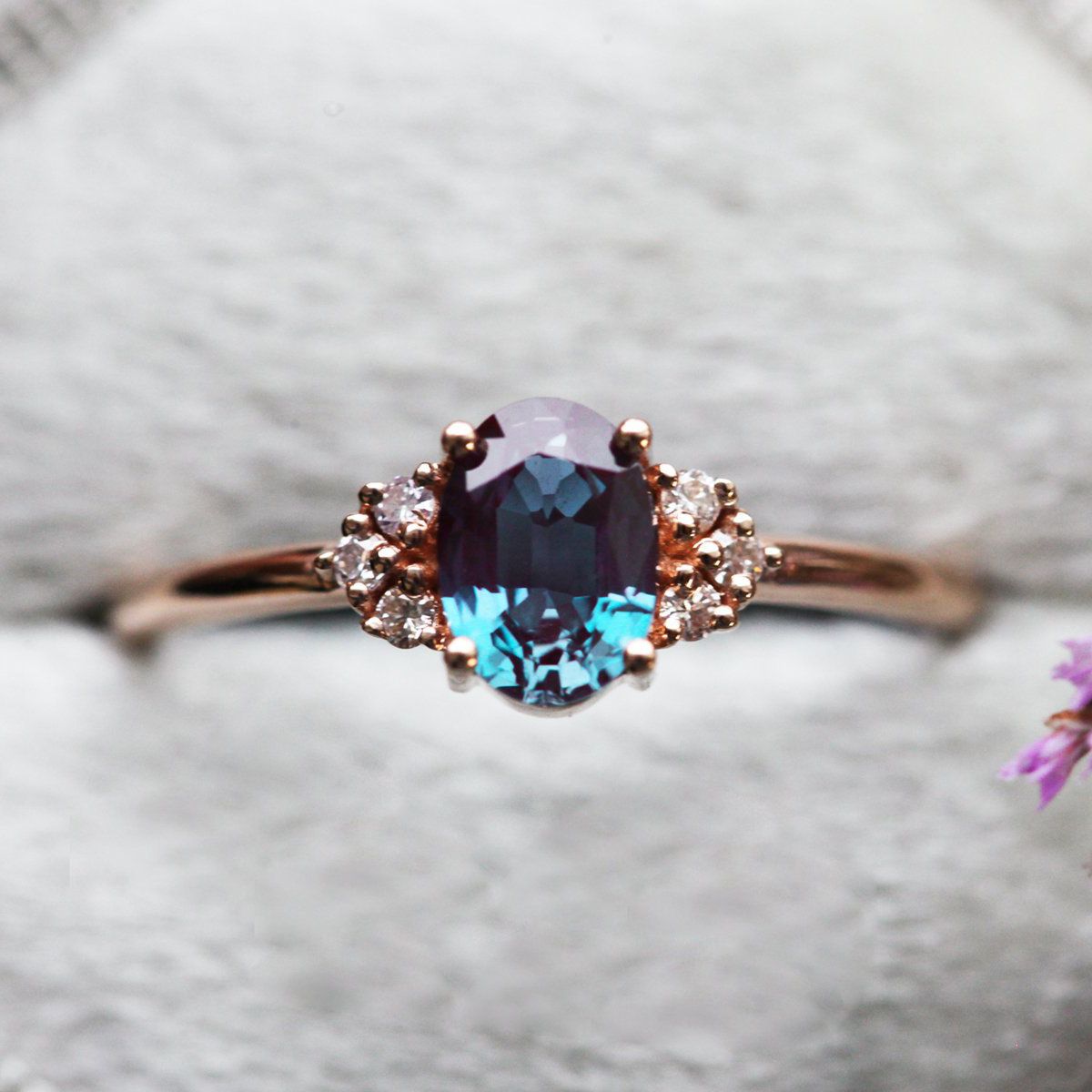
an alexandrite engagement ring

Image Credits: brides.com

When we say reactive, we mean that this precious mineral reacts to various light sources to emit its colour-changing characteristic. Thanks to its chemical composition, a person who owns this gem can observe its colour change from blue-green to red-purple from day to night.

It’s not just stunningly beautiful to observe, but it also performs well in the markets. Over the last few years, alexandrite has seen double-digit annual returns by collectors worldwide. An extraordinary carat with top-tier quality can cost up to US$100,000.

#5: Bright pink-red spinels
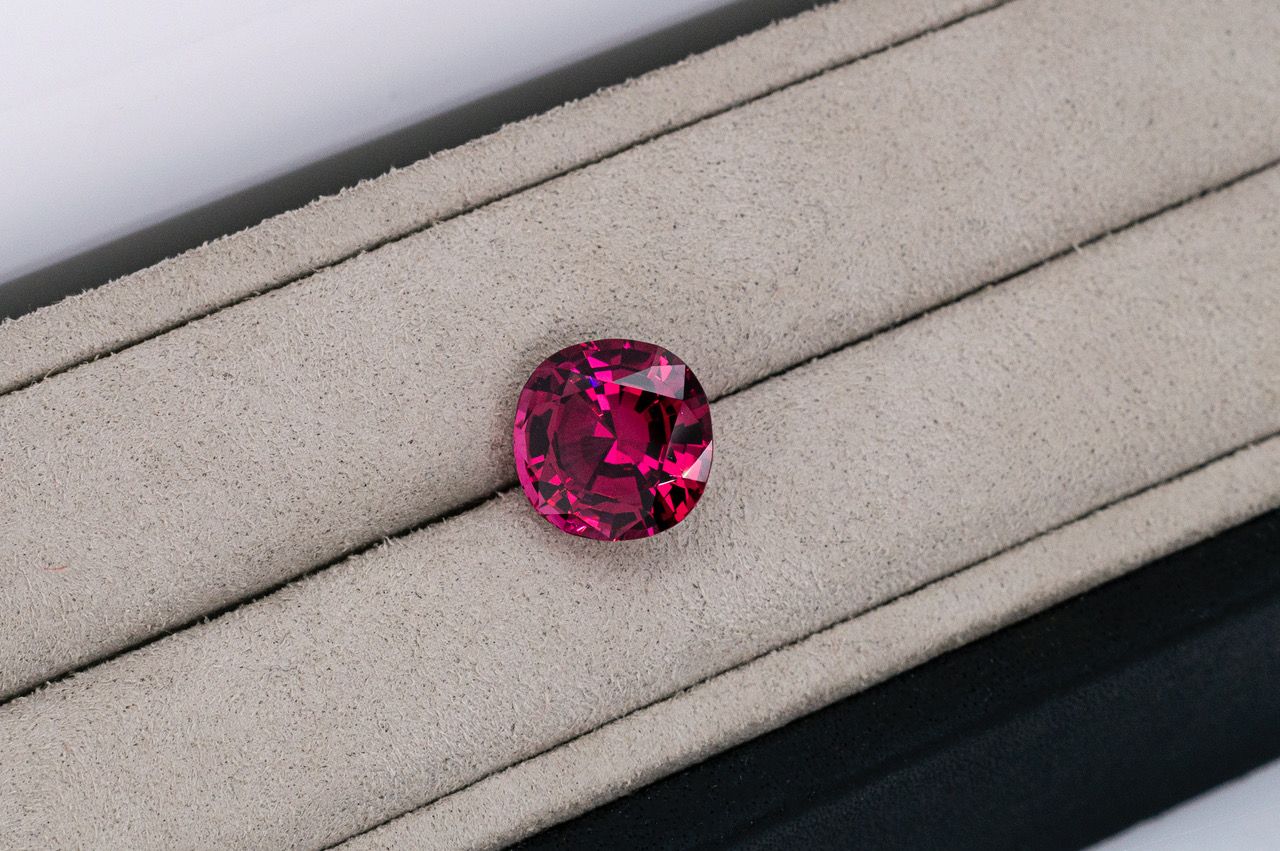
A very rare 10.5-carat Mahenge spinel from Tanzania

Image Credits: Arte Oro

As we come to a close, we have bright pink-red spinels to end us off this list. Spinels may not have been popular a few years back, but now, it’s a whole different story. With more buyers attracted to candy-coloured designer jewellery collections in recent years, spinel has climbed up the ranks to be considered investment-worthy.

Interestingly, it’s not the pure colourless spinel that is desired but the red, hot pink, and flame orange ones that are now in the spotlight. To be exact, neon pink-red spinels from Tanzania are the ones with tremendous investment potential, with prices up to US$50,000 per carat.

Now that you have an idea of what’s trending, do your due research and start collecting!

Read More...

Ask Your Insurance Agent These 4 Important Questions

Life is full of uncertainties. We are not aware of what will happen in the next hour or the next day. Despite this, we try our best to plan out our lives as best as we can. As you plan for the future, you may consider getting an insurance. Insurance is a means to cushion against financial losses and unexpected events.

Complete your financial plan by finding a suitable insurance policy that will cover your hospital bills, critical illnesses, and other needs. Do your research and ask your insurance providers for guidance to find the most suitable insurance plan for you.

On that note, here are four important questions that you may ask to your insurance agent.

#1: WHICH TYPE OF INSURANCE DO I NEED?

The distribution of insurance is regulated by the Insurance Act. Under this act, no one is allowed to establish an insurance business unless licensed or authorized by the Government. It also entails the duties and responsibilities of the insurance agents such as arranging contracts of insurance and collecting or receiving premiums on policies in Singapore. The insurance agent helps customize your insurance policy to best suit your needs.

There are many types of insurance policies. While endowment policies focus on savings, protection-type policies protect you from unforeseen circumstances. Do your research prior to meeting your insurance agent. As you become transparent with your financial circumstance, you may ask more questions surrounding the differences in their insurance policies. For instance, you may ask your agent to elaborate on the specifications of both their health and life insurance policies. With so many types of insurance around, you cannot blame a person for getting confused at first!

#2: IS IT ESSENTIAL TO PAY MORE WHEN MAKING A CLAIM?

Let us put a spotlight on health insurance. Although insurance policies help cover most of your hefty hospital bills, you can expect to pay some portion in form of deductibles and co-payments. Deductible is the initial amount that you need to pay for claim/s made in a policy year. You need to pay the deductible before you can get a payout from your insurance. On the other hand, co-payments are crucial principle in the design of health insurance. Co-payment is the amount that you need to split with the insurer after paying your deductibles.

Depending on your insurance provider, some health insurance policies may not cover certain illnesses or procedures. For instance, many health insurance policies will not pay for your cosmetic procedures. Ask your insurance agent about this. Know the scope and limitations of a policy before committing to one.

#3: HOW MUCH DOES THE INSURANCE COST?

Whether you are getting a car insurance or a life insurance, it is vital to scan your options in order to find a policy that fits your financial capabilities. The cost of life insurance, health insurance, car insurance, etc., will vary.

From a general perspective, the price of insurance depends on the risks. People who are working in high-risk jobs (e.g., factory workers or construction foremen) may be subjected to higher premiums. The insurance practice of charging higher premiums for certain occupational classes is called occupational loading. This practice is most commonly found in personal accident insurance. Do note that the premiums will also be affected by other factors such as the number of years that you need to have the policy in place.

Ask your insurance agent about this. If you feel that you cannot afford all the insurance coverage available, you do not need to worry. Your insurance agent will help you to prioritize your needs.

#4: HOW OFTEN SHOULD YOU UPDATE YOUR INSURANCE POLICY?

Throughout our lives, our goals and needs will change. This is why experts suggest to review your insurance policies every year. You may ask an insurance agent or a financial advisor for advice regarding the possibility of increasing your insurance coverage as years pass.

Image Credits: unsplash.com

Gradual increase in your insurance coverage may help prepare for the unexpected health problems that might come as you age.

Sources: 1 & 2


Read More...

It’s time to consider having a money date

a couple drinking coffee and holding hands

Even the strongest couples can experience tension when the topic of money presents itself. Money can bring hidden differences in opinions, priorities, wants, or needs to the surface. Though in all honesty, it can be pretty uncomfortable to talk about it with your partner.

However, avoiding the topic altogether will not solve any problems. Money touches every aspect of our lives since we need it for our daily living. We also require cash for well-deserved luxuries such as staycations or cruises.

It’s crucial to allocate the right amount of money towards expenses, savings, and splurges to thrive. And in a committed relationship, we cannot do it alone. That is why what you might need is a money date.

What is a money date?

Simply put, it is a date with money as the main highlight. Yes, we know it’s tough even to start. But Kathy Entwistle, the founder of Entwistle Partners, a financial specialist team, says that it gets more accessible and comfortable with every little step.

Having a constructive conversation with your partner about your monetary resources and financial goals can bring both of you to better wealth management and freedom in the future. 

One of the best ways to have this conversation is to set up a time with your partner, just like how you would do for a typical date invitation. A scheduled time and safe space where you and your partner can talk openly and honestly about money issues is the first vital step to take.

When should we arrange for a money date?

You and your partner should begin having money dates when you are ready to build a future together or you’re moving towards a committed relationship.

However, even if you’re already married, it’s not too late to start. You know the famous phrase, right? Better late than never. Regular money dates are essential, so you can adapt to changing financial circumstances and chart your progress towards your current goals.

Why should you consider having one?
a white mug with the word 'conversations' printed

Image Credits: unsplash.com

Mentally, don’t you agree that it’s easier to look forward to a date than a discussion? Scheduling a date ahead of time gives you and your partner time to reflect, get into the necessary mindset, and prepare yourself for potentially problematic money issues surfacing in your conversations.

A money date is also an apt time to gear yourself to discuss your values, goals, plans, and existing resources. Being willing to discuss any finance-related problems freely can help you and your significant other feel less stressed about the topic of money, in general, going forward.

Is there an ideal spot?

Unlike a traditional date, a money date requires an atmosphere conducive for serious discussions. It should be set at a time and a place where you and your partner can be comfortable and enjoy some privacy at the same time.

With that said, the latest cafe, rooftop bar, or restaurant may not be an ideal environment for a meaningful talk surrounding money. Your home can be the right place, and you could even choose to have your discussion over a glass of wine or a cup of tea to set the mood right.

If you have children at home, find a way to get privacy by considering dropping them off at your parents’ house for a few hours.

How do we kickstart the conversation?

Entwistle recommends that we begin with the bigger picture. These questions could guide both of you to find out what matters to you in life and the role of money in it:

  • What are our priorities?
  • Is it taking care of our parents?
  • What’s important to you when it comes to money?
  • Is it that you can provide for the family and put our children through university?
  • Does it have to do with security? Or is it knowing that you have enough to “get by”?

If your priority is to pay off credit card debts, you may want to examine your debts and decide how to approach them systematically. On the other hand, should your partner’s aim be caring for his ageing parents, both of you may wish to set aside an agreed sum of money for this purpose.

Or it could also be that both of you have started thinking about saving up for retirement. If that’s the case, then the conversation could revolve around minimising unnecessary expenses and maximising saving opportunities.

What about financial stresses?
a man covering his face with both hands

Image Credits: unsplash.com

Having a negative net worth or financial struggles can be upsetting. This emotional distress can spill over into your money date. Thus, it is vital to avoid getting into an overly aggressive discussion on your first money date.

As you and your partner gradually move towards subsequent money dates, you know it’s probably a good time to focus on more specific details. This could surface one’s irrational fear about a particular area. From there, start digging deeper and decide if there’s a solution to work towards.

Final thoughts

While it may feel uncomfortable to talk about money with your partner at first, it’s ultimately an essential thing to have. In fact, you might even surprise yourself by how easy it is to get into the flow of things. If you’ve yet to start, we urge you to consider taking that first step. It’s not as scary as you think it to be.

Read More...

Read this if you find yourself always buying “crap”

an asian woman carrying shopping bags and looking at her phone

It’s easy to be enticed with non-stop ongoing promotions online.

Thanks to the pandemic, more companies are also urgently shifting from brick and mortar to embracing digital means to sustain their business. This means customers like us can view a product instantly and make a purchase within a few taps or clicks.

But this also means it’s now easier to shop and buy “crap”. Please don’t get us wrong when we say “crap”. We’re not necessarily referring to a product as worthless but more towards whether it’s indispensable.

If you find yourself constantly buying “crap”, especially since it’s hard to say no to that dollar deal, read on.

#1: Stocktake your junk

Unless you are already living a minimalist lifestyle, chances are you have plenty of surplus stuff lying around at home or in your car boot.

The first step to help you stop buying items you don’t need is to do a stocktake on your current junk. A detailed record of your household items will help you realise how many things you already own.

Chances are, you will also find lost and misplaced items long forgotten over the years. Take these items and set them aside. Before donating, discarding, or reusing, look at it and do a quick sum-up of the costs. This exercise will reveal the potential savings you would have had if not for the purchase of those miscellaneous products.

And as a bonus, take it as an opportunity to declutter.

#2: Set a financial goal
financial-goals-on-a-notebook

Image Credits: moneycrashers.com

Financial goals are important because they help us make informed decisions with our money. Perhaps you want to save for retirement, get a new car, or take a luxury staycation soon.

Figure out how much money you need for your goal and consider opening a savings account to fund it. Next time you are at the shops and thinking of spending S$10 on something random (just because it’s on discount), consider putting that money in your savings instead.

You will be amazed at how quickly all those seemingly small purchases add up.

#3: Engage in an inexpensive hobby or activity

Shopping is a fun hobby, but it is an expensive one. Consider finding another activity to replace that.

Instead of going to the shopping centre, logging in to your favourite shopping app, or ordering stuff you don’t need during a time sale, do something else. Maybe you could go for a walk, read a book, or develop an artistic interest.

There are many engaging and inexpensive hobbies, such as bird watching or sketching, that can be very rewarding. Having an activity to fill your time can help you stop mindlessly carting out online. This could translate to more savings in the long run!

#4: Implement a 24-hour pause strategy
a red pause button

Image Credits: cobizmag.com

Even if you find a replacement hobby to keep you from shopping too much, you will undoubtedly find yourself back at the shops from time to time.

To prevent yourself from getting into the shopping routine, implement a 24-hour pause strategy. Before you buy that new phone cover or that shiny baking tray, put it on hold and think it over for 24 hours.

If you think it would significantly add value to your life or you would be using it for a long time to come, buy it. However, if you realise it’s possible to live without it until the current item you own wears out, skip it.

#5: Unsubscribe from marketing emails

Even the strongest among us can succumb to the temptations of promotional emails. New products, attractive coupon codes, and special deals are what marketers use to get inside our heads and tempt us to spend that money.

One of the most effective ways to avoid this temptation is to get it out of sight. There is little to no value in these messages if you’re on the road to stop buying “crap”. Unsubscribing from such marketing emails will help you regain control of both your inbox and your wallet.

#6: Create firm budget limits
Singapore debit cards

Image Credits: Vulcan Post

It would be unrealistic to say, “I am going to stop shopping”, and then hope it would work the next moment miraculously.

While we’ve worked hard to earn money, and it’s perfectly alright to spend it, the idea here is to spend less of it on “crap” that we don’t genuinely have a use for. The best way to attain this goal is to set a fixed budget in debit or cash.

Giving yourself an allowance in debit or cash helps you exercise more control over overspending. Spending debit or cash feels different than spending money on a credit card or through an app. Having to count and part with physical bills in exchange for an object helps us observe the trade differently now that we see the money disappearing from our possession.

#7: Pen down specific goals

As we come to a close, just saying “I am going to stop buying items I don’t need” may not work as you intend it to be. You want to pen down a more specific and measurable goal that you can attain.

For example, “I will only shop online on weekends,” or “I will only hit the stores on Saturdays with a cash budget of S$50 with me”. Preparing yourself with precise and realistic goals like these will aid you in reducing your excessive spending and break the chain of buying unnecessary “crap”.

Read More...