Your Concise Guide To Cryptocurrency Terms

DEFINING CRYPTOCURRENCY

The cryptocurrency is a virtual or digital currency that is secured by cryptography, which makes it nearly impossible to double-spend or counterfeit. Many cryptocurrencies are decentralized networks based on blockchain technology. This technology consists of a distributed ledger enforced by a disparate network of computers. A distinct feature of cryptocurrencies is that they are generally not issued by any central authority. Thus, these are theoretically immune to government manipulation or interference.

1. ADDRESS

Cryptocurrency coins are identified on the blockchain using the unique addresses. The value of your wallet is updated based on your address every time a transaction is confirmed. Addresses may appear in diverse formats. Simply put, no coin is stored without a proper wallet address.

2. BITCOIN

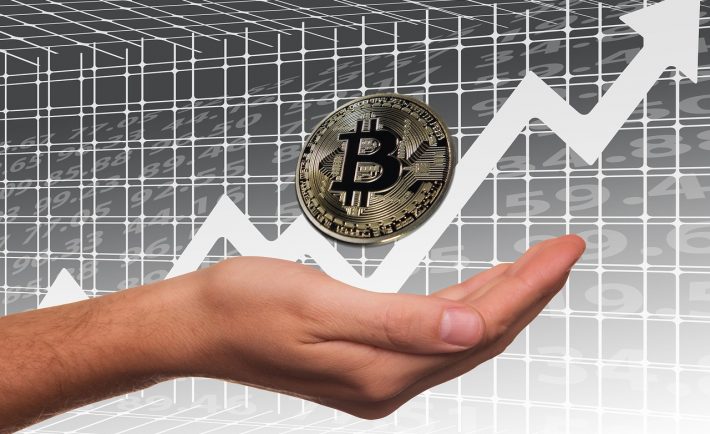
Bitcoin is a term you usually hear. It is a digital currency that came into circulation last 2009. Around 18.636 million Bitcoins have been mined and there are only 21 million currently in existence. These can be traded anonymously or sold for cash. It is important to note that the circulation is not controlled by banks or governments.

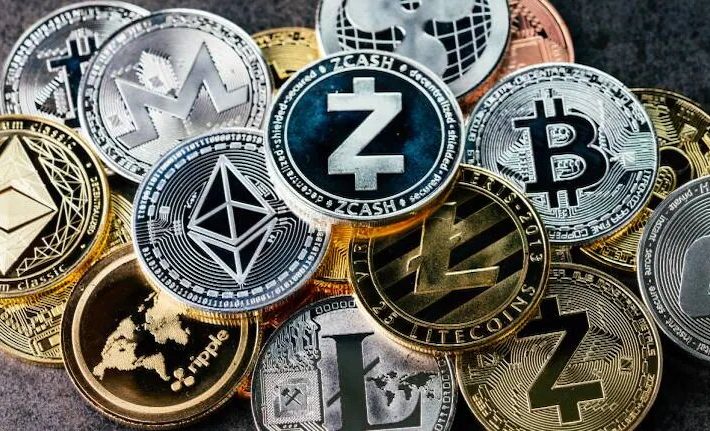
While Bitcoin is the most popular, there are other cryptocurrencies in circulation such as Cardano, Litecoin, Ethereum, Ripple, and Dogecoin.

3. BLOCKCHAIN

The blockchain is the underlying technology that powers the cryptocurrencies. It is a database that is chained togethering using cryptography. Once data is entered into this ledger, it cannot be erased or altered. All transactions are permanently recorded too.

4. EXCHANGE

The digital currency exchange is a business that allows users to sell, trade, buy, and exchange their Bitcoins for cash or other cryptocurrencies. Exchanges are usually run by private companies that earn by getting a commission from the transactions.

5. MINING

Like precious gold, there is a finite number of Bitcoins that can be acquired when you purchase or mine it. To mine it, miners use computers to solve complicated Mathematical puzzles. The miners receive Bitcoins as a reward for solving the puzzles. Mining requires powerful machines and unwavering amounts of time and energy.

Image credits: pixabay.com

6. PRIVATE KEY

The private key is necessary to verify transactions when withdrawing or selling your cryptocurrencies. If someone gains access your private key, you can lose all your funds in a matter of seconds. You should not share this string of numbers and letters to anyone!

7. PUBLIC KEY

The public key is a string of characters used to buy cryptocurrency. Fans can easily send cryptocurrency using the creator’s public key.

8. SATOSHI NAKAMOTO

Satoshi Nakamoto is the individual or group of individuals credited with founding the world’s first cryptocurrency – the Bitcoin. The founder remains completely anonymous. If you see the term “satoshis” thrown in conversations, it refers to a fractional unit of Bitcoin. You can transact with the satoshis.

9. SEED

Seed is the foundation of your wallet’s digital existence. A recovery seed is a series of twelve or sixteen words that can be used to access your wallet in case something goes wrong. It is the equivalent of asking twelve security questions for a forgotten password. Do not share this to anyone!

10. WALLET

A wallet keeps a record of the user’s balance. It enables you to receive and send digital currencies. A crypto wallet is either a hardware device or a program that can access the computer software.

Sources: 1, 2, & 3

Read More...

Seeing cryptocurrency as a get-rich-quick investment can be a massive mistake

cryptocurrency symbols

The word “cryptocurrency” has been thrown around rather frequently these days. However, this precarious investment may not be for everyone.

In fact, please don’t take our word for it. The Monetary Authority of Singapore (MAS) has warned the public on its volatility, and that risky investment products are unsuitable for retail investors. To be honest, it’s not hard to understand why.

Do you know that between 2018 to 2020, there have been over 500 police reports of crypto-related cheating, fraud, or other crimes? Nearly 400 of them were made last year, and the news revealed that roughly S$29 million was the figure for investors’ losses.

Experts highlighted the main risks:

  • Falling for scams
  • Jumping into crypto projects that fail
  • Involving in bad investments of obscure coins
A closer look into the scam tactics

Choo Oi Yee, chief commercial officer for private capital platform ADDX, shared that scammers are tapping onto examples of people who have struck it rich in rousing the greed of investors.

Ms Choo added that there are two scams under the Ponzi scheme:

  • Money from new investors is used as returns for earlier investors.
  • Pump & dump: Scammers buy a coin to push its price up misleadingly and then dump it after others jump on the bandwagon.

Hong Qi Yu, the founder and chief executive of the digital trading platform Tokenize Xchange, also commented regarding this issue. He said that scammers might use third-party accounts to hide their mischief.

Common tactics include:

  • Hacking into accounts
  • Using undoubting individuals as money mules
  • Threatening vulnerable individuals to use their accounts

To counter the ever-evolving strategy of scammers, Mr Hong urged legitimate operators to enhance their surveillance of unusual activities. He also recommended ​​“hot” and “cold” crypto wallets to reduce the risk of being hijacked.

Do your homework before cryptocurrency dealings
a person using laptop while researching

Image Credits: unsplash.com

With all that said, Ms Choo encourages potential cryptocurrency investors to do their homework. Crypto is complex, and a sound investment strategy involving investing in a range of assets is crucial.

Ms Goh (who declined to give her full name), who lost about S$30,000 to cryptocurrency trading platform Torque, prompted the public to learn about what they’re buying.

“Learn how to use the (crypto) exchange because different exchanges have different fees. You can save a lot on fees if you’re using the right exchange for the right coins.”

Another investor, Andy (not his real name), who lost about S$38,500 as a scam victim, asks investors to do their due diligence.

“The entire blockchain and cryptocurrency space (are) highly volatile. And the technology behind it is very difficult to understand, so unless you’re highly passionate about this whole landscape, don’t see it as a get-rich-quick scheme,” he noted.

When investment opportunities sound too good to be true, they probably are. Don’t let your hard-earned money go to waste via hasty investment decisions.

Read More...

Trading 2069: What the world will look like in 50 years

In 50 years, the world of trading will be revolutionised thanks to AI, blockchain, cryptocurrency and thought-powered decision making.

That’s the verdict of a new ‘time traveller’s guide’ that looks at where current technological trends will lead us by 2069.

While some of the predicted changes show how existing technology that is with us today will evolve – with cryptocurrencies eventually overtaking fiat currencies and blockchain networks usurping exchanges, for example – others represent a dramatic contrast to the picture in 2019.

Perhaps the most pronounced change of all comes with thought-powered trading, which the guide says is set to allow human beings to power super-quick decisions thanks to a headpiece and microchip.

The guide states: “It might sound like the stuff of science fiction, but thought-powered trading, hardware-induced neural stimulation and brain-to-brain communication have already been subject to extensive research by academics and commercial entities.”

It cites the evidence of hundreds of academic papers from leading neuroscientists and pioneering work from the likes of the US military, Facebook, Microsoft and Neuralink – who are all already investing in this technology.

It adds: Recent research has demonstrated the feasibility of controlling software applications via brainwave, electronic stimulation of the auditory and visualsystems, and even brain-to-brain communication – with participants sitting in France and India reportedly able to communicate at a basic level using just their thoughts

“Of course, significant challenges remain and commercialisation of many of these technologies is likely still decades away. However, mass adoption of such innovations by 2069 is not beyond the realms of possibility.”

The guide has been put together by IG – which specialises in forex, shares, cryptocurrencies and commodities – and also find that:

  • AI assistants will take over human brokers, providing smart real time reports
  • It will be possible to launch 3D holographic trading floors from a mobile device. 
  • Trading algorithms will develop to be able to suggest strategies and highlight key opportunities.
  • Pocket-sized quantum computers will power predictive AI, meaning big data sets can be analysed to suggest ways for traders to capitalise on trends.

The guide also notes that the greater involvement of robots could make the markets of the future even more volatile, especially if positions are opened and closed quicker and more regularly.


Read More...

Cryptocurrency A to Z – Everything You Need to Know in 2019

A little over a year ago, cryptocurrency received a lot of attention thanks to its sudden boom. Bitcoin went all the way to $9,000 in just a few weeks and went on to reach an all-time high of over $19,000 soon after. The market was ablaze, and a lot of new investors started investing in cryptocurrencies during that time.

The cryptocurrency market may not be as volatile as it was over a year ago, but experts believe that the lack of volatility is a good sign. Steadier, more manageable growth – and market changes – make cryptocurrency a better option for investors in 2019. Before you start looking into different coins and how you can invest, however, here is everything you need to know about cryptocurrency in 2019.

The Era of the Rivals

A few years ago, Bitcoin and Ethereum were the two biggest coins on the market. These cryptocurrencies showed the most growth and were widely accepted; they are still among the most-used cryptocurrencies today.

However, expect to see the rise of BTC and ETH rivals in 2019. The market has been showing a lot of interesting developments. Coins.live, the leading source of cryptocurrency market prices, confirmed what experts believe to be a series of future hits.

If you see their cryptocurrency tracker, you will find some interesting changes indeed. BTC still leads in terms of market cap, but XRP is now closing in on ETH in the same department. More importantly, we have coins like Litecoin and EOS challenging ETH’s growth.

More Mainstream Players

In an interesting move, eToro announced its new cryptocurrency exchange in the United States. Cryptocurrency exchanges are not new to the market, but the move by eToro is a clear signal of more mainstream financial institutions supporting cryptocurrencies in the future.

Talks about similar exchanges and investment products based on cryptocurrencies have sparked interest of more investors, particularly mainstream investors who are used to the financial markets. Outside of the US, the developments are even more interesting.

Binance Labs and the Argentinian government are co-investing in blockchain and the use of cryptocurrency. Bigger players like Goldman Sachs have been backing crypto startups and are showing signs of more developments in the future.

It’s Accessible

These changes have led to one major development: cryptocurrency becoming more accessible than ever. The support from stakeholders is apparent and there will be more exchanges and investment products based on cryptocurrencies in the near future.

That same support is also seen across the tech industry. The recently released Samsung GALAXY S10 has a built-in crypto wallet that can store blockchain keys. This is a development that will become extremely important for the industry as a whole.

Samsung and its GALAXY S line are everywhere. The built-in Blockchain Keystore wallet supports Ethereum out of the box, making the coin not only more accessible, but also more credible. Security will no longer be an issue with the built-in crypto wallet.

Crypto for Savings

Getting started with investing in cryptocurrency is very easy. As mentioned before, you can rely on Coins.live for market prices and real-time developments. However, a new trend is forming on the market: cryptocurrency savings products.

The first to announce the initiative was BlockFi, offering more than 5% APY for Bitcoin and Ethereum savings accounts. The move is also backed by Gemini Trust Company, which runs its own Gemini cryptocurrency exchange.

If you think the cryptocurrency industry is slowing down after the big boom in 2017, you may want to reconsider. Experts believe that the industry is just getting started, and the signs and trends we’ve been seeing seem to confirm that analysis. 2019 will be a great year for cryptocurrencies and investors alike.

Read More...

Is Blockchain a Viable Investment Option?

In truth, cryptocurrencies have dominated the news during the last 18 months, thanks primarily to Bitcoin’s historic price run last year. Altcoins such as Litecoin have also generated significant interest among investors, however, while driving high levels of engagement across social media.

Although the interest in cryptocurrency investment remains largely speculative in the mainstream, there’s no doubt that the blockchain technology behind this marketplace is evolving at a rapid pace and continuing to disrupt a huge array of alternative industries.

In fact, blockchain is now emerging as the fastest-growing digital technology since the evolution of the Internet, with its distributed and immutable qualities promising to revolutionise the social and economic landscape.

In this post, we’ll explore blockchain further while asking whether or not it’s a viable investment option.

What is Blockchain Technology?

A blockchain represents a growing list of records and data, with each individual block linked by cryptography.

The brainchild of Bitcoin innovator Satoshi Nakamoto, blockchain is a decentralised technology that has become synonymous with cryptocurrency and the financial market as a whole. In fact, blockchain is based on the principle of distributing rather than copying digital information, creating far greater security and removing the need for a central authority to manage data sets.

This highlights one of the main benefits of blockchain, namely its ability to provide immutable data records that cannot be manipulated. This, along with the anonymity provided by the blockchain, has created a technology that is tailor made the financial market and entities such as forex.

Is Blockchain a Viable Investment Option in the Digital Age?

Despite being synonymous with cryptocurrency, developers have also created an array of alternative applications for blockchain.

It’s certainly having an impact on the wider stock market, with NASDAQ having launched a ground-breaking LINQ platform based on this technology. This is a digital ledger that leverages blockchain to manage the entire process of issuing and managing private equity shares, creating a comprehensive and transparent set of records while optimising efficiencies.

NASDAQ continues to blaze a trail in this respect, however, with blockchain technology now used to underpin its own transactions and to support external marketplaces that are looking to integrate distributed ledgers into their business models.

This has involved a number of innovative and crucial collaborations, including a number of particularly interesting partnerships involving organisations such as Citigroup. Wealth management brands are also evolving to incorporate blockchain technology, in order to enhance the range of assets and the efficiency of service provided

Beyond this, blockchain is also having a huge impact on the modern supply chain, with distributed ledgers being used to introduce greater transparency into the logistics sector. Not only are these ledgers highly scalable, but they also improve the accuracy of recorded data and make it easier to monitor shipments in real-time.

The Last Word

As we can see, blockchain is an exceptionally diverse technology and one that has a growing number of potential applications available.

Not only this, but the blockchain market is also growing at a considerable pace and set to achieve a market value of $16 billion by the end of 2024.

With this in mind, it’s little wonder that RSM recently suggested that blockchain technology is “too powerful to ignore”, and this is certainly a worthwhile consideration for investors across the globe.

Ultimately, there’s no doubt that this technology offers value from both a short and a long-term perspective, while investing early may well increase your returns over time.


Read More...