 Image Credits: City Nomads
Financial goals become easier to manage when they are linked to clear numbers and realistic timelines. However, estimating how much to invest can feel difficult.
An investment calculator can convert a future goal into a practical starting amount. It can also show how time, contributions, and expected returns may affect the outcome.
For investors in Singapore, this tool can support planning for property, education, retirement, or long-term wealth. It does not predict returns, but it can help create a more informed plan.
Before examining different timeframes, it helps to understand what the calculator actually does.
What is an Investment Calculator and How Does It Work?
An investment calculator estimates how your money could grow over a selected period. You usually enter a target amount, investment duration, and assumed return.
Understanding the investment calculator formula can help you interpret the result rather than simply relying on the final figure.
An Investment Calculator Formula generally considers the initial investment, additional contributions, expected returns, and investment duration. Compounding can significantly influence the projected value over longer periods.
The Investment Calculator Formula is based on the compound interest equation:
A=P(1+r/n)nt+PMT×r/n(1+r/n)nt−1
Here,
- A represents the final balance
- P is your starting principal amount
- r is the annual interest rate
- n is the compounding frequency
- t is time (in years)
PMT is the monthly contribution.
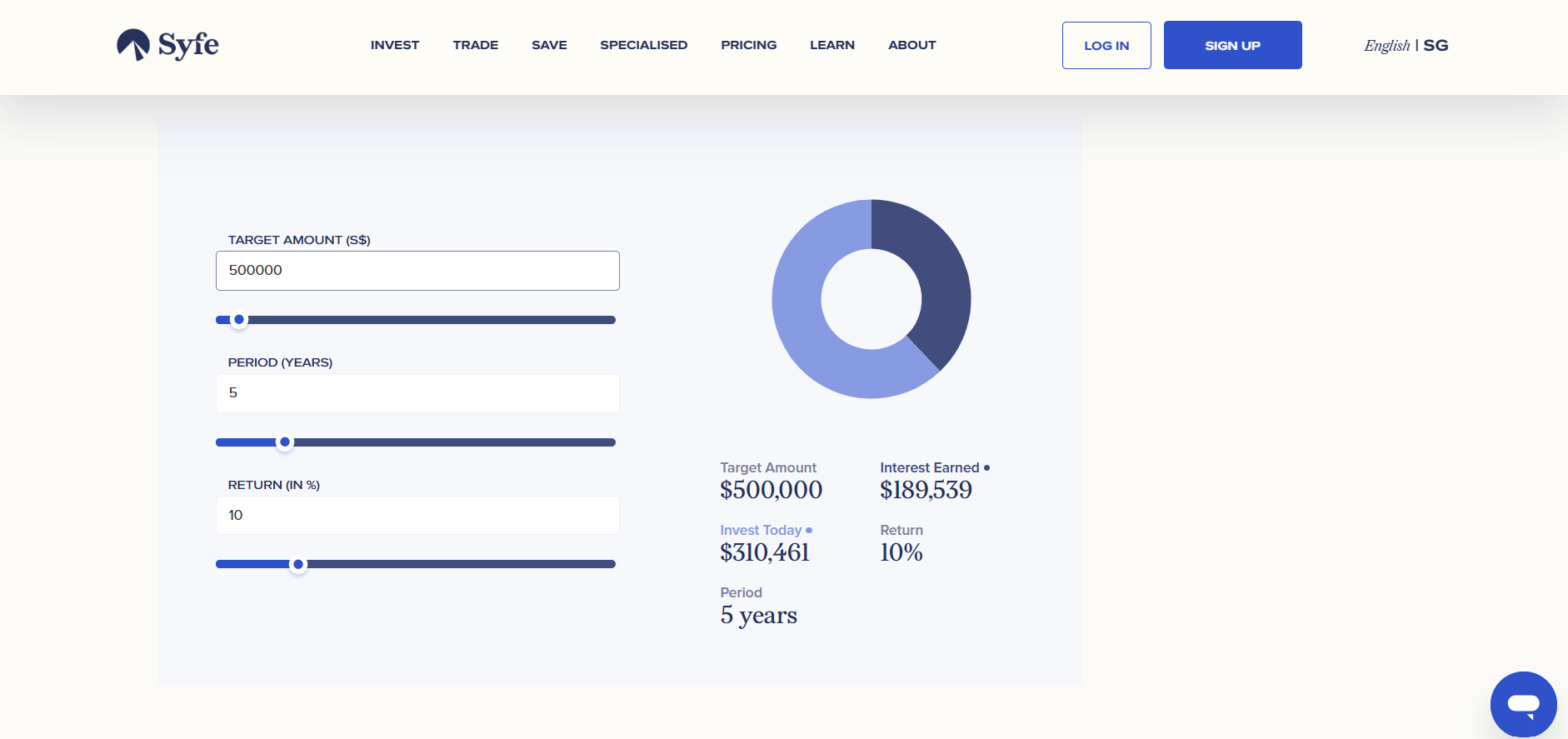
For example, suppose you want to build a target amount of $500,000 over a period of 5 years, assuming an annual return of 10%. Enter these details into the investment calculator:
- Target Amount: $500,000
- Investment Period: 5 years
- Expected Return: 10%
Based on these inputs, the calculator estimates the interest earned at approximately $189,539.
However, this is only an estimate based on the assumed return and investment period. Actual returns may vary depending on market performance and other factors.
Using an Investment Calculator for a 5-year Goal
A five-year goal could involve building funds for a home deposit, education expenses, or another planned financial commitment.
Start by entering your current investment amount and planned regular contribution. Then select five years as your investment period.
Next, enter a reasonable expected return based on the investment approach you are considering. Avoid using unusually high returns to produce a more attractive projection.
The result can show whether your current contribution may be sufficient. If the projected amount falls short, consider increasing contributions or reviewing your goal timeline.
Key Considerations for 5-year Targets
- Focus on low-volatility assets like bonds, fixed deposits, or money market funds.
- Maximise liquidity so funds are accessible when needed.
- Avoid aggressive equity allocations that could lose value right before your deadline.
Five years requires disciplined contributions, while a ten-year period may offer greater flexibility.
Using an Investment Calculator for a 10-year Goal
A 10-year timeframe can suit medium-to-long-term goals. Enter your planned investment amount and regular contribution. Set the duration to 10 years and use a realistic expected return.
You can then adjust the contribution amount to understand how different investment levels could affect the projected value.
Key Considerations for 10-year Targets
- Balanced portfolios combining equities and fixed income work well here.
- Expected returns are moderate and reasonable for balanced growth strategies.
- Rebalance your portfolio every year to lock in gains and control risk.
Try several scenarios rather than relying on one estimate. Comparing conservative, moderate, and optimistic assumptions can provide a broader view of potential outcomes.
Using an Investment Calculator for a 20-year Goal
A 20-year goal provides a much longer period for compounding to work. It can therefore be useful for retirement planning and other long-term financial objectives.
Enter your starting amount, regular contributions, expected return, and 20-year timeframe. Review how the projected value changes when you alter your contribution.
Key Considerations for 20-year Targets
- Allocate a higher proportion to global equities for maximum capital growth.
- Factor in inflation, as purchasing power decreases over twenty years.
- Reinvest all dividend payouts to accelerate portfolio compounding.
A larger future balance may not have the same spending power as the same amount today.
4 Ways To Strengthen Your Investment Plan
What happens if your investment estimation tool shows that you may need to increase your investment to reach your target goal? You have four practical ways to adjust your plan:
- Increase Monthly Contributions
Cut discretionary spending to invest more each month.
- Extend the Time Horizon
Delay your target date by a few years to let compounding work longer.
- Adjust Target Return
Take on slightly higher equity exposure if your risk profile permits.
- Reduce the Target Goal
Lower your target amount to something more achievable.
Testing these adjustments in an investment calculator helps you find a sustainable balance.
When to Seek Professional Guidance
Calculators are great for quantitative modelling, but they cannot evaluate your emotional risk tolerance or tax structure. An investment calculator can help with projections, but certain financial situations may require personalised advice.
- Complex Tax Situations
Seek guidance if you have cross-border tax obligations or complicated tax considerations.
- Estate Planning
A professional can help align your investments with inheritance and estate planning needs.
- Large Windfalls
Professional advice can help you allocate a significant amount of money based on your goals and risk profile.
- Uncertain Risk Tolerance
An advisor can help you understand how much investment risk may be suitable for your circumstances.
- Major Financial Decisions
Professional guidance can help you build a broader strategy beyond the calculations provided by an investment calculator.
In these situations, consulting a professional financial advisor can add immense value.
Start Planning Your Long-term Investment Goals
Building wealth across 5, 10, and 20-year horizons requires discipline, clear goals, and regular monitoring. An investment calculator provides the clarity needed to turn ambition into a concrete plan.
By setting realistic growth expectations, accounting for inflation, and adjusting monthly savings targets, you keep your financial journey on track. This can help you stay focused and make adjustments when needed.
Online investment and trading platforms like Syfe can make investing more convenient by helping you start your investment journey, automate contributions, and build diversified portfolios based on your goals and timeframe.
Start with a realistic target, review your progress regularly, and adjust your strategy when needed. Small, consistent steps can help you stay on track towards your long-term financial goals.