The “buy now, pay later” system: How it can ruin your finances

BNPL

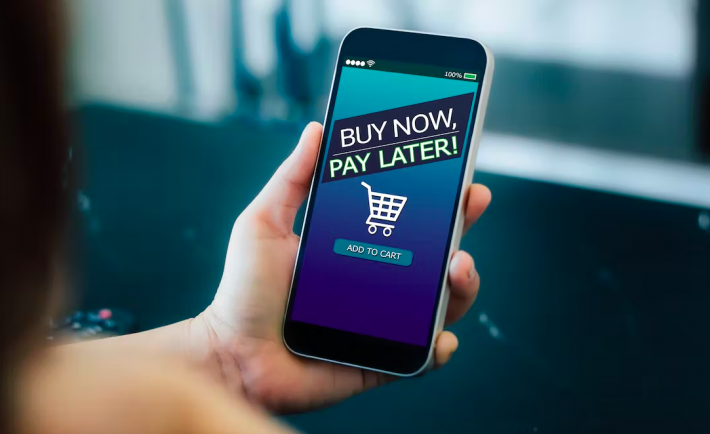
You may have heard of the “buy now, pay later” system, or maybe you’re even using it right now. 

If that’s the case, then you need to read this post. Because if you’re not careful, this system can ruin your finances.

The “buy now, pay later” system can be a great way to get the things you want without having to wait. But remember that there’s a reason this system is called “pay later”. Because eventually, you’re going to have to pay for those things. And if you’re not prudent, that payment can come in the form of debt.

What is the “buy now, pay later” system?

As mentioned earlier, the “buy now, pay later” system is a type of installment loan that allows you to buy items now and pay for them over time.

The thing is, this type of loan can come with some real risks. Throughout the COVID-19 pandemic, more and more people are using this type of loan to buy stuff. And if you’re not mindful, you could end up with a lot of debt that you’re unable to repay.

How does the “buy now, pay later” system work?
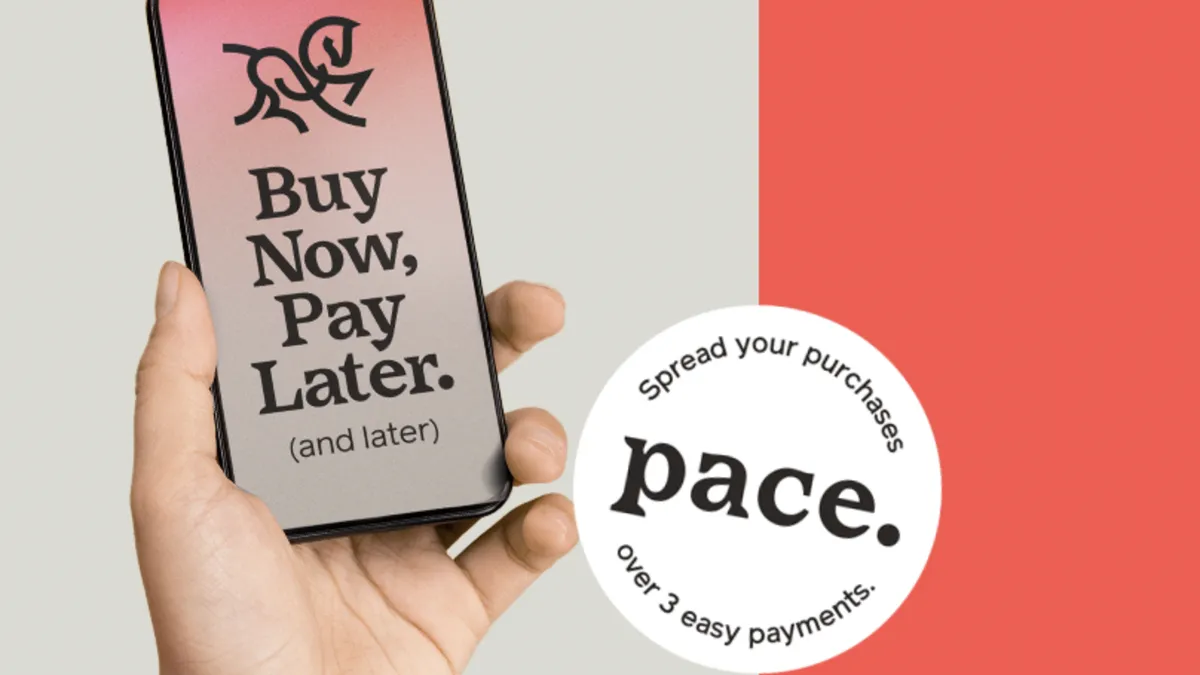
Pace BNPL

Image Credits: zdnet.com

When you use the “buy now, pay later” system, you’re essentially borrowing money from the company that’s offering the promotion.

You’re not using a credit card, so there’s no interest to worry about. But that doesn’t mean that there aren’t any consequences for your actions.

Here’s how it works: you make a purchase using the “buy now, pay later” system, and then you have a certain amount of time to pay it off. If you don’t pay off the purchase within that time frame, the company will charge you a (recurring) late fee.

How can the “buy now, pay later” system ruin your finances?

The “buy now, pay later” system can be a really dangerous way to shop. Here’s how it can ruin your finances:

  • Unable to control your spending

When you’re buying things on credit, it’s easy to get carried away. You might not be able to resist the temptation to buy more and more things, especially if you know that you don’t have to worry about the cost until later.

  • You could get stuck in a cycle of debt

If you’re not cautious, the “buy now, pay later” system could get you into a lot of debt. And once you’re in debt, it can be really hard to get out. You might find yourself stuck in a cycle of borrowing more and more money, which can be tough to break free from.

You’ve seen the commercials, and you may have even tried it out. But the “buy now pay later” scheme can quickly ruin your finances if you’re not wary. It can be very costly in the long run since you can quickly get wrapped up in debt. And we all know it’s hard to break the retail therapy cycle. If you’re struggling with debt, or if you just want to be more financially responsible, consider quitting the “buy now pay later” scheme. It may be hard to break the habit, but it’s worth it considering the future.

Read More...

Having a Credit Card is Not a License to Spend

Convincing yourself that you are not spending real money is easy when you charge for items on your credit card. Technically, you are correct! You are not spending money, in fact, you are borrowing money.

Using your credit card means that you will have to pay the bill eventually. The promise of small minimum payments can entice you into thinking that these purchases are bargains. Unless you pay back the purchase immediately, you will not feel the pain of the bill for another month.

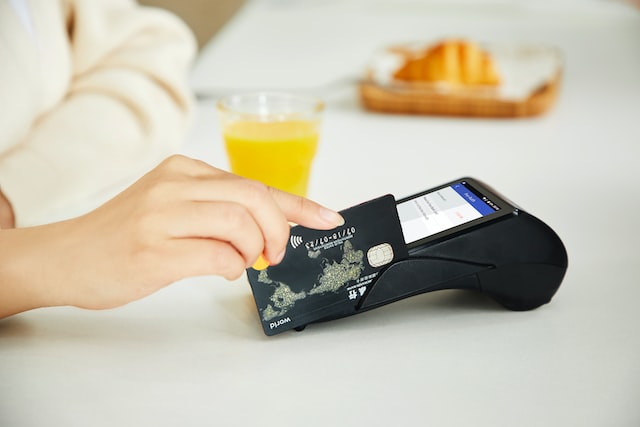
Be responsible with your credit card by treating it like cash and swiping only what you know you can pay back in full. You can reap its benefits by using your credit card in the following situations.

#1: GROWING YOUR REWARD POINTS

Many credit cards provide reward points for certain categories of spending like groceries, gasoline, air fares, and restaurants. When earning thresholds are reached, points can be redeemed for travel, shopping, and more. Choose a card that best suits your spending patterns.

#2: PAYING RECURRING BILLS

As long as you make payments on time, recurring payments will keep that line of credit open so you can continue to maintain or boost your credit score. Any recurring payments you have such as subscription on Spotify or Netflix can be paid through your credit card.

#3: SHIELDING YOU FROM EMERGENCY

Are you ready for unexpected expenses? When this happens, you need some time to cushion the blow. You can use your credit card in case of an emergency, including fixing, changing your tire or repairing a broken window. Be sure to repay more than the minimum on your credit card payments to avoid unnecessary interest.

Image Credits: unsplash.com

#4: SHOPPING ONLINE

Senior Industry Analyst at CreditCards.com once said: “Chip-enabled cards are very good at deterring in-person fraud but that doesn’t help you online, and that’s where most of the fraud has gone.” You can use your credit card when shopping online instead of shopping with your debit card.

Check your browser and shopping apps to ensure that your debit card is not saved on any of these platforms. You can either add your credit card information or delete all your card information to make it harder for you to overspend online.

Sources: 1, 2, & 3

Read More...

Set Up Your Money Goals Like a Boss

“You don’t have to see the whole staircase, just take the first step.” ― Martin Luther King Jr.

The first step is usually the hardest. However, you need to take the first step to live your best financial life. The longer you wait to establish your personal budget, the farther away your goals will be. Start by setting your money goals. Money goals include savings, investment, or spending targets that you hope to achieve over a given timeline. Money goals can give you a clear idea of why you are saving your hard-earned money.

Setting money goals is one thing but transforming these dreams into reality is another. Begin by giving your money a “job”.

#1: MAKE YOUR MONEY WORK FOR YOU

In the office, you have to accomplish tasks and finish them in the future. The same holds true for your money goals. What kind of life do you foresee for you and your family? Let money work for you!

Money goals are savings, investment, or spending targets you hope to achieve over a given timeline. Money goals do not have to be set in stone as you will revise them throughout your life.

#2: CATEGORIZE EACH MONEY GOAL

There are diverse types of money or financial goals. You can categorize each money goal as short-term, mid-term, and long-term. Short-term goals typically take six months to five years to complete. These goals include taking a vacation or purchasing a new washing machine.

Mid-term goals are accomplished within a period of five to ten years. It includes paying off your credit card debts and finishing a degree. Lastly, long-term goals take more than ten years to finish. It includes buying a new flat or saving up for your children’s education.

#3: SET A TIMELINE

You cannot achieve a goal overnight! Being specific helps make your goals more achievable.

If you have a toddler that is set to head into university by 2035, you must have a target date for your tertiary education savings goal. If you want to travel Europe for your 10th wedding anniversary, you must have a timeline that you are working toward.

#4: DO YOUR RESEARCH

Look for goal setting tips and resources online to stay on course. Money apps for goal tracking can be helpful too. Additionally, you can use old-school methods such as placing a vision board in your bedroom. Affix a collage of pictures that represent your money goals. If you see it, you believe it.

Image Credits: unsplash.com

Having a tangible representation of the future you are working toward can help you stay motivated. Whatever method you choose, know that it will all be worth it.

Sources: 1 & 2

Read More...

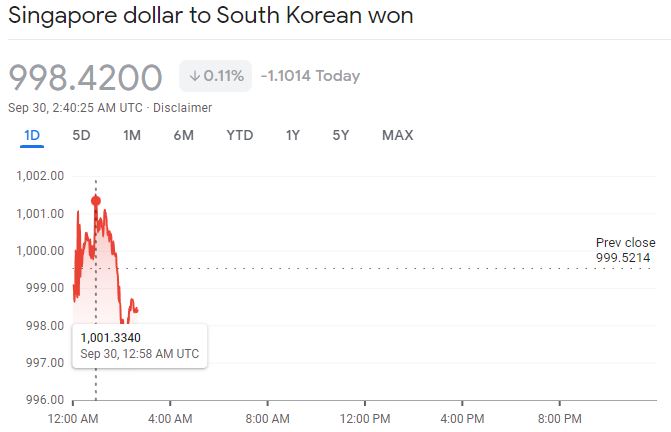
S$1 = 1000 KRW: Singapore dollar hits 13-year high against the Korean won


Asian currencies have broadly declined against the buoyant US dollar, sliding to levels not seen since the Asian financial crisis.

Among the worst-hit currencies is the Korean won which extended losses this month, dragged down by the U.S. Federal Reserve’s aggressive monetary tightening. South Korea which is export-dependant also comes under increasing pressure with higher oil prices and a deteriorating trade balance.

On the flip side, the Singapore’s dollar has been resilient against the US dollar. To fight inflation – which is expected to keep rising – the Monetary Authority of Singapore (MAS) allows the Singapore dollar to appreciate against peer currencies. This helps to slow the inflation momentum and ensure price stability thereby driving down the cost of imported good in local currency terms.

The SGD/KRW crossed the 1000 mark on Sep 30, 2022

On Friday, the SGD/KRW went above the 1000 support, a level not seen since March 2009.

According to the CashChanger’s site, one can get a rate of approximately S$1 = 975 KRW at local money changers in Singapore on Friday, Sep, 30, 2022. That’s a good rate if you are planning a travel to South Korea any time soon.


Read More...

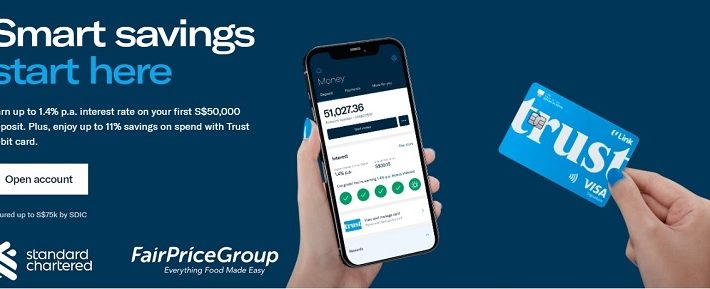
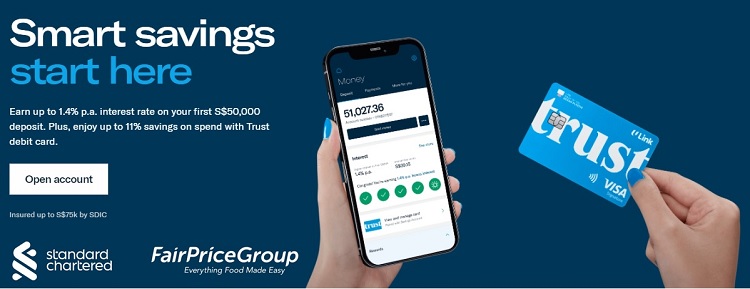
Trust Bank, the latest digital bank in town, is giving out $35 NTUC e-Vouchers

Graphical user interface, application Description automatically generated


Have you heard of Trust, the latest digital bank to take the digital banking scene by storm? Trust Bank offers up to 1.4% interest rate for its savings account, 21% rebate on its credit card, $35 NTUC e-Vouchers as well as free rice and Kopitiam breakfast set. Here is how to save and score these freebies!

What is Trust Bank?

Graphical user interface, application Description automatically generated

Trust Bank (known as Trust) is a new digital bank set up by Standard Chartered Bank and NTUC. This means that customers of Trust conduct all their banking activities online since Trust Bank does not have any physical bank branch. Here are the products available under Trust.

1. Trust Bank Savings Account

Trust offers a base interest rate of 1% for the 1st $50,000 deposits. If the customer makes 5 eligible card transactions, this can be increased to 1.2% and 1.4% for non-union and union members respectively. No minimum amount is required to start earning the base interest rate. Best of all, there is no fees or lock-in period required.

2. Trust Bank Credit Card

Trust credit card provides up to a mind-boggling 21% savings rate on card spend. This is issued in the form of Linkpoints which can be offset against purchases at NTUC, Unity stores etc. If a NTUC union member spends at least S$350 per month on expenditure outside of FairPrice Group every month, he or she will be entitled to 21% savings rate on spending made at FairPrice Group. Simply put, if you are already spending within the NTUC ecosystem- i.e. shop at NTUC and Unity, dine at Kopitiam, now is the perfect time to save on your spending with Trust card.

Other amazing perks are the absence of annual fee, foreign transaction fee, cash advance fee as well as card replacement fee. Finally, those who sign up for the Trust credit card will enjoy complimentary coverage of the Family Personal Accident Insurance for the first 2 months

Amazing Promotion

Another eye-catching aspect is the generous freebies thrown in to mark its launch. These freebies add up to a total of $42:

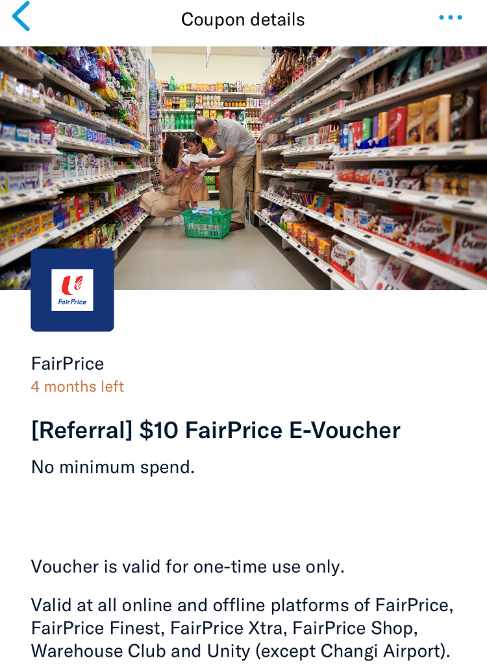
  1. $10 FairPrice e-Voucher upon signing up with a referral code (DFFZV6CZ)
  2. Free Signature Breakfast Set to be redeemed at Kopitiam (worth $3.10)
  3. Free 1KG Superior Fragrant Rice (worth $3.55)
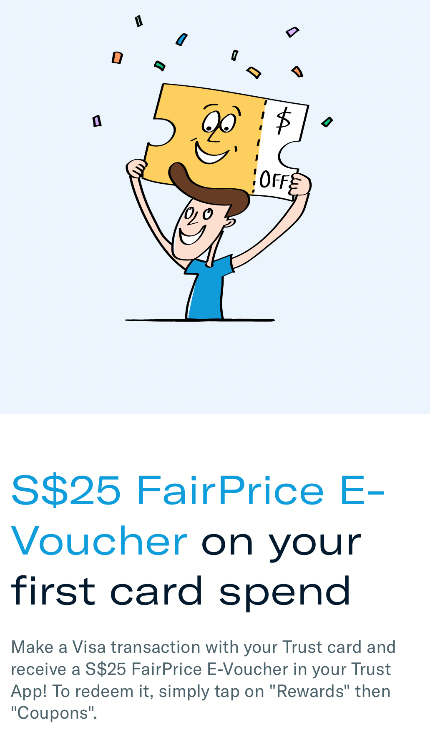
  4. S$25 FairPrice e-Voucher on your first card spend (no minimum amount required)

Besides these one-off freebies, Trust also pushes out regular discounts from popular merchants such as KFC, Burger King, Starbucks, Gong Cha etc. Remember to browse the app regularly and grab these vouchers!

Sign Up For Trust

From downloading of the app to approval of application takes less than 20 minutes if you sign up via MyInfo. With such a smooth onboarding process and the amazing freebies, what are you waiting for?

Download Trust app to collect your freebies- remember that the $10 FairPrice voucher is only valid if you sign up with a referral code. (DFFZV6CZ)


Read More...