
Fixed or Floating Rate, Which is Better For Your Home Loan?

Fixed or Floating Rate

Your home is often the biggest purchase you ever made in your life, however that also means landing yourself the biggest debt you ever had.

Properties in Singapore are expensive – be it HDB flats, excecuive condos, or bungalows. It’s not uncommon to have a million dollar price tag onto it. And often, taking up a mortgage loan would also means being in debt for 25, 30 or even 40 years.

Therefore, you want to be careful in choosing the most cost effective lender with the best mortgage terms.

Lenders usually offer many different types of mortgage packages such as interest-only mortgages, off-set mortgages and more. Understanding the difference between a fixed or floating rate loan and which is better is a major financial decision for home buyers.

Fixed Interest Rate

As the name suggests, the interest rate tags to your mortgage is fixed for a specific period and could span 1, 3 or 5 years before reverting to a floating rate once the term is up. For buyers who are risk adverse and want to reduce uncertainties, fixed interest loan is the way to go ask you don’t subject yourself to the fluctuation in interest rates. The cost to it is you have to pay a premium on top of the existing rate (so that lender can hedge the risk of lending you at fixed term) and when interest rate falls, you still pay the same rate when other borrowers on floating terms pay a lower rate.

Floating Interest Rate

On the other hand, floating interest is revised every month or every 3 months.Your repayment amount would therefore change every month. The rate fluctuates according to the Singapore Interbank Offered Rate (SIBOR), Swap Offer Rate (SOR) or the Internal Board Rate (IBR). SIBOR and SOR are more transparent than the IBR which may change according to the company’s discretion, so make your choices wisely. A floating interest rate is more suitable for astute buyers who are able to accurately assess and predict interest rate movement.

Which one to choose?

It’s never easy to decide which rate to choose as it is akin to selecting the correct stock in a market filled with uncertainties. Interest rate movement is volatile and may go up or down without you being prepared for it.

First, ask yourself if you have the financial means to afford a risk in an interest rate hike. If you are someone who just barely scraped through the monthly repayment, you should not be gambling with the interest rate, albeit a lower initial cost. What you need is certainty, so that you would be able to accurately plan and budget your monthly expenses. You don’t want to go around borrowing money to meet other necessary expenses. A peace of mind has a value in itself.

Conversely, if have lots of spare and liquid cash (now and in the future), you may consider a variable SIBOR if you want to take advantage of the low interest rate environment. If you want some degree of certainty, you can consider taking a longer tenor SIBOR rate of up to 12 months, even though it cost a little more than a 1 or 3 month SIBOR.

It is also important to note its correlation with the US’s fed rate and with interest rate hike looming as early as April 2015, it may be wise to time the commencement of your loan.

If you want to reduce your exposure to the US market, you can also consider DBS’s fixed deposit home rate (FHR) which is calculated from the average of DBS 12-month and 24-month interest rate. The FHR is more stable and is not subjected to constant repricing on the daily market movement but that is not to say that it is completely independent of externalities. It is still considered a board rate which DBS has the discretion to adjust the rate to meet their objectives.

There are also other factors to take note of in deciding the right home loan package. One should also consider if there is any prepayment penalty should you decide to pay off your loan early or refinance it in the future. The duration of the loan should also be taken into consideration when deciding whether to take a fixed or floating rate loan. If you take a longer tenor loan, what you need most is stability.

If you are financial savvy, you may want to keep yourself informed of the supply and demand for funds in the interbank market and how it influences interest rate movement.

Lastly, don’t forget to make Janet Yellen your friend.



Read More...

How to check if your savings are safe

How to check your saving are safe

When making an investment, one wants it naturally to be safe. Most investors make their moves only with secure projects that seem unshakable. Some even prefer investments that potentially generate less but are secure than investing in a something that is shaky but could be highly profitable in good circumstances. Surely there are investments, which are stable and generate a favourable income. However, as the international market grows increasingly interconnected, more and more investments and business areas can be effected by daily fluctuations and financial breakdowns. There is one question that rises – how can one be sure that one’s investments are safe?

When the international housing bubble erupted, plenty of people lost their money. However, many more questioned whether their investments were safe or were as well danger. These questions aren’t easy to answer, as obviously each area of investment is different. However, there are a few things to be kept in mind. First of all, the location of your investment is key. It can depend on the country whether your investment is protected or not. For example, if you have savings in the UK, you are covered up to £ 85.000. In case your bank goes bankrupt or fails, your savings are covered up that amount of money. This is however not straight forward, as not all banks in a country are regulated by the same. If you have obtained an account at a foreign bank, you may want to check whether your account is also regulated in your country. Foreign banks may be subject to the controls and regulations of the country of origin.

Although banks have created protections for the accounts of their costumers, it doesn’t mean that each account is safe. In most cases one has a certain protection sum at one particular bank, not for each account at the same bank. If you have a larger amount of money deposited within several different accounts at one bank, it is very likely that one is only protected for a total amount. If one demands better security for the funds, one should shift the savings to different banks. Having one’s savings distributed among the accounts of different banks, one feels surely safer and less paranoid, especially if one fears the next global economic breakdown coming soon.

Having understood these protections schemes and knowing where your money and investments are located, one has taken the very first step to save one’s earnings. For obvious reason, different countries and banks have also varying protection programmes and regulations. Having savings distributed among several accounts, it allows you to freely move the money when needed. In the case of an international crisis or any similar event, the accounts in the various countries are differently affected. This provides the chance to move the funds as desired.

However, one should also know which banks are vulnerable and which aren’t. Keeping one’s funds within the FSCS, the Financial Services Compensation Scheme, one can provide further protection and security. Furthermore, it is important to know who owns the banks in which you have deposited your money. Your bank might have been bought or is owned by another superior bank that could be more vulnerable. Therefore, one should be aware of who owns what bank. Changing owners within the banking system isn’t an uncommon procedure and can sometimes happen faster than one tends to believe. In case you are for some reason not able to distribute your money among different banks, you should consider a joint bank account with your partner, as those are usually covered to higher amount. As the amount can vary though, you should check for the details with your bank.

Many people prefer to keep their money in an offshore saving account, as the interest rates are there significantly higher as with normal banks. Considering the collapse of the Icelandic bank Icesave in 2007, one has a very recent example of large amounts of offshore money that can disappear extremely fast. In any case, banks often don’t require the account holder to live in the country in which the account is situated. Therefore, it is advisable to research the country with the personally most favourable conditions. As different countries have varying amounts and limits that are protected, one can choose and customise one’s own saving accounts around the world. Wherever you decide to keep your money the £ 85.000 limit is a good guideline for an account. If this limit seems for some reason implausible, than one should try to separate one’s saving somehow. Although the limit of approximately £ 85.000 cannot be met, any cut and division will be a further protection.

If one is really scared of another collapse like in 2008, then one should really obey to this limit. The reason is that the governments, which mostly have to deal with the consequences, will prefer a bailout than payouts. Therefore, the FSCS compensation scheme protects certain amounts, but nothing beyond that. In most cases, the governments cannot afford that a bank goes bankrupt. It is often cheaper and more convenient than if a failed bank is saved with public tax money – even though this is not understandable to most of the population.

Another alternative is state-owned banks. However, not every country has this kind of luxury. One has often the chance though that one can use a state-owned bank in a country, which one isn’t living in. State-owned banks have however the advantage of being the first one to be rescued in the case of a heavy situation. If one has money abroad with a state-owned bank, one can relax in most cases. Surely not all state-owned banks are the same. For obvious reasons one should choose a democratic country as well as a bank that really is regulated as a state-owned bank according to international standards instead of a few questionable individuals.

Personal savings and investments surely are tricky issues. Although the international market is more vulnerable than ever before, it doesn’t mean one needs to submit one’s savings to luck. The distribution of wealth between several different accounts is often a stable solution.


* (In Singapore, we are protected by the Singapore Deposit Insurance Corporation, or SDIC, of up to S$50,000)

Read More...

Best Credit Card For Petrol

Best Petrol Credit Card

When your car ran out of petrol, have you had problems deciding which petrol kiosks to go to enjoy the most savings? With four petroleum companies in Singapore – Exxon-Mobil, Caltex, Shell and Singapore Petroleum Company, you may at times scratch your head and wonder which petrol companies offer the cheapest petrol.

Owning and driving a car in Singapore is expensive, and it pays to find out how to save on your fuel expenses.

Using the right credit card to make your fuel purchase is important, as you could easily shave off up to one fifth of your petrol costs. The savings is huge! Imagine spending $2,000 on a petrol in a year – you could have saved up to $400 in a year!

There are many credit cards for petrol in the market and while some offer instant site and card discount, there are also cards that offer rebates and rewards to sweeten up the deal.

So which is the best card? Let’s find out! (Scroll to the bottom to see summary)

Esso

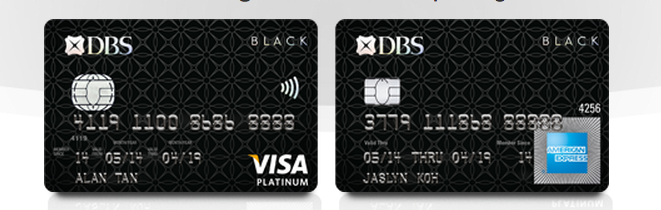
DBS Black VISA/AMEX Card & DBS Esso Card

DBS Black VISA/AMEX


If you own the DBS Black Visa or AMEX card, you can enjoy 18% discount off your fuel if you top up your petrol between 7pm – 7am. (4% cash rebates will end on 31 December 2014)

With the Smile rewards, you can redeem $30 worth of fuel for 750 litres of petrol pumped.That works out to be a 2.5% cut to your fuel expenses after taking into account of the 35% bonus Smile points.

And that’s not all – don’t forget you also earn DBS Points for your fuel top-up, at the rate of 1 Points = S$5 spent. That’s 0.31% on top of all the discounts and rebates!

Total effective discount = 20.81% (Until 31 December 2014)

DBS Esso Platinum Card

DBS Esso

Besides their Black Card, DBS also carries the Esso Platinum Card in their product suite, which offers up to 19.81% off your petrol. The only difference is you don’t enjoy the 4% promotional card rebates that the Black card offers. It makes up with a 7% card discount which is higher than the 4% of the Black Card. This will be the card to go for if you don’t want to stick to 7pm-7am rule and if DBS don’t extend the promotional 4% rebate for their Black Card.

Total effective discount = 19.81%

OCBC 365

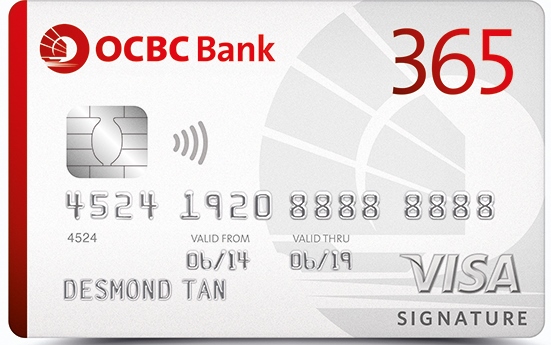
 OCBC 365 Card 

OCBC 365 is next on the list for Esso’s pump. You can enjoy savings of up to 20.80% effective discount which matches up with the DBS Black Card. Unfortunately, good thing don’t last and the cash rebates of 4.3% will end on 31 December 2014 and you will need a minimum charge of $600 with a $80 cap in rebates for a month.

Total effective discount = 20.80% (Until 31 December 2014)

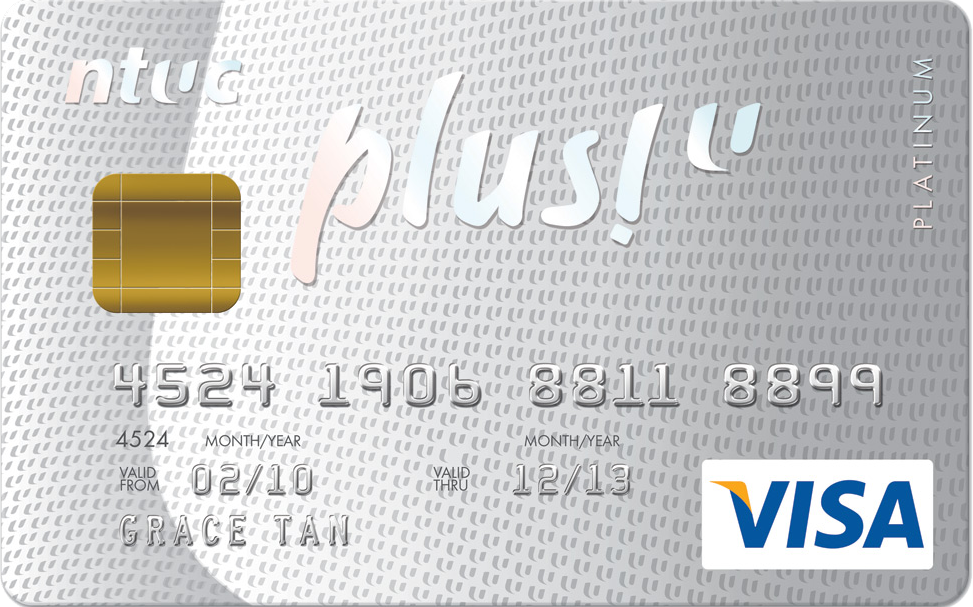
OCBC Plus!

OCBC Plus Visa CardOCBC Plus VISA Card 1

Good news is you can get a higher discount using a OCBC/NTUC PLUS! Card! That’s because you get Link points when you use the PLUS! card and a $300 spend will get you an additional dollar off your groceries at NTUC FairPrice. That is equivalent to an additional discount of 0.33%.

Total effective discount = 21.13%

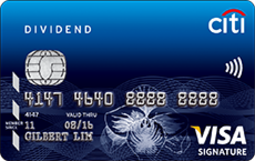
Citibank Dividend Card & Other Citibank Cards

 Citibank Dividend Card

Citibank Dividend Card matches up with the PLUS! card of 21.13% for Esso station. As long as you meet a min spend of $50 in a transaction, you will qualify for the cash rebates. You will also earn Citi Dollars for your transaction and 1,500 Citi Dollars can be used to exchange a $5 Shell voucher.

Total effective discount = 21.13%

Caltex

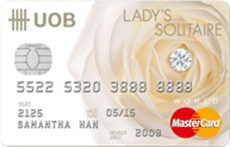
UOB Lady Card

UOB Lady Card

With the UOB Lady Card, get up to 20.75% off from your fuel! It offers a relatively higher card discount to make up for a lesser rebates as compared to the first few cards. Caltex also has it’s own loyalty programme – the Thanks! Rewards. 40 Thanks! points is equivalent to a dollar off and if you add this together with the rewards from UOB (UNI$600=$10 SPC voucher), it sums up to an effective discount of 20.75%!

Total effective discount = 20.75%

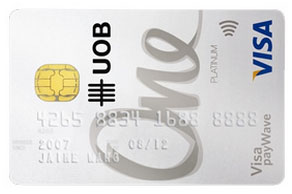
UOB One Card

UOB One Card

Another product from UOB is the UOB One Card which has higher discount than the UOB Lady Card. With an effective discount of 21.54%, it is the best card from UOB for motorists. That’s because besides the usual Smart$ rebate of 1.68%, you are also entitled to the UOB One Rebate of 2.80%. That’s massive even though you don’t qualify for the UNI$ programme.

Total effective discount = 21.54%

All other cards from UOB may get up to 19.07% off from their fuel purchase.

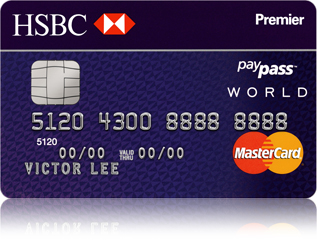
HSBC Premier MasterCard/VISA Infinite/VISA Platinum

HSBC Premier

HSBC Premier MasterCard, VISA Infinite and VISA Platinum offers a whopping 23.45% discount to your fuel – and that makes it the best credit card for petrol in 2014. (Ends on 31 December 2014 – This post may come a bit late, but we will keep it updated!) However, it comes with a few conditions to be eligible for the full discount. First, to get $4 off your petrol you will need to spend $80 on gross petrol. (Ends 31 Dec 14) That is equivalent to a 5% cut which is easily achievable should you need to top up a full tank on a RON 98. Next, to get the cash rebates of 5%, you are required to charge $800 a month for all 3 months in a quarter. Otherwise you are only eligible for 3% rebate.

Total effective discount = 23.45%  (Ends on 31 December 2014)

All other HSBC cards can get up to 15.06%.

Shell

HSBC Premier MasterCard

HSBC Premier

If you want to refuel at a Shell station, then coincidentally, the HSBC Premier MasterCard tops the list again with a total effective discount of 21.81%. This time round it offers a higher cash rebates of 6% with a min spend of $800 a month for 3 months in a quarter. Unlike in Caltex, you don’t get the $4 off petrol for a $80 pump, but there is a Shell Escape Rewards where you can exchange 600 Escape points for $20 worth of voucher and you get additional 1 point for every $5 charged to your card. For its own card rewards, you can exchange for a $10 voucher for every 2250 points.

Total effective discount = 21.81%

HSBC VISA Infinite and VISA Platinum gets 5% cash rebates so total saving = 20.91% and all other HSBC cards get 16.61%.

OCBC 365 & Citibank Dividend Card

You can also use OCBC 365 Card to enjoy 16.54% or Citibank Dividend Card for 18.43% discount.

SPC

American Express Platinum Credit Card

American Express Platinum Card


If there is only SPC in your vicinity and you happen to own an American Express Platinum Card, you can enjoy the highest discount of 21.64% in SPC as compared to other cards. That’s because of a very generous 7% cashback on the financial charge amount and a 5% site discount. You can also get a $20 SPC voucher once you have accumulated 3,900 reward points from AMEX. (2 Reward Points = S$1.60 spent)

Total effective discount = 21.64%

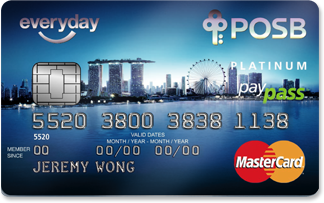
POSB Everyday Card

POSB Everyday Card

Who say you need to be a high-income earner to enjoy exclusive discounts? With the POSB Everyday Card, you can get up to 20.10% discount for your SPC fuel.

Total effective discount = 20.10%

UOB Cards

All UOB cards get up to 20.33% off as there is a $3 petrol discount for every $60 gross spend.

Total effective discount = 20.33%


To summarise everything in a table:

Petrol Company Best Credit Card Total Effective Discount
Esso OCBC Plus! VISA & Citibank Dividend Card 21.13%
Caltex HSBC Premier MasterCard/VISA Infinite/VISA Platinum 23.45%
Shell HSBC Premier MasterCard 21.81%
SPC American Express Platinum Credit Card 21.64%


To see the complete list and calculations:

http://www.moneydigest.sg/best-petrol-credit-card/

Read More...

Tips for your Car Insurance in Singapore

Tip on Car Insurance

Do you know the feeling when walking from the closest MRT station towards your house and it simply takes forever? Driving around the island of Singapore is a true pleasure. One hardly ever encounters a traffic jam and generally gets quickly to any desired place. There isn’t any problem with pollution or a high car density. However, driving and owning a car in Singapore can be a costly undertaking. It is not only the car and its license that is expensive, but also the car insurance can weigh heavy on one’s finances. No matter how much money one has – there isn’t any chance that one can lower the government-imposed charges for the usage of the car. Therefore, it is even more important that one finds a beneficial deal for the car insurance.

The first trick to safe money is the oldest one in the book – drive safely. However, many people are not aware of the system that car insurances around the world use. If one has a car accident, the rate one has to pay monthly or yearly is instantly increased. If you are driving safely around Singapore over a long period of time, your car insurance will remain the same or even shrink slightly. Those people, who tend to crash their car, will not only pay for the reparation, but also for the continuously increasing car insurance. Many car insurances offer a no-claim discount (NCD). This allows for a 10% discount for every year in which you haven’t claimed anything. If you for example have only a minor dent in the car, you may want to consider not claiming it from your insurance, as you can possibly save more with the discount. The NCD can reach a maximum discount of 50%, with which one can safe potentially thousands of hard-earned dollars.

Not only being a safe driver, but also being a law-obeying driver can help you with the insurance. Fancy and fast cars are extremely attractive in Singapore, but even if you have one of those racecars, you are still subject to the speed limits. If you have a clean license over an extended period of time, you can earn a further discount instead of another ticket. After three years driving without committing a traffic offence, you can get the Certificate of Merit (COM), which brings you a further 5% discount on top of NCD. Using all this saved money, one can buy a ticket for the Formula 1 Race in September and enjoy proper racing.

When you are arranging a new car insurance policy, then pay attention to what you actually commit. Many policies often include unnecessary points. Go through them and use your commonsense. It can be that your car insurance also covers you for something that you are already covered for. A personal injury policy within your car insurance is very good, but a total waste of money if your health insurance already takes care of you in the case of an accident. Being covered twice for the same cause will not bring you double money and doesn’t mean you can claim it twice. Furthermore, one should check exactly what policy covers what points. When renting a car, one might be already covered in the case of an accident through another insurance. Different policies might have different names, but cover actually the very same thing. A rental-car insurance might include the same points as a collision policy. Therefore, it is very important, if one wants to save money, to double check the covered points in a insurance. Furthermore, one should eliminate all unnecessary points.

Car and accident statistics aren’t the best friends of young drivers. Unfortunately, an inexperienced young driver has the tendency to crash a car more often than older and more experienced drivers. This results in a higher insurance policy for younger drivers in general. Even if you are driving perfectly, you are paying more by default. Therefore, it is advisable to let your experience on the road be reflected in your policy. If you have been driving for more than ten years without any accident, then you should make a point of it in your new insurance. Not everybody has the possibility to do so, but there is another trick. One can for example insure the car on another person or include a driver with more experience into the policy. Mixing a high risk and a low risk profile will in most cases reduce the insurance. Therefore, one should check who is a low risk profile. Statistically older or female drivers will fall in this category. Listing such as the main driver in one’s car insurance policy, can save some money.

Each car is categorized with a certain amount of insurance money that the owner has to pay. It is generally known that the bigger the engine of the car, the higher is this amount. The reasoning of the car insurance companies is the higher risk. Statistically cars with a higher engine are more likely to crash. For obvious reasons insurances are all about statistics. So if you can beat the statistic, you will save some money. Most people will not modify their car, however there are car enthusiasts that do. A simple engine tweak or any other car modification can quickly become very expensive. What seems like a body shop bargain, can become a killer within the insurance policy. Therefore, it is worthwhile to check with your car insurance whether an upgrade is necessary.

Of course one could say that the insurance company doesn’t have to know. This is however an extremely risky undertaking. In case you do have an accident with your modified car and you haven’t notified your insurance about it, you can loose your cover immediately. Even if you haven’t caused the accident, the insurance company can refuse to pay anything. Hence, one shouldn’t modify outside the regulations of the Land Transport Authority (LTA) and definitely not keep it a secret. Handling your car insurance correctly doesn’t take too long and can award you with some extra cash.

Read More...

Learn to live within your means when you retire

Learn to live within your meas when you retire

Many people cannot imagine themselves to be retired. It may be so many years away that it does not resonate to the current ideology of working hard for success and financial freedom or to simply stop working.

There are two kinds of retirement: by choice or by circumstances.

If you choose to (or not to) retire, it means you have either achieve financial freedom or you have relieved yourself from most financial obligations such as paying off your mortgage and raising your child to legal age. You may also choose not to retire as you gain satisfaction from working incessantly till the day your body can no longer take it physically. Alas, you throw in the white towel.

Like it or not, the truth is you may also fall in the latter category. With bills to pay and mouths to feed, you try to impress your superior so that you can keep the job as long as you could. Unfortunately, besides culminated years of experience, you are also the few who has inflated the labour cost of a company. In contrast, a fresh graduate costs much less and has more drive and in a company’s perspective, it makes complete economic sense to choose the latter. Fortunately, in Singapore you are protected by the Retirement and Re-employment Act. Under section 7a, your employer should offer re-employment when you attained the specified retirement age of 62, until age 65 or up to 67 as may be prescribed by the Minister. Of course, your work must be satisfactory and you must be healthy in order to be re-employed. What if you are completely debilitate by common illness such as diabetes? Stroke?

Whichever the case, learning to live within your means when you retire is important. You need to ensure your money is sufficient to cover you until the day you call it quits. You don’t want to blow the last candle on your 80th birthday cake knowing that you have spent the last dollar on it,

Here are 8 tips to make sure you live within your means.

Create a retirement budget plan

Look you may have done this when you first started working but circumstances has changed, your income and expenses are no longer the same. Without a budget plan, you simply cannot predict (or to be as accurate as possible) when you will finish exhausting your retirement reserves. And that is dangerous or just plain irresponsible on your part. Start off by aggregating your sources of recurring income such as CPF, stocks dividends, rental income, proceeds from your business and interests from you cash reserves.

Track your expenses

To complement your budget plan, you need to be able to track your expenses to make sure you are in line. There are free money management apps available on your phone which you can use. So you can do away with the traditional way of budgeting with pen and paper and not worry that Alzheimer or Dementia may take them away.

Spend less than you earn

With the two tips above in place, spending less than you earn should be easily achievable. But don’t count on it should you decide to travel often and hit the greens every weekend. It is paramount to make sure that money that goes out is less than the money that comes in so that you will not deplete your retirement savings faster than you are even aware of it.

Don’t keep up with the Joneses

When you retired, you will have an army of retirement kakis (buddies) that are in the same boat as you. You will go golfing, play chess, go fishing and even travel together so no one will blame you when you want to get that Rolex that your buddy has or if you want to buy the most expensive golf equipment to unleash your Tiger-Wood-Skills in Sentosa Golf Club or in your state-of-the-art home theater with your virtual golf simulator. I won’t be surprised when you also pick up expensive hobby such as a punt in the casino when you see your ‘Chow Yun-Fat’-inspired buddy visit the casino daily. These activities are extravagant and while it is acceptable to occasionally indulge yourself, overdoing it will be detrimental to your retirement goals.

Form a saving group

Rather than a group of kakis trying to keep up with one another, why not do it the beneficial way? Form a saving group that reward the one that save the most for the week. A beer or even a treat to an afternoon high tea after living frugally for a week? I will take it.

Look out for free stuffs

Who say you can only keep yourself entertained by spending money? There are many community and social centres that regularly organise activities for the elderlies. Activities such as karaoke, mahjong session, excursions and road trips are easily available so make full use of them. If not there are also many attractions such as the National Orchid Garden, Malay Heritage Centre, or the S.E.A aquarium that offer senior citizens a discounted entry. You can also organise a fishing trip, a chess session or simply parading the birds in birds-singing corners.

Make use of senior citizen benefits

Besides having a concession travel pass, make sure you are savvy enough to know what are the privileges and benefits that are available to senior citizens. Some examples are the 2% discount for your shopping at NTUC Fairprice on Tuesday when you are aged 60 and above, 10% discounts at Watsons and 5% at Unity or Guardians, CHAS programme for the pioneer generation or even catching a movie at discounted senior citizen price.

Monetising your homes

Often viewed as a last resort, your home is an asset which you can monetize when you are asset rich cash poor. There are various options available for right-sizing. You may consider selling your HDB flats and move in with your family members to get the Silver Housing Bonus (SHB) of up to $20,000 to top up CPF Retirement Account. You can also join the Lease Buyback Scheme (LSB) where you sell part of the lease back to HDB and retains a 30 years lease. More info here: http://www.hdb.gov.sg/fi10/fi10325p.nsf/w/MaxFinancesOverviewLeaseBuyback?OpenDocument

There are also alternatives such as renting out your spare rooms and reverse mortgage that is currently in reviewed.

As you reflect on your retirement options, make sure you work towards creating a strong pot of retirement funds. While money is not everything, you would not want to rely on others if given the option to. Start saving for your retirement now and of course, don’t be penny wise and pound foolish.

Read More...