In UK, Oil is Cheaper than Packed Water

Can there be an economy where oil is cheaper than water? If yes, how will it affect its countrymen?

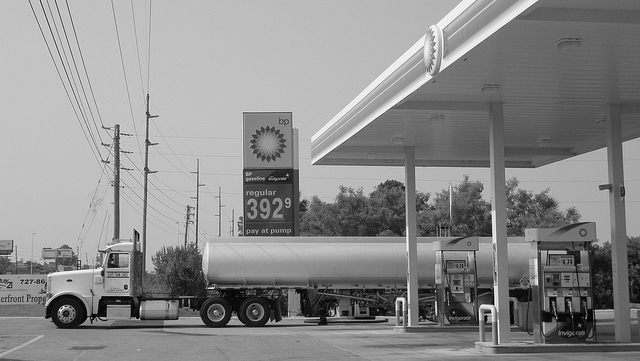
According to United Kingdom’s The Independent, a British national newspaper publication, Oil by barrel is now cheaper than the 6 packed bottles (1.5 liter each) of Evian Natural Mineral Water.

A liter of bottled water costs about 42 Pence (S$87 or US$0.66), while it costs about 24 Pence (S$0.49 or US$0.38) a liter for gas…that is 40 percent cheaper!

The price of oil has notably collapsed, affecting every single person in the country. A market analyst for Reuters named John Kemp, highlighted the bizarre state of economy on Twitter saying that not only that the current oil price represented “an unsustainable low level” – but that it was “impossible to predict how low prices might fall”.

Image Credits: Daniel Oines via Flickr

Image Credits: Daniel Oines via Flickr

This is not the first time it has happened globally.

In 2011, Saudi Arabia’s petrol costs about 0.45 Saudi Arabian Riyal or 0.16 Singapore Dollars and 0.12 United States Dollars, which is absolutely much cheaper than bottled water. Saudi’s government spends SAR26 Billion on water subsidies every year to keep down their citizens’ water bills (Finfacts, 2011). That is equal to S$26 Billion.

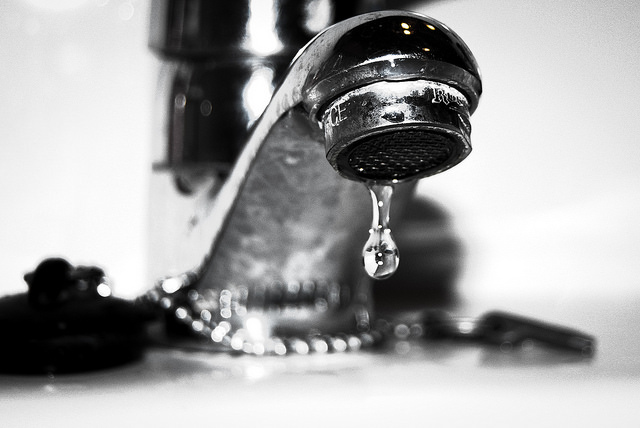
An interesting thought is that unlike any other countries in Southeast Asia, the tap water in Singapore is safe to drink. We can just get a glass of tap water then refill it for free. But, a liter of bottled water in the supermarket is still more expensive than United Kingdom’s liter of oil today.

Image Credits: Luis via Flickr

Image Credits: Luis via Flickr

Although this economic state in UK may cause lower annual prices of other goods easing the cost of living of the citizens…the falling energy prices may result to inflation and threaten the financial stability of the whole country. The Bank of England backs up this statement of warning.

Read More...

Snapchat’s Snapcash lets you transfer money fast!

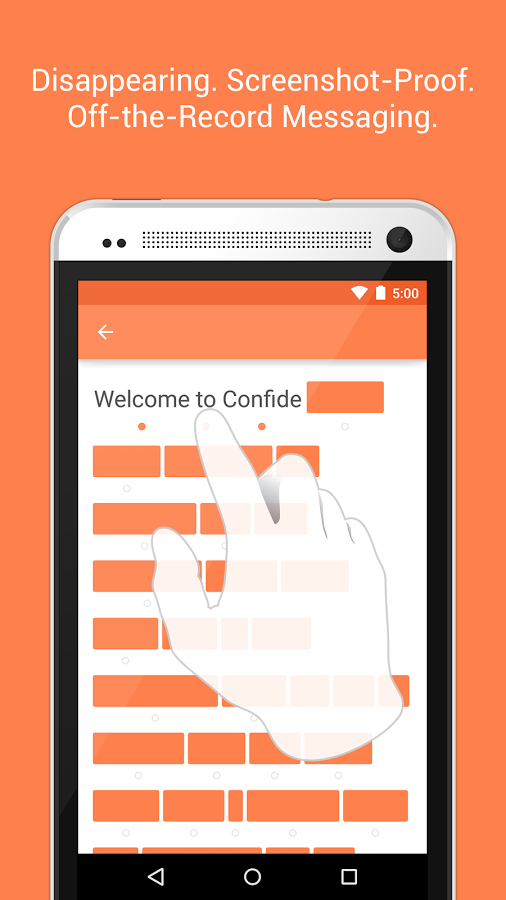
One of the widely used Social Messenger App in Singapore (especially for the youngsters), is Snapchat. Recently, Snapchat has unveiled its new feature called Snapcash that allows its users to send money to their Snapchatting friends.

We all know how Snapchat works: you take a photo or a video of yourself; you send it to your friend; and, seconds later, it will disappear as though it never existed. So, will sending money be as quick as that?

Snapchat partnered with Square, Inc. to revolutionize fast mobile money transfer. Square is a company, which permits individuals and merchants in the United States, Canada, and Japan to accept offline debit and credit cards on their iOS or Android smartphone or other tablet devices.

Snapcash via blog.snapchat.com

Snapcash via blog.snapchat.com

For now, Snapcash is only available to users in the United States who have debit cards and are 18 or older.

How does it work?

Users must enter their banking details to a Square account first. Then, to send cash, Snapchatters must type the dollar sign with the amount (e.g., $12), and click the green button. This shall be done through a private message.

The good thing is that Snapcash messages don’t automatically disappear. Although, once you send money through, there is no way to cancel the transaction. So, be careful.

Another cool way to send money is by using the app’s “swipe-to-send” feature by typing three dollar sign into the chat window, like this video below:

Oh, it’s like tossing play money around—except it is real!

Snapcash is fast, fun, and incredibly simple. At least that is what Snapchat says. What do you think? Is it a good idea to bring this feature in Asia?

Read More...

How to save on your electricity bills

How to save on your electricity bills?

Before we go into the various methods on how to save electricity bills, let us find out what are the appliances that consume the MOST electricity.

According to the National Environment Agency (NEA), the three appliances that consumed the most energy are air-conditioner, water heater and refrigerator – with the former consuming the most electricity.

If that is really the case, what should be done to reduce the consumption?

Lets find out!

1. Set your air-conditioner thermostat to 25°C or higher

Singapore is a humid place and at times it can get really hot and stuffy in a room. Use the air-con if you wish, but you don’t need to turn your room into a Nordic country by setting your thermostat below 20°C to be comfortable. Set the temperature to 25°C or higher. Do you know that for every degree raised, you save an estimated of $15/year? If you can replace your air-con with a fan, bring your family out for a feast at the end of the year with the moola saved.

2. Reduce the use of heat-emitting appliances

Heat emitting appliances like iron, hair dryer, tumble dryer, induction stove and water heater uses lot of electricity. Here’s how to reduce the use of each appliances.

A. Iron
Instead of ironing clothes, try this – hang your clothes on plastic hanger and place them in the bathroom when you take a hot shower bath. Make sure the window and everything is close so that steam stays in the room. It takes about 10-15 minutes for your clothes to be wrinkle-free.

B. Hair Dryer
If you have long hair, drying it after a shower is a pain. Hair-dryer will usually do the trick but it is actually one of the main culprit for inflating your electricity bill. Try using a super-absorbent microfibre brush to comb your hair after a shower or wrap it up with a microfibre hair turban.

C. Tumble Dryer
Of course, you can hang your clothes on the traditional bamboo stick method. It’s the best method that does not consume any electricity. Also make sure you use the high-spin method on your washing machine as the electricity used to create the extra spins will be less than the electricity used to generate heat from a tumble dryer.

D. Induction Stove
Use a gas stove if safety is not an issue.

E. Water Heater
There are a few ways to save electricity consumed by the water heater. Here’s a few:
Use a smaller size heater because electricity consumed is based on the amount of water heated. Switch off your water heater immediately when not in-used. Keep thermostat at medium level and use heat insulating water pipes to prevent heat loss. Lastly, if you want to save water and electricity, go to Sembawang’s Hot Spring.

3. Fill up your refrigerator’s empty spaces

Who say less is always going to save you more money? For a refrigerator, it works the other way. First, you need to understand some physics on how heat moves in air. Air is dense and not a good conductor of heat, thus they moved by masses of warm and cold air trading places. In an empty fridge, lots of trading takes place when you open your fridge. If it is full, heat can only be transferred by conduction.

You can fill up your fridge with jug of waters, ice packs, or any empty containers and bottles so that there is no room for hot air to enter and replaces the cold air – which saves the energy to pump the extra heat out of the refrigerator.

4. Use a LED TV instead of a Plasma TV

A Plasma TV consumes more electricity than a LED TV because electricity is used to charge up every gas cell in a Plasma TV whereas in a LED TV, the light is independent and shared across in an efficient way.

A Plasma TV also generates more heat than an LED and if you keep your air-conditioner on the entire day, it uses more electricity to cool the room temperature.

5. Off appliances on standby mode

Appliances on standby mode contributes about 10% of a household energy use. Turn them off when not in use. Common items are laptop, TV, radio and heater.

6. Submit your own meter reading

Once every two months, SP Services will send someone to read the electricity meter located outside your house. The readings are estimated on months that meters are not read. To prevent overcharging, you can actually submit the reading yourself online to via their phone services.

Read More...