

Financial Intimacy: How To Mix Love With Money

Relationships and investing are both complicated and mixing the two can either be a home run or a recipe for disaster. As Michelle Singletary, author of Your Money and Your Man: How You and Prince Charming Can Spend Well and Live Rich, once said:

“Couples want to know should they have his, hers, or ours, or all of the above. They’re not sure how to manage it. And that’s where a lot of the arguments come in, especially if there is uneven income earning between the two.”

Sometimes an individual may feel like a child receiving an allowance from his or her spouse, but it turns out that the person simply cannot handle money well. The situation can be resolved if both parties begin to be accountable for their money. Aside from this, here are some tips to boost your financial intimacy:

1. INTERVIEW EACH OTHER

Upon entering a serious relationship, you must discuss about your perspectives on money, spending habits, and sharing costs. This will make talks about financial issues easier as time goes by – especially if you are planning to spend the rest of your lives together.

For couples who are about to get married, you must touch on the long-term subjects such as how to enhance your credit scores, how to address retirement, how lavish your wedding ceremony will be, and how do you plan to manage your money.

2. BE COMPLETELY HONEST

Regardless of whether you have joint or separate bank accounts, you must always be honest to your partner about your current financial situation and your ideal financial situation. Tell him or her about your purchases, debts, income, assets and other things that are in your account/s right now. As for your ideal financial situation, relay your future plans such as having annual overseas trips.

Financial intimacy entails full disclosure about your finances including knowing what documents are signed and where the records are kept.

3. SEEK OUTSIDE HELP

When it comes to marriage, you become half of a legal and financial partnership once you say “I do!” This is why Premarital Counseling incorporating a strong financial component is a great help. If you are deciding to purchase a condo or an HDB through your CPF accounts, the financial professional will guide you to good credit score and substantial amount of savings. An accountant during the first year of marriage is also helpful as your taxes can get complicated during the transition from single to married.

Image Credits: pixabay.com (CC0 Public Domain)

Image Credits: pixabay.com (CC0 Public Domain)
Sources: 1,2, & 3

Read More...

How To Preserve Your Currency Collection Effectively

Currency collection is both a hobby and an investment to many people. After reading the “Newbie’s Guide To Collecting Currency In Singapore”, it is time to know about the ways to effectively take care of your collection.

1. HANDLING

Employ some precautions when handling the banknotes and the coins. To pick up your collection properly, you can either use a pair of trusted tweezers with studded ends or wear a pair of cotton gloves. Avoid using your bare hands as it may stain the coins and soil the notes. Furthermore, your collection may absorb contaminants that may damage it.

2. KEEPING

To create an appropriate storage environment for your precious collection, start by finding a dry place that avoids direct sunlight and artificial light. The high levels of ultra-violet rays are not only harmful to us but also to the notes. So store it at a constant temperature of 20-24 Celsius with a relative humidity of 45-55%.

Notes and coins are best kept in small containers, protective holders, and albums. Or you may purchase a safe for your home to avoid paying the recurring fee of renting a safe deposit box.

3. CLEANING

More than anything else, improper cleaning has damaged valuable coins. For example, un-circulated coins should never be cleaned as improper cleaning can cause permanent loss of value, original mint finish, and antique color. This is why experienced collectors and dealers recommend that the experts should only be the ones to polish coins.

4. INSPECTING

To help detect deterioration at its early stages, you must regularly inspect the condition of your collection. Complete repair may no longer be possible if the deterioration is discovered too late!

Image Credits: pixabay.com (CC0 Public Domain)

Image Credits: pixabay.com (CC0 Public Domain)

When you decide to take action, always seek the advice of an expert regarding the cleaning or restoration procedures as unqualified attempts will more likely cause a decrease in its value.

Sources: 1, 2, 3, 4,  & 5

Read More...

5 FUN-astic Activities That Teach Your Kid About Money

Money gives people, of all ages, the decision-making opportunities they need in life. Educating your children to make wise money decisions earlier on will affect their finances in the long run. Why not teach them about money with a hint of fun?

1. CREATE YOUR OWN BILL

Aside from language, art is one of the child’s primary modes of communication. Let your children understand the importance of the design of a note by letting them create their “own S$2 bill”. Use crayons, markers, and pens for this craft. Tell them to use their imagination to decide whose face they shall put in the front and what infrastructure they shall put at the back.

2. USE A PIGGY BANK OR A MONEY JAR

Setting up realistic goals is the foundation to learning about the value of money and saving. Ask your children what they want to buy with their money. After identifying the short-term goal, provide your child with a small piggy bank or a money jar where they can fill up their savings with. Have your child draw the picture of the specific toy on the side of the piggy bank or the money jar.

You may also want to help your child understand that some items will take longer than others to save for. For these long-term goals (e.g., going to Disneyland Hong Kong), provide them with a bigger money jar.

3. SAVE BY SORTING

Based on experience, 3-5 year old kids love to sort things. It trains them cognitively too! Incorporate money in this enjoyable activity by letting your child sort coins in the different denominations of 5, 10, 20, and 50 cents. If your child correctly sorts those coins, reward him or her with your spare change. Ask your child to save this money inside the piggy bank or the money jar.

4. PLAY “FINANCIAL” GAMES

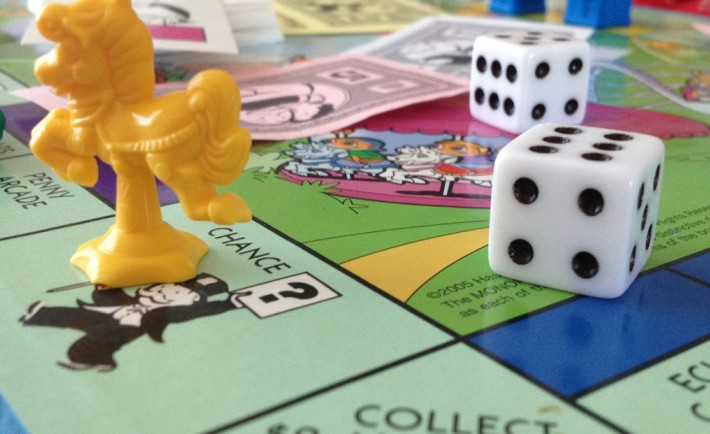
Preaching about money can be a boring subject for kids but if you open up the discussion with a game then that shall stir things up! Play games that teach children about financial concepts. Such games include Monopoly and The Game of Life. They will not only have fun but it will also shape their money management skills.

5. TAKE ADVANTAGE OF TECHNOLOGY

Use technology to your advantage by letting your child watch free videos that teach the basics of making and saving money. For example, your preschooler can learn about salary by following these steps:

a. Describe your job to your children. You may even bring them along one in your workplace and give them a tour.

b. Introduce this video of a farmer that gets paid for supplying milk. This short video explains the concept of money to children in a simple and animated manner.

Or you may print this colorful and informative activity book by Sesame Street.

Sources:  1,  2, & 3

Read More...

The Age-Old Relationship Of Money And Time

If you lived in Singapore long enough, you will realize that time is money! Not in the literal sense. In a fast-paced work driven environment, time is seen as a valuable and finite resource. Since time is irreplaceable, we must accomplish tasks as quickly as possible. You can always make money but you can never bring back time.

Time and money’s dynamic relationship is manifested in different daily scenarios such as these:

a. HAVING TOO MUCH TIME

Experts say that the unrealistic expectations people have with time outweigh their irrationality with money. It is because measuring our lifespan is a complex task. In a study, participants placed more bets when they gambled with their time than when they gambled with their money. Time is such an ambiguous currency that people cannot see its actual worth.

b. HANGING OUT WITH THE CROWD

Financial psychologist Brad Klontz said that: “It’s the herd instinct that influences each of us, particularly when it comes to our wallets.” Generally, we surround ourselves with people with the same monetary habits. If you frequently hang-out with a cautious buyer, you are more likely to learn a thing or two about the importance of budgeting. And that is not a bad thing!

c. POWER OF COMPOUND INTEREST

As an investor, the longer you keep your money on the account, the more you will make out of it. Elevation of your wealth each year is possible because of Compound Interest. This is why it is advantageous if you started young. And if your “younger years” passed, the next best thing is to start now.

d. BUYING A CAR

When purchasing a car, the present value of your money may not be enough. And you will have to make several financial strategies to increase your future value of money. Watch this short video to grasp its idea:

According to Investopedia, “Time Value of Money is the idea that money available at the present time is worth more in the future due to its potential earning capacity”. Provided that money can earn interest, any amount of money is worth more as time passes. Thus, it is important to calculate the Time Value of Money before you start investing.

Sources: 1,  2, 3, & 4

Read More...

Why Is Earning Money A Challenging Task?

COMMON REASONS FOR DIFFICULTY

1. FEELINGS OF INADEQUACY

The feelings of unworthiness and incompetence can drag many people away from accomplishments. If your mental dialogue focuses on these things then it can result to low self-esteem, lack of enthusiasm, and lack of creativity. No matter how much you want to succeed, these results can make you unsuccessful at work.

Your mental dialogue affects your behavior.

2. NEGATIVE ASSOCIATION

Money has been portrayed in media as a currency that most people fight for. Whether the news showcases a bank robbery or criminal dealings, the world has seen how money can make people “bad”. As the saying goes: “Money is the root of all evil.” This negative association fed by the environment is stored in our unconscious mind. If it is something undesirable, your unconscious mind is bound to “protect” you from it.

Hence, the negative association can affect how we deal with money.

3. FINANCIAL FEARS

Most of us are overwhelmed with a certain financial fear. Some of us may take the conscious effort to resolve it. However, many of us do not take the necessary steps to overcome it. They simply allow the financial dilemma to drive their life choices.

Know if any of these fears consume you (click here).

4. THE COMPETITION

One the higher end of the spectrum are the people who earn millions of dollars each year. Sam Wilkin, economist and author of Wealth Secrets of the One Percent, says it is difficult to be as rich as them because of the competition that is present in an open free market economy. Much like United States, Singapore has a highly developed and prosperous free-market economy.

There is a possibility to become immensely rich but you will have to dedicate your life to high-risks and high-return strategies.

STEPS TO TAKE

1. DO NOT FOCUS ON MONEY ALONE

If you take money as your primary motivation to work then, you will be depressed when it is gone or not enough. Focus on the reasons why you earn rather than how much you earn.

2. LOVE WHAT YOU ARE DOING

If you love your job then you will have a positive association with money and occupation. You will find fulfillment in your passion even if you have a relatively small income and long working hours.

3. MANAGE YOUR MONEY

You shall have control over your money and not the other way around. Be wise in saving, spending, budgeting, or opening a business. Instead of a shopping list, make a list on how you can grow your wealth.

Image Credits: pixabay.com (CC0 Public Domain)

Image Credits: pixabay.com (CC0 Public Domain)

Sources: 1,  2, & 3

Read More...