How to Deal with Negative Emotions About Money

Money has a way of tugging at our emotions…sometimes even breaking us down. Recently, I found myself in tears over an academic setback. I had poured a significant amount of money into my studies, only to face disappointing results at the final dissertation stage. The thought of spending even more to fix the situation felt overwhelming.

Negative emotions tied to money can easily spiral into despair, but managing these feelings is essential. Start by examining the impact of your emotions.

#1: EXAMINE THE IMPACT OF YOUR EMOTIONS

Intense emotions aren’t always bad. My initial reaction to failing or needing to revise my dissertation wasn’t “wrong.” Big emotions often mean we’re deeply invested in our lives. However, letting emotions spiral unchecked can wreak havoc on your personal and professional life. When money-related stress takes over, it can lead to:

Strained relationships
Trouble at work or school
Emotional outbursts
Reliance on unhealthy coping mechanisms

Take a moment to reflect. Are your emotions affecting your daily life? Identifying these triggers helps you turn emotions into tools for growth and motivation instead of barriers.

#2: IDENTIFY SPECIFIC NEGATIVE FEELINGS ABOUT MONEY

Our emotional connections to money often run deep, even if we don’t realize it. Start by journaling about your feelings toward debt, spending, and saving. Ask yourself:

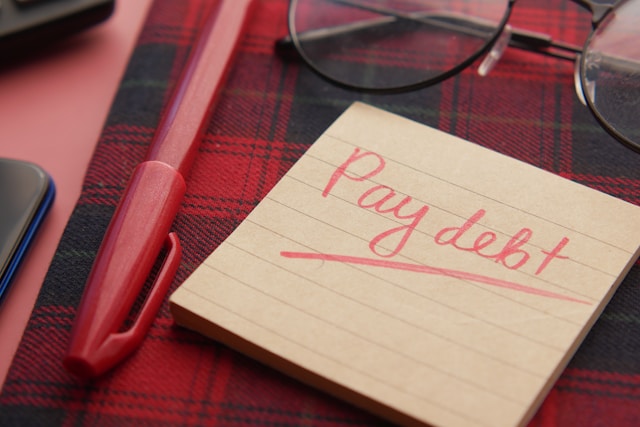
Does your debt make you feel trapped or ashamed?
Do unplanned purchases leave you feeling guilty?
Does budgeting feel suffocating, triggering anxiety or conflict?

Unpacking these emotions can help uncover their root causes. Once you know what’s driving your feelings, you’re better equipped to change them.

#3: PRACTICE EMOTIONAL REGULATION

There’s no switch to turn off negative emotions, but you can learn to regulate them. Bottling up feelings can harm your mental and physical health, causing:

Anxiety or depression
Sleep disturbances
Chronic stress
Muscle tension and pain

Instead, aim for balance. Allow yourself to feel emotions without judgment. Acknowledge them, let them flow, and then refocus. This practice prevents overwhelm without forcing you to suppress how you feel.

#4: REPLACE NEGATIVE THOUGHTS WITH POSITIVE ONES

Once you’ve identified the negative emotions tied to money, work on replacing them with empowering ones. For instance, if debt makes you feel ashamed, strive to feel motivated instead.

Affirmations can help. Start with phrases like:

“I am in control of my finances.”
“I attract opportunities for financial growth.”

It might feel awkward at first, but over time, these affirmations can reshape your mindset and help you feel more confident about money matters.

#5: BUILD RELIABLE FINANCIAL SYSTEMS

Systems can take some of the emotional weight out of managing money. Small steps like setting up autopay for bills, automating savings, or enabling low-balance alerts can make a world of difference.

However, don’t “set and forget” your finances. Schedule a weekly check-in to calmly review your financial situation. This routine helps you stay proactive and prevents money worries from spiraling.

#6: JOIN A FINANCIAL SUPPORT GROUP

Money stress is incredibly common, yet many people avoid seeking help. Luckily, online resources make support more accessible than ever.

Consider exploring:

Financial literacy courses, like those FREE from the Institute for Financial Literacy
Budgeting communities on social media
Credit counseling services, such as CCS.org.sg
Being part of a positive, informed community can help you develop a healthier relationship with money. Remember, you’re not alone—sharing your challenges and successes makes the journey less isolating.

Image Credits: unsplash.com

Dealing with negative emotions about money takes time, self-awareness, and intentional action. By reflecting on your feelings, building solid financial habits, and leaning on support systems, you can turn money from a source of stress into a tool for growth.

Sources: 1 & 2

Read More...

Best Credit Cards for Beginners in Singapore

In a 2022 survey by the Institute of Policy Studies and Talking Point, 35% of participants admitted to spending more than they earned, with over 60% stating they used to subscribe to “buy now, pay later” (BNPL) schemes. How serious is the prevalence of these schemes? According to the Monetary Authority of Singapore, BNPL transactions reached around S$440 million in 2021. With the growing popularity of BNPL, navigating credit card ownership has become trickier, especially for younger generations.

If you’re a Gen Z, a younger millennial, or a guardian looking for the right credit card for a young adult, consider this guide to credit card recommendations and tips.

START WITH THE ELIGIBILITY

While requirements vary between financial institutions, these are the most common requirements:

a. Minimum Annual Income: typically S$30,000 for Singapore citizens/PRs or S$45,000 for foreigners
b. Minimum Age: at least 21 years old
c. Good credit history: Certain cards may require a solid credit record of several years

IDENTIFY THE RIGHT CREDIT CARD FOR YOU

Identifying the right credit card can feel overwhelming because of the variety of options in the market today. A good place to begin is by examining your lifestyle. Are you a frequent traveler or do you spend more money on groceries? After identifying the factors that matter to you the most, you can shop around and compare each credit card’s features.

On that note, here are some of the best credit cards for beginners in Singapore:

#1: FOR AVID TRAVELERS: KRISFLYER UOB CREDIT CARD

The KrisFlyer UOB Credit Card allows you to earn 3 miles per S$1 spent on Singapore Airlines, Scoot, KrisShop, and Kris+ purchases. Additionally, you can earn 3 miles per S$1 spent on dining, food delivery, online shopping, travel, and transport. For all other spending, you’ll earn 1.2 miles per S$1.

What’s more? From now until 30 Sep 2024, you can take advantage of a promotion offering up to 31,000 miles and a first-year annual fee waiver (worth S$196.20, including GST) when you spend a minimum of S$2,000 within 60 days of approval (T&Cs apply). Apply for KrisFlyer UOB Credit Card at uob.com.sg.

#2: FOR TRANSPORT AND SHOPPING REWARDS: DBS LIVE FRESH CARD

If you are looking for a credit card that rewards you for transportation and shopping, look no further than the DBS Live Fresh Card. It offers up to 6% cashback on transportation and shopping, along with 0.3% unlimited cashback on every eligible purchase. Keep in mind that a minimum spend of S$800 is required, with a cashback cap of S$70.

Best of all? There’s a promotion of S$150 cashback when you spend a minimum of S$800 within 60 days of card approval (T&Cs apply). This promotion is valid until 30 Sep 2024. Learn more about the DBS Live Fresh Card at dbs.com.sg.

#3: FOR ONLINE & IN-STORE SHOPPING: CITI REWARDS CARD

The Citi Rewards Card allows you to earn 10x points or 4 miles per S$1 on online and shopping purchases. You can also earn 1x point for all other spending. Additionally, you can redeem your points for every purchase via the Citi Mobile App. You will get S$1 with every 440 points.

If you’re interested in applying now, you can receive up to S$450 in cash rewards or 5,540 SmartPoints, plus a chance to win a Rolex Submariner Date 126610 (T&Cs apply)! Hurry, as the promo runs until 13 Sep 2024. Sign-up for Citi Rewards Card at citibank.com.sg.

READ THE ANNUAL FEES

Much like the benefits, annual fees vary across credit cards. Some cards offer no annual fees, while others may waive the fee for the first year. However, don’t automatically choose a no-fee card as you need to compare the features before deciding what suits you best.

Pro tip: Sometimes, you can get the annual fee waived simply by requesting it from your bank. It doesn’t hurt to try!

FINAL THOUGHTS

Getting your first credit card is an exciting milestone, but it also brings new responsibilities. As a newbie, it is important to do your research first before committing to a credit card application. Then, always monitor your spending and stay within your credit limit to avoid financial stress. Lastly, make sure to pay off your balance on time to build a solid credit history.

Image Credits: unsplash.com

Disclaimer: All data provided is accurate as of 10 September 2024. Promotional details are subject to change at the discretion of the respective banks. Please conduct your own due diligence when comparing credit cards and their offers before signing up, as individual lifestyles and needs may vary. Use this article as a guide only. Thank you.

Sources: 1 & 2


Read More...

Good reasons why you should go Dutch from courtship to marriage

couple figurines on top of coins

Ever felt the tension when the bill comes on a date or wondered if you’re being taken advantage of financially in your relationship?

Maybe it’s time to consider or reconsider “going Dutch”.

Some people might think it’s unromantic, but going Dutch (where costs are split equally) from dating to marriage can actually save you down the road.

Why should you go Dutch while dating?
  • Avoiding financial friction

Very simple – avoid potential arguments over who owes what.

By agreeing to split costs, you remove the awkwardness of one person feeling like they owe the other.

This can prevent resentment over time, especially if you’ve got some income disparity between partners.

  • Establishing equality

This practice shows that both parties are invested both financially and emotionally.

  • Building financial independence

Splitting expenses encourages both partners to maintain their financial independence, which can be very empowering for people who value their autonomy.

By managing your finances, you’re better prepared to make joint decisions about money when the relationship gets more serious.

But it’s good to note that going Dutch doesn’t mean you can’t treat each other sometimes.

It’s up to you and your generosity!

  • Reducing financial pressure

By splitting expenses, neither partner bears the full weight of financial obligations.

Going Dutch also lets you both enjoy date experiences together without one person feeling the strain on their wallet.

As your relationship progresses, this habit can smoothly transition into married life, in the area of managing household expenses per se.

Encouraging mutual investment in the relationship

Going Dutch doesn’t always mean a half-half-split.

Find a % that works for both of you based on your circumstances.

two cups of coffee on a tray

Image Credits: unsplash.com

Modern relationship dynamics
  • Shifting gender roles

Come on, it’s 2024.

As societal norms change, traditional gender roles are being redefined, especially in terms of financial responsibilities.

You may have noticed that the expectation for men to always pay is becoming less common.

  • Financial equality in partnerships

When you choose to split expenses, you’re acknowledging that both individuals in the relationship CAN contribute financially.

  • Empowerment and independence

By deciding to go Dutch from dating to marriage, you’re adopting a modern mindset that values individual financial independence.

This practice can help both partners maintain autonomy while building a life together.

In a nutshell, it allows you to:

  • Preserve your financial status
  • Contribute equally to shared goals
  • Avoid potential resentment over money woes

It’s not about being stingy ya; going Dutch offers an approach that can strengthen your bond. By sharing financial responsibilities, you’re working on equality, respect, and open communication. This practice contributes to a lasting partnership built on support and understanding. So, be it future dates or planning your wedding, why not go the Dutch way?

Read More...

Get up to S$500 cash with DBS/POSB with your salary crediting & card spend

What’s better than payday? Free cash! With DBS/POSB, you can now get up to S$500 in cash rewards just by crediting your salary and spending with your POSB/DBS Credit or Debit Cards.

Here’s how it works:

Step 1: Start with S$300 Cash Reward

Register for the promotion from 7 August to 31 October 2024 and credit your salary of at least S$1,600 for three consecutive months to your DBS account. Once that’s set, you’ll be rewarded with S$300 cash! Just contact your HR department to make the switch.

Step 2: Unlock an Additional S$200

After your salary is credited, spend a minimum of S$500 monthly for three consecutive months on your DBS/POSB Credit or Debit Cards, and you’ll receive an additional S$200 cash reward—bringing your total to S$500!

New to DBS/POSB Credit Cards?

If you’re new to DBS/POSB Credit Cards, apply now with the promo code SCAUG and receive an extra S$100 cash reward when you sign up! It’s the perfect way to kickstart your journey toward more rewards.

Reward Payout

Eligible Customers will receive the Cash Reward according to the schedule below:

Don’t miss out—register and credit your salary by 31 October 2024!

Terms and conditions apply.

Switch, spend, and get rewarded with DBS/POSB—because it’s time your money worked harder for you!

Click here to find out more about this offer.

Read More...

How Taxes Affect Your Flexible Retirement Annuity Withdrawals

Planning for retirement can feel like a maze. Each turn brings new financial choices. A key factor is knowing how taxes affect your annuity withdrawals. This knowledge is crucial for optimizing your retirement income and ensuring your nest egg lasts as long as possible.

Read on to learn how taxes affect your flexible retirement annuity withdrawals.

Timing of Withdrawals

The timing of your withdrawals can also play a significant role in the tax consequences. By carefully planning when and how much to withdraw, you may be able to minimize the amount of taxes owed on your retirement income.

Flexible retirement annuity plans allow you to choose when and how much you want to withdraw each year. This flexibility can be beneficial for tax planning purposes as well. For example, if you have a lower income and are in a lower tax bracket for one year, it may make sense to withdraw more from your annuity during that time.

Tax-Deferred Growth

The tax on flexible retirement annuity withdrawals depends on if the funds were pre or post-tax. Pre-tax contributions, such as those made to a traditional IRA or 401(k), are taxed at the time of withdrawal. This means that all your withdrawals from these accounts will be subject to income taxes at the current tax rate.

On the other hand, post-tax contributions, also known as Roth contributions, are not taxed upon withdrawal. Be sure to go to Annuity Rates HQ to see the current rates. This can provide significant tax advantages in retirement, as you will not be subject to income taxes on these funds.

Required Minimum Distributions

Also, consider required minimum distributions (RMDs) when planning your annuity withdrawals. Partial withdrawals from your annuity may satisfy your RMD. But, consult a financial advisor to ensure you meet these obligations.

If you fail to take out the required minimum amount each year, you may face steep penalties and taxes on the amount not withdrawn. Keeping track of your RMDs is a vital part of managing your retirement income and avoiding unnecessary taxation.

Impact of State Taxes

Consider state taxes on your flexible retirement annuity withdrawals, along with federal taxes. Each state has its own tax regulations and rates concerning retirement income, which can vary significantly.

Some states, like Florida and Texas, don’t tax withdrawals. Others tax retirement income at varying rates.

Knowing your state’s tax laws can help you withdraw money more efficiently. It might be worthwhile to consult with a local tax expert to ensure your retirement strategy aligns with state-specific laws.

Social Security Benefits

Another key point in retirement planning is your withdrawal from flexible retirement annuities. They may affect your Social Security benefits. Withdrawing large sums from your annuities could raise your income.

This may increase your tax on your Social Security benefits. This is due to the formula used by the IRS to determine how much of your benefits are taxable, based on your combined income.

Balancing your annuity withdrawals with your Social Security can lower your taxes in retirement. A financial advisor can be invaluable. They should know annuity options and Social Security rules. They can help create an effective withdrawal strategy.

Learning About Flexible Retirement Annuity Withdrawals

Understanding the tax implications of flexible retirement annuity withdrawals is crucial for maximizing your retirement income. By considering factors, you can create a comprehensive plan that minimizes your tax burden and ensures your savings last throughout your retirement years.

Be sure to consult with financial experts and stay informed on current tax laws to make the most out of your flexible retirement annuity.

Visit our website and read more.


Read More...