Expenses You Must Never Swipe On Your Credit Card

I have to admit! Credit cards are convenient, especially at this time. However, swiping your plastic card often costs you more money than other payment options. Regular charges from interest rates and annual fees are coupled by hidden surcharges. The latter are transaction-based fees that can add up!

You must maximize your savings and use your debit card as much as possible. On that note, here are the expenses that you must avoid charging into your credit cards.

#1: EDUCATION EXPENSES

Most schools and universities accept credit cards as a form of payment nowadays. Some even offer attractive interest rates. Just because it is available does not mean you have to use it. During my time, a diploma course in a private institution costs S$10,000 a year. Imagine paying a 3.5% interest per month? This will accumulate to about 51.11% interest in an annum. This is too much, if you ask me.

#2: GAMBLING EXPENSES

Gambling addiction is inside the Psychological manual of Psychologists and therapists. Gambling is there for a reason! It poses an uncontrollable damage on one’s finances and relationships. If you are thinking of using your credit card to cover your gambling-related costs, you are in deep trouble. Go home!

Contemplate on the monthly interest rates you will have to pay on the top of hidden fees. The interest rate will shoot up continuously until you pay your balance in full amount.

#3: MEDICAL EXPENSES

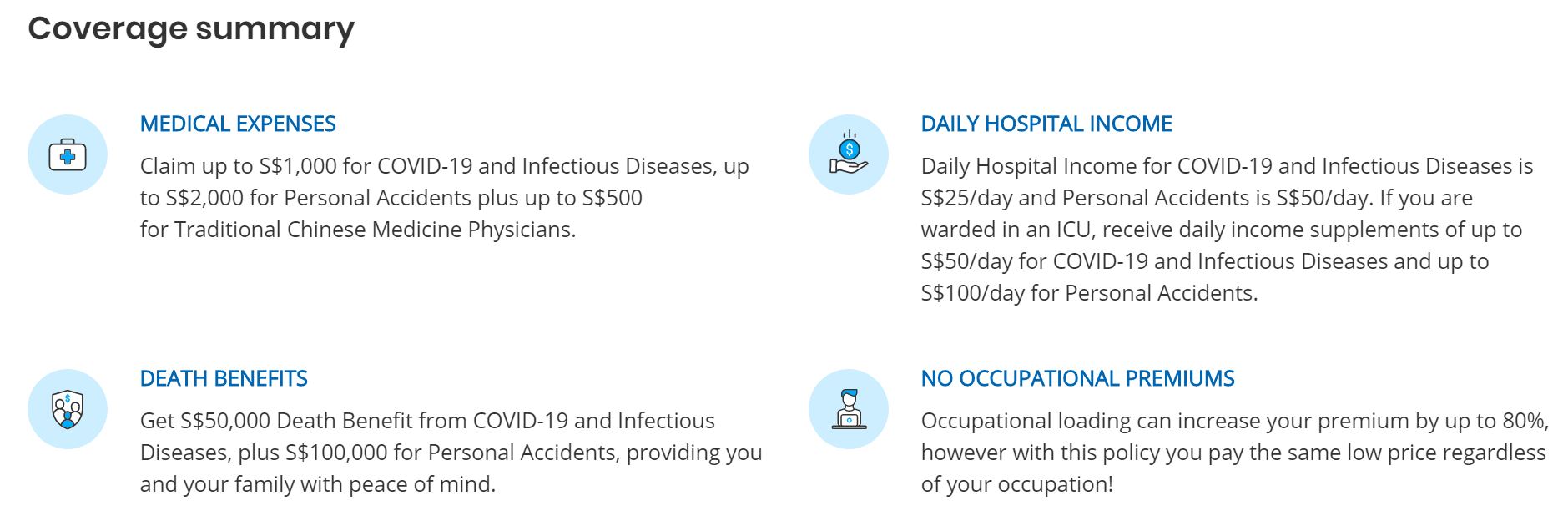
Many experts agree that you must use your Government medical allowance, non-retirement savings, and available cash to pay for medical expenses. If the COVID-19 situation is tough for you, you may get a low-cost loan option too. Medical expenses can immediately put you in a mountain of debt. You cannot simply turn to your credit card to pay for your entire hospital bill!

Image Credits: unsplash.com

As you take in all the above information, it is important to know how to avoid surcharges. Follow these tips.

a. Use a debit card to pay for your retail expense as it directly deducts from your bank account. Another electronic service that rarely incurs fees is NETS.
b. Book your flights using travel points. Use your travel points or air miles when you book for a flight overseas.
c. Use vouchers when institutions do not accept credit card points or rewards.
d. Link your credit card to PayPal. PayPal allows you to link your bank accounts in one place. This way, you will be able to pay the merchant free of extra fees.
e. Search for other businesses that offer zero interest rates on credit card transactions.

May these tips help you shop around!

Sources: 1 & 2

Read More...

Creating A Budget During Extraordinary Times

With non-essential establishments on closure and the economic crisis we are under, how can you employ a system to arrange your cash-flow better? The answer is strict BUDGETING.

A budget estimates your revenue and expenses over a period of time. By listing your sources of income beside your monthly expenditures, you will get an idea on where your money goes. This way, you can make smart financial choices and prioritize your obligations to reach your financial goals.

Creating a budget for the first time is like learning how to ride a bike. At first you are scared to ride the bike without training wheels. Eventually, you will be able to ride a bike on your own without qualms. Although you know cycling is healthy for you, you cannot just ride and go! You must learn about the basics of coordination and road safety. Creating a budget during a pandemic involves steps too. Here are the vital steps to create a working budget:

1. COLLECT YOUR DATA

Gather all the previous salary invoices, credit card statements, utility bills, bank statements, and receipts. Estimate how much you make and spend each month by using these necessary resources. Take note of the changes in the expenses due to the Circuit Breaker (CB) period and allow yourself to incorporate Government allowances too.

Start your budget by calculating your revenue since the CB. Add all your sources of income both from your part-time and full-time jobs (if any). Use your minimum monthly wage as a basis for your budget.

2. SET YOUR GOALS

Set S.M.A.R.T. goals and examine how you will be able to achieve each one. This acronym stands for Specific, Measurable, Attainable, Realistic, and Timely. I want to highlight that you must not make unrealistic and unattainable goals at this time. After satisfying S-R goals, you must budget according to your time-frame. List all your financial goals and divide them into short-term and long-term goals.

For goals to be specific and measurable, you must quantify what you want. For example, your goal is to increase the number of clients that will view your website. You may allot money to Facebook promotion or to hire a freelancer that will create your web design. I suggest that you focus on Marketing as it is more feasible given the limited physical movements that you can make during CB.

3. IDENTIFY YOUR FIXED EXPENSES

For many of us, lessors have postponed the payment of the April rent. You can only imagine the increase in your utility bills as you are mainly staying at home. These essential expenditures are called fixed expenses. Come May, you are looking at a wider range of fixed expenses.

Fixed expenses include rent, utility bill, and insurance. As they are stable each month, allocate a portion of your income to this category first.

4. ALLOT MONEY FOR EMERGENCIES

There should always be a budget for savings, especially for your emergency fund. Savings are your gateway to long-term financial goals and your safeguard against unforeseen events such as COVID-19. Set aside at a certain percentage of your revenue each month to help build a nice nest for your future. I personally recommend at least 10% but you have to give a percentage that you can maintain for the months to come.

5. USE A CLEAR SYSTEM

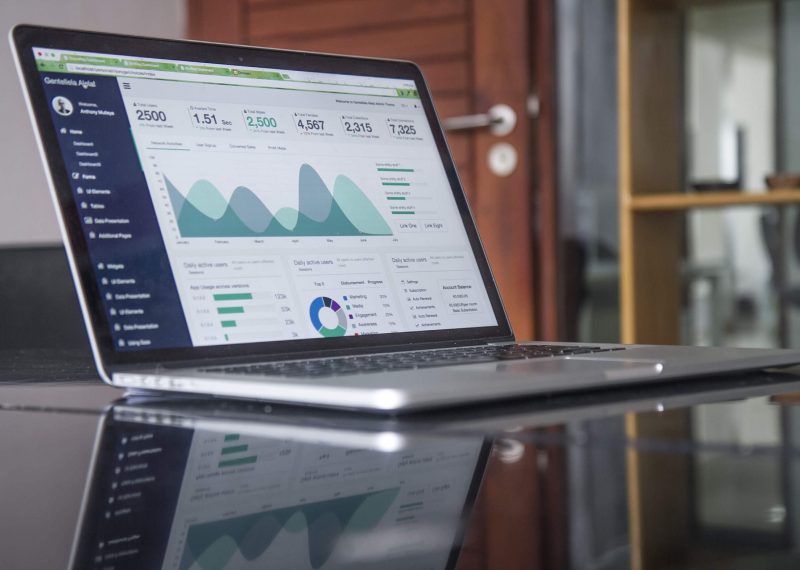
Help yourself navigate through the waves of budgeting by keeping a money journal or by downloading a digital budgeting tool. Supplement your budget with a calculator that enables you to know your cash-flow. It is called the Budget Calculator.

Then, download free apps that enable you to track your spending. Some of these apps are Mint and Spendee.

Image Credits: unsplash.com

No one knows how long this pandemic will last. Hence, you must be frugal with your expenses and eliminate unnecessary luxuries. Moreover, you may look for other ways to expand your income!

Read More...

The One Thing to Do Today If You’re Tired of Being Bad With Money

Do you look at your bank account at the end of the month and wonder where all your money went?

Are you tired of having to deal with banking, choosing a debit card or credit card to use, investments, paying your utilities and bills, getting sufficient insurance, settling your loans and more?

(Man… I got tired just typing this list out.)

In fact, does sorting out your personal finances stress you out so much because you don’t know where to start and have no idea what you need to do?

Well, if you’re tired of being bad with money, then you just need to do one thing today: visit Seedly.

Source: Adventure Time | Giphy

Be Part of Singapore’s Biggest Personal Finance Community

Seedly is home to the BIGGEST personal finance community in Singapore and it’s the only resource you need to sort out your personal finances.

The coolest thing about the Seedly site is that it knows exactly what you need…

All you have to do is just ask. See that Search Bar?

Just type in your query and you’ll find all the relevant information about whatever you wish to find out.

For example, if you’re looking for information about loans, just type in ‘loans’ and you’ll find:

  • Product information and reviews about loans
  • SeedlyReads content about loans
  • Questions asked by the Seedly Community about loans, and even
  • A Seedly Community member named… erm… Loan

Basically, everything you ever need at a glance.

Alternatively, you can also find what you are looking for by Category.

Let’s say you’re looking for a new credit card.

All you have to do is click on the ‘Cards’ category icon:

And you’ll be able to compare between credit cards and read guides on how to choose your first credit card.

There’s no need to waste time trawling the internet in search of information that may or may not be helpful or relevant.

Level Up With the Savvy Seedly Community

Let’s face it, personal finance is a subject that was never taught in school.

So the fastest way to get good at it is to talk to other community members, discuss, and learn the best practices and money-saving hacks from each other.

On the Seedly site, you’ll notice that there are Recommended Questions.

That’s where you’ll find questions which the Seedly community is actively talking about and discussing.

It’s also the perfect place to learn about the newest developments in personal finance and level up by finding out new ways to do things that you might never even have thought of.

Find a topic that you like?

You can follow the topics and questions which you are interested in and receive notifications once someone has something to share.

Oh, and if you see a question which you know the answer to, you can also answer questions to help out a fellow community member!

Read Real User Reviews Left By The Seedly Community

You know how every bank, insurance company, mobile telco and etc. out there claims to have the best product?

Under Recommended Product Reviews you will find honest and unbiased reviews which provide great insight into whether you should REALLY buy that product or not.

Yep. You no longer have to try it out for yourself in order to find out if something’s as good as it looks.

Learn The Latest Money Hacks and Read Useful Guides

Last but not least, you can also get quality personal finance-related content under Recommended Articles.

There, you’ll only find relevant, easy to read, hard-hitting personal finance content that is sure to turn you into a personal finance pro in no time.

Start Today

Having control over your money is one of the best feelings ever.

So if there’s one thing you should do today…

It’s to visit Seedly, be part of the biggest personal finance community in Singapore, and start being in control of your finances.

Read More...

4 COVID-19 News Headlines Worth Reading

From receiving up to S$600 worth of Solidarity Budget to closing down of Changi Airport Terminal 2, here are some of the COVID-19 news headlines that will greatly affect your lifestyle and your budget.

1. “Solidarity Budget: All adult S’poreans to receive extra one-off cash payment of S$300, taking total to at least S$600”

Deputy Prime Minister Heng Swee Keat announced yesterday (April 6) that all Singaporeans above the age of 21 will receive a one-off cash payment of S$600 to cushion the weight that social-distancing measures have caused. This financial step shall cost the Government an extra S$1.1 billion as it increases the Solidarity Budget by S$300.

Singaporeans who provided the Government with their bank account details will receive the payout by April 14. While, the rest will receive the lump sum by cheque from April 30 onward.

2. “Changi Airport Terminal 2 to suspend operations for 18 months amid COVID-19 pandemic”

As the pandemic continues to affect the aviation sector, Transport Minister Khaw Boon Wan announced the upcoming closure of Changi Airport’s Terminal 2 (T2). It will suspend operations for 18 months, starting from May 1. Airlines operating at this terminal will be relocated to Changi’s other tree terminals.

The suspension of T2 operations will allow Changi Airport Group (CAG), its retailers, its airlines and its ground handling firms to save on running costs during this time. Moreover, it will speed up the current upgrading works at T2.

3. “Singapore Expo being prepared to house recovering Covid-19 patients”

Isolation areas have been prepared for COVID-19 patients and those who have been advised to have a 14-day quarantine. Health Minister Gan Kim Yong has confirmed last Sunday (April 5) that the Singapore Expo Convention Hall and Exhibition Centre is currently in the process of being turned into a facility to care patients who are on the road to recovery. This will help ensure that there will be continued hospital capacity to treat patients with severe symptoms.

According to him: “For patients with mild symptoms, generally they don’t need any medical support. In fact, they can actually recover and be cared for in these facilities until they are well and can be discharged, without having to go to the hospitals.”

Let us do our part to heal as one by being responsible for our actions.

4. “Durable, self-disinfecting coating applied on all HDB lift buttons”

One of the things that we frequently touch on a daily basis is the lift button. Teams from Singapore’s 16 town councils applied a self-disinfecting coating to the lift buttons over the past two weeks. This was made possible by the donation of 650 litres of sdst by the Changi Airport Group’s (CAG) philanthropic arm Changi Foundation. The self-disinfecting coating is called sdsr. It kills bacteria, viruses, and fungi upon contact.

Image Credits: unsplash.com

It remains in place, even with repeated cleaning and scrubbing, as chemical bonding agents help it to adhere tightly to surfaces at a molecular level. It is said to last for up to three months. That is one way to keep the HDB lifts and lift lobbies in Singapore safe!

Read More...