
Long-term financial security: 7 key steps to follow according to CNBC’s personal finance journalist

Financial Security Budget

Has the pandemic led you to think more about how you manage your finances? If you’ve been recently thinking about long-term financial security, this article might help.

As advised by CNBC’s personal finance journalist, Carla Fried, here are seven key steps to focus on to help you to work your way towards long-term financial security:

Step 1: Set short-term and long-term goals

Think about what would make you feel great money-wise. Next, list down your goals before deciding whether they fit into the short- or long-term.

Short-term goals

This could fall under plans that you can reach in a few months or by next year. Consider putting in place an emergency fund that can cover at least three months of your current living expenses.

Long-term goals

Do you find your salary gone up in smoke after a few days from payday? Time to look into saving at least 10% of gross salary every year for your retirement.

Step 2: Create a budget

Set a budget and stick to it. A budget exists to lay everything out in front of you so you can see for yourself the ins and outs of your balance. If needed, make little changes to help you stay on track to meet your goals.

Step 3: Build an emergency fund

We briefly mentioned this in step one – it’s good to have at least three months’ worth of living expenses saved in your emergency fund. With that said, of course, the more the merrier. If you can afford three, see if you can save up for six months and beyond.

Step 4: Pay off costly credit card debt

This applies to you if you have credit card debts to pay off. You don’t want to let the interest rates roll by delaying repayment of what’s due.

Step 5: Save for retirement
Retirement

Image Credits: MoneyOwl

As stated earlier in step one, it’s right that you start saving for retirement. If you’re the sort that rides on ‘YOLO’, think again.

The writer suggests these steps to take at different life stages:

IN YOUR 20s:

Start saving at least 10% of your gross salary ASAP.

IN YOUR 30s:

Aim to contribute 15% of your gross salary.

IN YOUR 40s:

Having at least two to three times your annual salary saved in retirement funds.

IN YOUR 50s:

By 50, you should have six times your salary saved. By age 55, have seven times your salary saved.

IN YOUR 60s:

By age 60, have eight times your salary saved. By age 67, have 10 times your salary saved.

Step 6: Invest for retirement with a long-term focus

Your body won’t be able to keep up with the work when you’re old. Investment is the way to go for a comfortable retirement. Time to look into stocks and/or bonds to reap the benefits 10 years down the road.

Step 7: Borrow smart

To borrow smart, you will need to identify your true needs from wants. Do you really need to get a loan to buy that new car? Or would it be better if you settle for a second-hand vehicle? Or do you even need one in the first place? Ponder over these things.

Read More...

‘Thrive with Grab’: New financial products including the opportunity to invest on the Grab app

Grab logo

Last Tuesday (28 July), we wrote about how Grab might be implementing a 0.32 SGD platform fee on each ride to help cover its costs.

Today (4 August), Grab Financial Group, the financial services arm of the ride-hailing company has announced a few new financial products including a micro-investment scheme that would allow you to invest as you spend on the Grab app.

The new features are part of the ‘Thrive with Grab’ strategy which aims to tap into Southeast Asia’s mass-market financial services opportunity.

According to Grab Financial Group senior managing director Reuben Lai, the strategy will allow consumers to “build their wealth, manage their finances and protect what they value during this uncertain period”.

Here are the deets.

#1: New third-party consumer loan

You will soon be able to access personal loans offered by Grab’s licensed bank partners. The group is working with its bank partners to integrate their application programming interfaces (APIs) so you can securely apply for loans directly from the Grab app.

#2: Micro-investment scheme: AutoInvest

After Grab Financial Group’s acquisition of robo-advisory start-up Bento Invest, they have created AutoInvest. AutoInvest is a new micro-investment product that will allow the public to invest at least 1 SGD per transaction on the Grab app. 

The good news? You will earn returns of about 1.8% per annum and the amount will be paid out to your GrabPay wallets.  

“AutoInvest sets GrabPay apart from other e-wallets by allowing users to invest their wallet balance easily. The invested sum can then be withdrawn at any time, with no penalties, to spend on Grab services or at any merchant accepting the GrabPay Card,” said Grab in its news release.

And of course, nothing comes for free. When AutoInvest rolls out in early September, you will need to pay a fee to use the service.

#3: Expansion of “buy-now-pay-later” payment plans

Following the launch of AutoInvest in September, expansion plans for its “buy-now-pay-later” scheme will also come to play in October.

You can look forward to PayLater Instalments, giving you the ability to split your purchases into monthly instalments. In addition to that, there’s also PayLater Postpaid, where you can defer your payment to the following month. It will only be applicable to selected e-commerce stores in Singapore and Malaysia in October.

The news comes after a report yesterday (3 August) that Grab is raising 200 million USD (275 million SGD) from South Korean private equity firm, Stic Investments.

What are your thoughts on Grab’s new initiatives?


Read More...

Couple finances: 12 questions to ask your partner as advised by renowned relationship therapist

Couple Finances

We can’t deny the impact of COVID-19 on our relationships. Quarantine and lockdowns during this season have inevitably led to an increase in divorce cases around the world. As couples spend more time together under one roof, arguments may happen.

If you’ve had a relatively good relationship with your significant other, use this extended time together to talk about your finances. As advised by renowned relationship therapist, Esther Perel, here are 12 money questions you can ask to have a ‘Financially Ever After’ marriage.

#1: What does having money mean to you?

The perception of money will guide you in the way you handle money. Get this sorted upfront!

#2: What does it mean to be good with money?

Get an idea of how your partner defines ‘good with money’. This is because no two individuals are the same. You guys may have different notions about being ‘good with money’.

#3: Did your family talk about money growing up?

With this question, a lot can be traced back from the good old days. Habits are usually formed as a result of exposure from young.

#4: On a scale of 1 to 10, how would you rate how we spend our money?

If you’re prepared to ask this question, be ready for an honest answer. It may not be a positive one, but a good chance to re-evaluate how the both of you are spending money.

#5: If I spent $100 on something and didn’t tell you, would you be upset with me? How about $1,000?

Your partner may have something to say regarding how you spend your money. It may also boil down to whether you and your partner have merged finances after getting married.

#6: What is your biggest money regret or mistake?

Honesty is the best policy. Revisiting money regrets or mistakes in the past can help realign your money decisions in the future.

Image Credits: partnersunitedfinancial.com

#7: What keeps you up at night about our finances?

Is either one of you exceptionally worried about your current finances? Get it off your chest by sharing with one another and see what you guys can do to solve it.

#8: What will we do when we disagree about money and just can’t see eye-to-eye?

Disagreements are bound to happen. Discussing this in advance will set the path right when unhappy situations arise.

#9: What would we do if one of us were laid off?

Are both of you saving up for a rainy day? If not, talk about plans for emergency funds or even a joint savings plan if a retrenchment happens.

#10: How has the pandemic changed how you think about our finances?

Now’s a good time to re-evaluate your couple finances. Have your plans been disrupted? How will you and your partner recover from the effects of COVID-19?

#11: Do you feel like we’re on track financially to achieve our goals? What are our financial goals?

Personally, I think the second question comes first. Are there even financial goals in the first place? This will then guide you to review whether you guys are on track to achieving it.

#12: What’s one money habit that you admire about me?

Finally, this positive question will help you to round up the conversation on a better note. It also helps both of you to appreciate the qualities that you lack which can be found in the other party.


Read More...

How To Maximise Your Returns Investing In Gold With Everest Gold

The arguments of having gold in your investment portfolio have already been well articulated by scholars, but do you know how to go about doing it in Singapore in a cost-efficient manner?

The traditional way of buying gold jewellery and passing it down to the next generation is highly cumbersome and costly. Purchasing gold bars from a bank and storing them in a vault will not be cheap either. Fret not, your chance to start building your own dream gold portfolio is finally here with the launch of Everest Gold in Singapore.

Traditional Ways Of Investing In Gold

The most traditional way of investing in gold is to purchase and store gold jewellery at home while waiting for capital appreciation. However, this is a costly way of investing in gold because of leakages such as workmanship costs and 7% GST on the purchase price.

The other way of investing in gold is to purchase gold from the banks. However, there is often a minimum quantity to purchase which may put it beyond the reach of retail investors who do not have a significant amount of money to set aside in the first place.

Purchasing gold directly from the banks is also not a cost-effective way of investing in gold because of the significant bid-ask spread and storage fee charged by the bank. Bid-ask spread at the bank could go as high as 30% while storage fees are often levied as a separate service charge at 0.25% of the current portfolio. All these fees significantly dilute the returns investors can potentially make from gold.

An Elegant and Tech-savvy Solution To Own And Trade Gold

To maximise your returns from investing in gold, you should own and trade gold on Everest Gold. Everest Gold is a fintech company working to make gold trading and investment accessible and affordable for retail investors on a secure online platform. Everest Gold uses 999.9 pure investment-grade gold. Its 1kg gold bars are obtained from Metalor Technologies Singapore Pte. Ltd, which is a wholly-owned subsidiary of Metalor Technologies International SA, the leading worldwide precious metals refiners based in Switzerland.

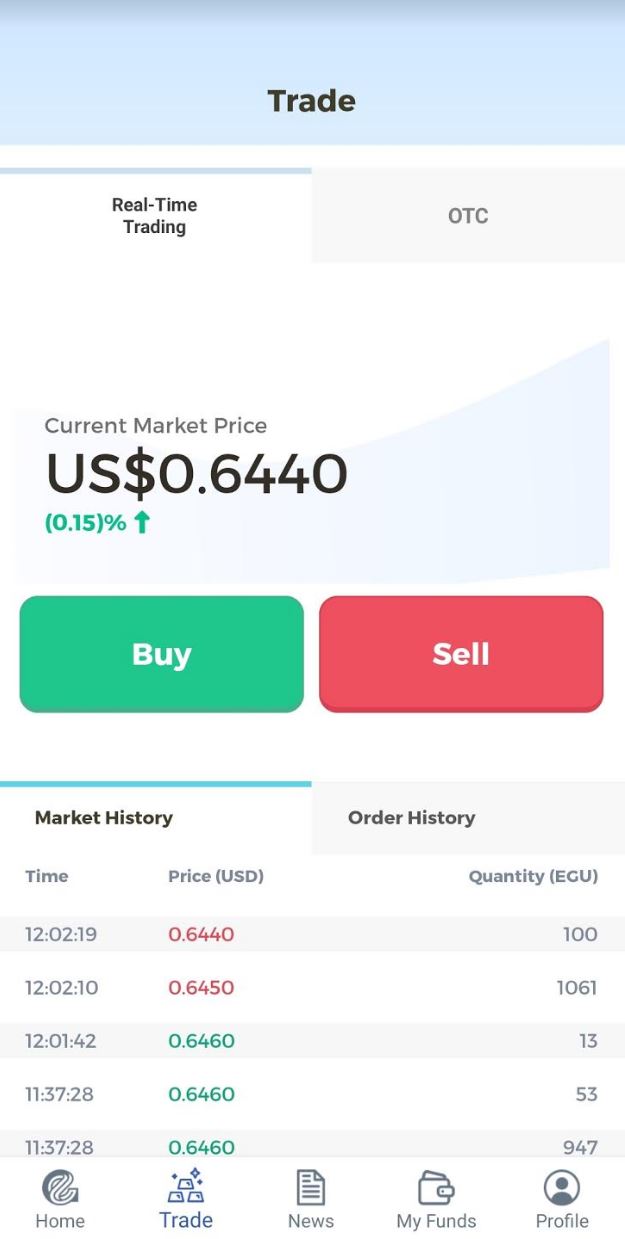
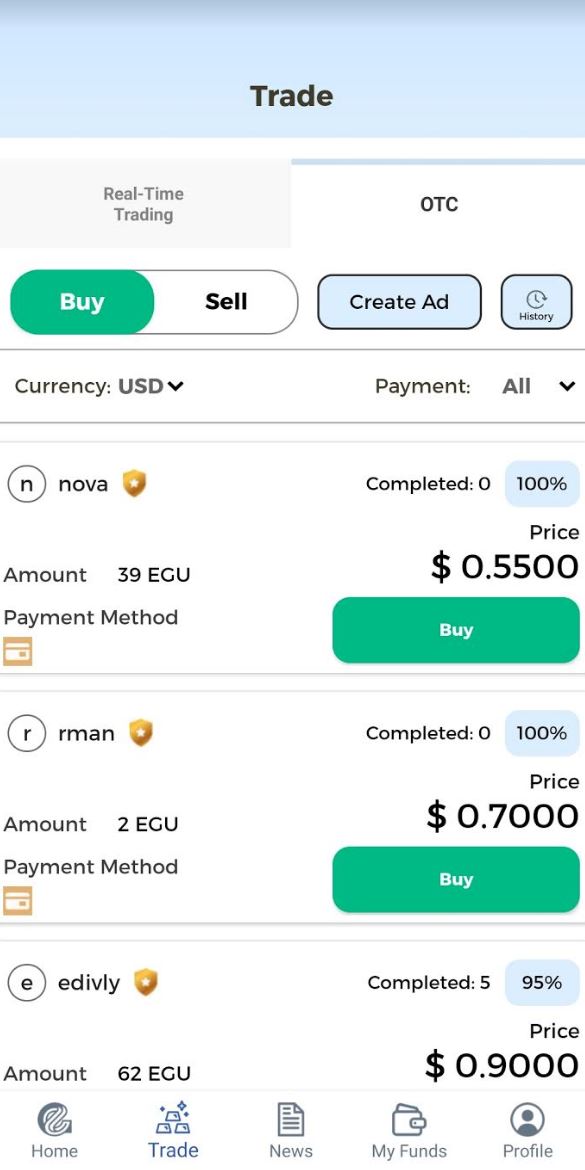
Everest Gold employs advanced technology which allows clients to track real-time gold prices as they seamlessly build, invest, trade and sell their gold portfolios. Here are the key cost advantages of using Everest Gold to invest in gold:

  • Affordable: No minimum amount required such that the capital investment is low. Start trading gold from as low as 0.01g of gold!
  • Trade with peace of mind: Your investment assets are fully insured.
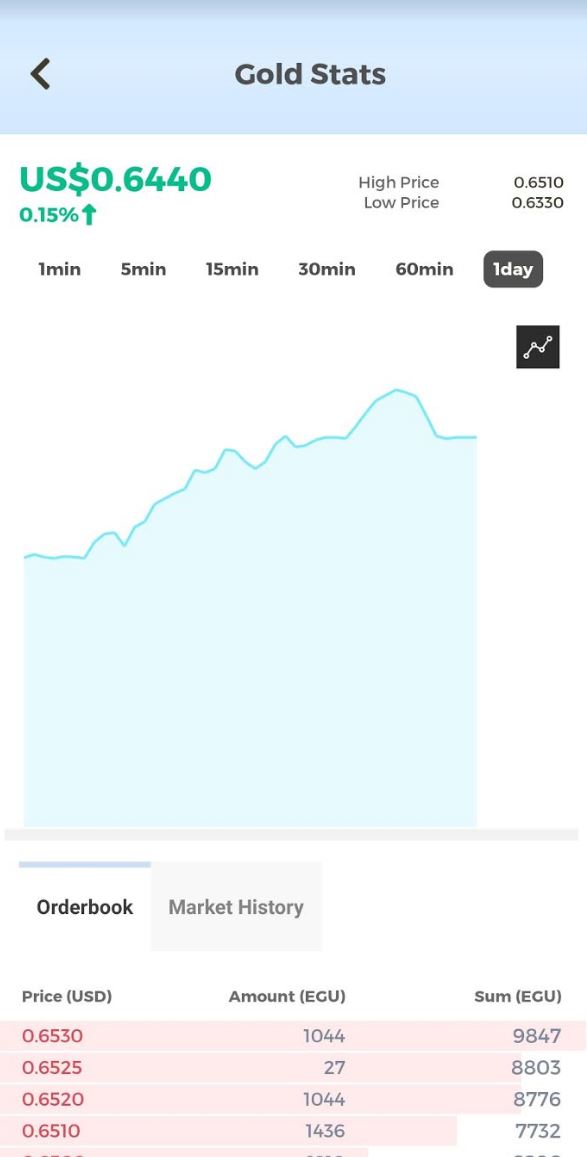
  • Lower gold price: Benchmarked against international gold price, price of gold sold on Everest Gold is significantly lower than banks (USD$0.558 vs USD$0.783 per 0.01 of gold) during its Gold Subscription Event
  • Maximise Returns: No transaction fees mean all your principal are invested in the possible capital appreciation of gold
  • Accessible: 24/7 trade for instantaneous liquidity, something which the banks cannot provide

Additionally, investors do not need any specialised trading experience to yield higher profits when investing in gold via Everest Gold. Everest Gold is truly the most affordable and accessible platform for retail investors to start investing in gold today. Say no to workmanship cost, GST, high bid-ask spread and storage fees once you start investing in gold via Everest Gold.

Everest Gold is available for download on Android, iOS and desktop

For more information, visit https://everestgold.sg 

Enter referral code “WAVTW” when you register your Everest Gold account. Be rewarded with 300,000 reward points (worth US$30) for each successful account verification. Promotion valid till 31 July 2020.

Read More...

Sign your kids up for these useful enrichment classes to teach them about money management

Money management for kids

According to the Ministry of Education’s (MOE) mathematics syllabus, your child would begin learning more about money from primary one. To be more specific, they will start learning how to count in cents up to a dollar, and in dollars up to 100 SGD.

By the end of their primary one academic year, they should be able to solve one-step problems like the addition and subtraction of money in dollars or in cents. But learning how to count is vastly different from money management. While it is part of the learning process, not every child grows up to be a financially literate adult.

If that’s your concern, skip the usual piano lessons and sign your kids up for enrichment classes that can groom them to be better money managers. We think this is an important life lesson that MOE schools may not have placed enough emphasis on. Hence, we’ve sourced out three platforms that offer such classes.

#1: STAR HORIZON
Financial literacy for teens

Image Credits: Star Horizon

Star Horizon offers financial literacy courses for kids, teens, and adults. For the sake of this article, we will focus on their kids and teens syllabus. Feel free to head to their website if you’re keen to learn more about the course for adults.

Kids syllabus (for 9 to 12 year-olds)

Targeting upper primary school students, their kids’ workshop will teach your children about the forms and history of money. They will also learn about how money is earned. In addition, there will be exposure to the importance of savings. Your little ones will be able to differentiate their needs from wants and set their own budget.

Teens syllabus (for 13 to 18 year-olds)

Their teens’ syllabus will target secondary school to junior college students. They will learn about cash-debt management including types of loans, credit card problems, and even bankruptcy. 

The syllabus has also included investment-related topics like shares, unit trusts, and property. Furthermore, your teenager will be able to learn in-depth about risk management and insurance too. To put the icing on the cake, there will be field visits to corporate companies. Talk about positive exposures!

#2: CIVIL SERVICE CLUB
ways-to-make-saving-fun-for-your-child

Image Credits: DBS

Civil Service Club is also another avenue to look out for. They have a course named ‘Introduction to Financial Awareness for Children’. Aimed at children aged 7 to 12, it will provide kids with basic financial awareness. They will also understand how money decisions are influenced and learn to develop wise money management habits.

#3: MONEYTREE
learn about money through play

Image Credits: MoneyTree

Founded in 2008, MoneyTree claims to be the leading financial literacy education provider in the region. To prove their credibility and give you peace of mind, they have had partnerships with MayBank in 2009 and 2016.

Their programs are specially catered for children and youth aged from 7 to 22. However, they work a little differently from the average enrichment schools in the market. They are currently only partnering schools to offer their Financial Literacy in School (FLIP) program.

However, parents or caregivers can look forward to their Financial Literacy Pack launching soon. Instead of sending your kids for enrichment classes, you will get resources from their online learning portal to equip you with lifetime skills to coach your kids on money matters. How cool is that?

Money management is important and it’s good to start them from young. As the famous Chinese proverb goes, “Give a man a fish and he will eat for a day. Teach a man to fish and he will eat for the rest of his life.” Over to you to decide!

Read More...