What On Earth Is A Buyback?

Highlights

  • A buyback occurs when a company purchases its own shares in the stock market.
  • A repurchase reduces the number of shares outstanding. Thus, it inflates earnings per share.
  • A buyback can demonstrate to investors that the business has sufficient money set aside for emergencies.

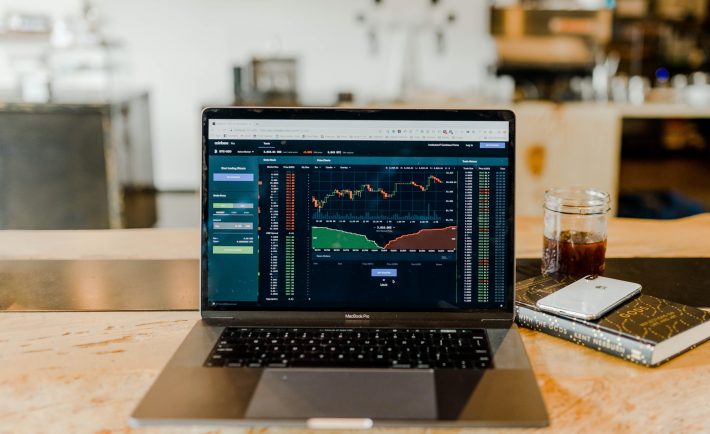
WHAT IS A BUYBACK?

A stock buyback occurs when a company purchases shares of its own stock. It either retains the stock for resale to the market in the future or permanently removes the stock from the circulation.

This process reduces the total shares of stock outstanding and increases ownership stake that each remaining share of stock represents. It increases the value for the shareholders.

HOW DO BUYBACKS WORK?

Stock buyback plans are usually authorized by the company’s board and proposed by its executives. However, a planned buyback does not always occur. In some cases, the target share price a company chooses may not be met or a tender offer may not be accepted.

WHAT ARE THE DIFFERENT TYPES OF BUYBACKS?

The diverse types of buybacks include the on-market and off-market buybacks. The former refers to when a company buys its own shares on an exchange in the ordinary course of trading.

In contrast, the off-market buybacks occur when the company makes its offer directly to the shareholders.

Image Credits: unsplash.com

WHAT IS AN EXAMPLE OF A BUYBACK?

Company XYZ had one million dollars in earnings and one million outstanding shares before the buyback. Thus, it equates to earnings per share of S$1. Trading at a S$20 per share stock price, its P/E ratio is 20.

With all else being equal, one hundred thousand shares would be repurchased and the new earnings per share would be S$1.11. To have the same P/E ratio of 20, shares would need to trade up 11% to S$22.22.

WHAT ARE THE ALTERNATIVES TO BUYBACKS?

Buyback programs have come under scrutiny over the past few years. So, alternatives are important to know when understanding buybacks.

Other options include:

a. Using capital to acquire other companies or securities,
b. Returning cash on hand to investors in the form of dividends, and
c. Re-investing the capital in research and development.

Sources: 1 & 2

Read More...

6 Overlooked Perks Of Using Credit Cards In Singapore

From ease of purchasing items to fraud protection, credit cards offer the several benefits. Just please use your plastic card responsibly!

#1: RECEIVE ONE-TIME BONUSES

Signing up for new credit cards will qualify you for the initial bonuses or sign-up rewards. You can new items or reward points that can be redeemed for travel, gift cards, and more.

In contrast, a debit card that comes with a bank account generally offers no initial bonus or ongoing opportunity to earn rewards.

#2: TAKE ADVANTAGE OF THE GRACE PERIOD

When you make a purchase using your debit card, your money disappears right away. When you make a purchase using your credit card, your money remains in your account until you pay for your bill.

There are two main benefits of having a grace period. Firstly, the time value of money will save you money. Delaying eventual payment will allow you to earn money during the grace period. Secondly, you will have a set period to pay for your purchase. You do not have to watch your bank account balance vigilantly.

#3: BE REWARDED WHEN YOU SHOP

Reward credit cards allow its users to earn points for every purchase. Many reward credit cards give bonus points for certain categories such as restaurants, groceries, or petrol.

When your earnings reach a threshold, points can be redeemed for travel or gift cards to shop at participating retailers and restaurants. All you need to do is to choose a card that suits your spending pattern and your lifestyle!

#4: INDULGE IN THE COMPLEMENTARY CASHBACK

You can get a percentage of the items you purchase refunded back into your account with the credit card’s cashback feature. How much you get back varies per bank or credit card. Nonetheless, rebates usually apply only to certain items.

For instance, Standard Chartered’s Unlimited Cashback credit card* lets you receive 1.5% cashback on your eligible purchases. No minimum spending is required. Another example of no minimum spending is the Citi Cash Back+ Card*. It offers 1.6% cashback on all spending.

Note: *Terms and Conditions apply.

#5: BUILDING OF CREDIT SCORE

When people assess whether you are qualified for a loan extension or not, banks do not just look at your annual income. These banks also examine your credit rating for indications of proper financial management.

By using your credit card sensibly and regularly, you can build reputable credit rating. Enjoy lower interest rates for your unsecured loans by having a better credit score. Be sure to pay off your balances each month and keep your spending to a minimum.

#6: EXTRA LAYER OF PROTECTION

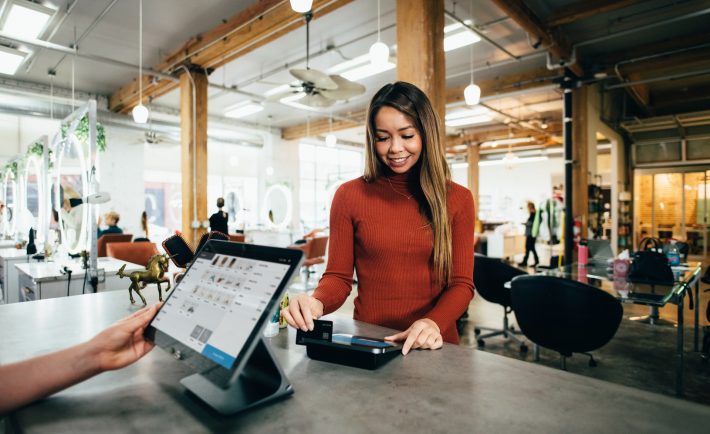
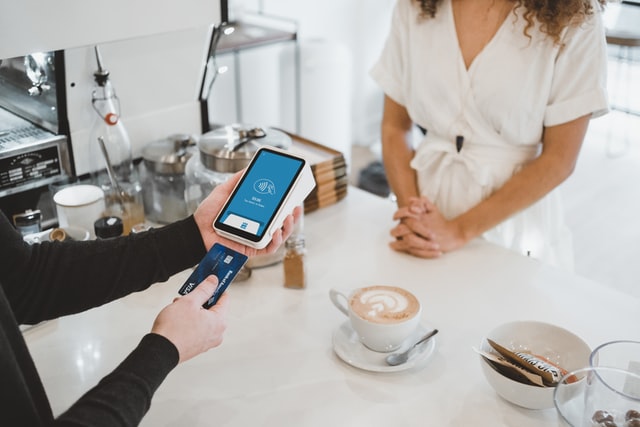
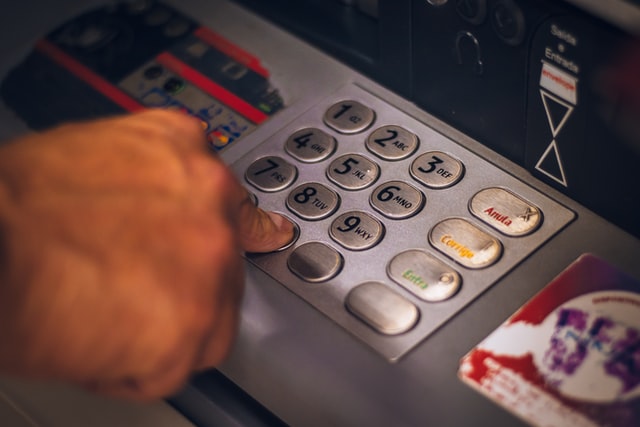
Apart from the convenience that cashless shopping can bring, certain credit cards offer a range of purchase protection insurance. This type of insurance will help ensure your peace of mind as you shop. The following protections can be given by your issuer: a. price protection, b. purchase protection, and c. fraud protection.

Image Credits: unsplash.com

Price protection refers to getting back the difference or a percentage of the difference if an item you bought on your card drops in price within a timeframe. Purchase protection refers to the coverage against theft or accidental damage. This protection usually lasts until six months. Lastly, fraud protection refers to being refunded for purchases made using your stolen credit card or card details.

Sources: 1, 2, & 3

Read More...

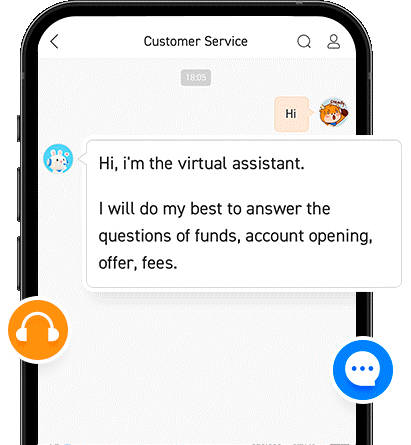
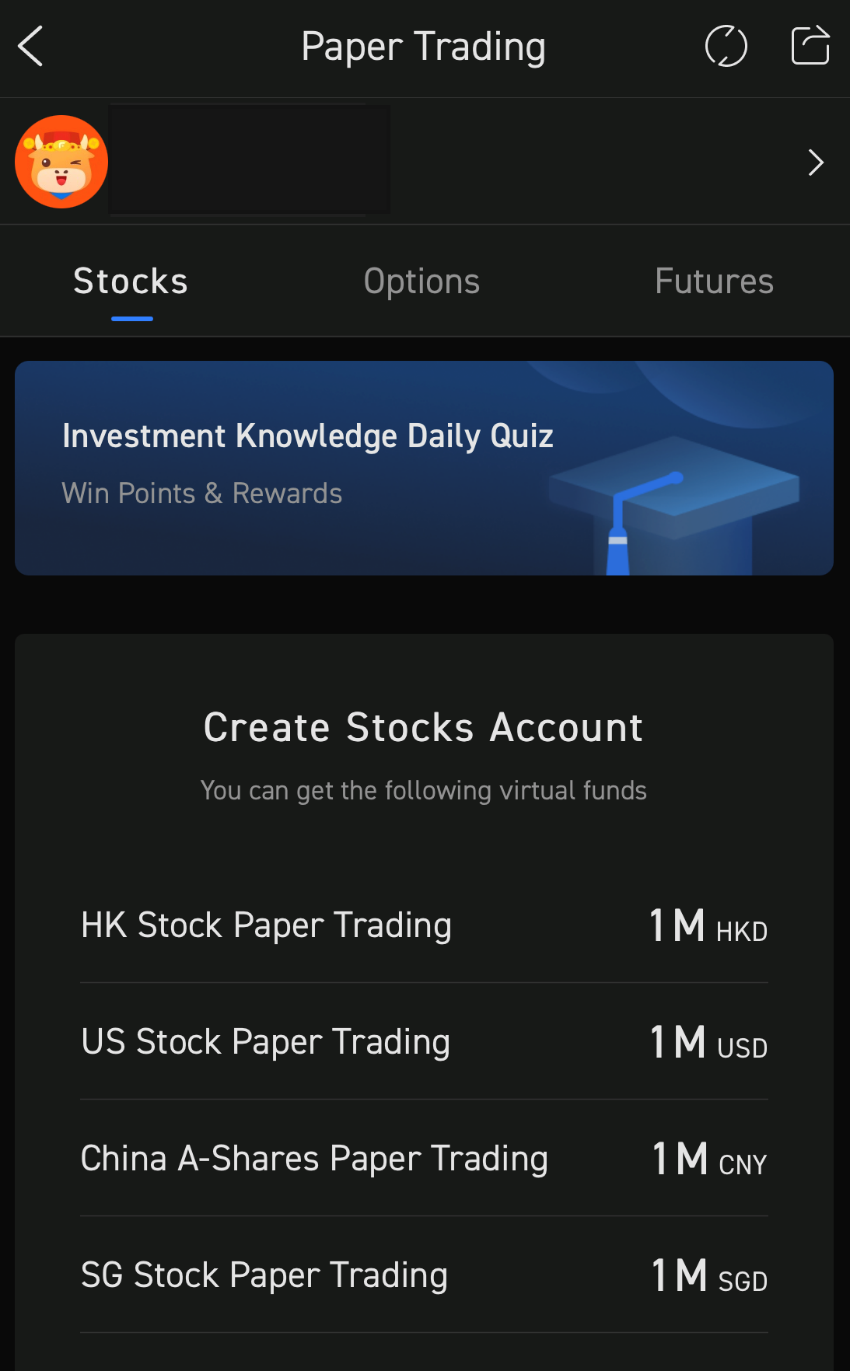
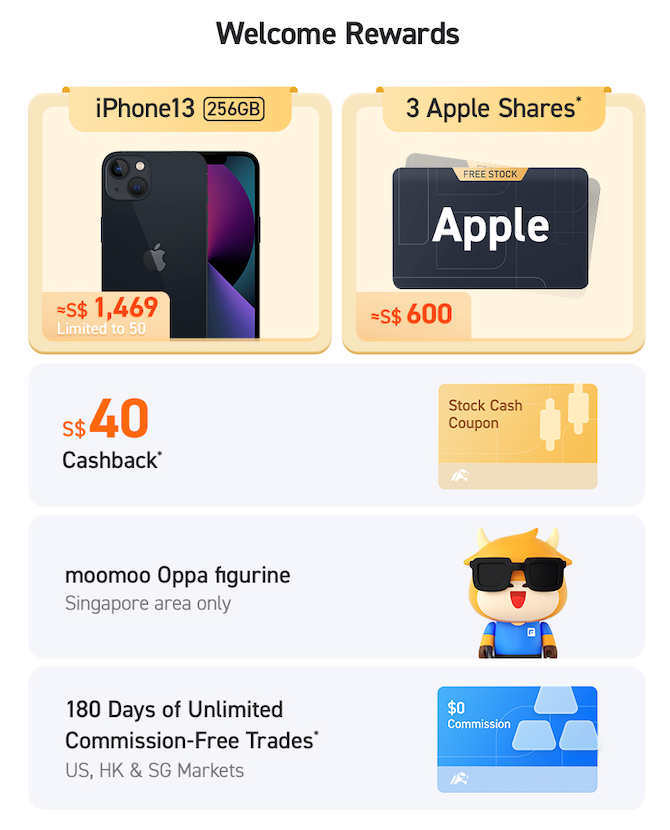
Get a free Apple share worth around S$200 from now till 30 Sep 21

Get rewards of up to S$288 in value! Sounds too good to be true? Read on. 

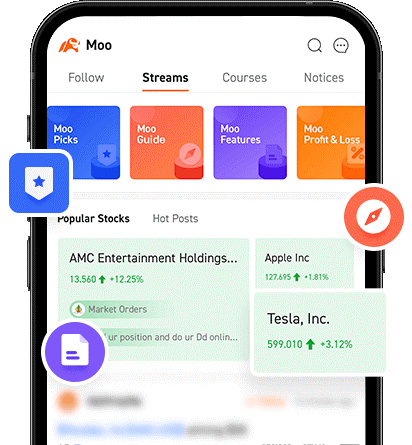
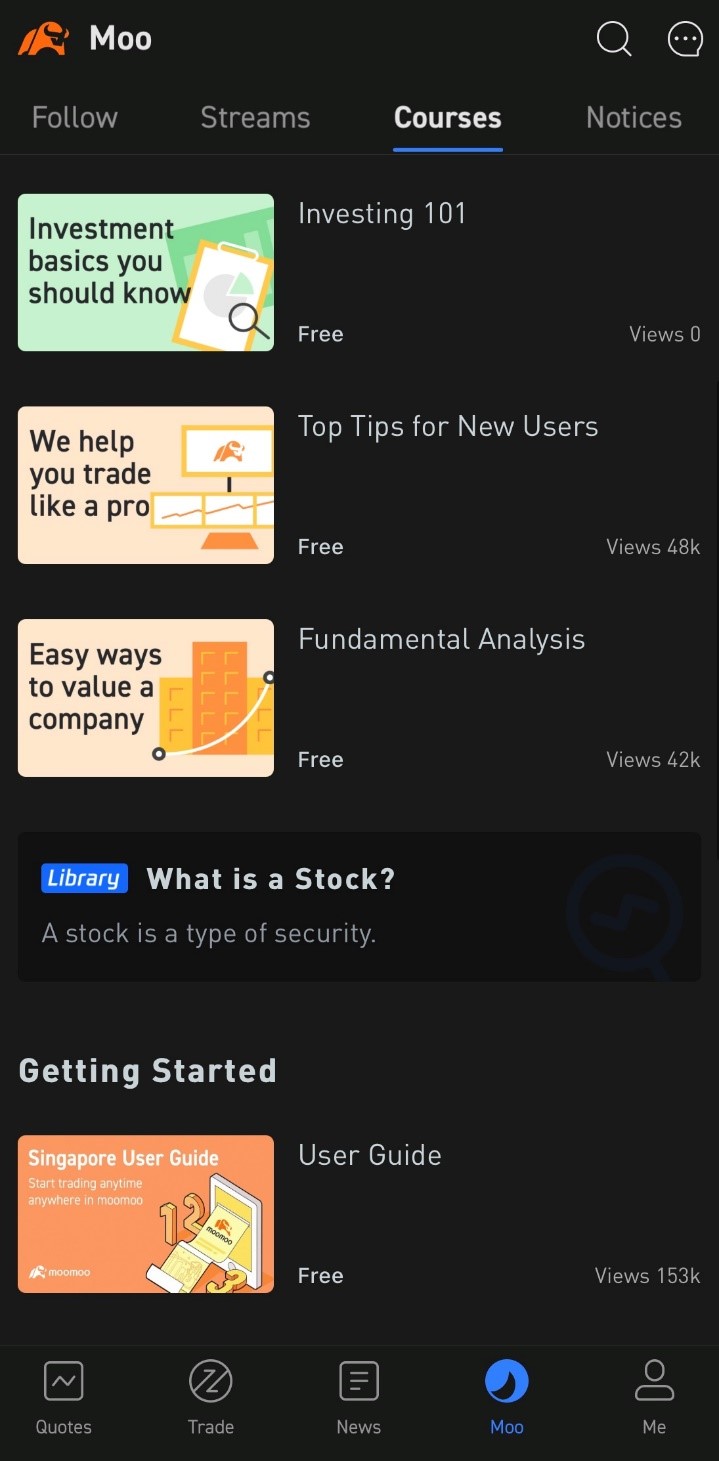
Moomoo by moomoo Inc. is a stock trading platform that has launched in Singapore in March 2021 and have been offering attractive sign-up offers to expand their customer base. moomoo Inc. the company behind the trading app is a subsidiary of Futu Holdings Limited, a company listed in NASDAQ (NASDAQ:FUTU) and backed by Tencent.

In Singapore, investment products available through the moomoo App are offered by to Futu Singapore Pte. Ltd. (“Futu SG”), a wholly-owned subsidiary of Futu Holdings Limited. Futu SG is a broker-dealer and custodian licensed by the Monetary Authority of Singapore, (License No. CMS101000).

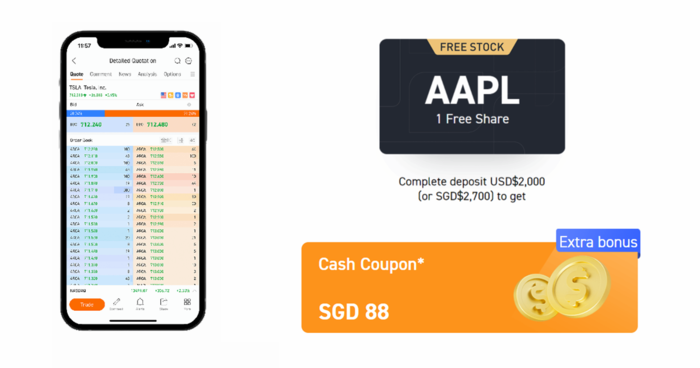
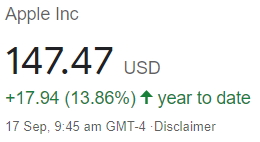
From now till 30 September, they are giving away a free Apple Share to new customers who sign up during this period. As of 17 Sep, the share is worth 147.47 USD or around S$200 in value.

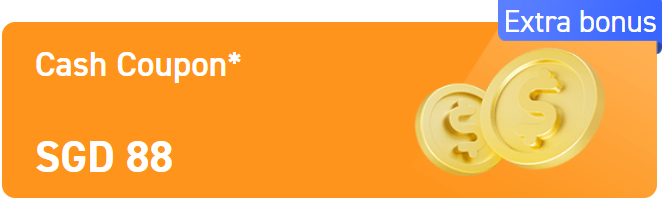
In addition, they are also giving you a S$88 cash coupon can be exchanged for cash in the moomoo app.

That is a total of S$288 in value we are talking about – and they are free once you complete the requirements.

Here’s how to redeem your free share

  1. Sign up for an account here and deposit a minimum of S$2,700, US$2,000 or HK$16,000 within 30 days of account approval. You will need to download the moomoo Trading App.
  2. Trade 5 times on any market and any product.

The free Apple share (AAPL) will be allocated to you automatically once you completed Step 2.

Tip: According to some users, you can easily complete Step 2 by buying and selling a non-volatile stock in the US market. That would make 2 trades. Do it 3 times to complete Step 2. Why US? Because you can buy a single share which sometimes cost you less than $10.

Other benefits of trading on the moomoo app

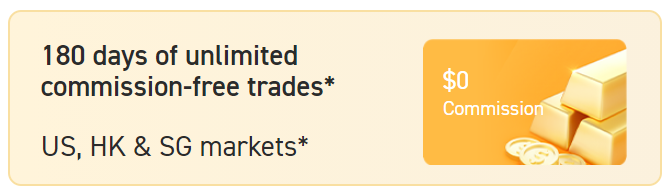
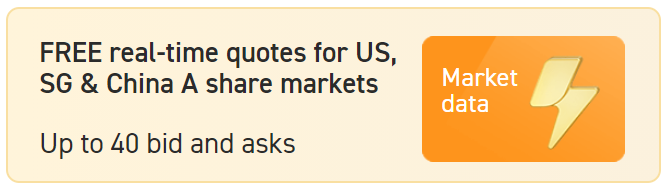
Investors can enjoy commission-free trades for 6 months plus free access to Market Data for US and SG stock exchanges. T&Cs apply.

If you are planning to start trading in stocks, this is a good start because you can enjoy unlimited commission-free trades in the US, HK & SG markets.

In addition, you also get free real-time quotes and market data for US, SG and China A share markets.


* T&Cs apply. Subject to price fluctuation. 

Money Digest receives monetary and other forms of compensation from Affiliates for various advertising, sponsorships (such as sponsored posts or sponsored stories within our editorial content), insertion orders, commercial messaging, and other promotional campaigns that we feature on our website.


Read More...

Your Concise Guide To Cryptocurrency Terms

DEFINING CRYPTOCURRENCY

The cryptocurrency is a virtual or digital currency that is secured by cryptography, which makes it nearly impossible to double-spend or counterfeit. Many cryptocurrencies are decentralized networks based on blockchain technology. This technology consists of a distributed ledger enforced by a disparate network of computers. A distinct feature of cryptocurrencies is that they are generally not issued by any central authority. Thus, these are theoretically immune to government manipulation or interference.

1. ADDRESS

Cryptocurrency coins are identified on the blockchain using the unique addresses. The value of your wallet is updated based on your address every time a transaction is confirmed. Addresses may appear in diverse formats. Simply put, no coin is stored without a proper wallet address.

2. BITCOIN

Bitcoin is a term you usually hear. It is a digital currency that came into circulation last 2009. Around 18.636 million Bitcoins have been mined and there are only 21 million currently in existence. These can be traded anonymously or sold for cash. It is important to note that the circulation is not controlled by banks or governments.

While Bitcoin is the most popular, there are other cryptocurrencies in circulation such as Cardano, Litecoin, Ethereum, Ripple, and Dogecoin.

3. BLOCKCHAIN

The blockchain is the underlying technology that powers the cryptocurrencies. It is a database that is chained togethering using cryptography. Once data is entered into this ledger, it cannot be erased or altered. All transactions are permanently recorded too.

4. EXCHANGE

The digital currency exchange is a business that allows users to sell, trade, buy, and exchange their Bitcoins for cash or other cryptocurrencies. Exchanges are usually run by private companies that earn by getting a commission from the transactions.

5. MINING

Like precious gold, there is a finite number of Bitcoins that can be acquired when you purchase or mine it. To mine it, miners use computers to solve complicated Mathematical puzzles. The miners receive Bitcoins as a reward for solving the puzzles. Mining requires powerful machines and unwavering amounts of time and energy.

Image credits: pixabay.com

6. PRIVATE KEY

The private key is necessary to verify transactions when withdrawing or selling your cryptocurrencies. If someone gains access your private key, you can lose all your funds in a matter of seconds. You should not share this string of numbers and letters to anyone!

7. PUBLIC KEY

The public key is a string of characters used to buy cryptocurrency. Fans can easily send cryptocurrency using the creator’s public key.

8. SATOSHI NAKAMOTO

Satoshi Nakamoto is the individual or group of individuals credited with founding the world’s first cryptocurrency – the Bitcoin. The founder remains completely anonymous. If you see the term “satoshis” thrown in conversations, it refers to a fractional unit of Bitcoin. You can transact with the satoshis.

9. SEED

Seed is the foundation of your wallet’s digital existence. A recovery seed is a series of twelve or sixteen words that can be used to access your wallet in case something goes wrong. It is the equivalent of asking twelve security questions for a forgotten password. Do not share this to anyone!

10. WALLET

A wallet keeps a record of the user’s balance. It enables you to receive and send digital currencies. A crypto wallet is either a hardware device or a program that can access the computer software.

Sources: 1, 2, & 3

Read More...