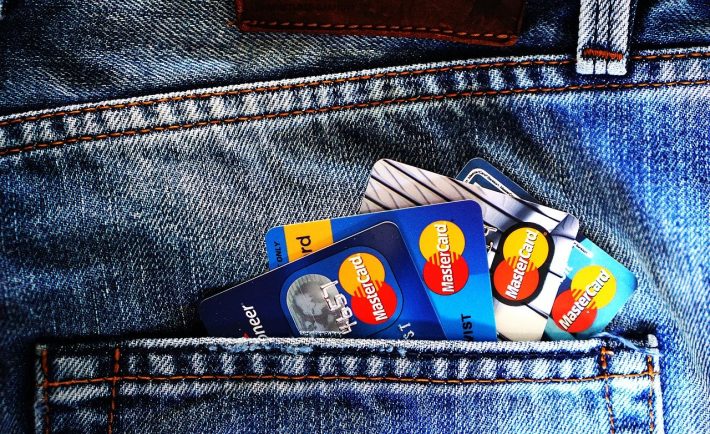
You may not be able to pay for items in full cash, but you can certainly swipe your card! Credit cards offer convenience to afford larger purchases anytime. It can also help you establish a good credit history.
However, it is important to understand the actual cost of credit cards when fees and interest are factored in. The actual cost of using a credit card can add up!
#1: THE COST OF PAYING MINIMUM DUE ONLY
There are consequences to only paying the minimum fee. Firstly, it will take longer to eliminate your balance. Secondly, your interest continues to accrue steadily in what you owe. Your minimum payment may not be enough to cover the interest charges for the month.
#2: THE LATE PAYMENT FEES
If the payment is passing your due date, the late payment charges vary by bank. This charge is usually between S$60 to S$80. A late payment may cause you to forfeit some of your credit card rewards or cause your interest rate to spike significantly higher than your regular purchase.
#3: THE COST OF CASH ADVANCE
Did you know that you can use your credit card to withdraw cash through a cash advance? Cash advance on credit cards can be awfully expensive, with interest rates going as high as 30%. You can be charged about 6% of the amount withdrawn per transaction or a minimum of S$15.
Apart from that, you will also receive an interest rate charge of around 28% per annum, subject to compounding if the charges are not repaid in full on the amount withdrawn.
#4: THE COST OF OVERSEAS TRANSACTIONS
These days, more and more people are shopping online using their credit cards. When shopping from an overseas website, it is important to know that there are fees. Two types of fees that can be charged are foreign transaction fee and dynamic currency conversion fee.
#5: THE ANNUAL COSTS
While some annual fees can be waived, others cannot. The next time you receive your credit card statement with the annual fees charged, try calling your bank to ask for a waiver. Doing this may save you more than a hundred dollars!
Establishing a healthy relationship with money takes effort, but it pays off. You must manage the highs and lows, and everything in between.
#1: PUT IN EFFORT FOR IT TO FLOURISH
Much like any other relationship, you have to put in effort to your finances for it to grow. A positive mindset and the right attitude towards money can help strengthen your relationship. Plant the seeds of appreciation and contentment for what you already have. Perhaps, you are grateful for your recent promotion, or you are thankful for having additional online vouchers. Working towards a positive mindset can go a long way!
#2: SCHEDULE REGULAR CHECK-INS
According to clinical psychologist Joe Lowrance, “financial wellness is a component of overall wellness”. Regular financial check-ins are necessary for you to know which areas you need to improve on. Then, you must create an action plan to reduce your unnecessary expenses.
Image Credits: pixabay.com
#3: PAY ATTENTION TO SMALL THINGS
If you indulge in artisan coffee on a Saturday afternoon, take the time to relish the moment. You could also purchase a small gift for attaining your saving goals or celebrate a small win at work. Acknowledging the little thigs can keep you motivated and improve your relationship with money.
#4: RESPECT EACH OTHER
Respecting your money means taking care of it properly by practicing accountability. Your money is influenced by how you treat it. Give it the respect it deserves, and it will reciprocate in the same way.
#5: PLAN SOMETHING SPECIAL
Money is a tool used to meet your needs and to achieve your financial goals. If your money does not give you pleasure and is only tied down to sacrifices, then you are likely to feel overwhelmed. To relish the rewards of your income, you must plan for it. Use your extra savings to plan something special for yourself. You can also bring along a friend or your loved one.
#6: ADMIT WHEN YOU ARE WRONG
Some people cannot admit when they have made a financial mistake or deny their poor relationship with money. Be honest with yourself. What is your current financial circumstance? Being honest about your financial situation is necessary for you to learn from your mistakes and to attain financial stability. Try to ditch the excuses and look at your relationship with money through clear lenses.
Financial literacy is a life skill. Similar to other life skills, financial literacy takes time to learn. Starting your journey can be intimidating and daunting for some Singaporeans.
As personal finance is not typically taught in schools, you need to take conscious decisions to improve your own skills. Whether you are an expert or a novice at financial literacy, keeping your knowledge base growing matters!
#1: READ MORE FINANCIAL BOOKS
Retail CEO Sandra Campos believes that financial literacy is a skill that you should never stop acquiring. She encourages people to read trusted publications to stay informed about understanding how to manage your finances better. If you opt to listen to financial podcasts, you may do so.
Financial podcasts can be a wonderful way to absorb financial news while you are fulfilling your other tasks. You can listen to these podcasts as you run errands, travel to work, complete your housework, walk your dog, or exercise in the park.
#2: TEACH YOUR CHILDREN THROUGH PLAY
Learning about money does not have to be a two-hour long lecture. One of the most effective ways to connect with your children is to introduce play-based learning. It provides them with a friendly environment to test new skills and gain confidence with challenging topics. Make learning fun by playing financial literacy games with your kids!
Ignite a family competition by playing money board games or trying out activities that are suitable for your child’s age. You will not only help your child start a healthy relationship with financial education, but also improve your quality time.
#3: EMBODY THE FRUGAL MINDSET
Embrace the frugal mindset to improve your budget. Take your monthly expenses under a microscope and inspect if there are unnecessary costs that you can eliminate. For instance, you may purchase second-hand children’s clothes instead of new ones. Eliminating unnecessary costs can move you closer to your financial goals.
Despite being frugal, there are some expenses that you cannot skip! Prioritize groceries, household supplies, and other non-negotiables. For these expenses, make sure that you are getting the best price.
#4: FOLLOW YOUR WELL-DEVELOPED BUDGET
A well-developed budget can operate itself if you stick to it.
It can help you identify where your money is going. So, start tracking your spending using a simple spreadsheet or mobile budgeting apps. Saving an accumulation of lesser amounts can go a long way.
#5: SEEK PROFESSIONAL HELP
If you need additional assistance from a financial professional, you can research credible local organizations. A financial professional can answer your money questions ranging from day-to-day money issues to more complex long-term situations.
Image Credits: pixabay.com
This professional will begin by assessing your current situation to help you plan for all your financial needs to move forward. Remember that your financial is a lot like your physical health. You need regular exercise and check-ups to sharpen your financial muscles!
BONUS TIP: EDUCATE YOURSELF THROUGH TECHNOLOGY
Expand your financial literacy by educating yourself through virtual methods. You can soak up financial news through podcasts and newsletters or follow your favorite social media channels. There is a wealth of financial podcasts available on Apple and Spotify including The Ramsey Show, Yield Hunters, BT Money Hacks, and Money for the Rest of Us.
What’s more? You can follow Money Digest on Facebook to consume free financial news and latest deals in Singapore.
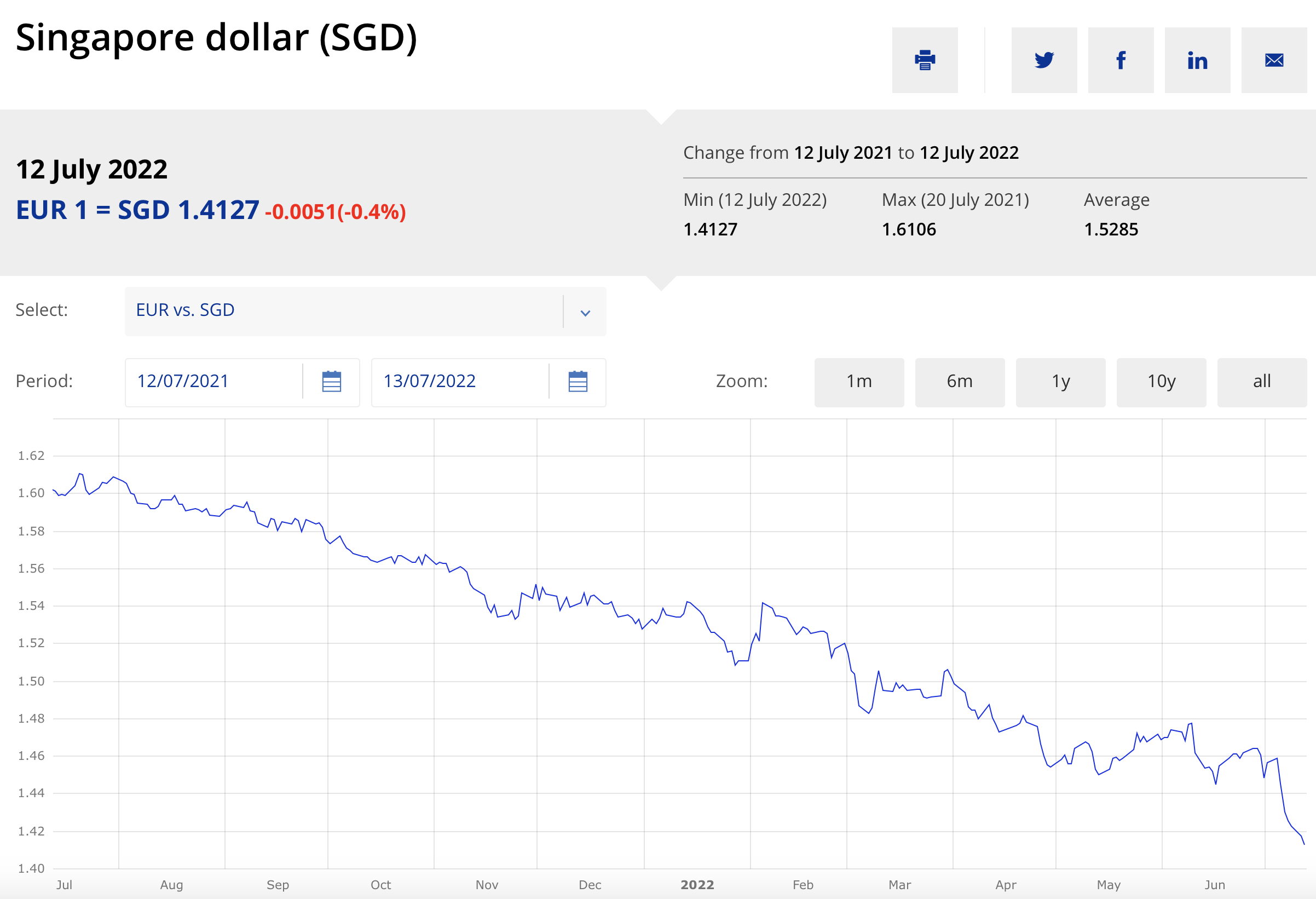
The Singapore dollar has hit an all-time high against the euro yesterday (Jul 12).
The Singapore dollar reached a record high of S$1=€0.71 (or €1 = S$1.41) on Tuesday, up about 9% since the start of the year. Fear that an energy crisis in Europe and the war in Ukraine will plunge the region into a recession has caused the euro to depreciate. The slide of the euro also saw that it reaches parity against the US dollar in two decades.
Source: European Central Bank
According to historical data, the last time the Singapore dollar hits €1 = S$1.41 was back in February 1985.
To fight inflation, Singapore has adopted an aggressive monetary policy by appreciating the Singdollar. The stronger Singapore dollar also saw that it strengthen against several currencies in the region including the Malaysian ringgit (S$1 = RM3.15), Thai baht (S$1 = THB25.72) and the Indonesian rupiah (S$1=10,637 IDR).
Retirement may make it tricky to adjust to life in general, notably if you have always been on a tight budget.
You don’t automatically have to stop paying your bills and keep up with house maintenance just because you’ve entered the next phase of life. In fact, it’s more crucial now than ever to allocate additional expenses for outings to the country club or for relaxing holidays.
Now’s the perfect time to employ your knowledge in personal finance if you’re thinking of retiring! Here are several tips to help you stay frugal during your golden years.
Define your goals and budget
First, you need to define your goals and budget. What do you hope to achieve in retirement, and how much money do you need to make that happen? Once you have a firmer idea of what you’re working with, you can start brainstorming ways to save.
Next, take a look at your regular expenses and see where you could cut back. Maybe you don’t need that expensive subscription plan anymore, or maybe you can start brown-bagging your lunch instead of eating out every day. Paring down your expenses will free up more money to save for retirement.
Bonus advice: One of the smartest things you can do for your retirement savings is to invest them. Investing allows your money to grow over time, so you can comfortably retire without having to worry about finances. There are many diverse types of investments available, though, so talk to a financial advisor to figure out which one is best for you.
Invest in quality over the price tag
When it comes to spending your money during retirement, it’s essential to invest in quality over the price tag. Sure, you may be able to save a little bit of money by buying the cheapest version of something, but in the long run, you will be much better off if you spend a little bit more and purchase something that’s going to last.
For illustration, instead of buying the most inexpensive watch available, invest in a quality timepiece that will last for years. Likewise, rather than opting for the most affordable clothing options, choose well-made pieces that will resist wear and tear. By spending a little bit more upfront, you will avoid having to constantly replace items and will be able to stick to your budget much more efficiently.
Seek free or relatively low-cost activities
Image Credits: lionraw.com
When you retire, it’s important to find ways to stretch your dollar. One way to do this is by seeking free or low-cost activities. There are several things you can do to keep costs down.
For example, you can take complimentary online courses, visit museum exhibitions with free admission or participate in meetups and group activities. You can also save money by cooking at home and avoiding expensive restaurants. Whatever you do, make sure that you’re budgeting wisely and that your retirement expenses don’t put too much stress on your budget. Retirement should be a time of joy and relaxation, not financial worry.
Get creative with your living situation
One way to save money during retirement is to get clever with your living situation. For instance, consider downsizing to a smaller home or moving to a less expensive neighborhood. You could also consider sharing a home with a friend or family member or renting out a room in your house.
Another way to save money is to be mindful of your spending habits. Try to avoid buying unnecessary items and be conscious of the things you do spend money on. There are many ways to be economical without having to deprive yourself of the things you enjoy. It just takes a little bit of restraint and inventiveness.
Learn to cook and enjoy meals at home
Image Credits: straitstimes.com
One of the wisest things you can do to save money during retirement is to learn to cook and savor meals at home. Not only will you save a ton of money on delivery food, but you will also have the satisfaction of knowing that you made your meal from scratch. Here are a few suggestions to help get you started:
Try no-frills recipes that are effortless to follow and don’t require a lot of ingredients.
Browse cooking blogs for inspiration, or take a cooking class at your nearest community center or a cooking school.
Invest in some quality kitchen utensils and equipment. A fast blender, for example, will make cooking much more pleasurable.
Be creative and experiment with distinct flavors and ingredients. You might be pleasantly surprised at what you can come up with!
Being thrifty and living within your means is more paramount now than ever when you’re retired. But keep in mind that a thrifty way of living values conserving money as effectively as possible and is cost mindful. It’s critical to assess your financial situation in retirement and determine whether being frugal is a good match. It should not be thought of as a punishment to be thrifty since it can be financially empowering in the long run. Strive to maintain your retired lifestyle while keeping within your budget by considering the advice provided in this article.