These two banks join OCBC & Citibank to restrict bank digital services usage if unverified apps on phones are found

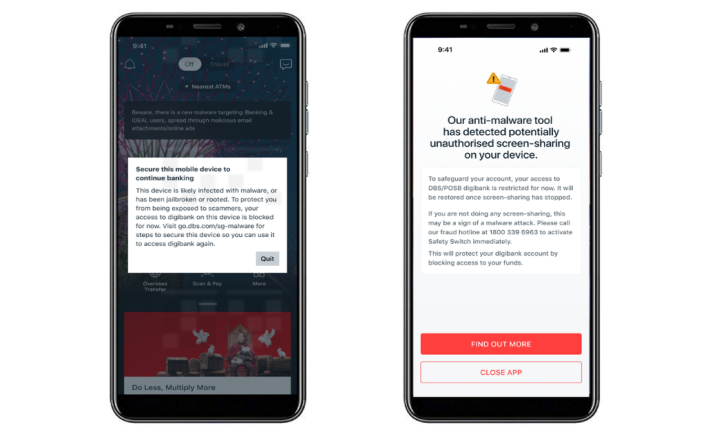
DBS app mockups

And they are none other than DBS and UOB, the two big local bank names we’re aware of.

So news has it that new security measures will be implemented to protect customers from scams.

These measures include…

DBS’ anti-malware tool for Android

Following in the footsteps of OCBC and Citibank, DBS announced that they have developed an anti-malware tool for Android phones.

This tool aims to prevent scammers from illegally accessing customers’ accounts by limiting app access when potential risks such as malware or malicious applications on customers’ phones are detected.

Starting early this month, if sideloaded apps with accessibility permission enabled or ongoing screen-sharing or mirroring are detected on devices, access to DBS’ banking app will be restricted.

Customers will only be able to regain access once they have taken the necessary action to secure their phones.

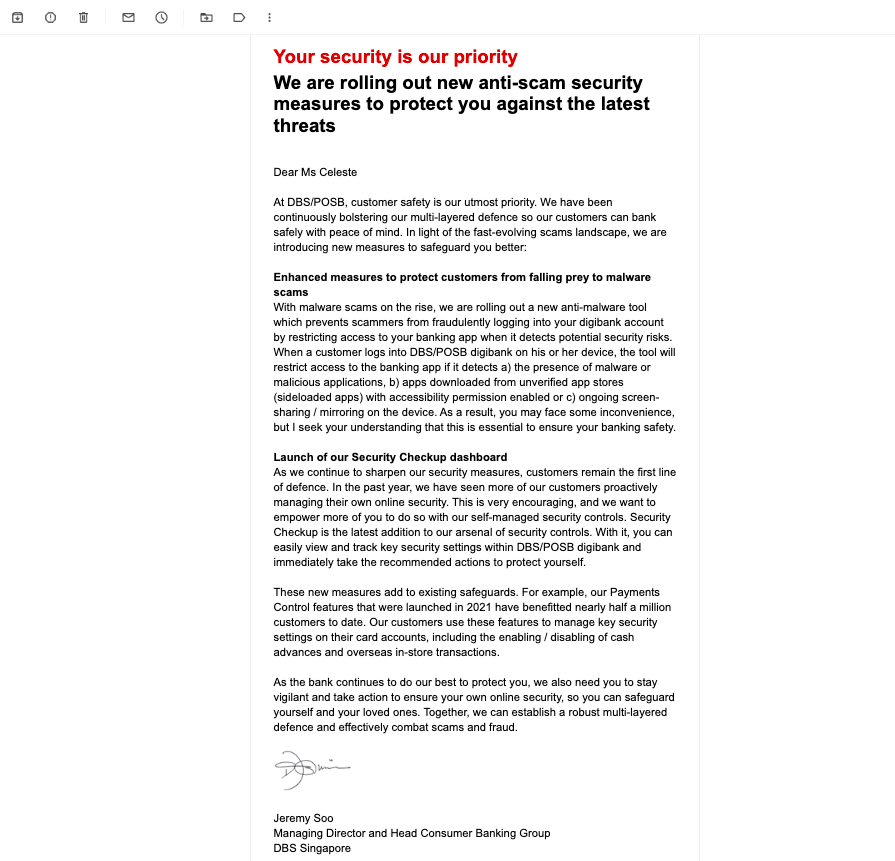
I’ve received an email with official updates from DBS yesterday (30 September 2023) since I’m their customer:

DBS email

Check your email if you don’t want to take my word for it.

UOB, too, rolls out anti-malware security features

Similarly, UOB will be introducing new anti-malware security features on its banking app gradually.

These updates will restrict access to the app if apps downloaded from third-party or unauthorized sites with risky permissions are detected.

An error message will be sent, indicating the name of the potentially risky app.

To continue using UOB’s digital services, you will need to uninstall or disable accessibility permissions for the mentioned app.

Similar to DBS, access to UOB’s banking app will be denied if screen-sharing on other apps or tools is detected on your phone.

This measure aims to prevent scammers from gaining control of your device and compromising banking information.

You can only resume using the app by disabling screen sharing.

What bank users think

If you don’t already know, OCBC was the first to implement these new security measures in September 2023, followed by Citibank.

While these measures are designed to counter the threat of malware scams, not everyone accepts them with a huge “thank you.”

Some OCBC customers have expressed concerns about privacy on the bank’s social media platforms.

But it’s rather uncalled for because the head of anti-fraud at OCBC group financial crime compliance noted that it’s a misconception that the bank can scan phones and view personal content.

In short, your information does not get to the bank. Your privacy is yours to keep.

DBS Singapore Country Head also acknowledged that these measures may cause some inconvenience for customers but emphasized their importance in ensuring secure digital transactions.

UOB also reassured customers that their new security features do not monitor phone activities or collect and store personal data.

The Monetary Authority of Singapore (MAS) says it supports local banks’ initiatives to increase the safety of online banking.

So while you may experience some additional inconvenience due to the recent security measures, they are necessary to maintain the security in digital banking.

Read More...

Money Management Tips Embraced by Gen Z

Meet Generation Z, the younger siblings of millennials, born between 1995 and the late 2000s!

Despite growing up in the aftermath of the 2008 recession and facing an uncertain job market, Gen Z has developed some impressive financial habits that everyone can learn from.

#1: THOUGHTFUL CHOICES & SACRIFICES

Gen Z understands the significance of making thoughtful decisions, especially when it comes to spending on non-essential items. Having experienced the impact of the 2008 recession, they’ve earned the reputation of being the most fiscally conservative generation in years. This frugal nature allows them to manage their funds wisely, focusing on essential expenses and saving for the future.

I had a conversation with my younger Gen Z cousin about money, and She shared how the recession taught her the value of choices. Her family had to cut back on certain luxuries, which taught her to prioritize his spending and save for rainy days.

#2: UTILITY & QUALITY OVER BRAND NAMES

Unlike their parents’ generation (Gen X), Gen Z doesn’t base their choices on recognizable logos and brand loyalty. Having grown up in the tech age, they value efficiency and usefulness over trendy branding.

A Gen Z friend once shared a funny incident where they refused to buy expensive shoes just because they had a famous logo. Is logomania really over?

#3: DIVIDE YOUR MONEY INTO BUCKETS

Gen Zers must organize money into different categories or “buckets” to track spending effectively. This could involve setting up separate bank accounts for different financial goals or physically allocating cash into envelopes labeled for specific expenses.

For example, dividing income into necessities and discretionary spending helps maintain financial discipline. Creating buckets for short-term and long-term goals, as well as savings and investments, aids in focused financial planning.

#4: SOCIAL MEDIA AS A STARTING POINT

Many seek financial guidance through platforms like TikTok and Instagram. While social media can offer useful tips, it’s essential to recognize its limitations and supplement it with further research.

One of my Gen Z acquaintances confessed how she used to believe everything she saw on financial TikTok without question. After making some hasty financial decisions, she learned the importance of cross-referencing information from reputable sources, like financial websites and expert advice columns.

Image Credits: unsplash.com

In conclusion, Gen Z has demonstrated remarkable financial acumen by embracing mindful spending, prioritizing utility over branding, adopting the bucket strategy, and using social media as a stepping stone for financial knowledge. Their approach serves as a valuable lesson for all generations to manage money wisely and secure a stable financial future.

Sources: 1 & 2


Read More...

How To Manage Your Trading Portfolio


If you want to manage your trading portfolio better, here are some tips that would be beneficial.

Knowing how to manage a trading portfolio is critical if you want to stamp your footprint into the world of trading, and it’s a crucial skill that many day-to-day traders need more time to understand fully. It doesn’t matter whether you’re a seasoned trader with years of experience or a newbie who’s trying to find what works for them; the key to being successful is being able to manage a portfolio and be able to assess risks, get the best returns for your investment, and stick to the goals you set.

In this article, we’ll look at how you can manage your trading portfolio and share some tips to help you trade smarter.

Define Your Investment Objectives

If you want to be a successful trader, having a sole idea of your end goal will be pivotal and will significantly impact your trading behavior and future success. Setting goals will help you decide what you get from trading, whether long-term growth, short-term gains that can be quickly turned around, or a mix of both. Once you’ve decided on a trading strategy that you want to use moving forward, it’ll be a lot easier to find a pattern that works for you and is sustainable long-term, which is where tools like TradingView can come in very helpful.

Diversify Your Portfolio

Being overly leveraged in a particular direction could spell disaster for your future in trading, ending it before it’s had a chance to begin. Diversifying your portfolio is a term used to describe traders making sure to have investments in various sectors or industries, some of which may compete with one another. This means that should one of your investments go badly wrong, you’ll be able to survive because you have investments elsewhere that can prop up your portfolio as a whole.

Monitor and Act Accordingly

https://pixabay.com/photos/startup-business-people-students-849804/

Your portfolio could easily become unbalanced, affected by market conditions beyond your control. This is why monitoring your assets and being able to act decisively is essential, but this isn’t an easy skill to master, and it will take time to get this right. Rebalancing involves selling stocks that have outlived their usefulness or maxed out, freeing up capital that can be used to invest in other stocks that are undervalued and have high-growth potential.

Set Stop-Loss Orders

While this may seem like a no-brainer when it comes to acting sensibly and with a clear sense of direction, many traders neglect this aspect of trading because they don’t think the unthinkable could happen. Stop-loss orders will help you offload assets that suffer from a sudden drop in value, helping protect your portfolio by ensuring that it doesn’t become flooded with low-value assets that will be much harder to liquidate. It might take time to research, but it’s certainly worthwhile.

Stay Informed and Analyse Data

It’s been said before that knowledge is power, which is more accurate than ever in the world of high-stakes trading. It’s easy to stay informed about the latest trends and developments in trading. Still, the real skill is knowing where to look to get the most effective information before anybody else. Make sure to use social media to find out about the latest developments in real-time and follow people who are most likely to have exclusive track news that could have a considerable impact.

Avoid Emotional Trading

https://pixabay.com/photos/minimalism-emotions-feelings-joy-4846000/

The worst thing you can do is act impulsively when trading, so if you’re ever feeling upset and overwhelmed, it might be a good idea to step away from the computer and give yourself a break. As well as not trading when you’re overcome with emotion, it’s also important not to let fear and greed influence your behavior, as this will often result in you making decisions that you would not typically do. Staying disciplined and in control is one of the best things you can do to be a successful trader.

Keep a Trading Journal

Organisation is crucial, and keeping track of your activity is a surefire way to make decisions that will have a much better impact on your trades in the long term. Many seasoned traders use their trading journey to keep track of the trades they make and note the circumstances around them so they can reflect on these and analyze them later. Self-reflection is a compelling trait for traders, and if you can do this successfully, you’ll be able to make much smarter decisions moving forward.

Knowing how to manage a portfolio will put you in excellent stead, as it’ll help you remain disciplined and develop the ability to make smarter decisions in the long term. There are many different skills that you can sharpen to become a better trader, but by making these small changes, you should see an increase in the profitability of the trades you place.


Read More...