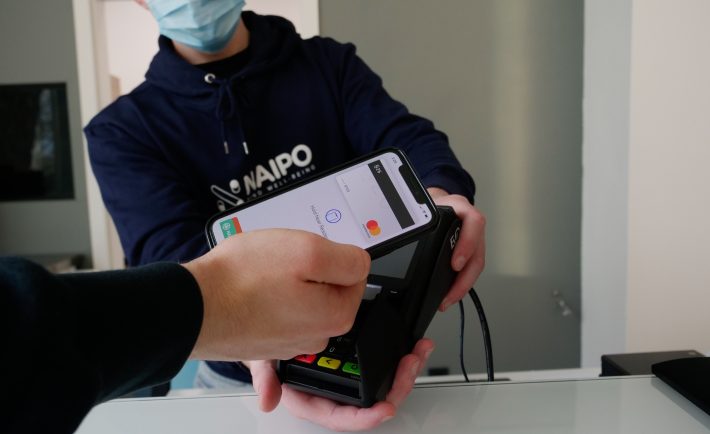
Earning more money is undoubtedly appealing, but it’s only part of the equation. What many people overlook is that controlling your spending is equally essential, if not more so, for achieving financial stability and success.
Let’s explore why spending less is just as crucial as earning more and how this simple approach can significantly improve your financial situation.
#1: EMPHASIZE SAVING
Developing the habit of spending less than you earn is a powerful financial strategy that should become an integral part of your lifestyle. By doing so, you create the opportunity to have extra cash at your disposal, allowing you to save and invest for your future. Moreover, it acts as a safeguard against accumulating unnecessary debt, which can burden you for years to come.
Image Credits: unsplash.com
If you find yourself unable to implement this habit immediately due to your current situation, don’t fret. As soon as you become capable, make it a priority to pay off any outstanding debts, freeing yourself to focus on saving money for the future.
#2: UNDERSTAND THE VALUE OF DOLLAR
One essential aspect of spending less is recognizing that every dollar you earn is not entirely yours to keep. Taxes and other expenses take a considerable bite out of your income. In fact, to have one dollar in your pocket, you may have to earn closer to $1.30. This means that approximately 30 cents of every dollar you earn goes towards taxes and various costs.
#3: MIND YOUR SPENDING HABITS
Imagine trying to fill a bucket with water while it has holes in the bottom. No matter how hard you work to pour water into it, the effort would be futile, and the water would simply leak away. Similarly, focusing solely on earning more money without addressing your spending habits is counterproductive. Before pursuing ways to increase your income, it’s crucial to plug those spending leaks, ensuring that your efforts bear fruit.
#4: GIVE EVERY DOLLAR A PURPOSE
Doubling your income might sound like the ultimate financial goal, but it won’t guarantee success if you lack a proper financial plan. Whether you choose to cut back on expenses or boost your earnings, it’s vital to give every dollar a designated purpose before the month begins. Creating a budget and allocating funds for specific goals will guide you towards financial prosperity.
Image Credits: unsplash.com
By following this approach, you’ll find that dreams like traveling the world, saving for a new car, or buying a house become attainable realities. So, take the reins off your finances, strike a balance between earning and spending wisely, and watch your financial aspirations come to fruition faster than you can say “budget!”
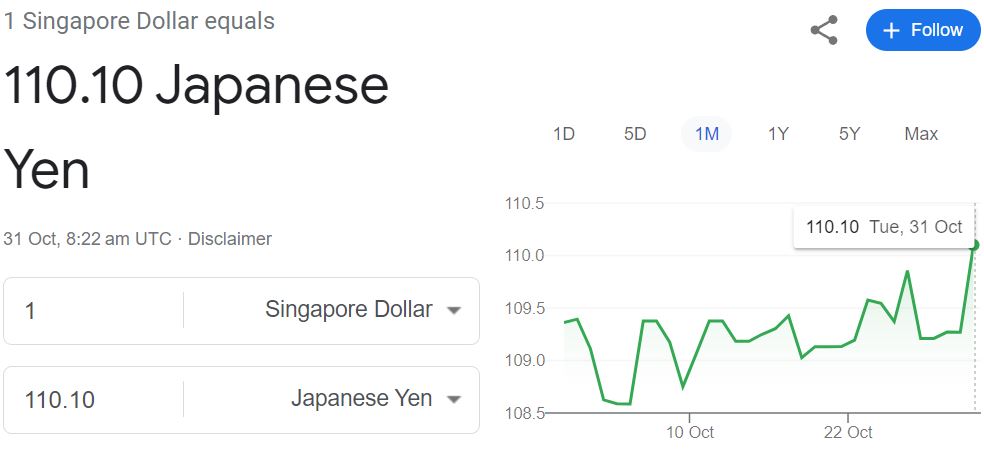
The Singapore Dollar (SGD) has hit a record high against the Japanese Yen (JPY), with the exchange rate reaching as high as ¥110.10 for every 1 Singapore Dollar on 31 October 2023.
The Japanese Yen (JPY) experienced a decline in value due to the Bank of Japan’s (BoJ) commitment to maintaining an exceptionally accommodative policy to bolster the domestic economy.
For those who are planning a trip to Japan soon, this might be a good time to exchange for some Japanese yen.
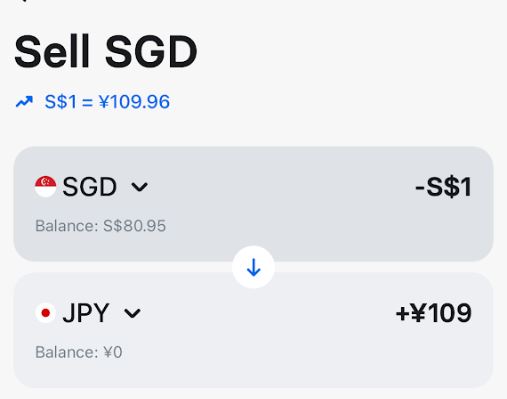
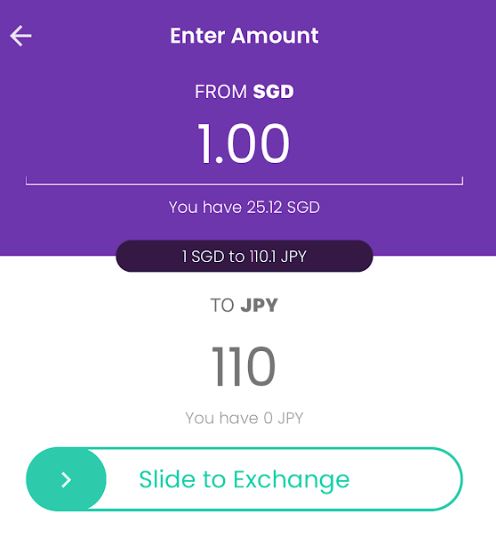
When the exchange rate hits 109.66 in October this year, many customers have visited local money changers to stash up on the currency. For those who are own multi-currency travel wallets such as YouTrip or Revolut can take advantage of the favourable exchange rate to do an in-app exchange in real time.
If you’re a pet parent and want things to be taken care of properly when you leave this world, you’ve got to start digging deep into estate planning for pets.
Never heard of or the idea has never crossed your mind?
Well, allow us to share with you more in this post.
Indirect beneficiary
Providing for your furkid is like providing for a vulnerable beneficiary.
But do you know that our animal companions are classified as property? This means they cannot be named directly as beneficiaries or inherit our stuff.
Simply put, I cannot leave a lump sum directly to my puppy. However, in my will, I can name a caretaker as a beneficiary. As long as they agree to take care of my sweet fluff, then my pup becomes an ‘indirect beneficiary’.
Just relying on a family member or relative without entrusting them with money is not a good idea. Who wants to take sudden responsibility for a furkid if they have to pay extra out of their own pocket?
With that said, structure your will properly so that your appointed caregiver can only access your money after confirming they will take care of your pet.
A safer bet with a pet trust
Sure, a legally binding document to distribute your estate can give you peace of mind. And you can name your caregiver and earmark money.
But once assets are distributed, the job’s done. In other words, the will executor is not legally bound to see your wishes through.
So how?
If you want a more confirm plus chop bet, this is where a pet trust comes in useful.
Setting up a trust by appointing a trustee company means they are lawfully tied to carry out your instructions according to your wishes. Whereas a will is based on trust between you and your appointed caregiver only.
With a pet trust, your chosen caregiver is legally restrained to only spend money on your pet’s needs, not on their personal wants. Otherwise, they may risk having their funds frozen.
Image Credits: unsplash.com
How much money should you leave behind?
How much money do you need to leave behind for your pet?
A good way to estimate the amount is to take their annual spending and factor in their breed lifespan. Then make your calculations.
For instance, if your cat is expected to live 10 more years and you spend $1,000/year, that means you need to allocate at least $10,000.
But vet visits may increase when they are older so plan for medical bills or consider pet insurance to cover those costs. Don’t forget to factor in inflation too.
As we come to a close, do you know how much estate planning costs?
Depending on the complexity, we’re looking at a few hundred dollars to thousands of dollars for those that involve testamentary trust or standby trust.
If you want to know the exact numbers, you should hit up a financial advisor or estate planner for the deets.
Life is short and unexpected, so there’s no harm in starting to plan early if you want your furkid (and your money) to be in good hands after you bid goodbye to life on earth.
Considering CFD or Forex trading for your financial portfolio? This article gives you a clear picture of their differences and how you can get started.
Forex and CFDs are international financial instruments. Both are highly leveraged instruments that offer the possibility of financial success, but they are not the same. Contracts for difference are a special kind of derivative financial product, while Forex involves buying and selling currencies.
What Is CFD Trading?
Contracts for Difference are derivative contracts allowing investors to speculate on price changes in underlying assets without purchasing or owning such assets. They enable investors to trade the difference between an asset’s opening and closing prices through a broker. CFD trading offers a wide variety of assets, including stocks, indices, commodities, and cryptocurrencies. Its minimal barrier to entry means it can be used by anybody, anywhere in the world. Using leverage, you may manage bigger holdings with the same amount of money.
What Is Forex Trading?
Foreign exchange is the buying and selling of currencies in the Foreign Exchange market. Currency exchange is decentralized, allowing traders to purchase and sell currency pairings like GBP/JPY or EUR/USD to benefit from price changes. Due to the overlap of sessions in several time zones, currency trading can occur around the clock, five days a week. As in CFD trading, traders can use leverage to magnify their gains on a reduced financial investment.
What Is the Difference Between a CFD and Forex Trading?
Unlike Forex trading, which only trades currencies, CFDs allow you to speculate on various markets your broker can cover. Traders can take a bullish or a bearish stance on an asset and place either a short or a long position. Gains or losses are determined by the fluctuation between the asset’s opening and closing prices.
The foreign exchange market is global in scope. There is typically no centralized currency exchange. The value of one currency is exchanged in relation to another.
Pips are the smallest increment of change in a currency pair that can result in a profit or loss.
Leverage is a feature of Forex and CFD trading that allows investors to manage a larger position with the same amount of cash. However, leverage amounts may vary depending on factors like the broker, location, and regulations.
Liquidity and Access to the Market
Since the foreign exchange market is open around the clock across several time zones and can be accessed by anybody with an internet connection and a broker account, it offers excellent market access and liquidity. The forex market is the most liquid financial marketplace, with daily exchange volume averaging $6 trillion. In addition, this market has low entry barriers, necessitating only a little starting capital investment and some familiarity with currency pairs.
Market access and liquidity of CFD trading make it possible to trade on a wide variety of worldwide marketplaces throughout their respective hours. As expected, they vary depending on the underlying asset being traded. Traders benefit from this variety of markets and assets but face problems like adapting to various laws, fees, spreads, and commissions.
Spreads, Commissions, and Other Charges
The spread, or the difference between the broker-quoted buy and sell price, is a frequent cost associated with buying and selling CFDs and FX. This charge covers your broker’s overhead and the money they make from your trades. The spread shifts due to changes in the asset, the broker, the market, and the liquidity.
Currency trading on the FX market has more competitive spreads than CFDs since more people trade in this market. In addition to spreads, you may incur other expenses for each trade while trading CFDs. CFD trading makes greater use of them, especially when dealing with equities and indices.
Foreign exchange trading can be done for speculative purposes, although its principal function is facilitating commerce and investment across national boundaries. Foreign exchange markets include transactions between central banks, businesses, institutional investors, and private speculators. Hedging is another reason people trade Forex. Currency traders often work with forex brokers, although Forex can also be traded on the Contracts for Difference market.
The initial intent of the CFD market was to serve as a hedging mechanism. CFD contracts can be a hedging tool for existing equity and commodity investments. Contracts for difference do not expire like option contracts. Rolling over overnight contracts may incur additional fees depending on the provider. Since there is currently no oversight, the fees may differ.
Mini and micro units are more manageable for smaller traders and are available for several currency transactions. Currency futures contracts can also be traded as options. Currency exchange-traded funds (ETFs) allow investors to trade currencies on the stock exchange.
Final Words: How To Trade CFD and Forex
First, you must create and fund an account with a trustworthy broker. Make sure your broker has a solid reputation through background research.
After selecting a broker and opening an account with them, you will need to fund your account using the method you have chosen. Some account types and platforms are more suited to your specific needs and style than others, so do your homework.
You should also choose a way to trade that is consistent with your objectives and risk comfort level. You can reduce your risk and enter and exit positions with more consideration when you have a plan. You can use technical and fundamental analysis to spot opportunities and determine when to enter and quit a market.
Ultimately, you must decide which asset or currency pair to trade. Studying the economic statistics, geopolitical events, and central bank policies that affect the price fluctuations of your preferred currency pair is crucial. After deciding the currency pair to trade in, you may purchase or sell it on your platform. Always keep a tight eye on your investments and employ risk management strategies to reduce potential losses.
You and your wife/husband are going shopping again and you know what that means.
Another dent in the wallet and more clutter in the house. You’ve tried talking to them so many times already but the impulse buys just keep coming.
How?
Well, keep reading.
Make a shopping list and stick to it
First thing first, before going out, sit down together and write a list of only the things y’all really need.
Don’t put extras or ‘maybe can buy’ stuff. Focus only on necessities. Then when shopping, buy only what’s on the list and don’t deviate. No matter how tempting the sales or newly released items are, don’t sway.
If your spouse sees something extra they want, tell them “next time.” For now, just focus on needs. Next, check off items from the list as you buy. This gives a sense of progress to not make impulse buys.
Using a targeted list works. It provides focus and direction, limiting distractions. And by reviewing the list and receipt, you’re keeping each other accountable. If can master this, you sure can tame the spendthrift beau/beast and save more money.
Cash over credit
Another tip is to use cold hard cash instead of a card. Physical money means you and your spouse can see how much is left in their wallet. This makes your spouse think twice before buying.
Using cash is a good way to control impulse buys. Your spouse can see how much they spending, so he/she is more likely will buy only what they need. And when the money runs out, no choice but to stop shopping and balik kampung.
Time-out before check-out
Still, we know it’s easy to get caught up in the moment and still make impulse buys. So here’s another way to avoid overspending: take a quick “time-out” before heading to the checkout counter.
Maybe grab a cuppa? Suggest taking a tea/coffee or snack break before proceeding to pay. This pause gives you both a chance to reconsider your cart and think twice about any non-essential purchases.
Image Credits: nowboarding.changiairport.com
Ask your spouse:
“Do you need that? Let’s stick to what’s on the list.”
“We have a budget to keep. Why not wait till next month to get that, in case you change your mind?”
Often, the urge to buy something fades after a short break.
Leaving the store environment also helps provide perspective. The music, lighting, and product displays are all designed to encourage spending. Stepping away helps combat these effects so you can make better decisions.
If after your break, your spouse still feels strongly about a particular item, consider setting a 24-hour waiting period before buying. This extra time allows the initial excitement to fade so you and your partner can determine if it’s a well-thought-out purchase or just an impulse buy.
Pausing and reevaluating before paying is an easy way to curb overspending while shopping together. Staying within budget and making joint decisions will help ensure you both leave the store feeling good about your purchases.
Reward mindful spending
Last but not least, reward your spouse when they make mindful spending choices! Every time your spouse passes up a huge impulse buy, reemphasize how much both of you have saved. Give them praise and maybe a small treat.
For example, you can say:
“Well done, dear! I’m proud of you for not buying that new gadget even though you really wanted it. Milk tea? My treat!”
“Thank you for being so disciplined today. I appreciate you helping us save money. Want to go for a massage session this weekend?”
Over time, this positive reinforcement will strengthen their ability to curb impulse spending. Your spouse will start to associate mindful shopping choices with rewards and praise from you, giving them motivation to keep spending wisely.
So the next time you go shopping with your other half, try out some of these practical tips. They may complain a bit at first, but deep down they will appreciate you helping them save some dough. At the end of the day, successful relationships are built on understanding and supporting each other’s weaknesses. Help your spouse shop smarter, and the financial gods will help secure your future.