Fuel-saving tips as we start hitting the roads again

As Singapore moves into phase two starting 19 June, more of us are hitting the roads once again. Whether it’s to work, taking out our favourite local food, or visiting our loved ones, traffic’s going to be bustling again. If you have the privilege to continue owning a car this trying period for many, we’re truly glad for you.

However, we understand the costs that accompany car ownership in Singapore. Car insurance, servicing costs, and road tax are just some of the payments tagged to driving. Hence, we’ve curated a few fuel-saving tips to help you manage some of your expenses. As the saying goes, ‘habits maketh man’ (and women, of course) so read on and see if you can incorporate some changes to your driving style.

#1: GO EASY ON THE GAS PEDAL

If you’re feeling guilty just by reading our first tip, you’re probably not alone. Many drivers on the road seem to be having a racing competition. By that, I mean going full-on the gas pedal when the light turns green. Or suddenly braking on red lights or stop signs.

Presuming that you’ve been driving in this manner for years, it’s definitely tough to change since you’re already accustomed to this style. However, if you want to save some fuel, it’s time to start making changes. Gently step on the gas pedal to start moving and release it slowly when you want to stop. This will greatly reduce your fuel consumption and spending in the long run.

#2: REMOVE UNWANTED ITEMS

Were you expecting this fuel-saving tip? Maybe you think that the picnic mat left in the car a year ago won’t do much damage. But hold on to that mindset and you will realize that your car is currently like a dumping ground.

Apart from spring cleaning at home, do it for your car from time to time. You may be wondering why we’re advising you to do that. That’s simply because the heavier the car, the more energy it needs to get it moving. Just imagine how it was like to move around when you were at your heaviest. To make sure your car is consuming fuel at the right amount it should, start clearing and stop dumping.

#3: IDLE NOT WITH THE ENGINE ON

Image Credits: unsplash.com

Waiting for your significant other to knock off work? Or fetching the kids from their enrichment classes? Often times, we end up waiting for longer than we expect. If you think you’re going to wait in the car for more than five minutes, turn off the engine. Yes, even when you can’t bear to part with the air-conditioning.

Every minute you spend idling around with the engine on burns more fuel than you think. Restarting the engine consumes petrol of course, but you will save a whole lot more restarting, than idling for prolonged periods of time. Of course, be smart and roll down the windows first if you don’t want to open your car doors to allow air circulation.

#4: CHECK YOUR CAR’S TYRE PRESSURE

We pay little attention to our car’s tyre pressure most of the time. But it is recommended that you have it checked at least once a month. Refer back to your car manual to see the optimum tyre pressure for your car, which should be in the 32 to 35 psi range.

Staying in the recommended range is essential because low pressure will increase friction between your tyres and the road. You’ve probably recalled learning in school that energy is required to overcome friction. By now, you should know that any factor that requires energy equates to more fuel consumption. A little inspection will go a long way, my friends.

#5: SEND YOUR CAR FOR MAINTENANCE

Even if you have a can’t-be-bothered attitude, the least you can do is to send your car for regular servicing. Based on the experts, it’s best to send your car for routine servicing twice a year or at every 10,000km mileage interval. Parting with small money now will reap great benefits in the long haul. Be wise!
Read More...

Will Mixing Other Brands Of Petrol Harm Your Car?

As you may know, petrol prices in Singapore remain unchanged despite the plunge in oil prices. According to Bloomberg, a barrel of West Texas Intermediate crude was at a record low of US$1.69 last Monday (April 20). While, Brent crude was at US$25.92 compared to the US$74 usual price 12 months ago.

If you are happy with the performance of your usual petrol, that is great! You can stay loyal to that brand. However, unsatisfied customers may still search for another brand. To save money during tough economic crisis, will mixing other brands of petrol harm your car?

A short answer – it will not. Usually, any commercially available gasoline that passes industry standards would suffice for almost any gasoline-powered vehicle. Putting a higher-octane petrol into your car will neither help nor hurt your car’s performance despite the variations among engines.

The answer may vary from person to person, even among drivers who own the same vehicular models. You see, some people are strictly following the required octane fuel that their vehicles need. This is often due to the engine incompatibility with additive packages in premium fuels. Nonetheless, the brand that will give you the best fuel economy for your driving habits is the best one for your car.

To determine this, you need to monitor your fuel consumption over two to four full tanks. How often do you have to refill your car’s petrol on a monthly basis? Throughout this time, make the conscious effort to note down any driving conditions that you may encounter. The objective is to establish an average of your fuel consumption. The next step is to factor the cost per liter of your chosen fuel and switch to the other brand. Consider significant differences between the two.

Image Credits: unsplash.com

For safety purposes, please do not let your fuel run down the manufacturer’s recommended rating for your car. Check your owner’s manual thoroughly beforehand to cover all your bases. At the end of the day, it is all about choosing the petrol that will best suit your car and your needs. Most of the time, brands have very little to do with it.

Sources: 1 & 2

Read More...

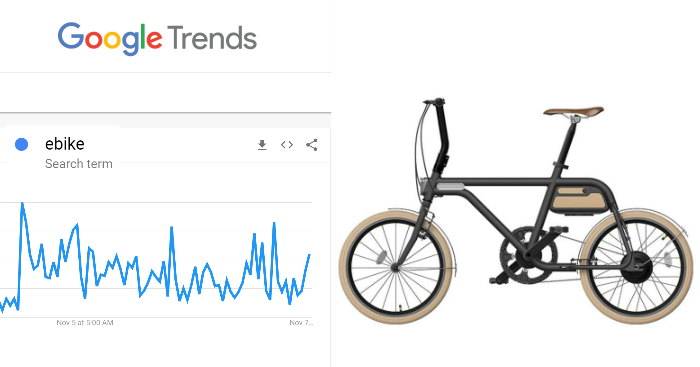
‘eBikes’ Google search spikes as food delivery riders search for alternatives

LTA has announced that from Nov 5, 2019, e-scooters have been banned from footpaths. You can only use them on park connectors and bicycle lanes.

The ban has hit food delivery riders hard especially when they use PMD to earn a living. Under the new rule, e-scooters are not allowed on footpaths. The ban will be progressively extended to other motorised PMDs by the first quarter of 2020. Bicycles, PMAs and non-motorised PMDs, such as manual kick-scooters, can be used on footpaths. From Jan 1, 2020, those caught riding an e-scooter on footpaths will be liable for a fine up to S$2,000 and/or jail up to three months.

This has affected over 7,000 PMD riders who use e-scooters to do food deliveries.

Search for alternatives

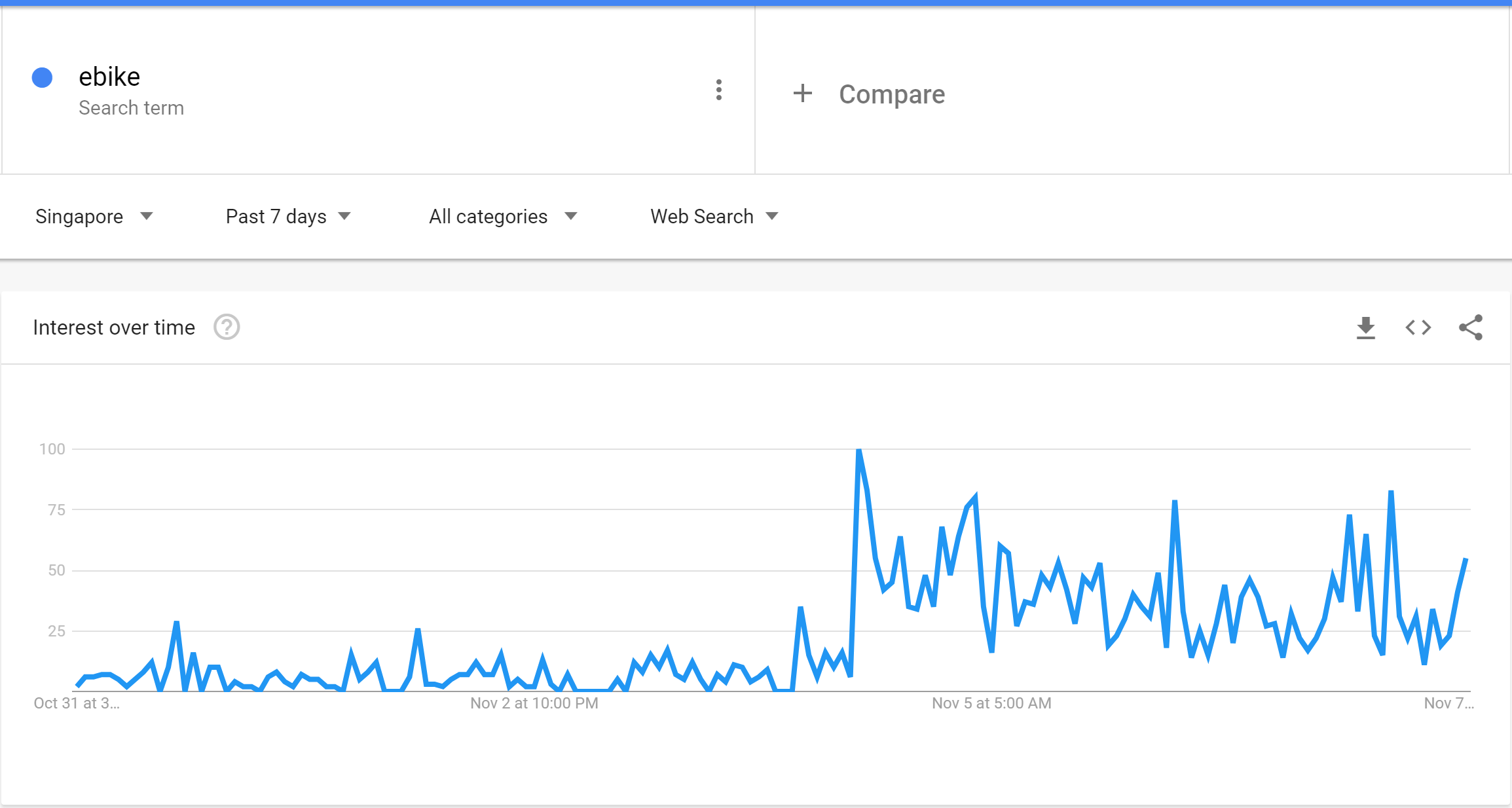
According to Google Trend, search queries for ‘eBikes‘, ‘Power-Assisted Bicycle‘ and ‘PAB’ have surged over the past few days from Nov 4, the same day after LTA announced the ban.

Power-Assisted Bicycle (PAB) are not allowed on footpaths but can be used on public roads. This has resulted in many trying to search for an alternative to PMD to carry on their job to earn a living.

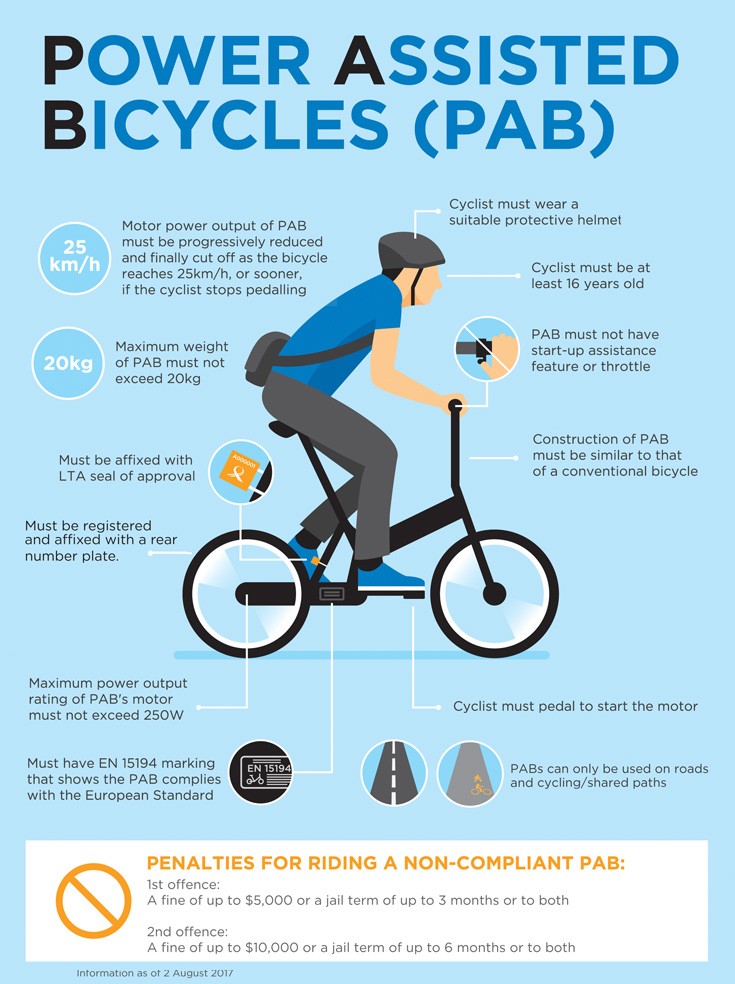
Technical Requirements for PAB

According to LTA, you must be at least 16 years old to use a PAB.

For your safety and the safety of other road users, your PAB must meet the following technical requirements:

  • The construction of a PAB must be similar to that of a conventional bicycle
  • The PAB can only be powered by an electric source
  • The PAB must comply with European Standard, EN15194, for electric power-assisted cycles
  • The maximum continuous power output of the PAB must not exceed 250 watts
  • The motor power of the PAB can only cut in when the rider starts to pedal
  • The motor power of the PAB must be progressively reduced and finally cut off as the bicycle reaches 25km/h, or sooner, if the cyclist stops pedalling
  • The maximum weight of the PAB must not exceed 20kg

LTA-approved eBikes

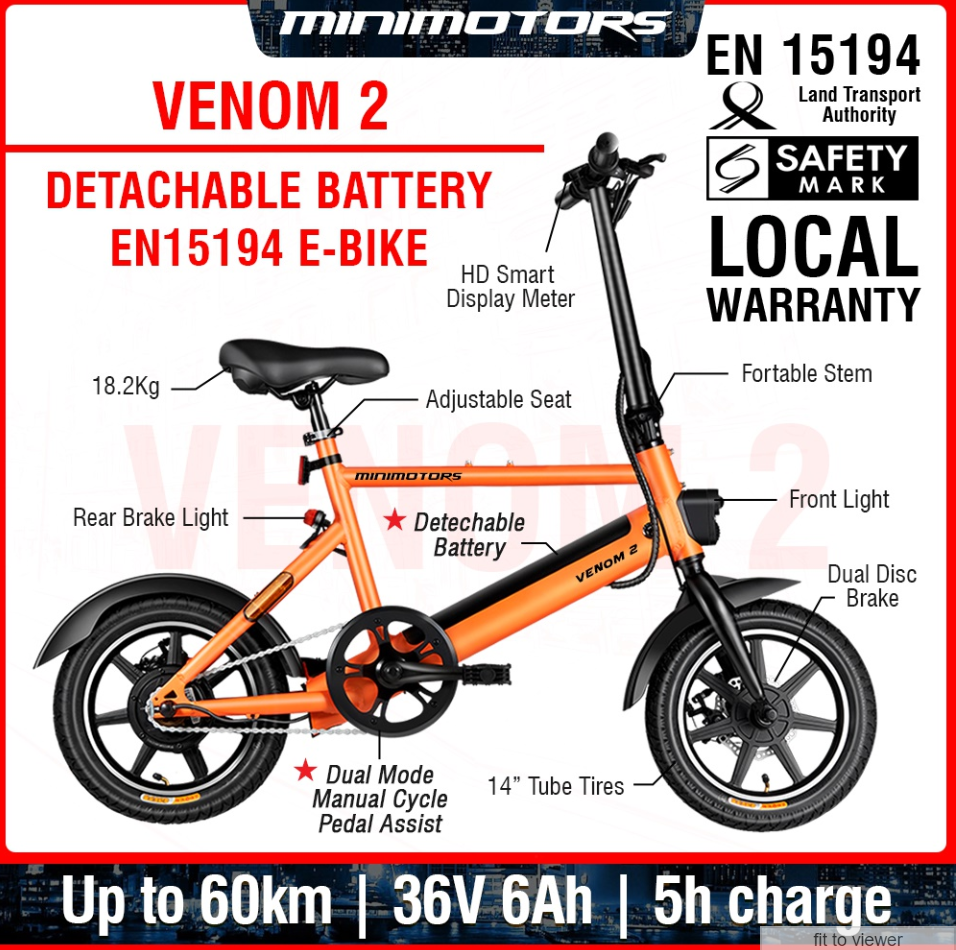
There is no list of approved eBikes on LTA website but here are a few that were tested and approved:

Minimotors Venom 2/2+

$799 on Qoo10

Tsinova Smart eBike

$1,688 on Qoo10

Register your eBike with LTA (from onemotering.com.sg)

You can buy an unregistered PAB and bring it for type-approval, sealing and registration yourself. If the unregistered PAB already has an LTA orange seal, you will only need to register it. Alternatively, you can buy a registered PAB from a retailer, who will simply transfer the registration to your name.

To register or ride a PAB, you must be at least 16 years old. You must also wear protective gear when riding a PAB. If you fail to follow the guidelines when using your PAB, you may face penalties.

If you have purchased an unregistered PAB, you must get it type-approved and sealed and registered at an LTA-Authorised Inspection Centre before you can use it.

If you have purchased an unregistered PAB which already has an LTA orange seal, register your PAB online.

Once registered, affix a registration number plate on your PAB.

You may also transfer your PAB to another rider who meets the requirements.

If you are no longer using your PAB, you can also deregister it.

Read More...

Transportation Hacks For Every Singaporean

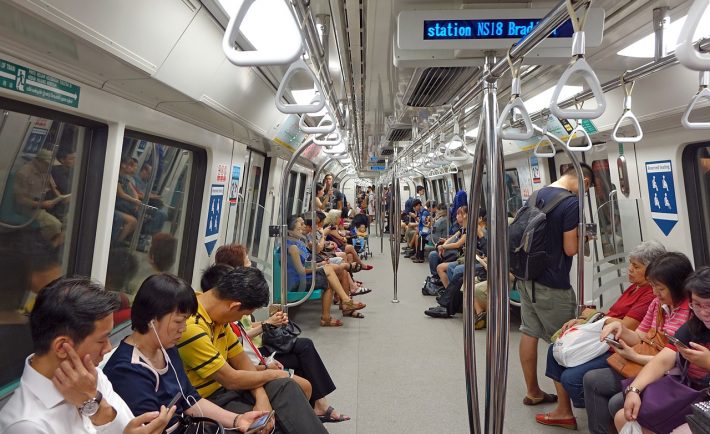
Getting around Singapore can either be a breeze or a storm. It is up to you to weigh your options. Nonetheless, you may use this guide to travel from one place to another without a personal vehicle.

PLAN YOUR TRIP AHEAD

To budget your transportation expenses, you may plan your trip ahead of time. You can use fare calculators to complete the task. With an extensive collection of MRT lines and bus services, you may not be able to memorize each route or fare.

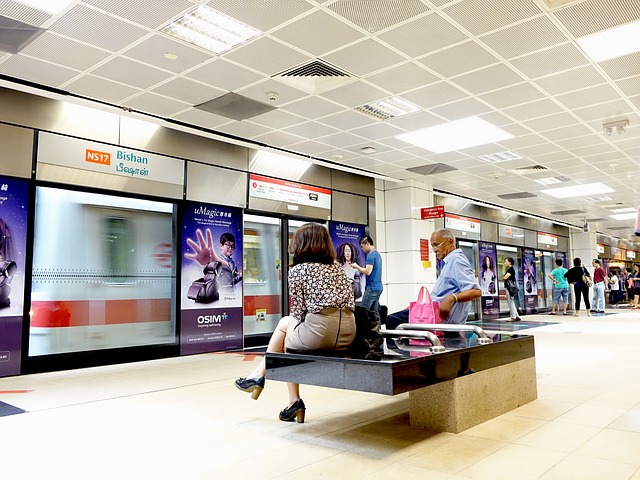
Know the most affordable way to get to your destination by checking GoThere.sg. You may also download the lite version of the app for free or plan your route the latest MRT map.

DO NOT TAP OUT

There will be days when you cannot hold your pee any longer! Not to mention, there will be times when nature calls at the worst places.

If you find yourself within the CBD area, simply alight at Bugis station and use the toilet within its gantry area. This will save you money without having to tap out. As this toilet is meant for the people who need it most (e.g., PWDs), please exercise courtesy.

CHOOSE YOUR CABIN WISELY

All our movements inside the train station are fueled by time. There are times when you have to settle with the cabin in front of you. Otherwise, the door will shut! Then, you have to endure the distance from your cabin to the escalator.

When you have time to spare, choose your cabin wisely. Avoid the mini “pilgrimage” by entering the cabin that opens directly to the escalator at your exit. A nifty app called Singapore MRT Lah 2.0 may help you. This app lists the quickest routes out of the train station. See for yourself!

ENJOY FREE WIRELESS CONNECTIVITY

Commuting can be boring for some. Thus, these people may turn to their phones for entertainment. Spiraled into the online abyss, you may encounter some ads. You do not know how much data a video ad can consume! So, reduce your mobile data consumption by tapping into areas that offer free WiFi spots.

Image Credits: pixabay.com

Simply download the Wireless@SG app via the App Store or Google Play. Register to enjoy free wireless connectivity at a variety of stations.

Sources: 1 & 2

Read More...

Why Are Cars So Expensive In Singapore?

A city with growing population and limited space cannot afford a massive traffic jam. This is why the Singapore government invest billions of dollars each year on public transportation. The government aims to make it reliable, inexpensive, efficient, and accessible for all. With this objective comes the restriction of private transportation. Since 1990, the Certificate of Entitlement (COE) complemented with tax and duties have been introduced to regulate car ownership and road usage.

There is no such thing as a cheap car! Even an upper middle class Singaporean will tell you that owning and maintaining a car is no easy feat!

So, why are cars so expensive in Singapore? For starters, it involves several factors.

#1: Open Market Value

You may have noticed that the price-tags of a certain car varies from country to country. These varying degrees of prices start a baseline. In our case, the baseline is the Open Market Value or OMV. The OMV will soon be boosted by the Additional Registration Fee and the Certificate of Entitlement. Imagine if we paid cars in terms of its OMV!

#2: Additional Registration Fee

As I said, your car purchase will be subjected to the ADF. ADF or Additional Registration Fee comes after the Registration Fee and the OMV. You see, it is a form of tax imposed to all cars during registration. The calculation of ARF depends heavily on the OMV of the vehicle.

Currently, the ARF is calculated as follows:

For the first $20,000, 100% of the OMV
For the next $30,000, 140% of (OMV-20000)
Above $50,000, 180% of the (OMV-50000)

Please refer to the full list at lta.gov.sg.

#3: Excise Duty And GST

People pay for additional taxes on specific goods sold within Singapore such as petrol, alcohol, and cigarettes. This tax is called Excise Duty.

The Excise Duty on cars is 20% of the OMV. Once this is calculated, a 7% GST will be added on both the OMV and the Excise Duty. It sounds confusing, right? Let me illustrate it for you!

For instance, a car has an OMV of S$49,113. It will incur and Excise Duty of S$9,822 (20% of S$49,113) and a GST of S$4,125 (7% of S$49,113 + S$9,822).

#4: Certificate Of Entitlement

Certificate of Entitlement or CEO is infamous for bumping one’s car expenses. Even Singaporeans who cannot drive would know what it means. It is a certificate that allows a car to be driven for 10 years. Essentially, COE is driven by the market’s supply and demand. COE prices can elevate during periods of high car demand and vice versa.

In 2013, the COE was a whopping S$97,889 (Category E). In today’s market, COE prices go between S$40,000 to S$50,000.

#5: Car Dealers’ Margin

It comes as no surprise that the car dealers have a portion for their own overheads. The profit they own for selling cars is called the dealers’ margin.

It could range from as little as 15% for affordable brands to as high as 50% for luxury brands.

Image Credits: pixabay.com

Your job is to calculate all these factors together. Then, ask yourself whether owning a car in Singapore is worth it or not!

Sources: 1 &2

Read More...