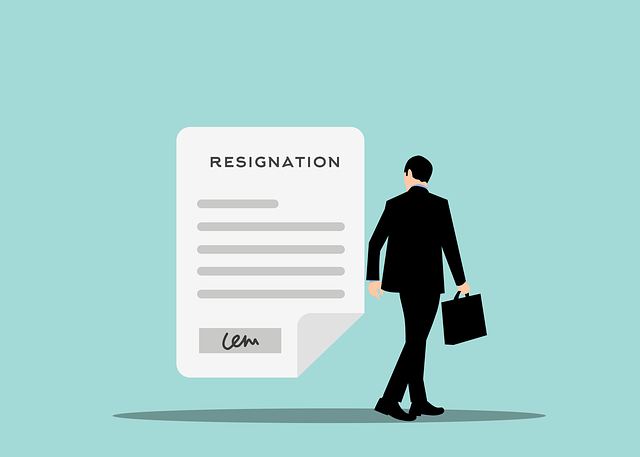
When shifting jobs, professionals should communicate their decision to quit with respect and gratitude. Leaving professionally and ensuring that you do not burn any bridges is the best way to welcome new opportunities ahead. While it may be entertaining to quit in a grand public gesture, it should probably stay as a dream.
Here are five helpful tips that you can employ when you lodge your resignation this 2022.
#1: BE DIRECT
After days of careful contemplation, you realized that you are ready to leave your post. Make sure that your supervisor and co-workers are not surprised by a general announcement. Notify your direct supervisor through written and verbal communication. While some companies prefer to receive a four-week notice, others are satisfied with a two-week notice. Review your employee contract to read about the resignation period.
Be direct when communicating the reasons for leaving. Consider not only what is best for you and your new employer, but also what is best for the company you will be leaving.
#2: GIVE AT LEAST 2 WEEKS’ NOTICE
Employers generally accept a two weeks’ notice of departure. Sharing your decision in advance will give the supervisor time to sort things out. Elements such as your pending projects and status of assignments can be transitioned strategically.
In contrast, departing abruptly could have negative consequences such as leaving a poor impression and having co-workers wonder what happened wrong.
#3: CREATE A RESIGNATION LETTER
Make a resignation letter that is clear and concise. Thank your employer for the opportunity and state when your last day of work will be.
If you are leaving over a possible legal claim (e.g., allegations of workplace safety violations), you must speak to a lawyer first. Remember that anything in writing could be used against you.
#4: TRANSITION YOUR PROJECTS
What are your current projects and assignments? List these down. Determine which items will end when you leave, and which will need to be assigned to someone else. Discuss these projects to your direct supervisor and provide substantial data, reports, files, and contact information. You may need to train your replacement too.
#5: MAINTAIN PROFESSIONAL RELATIONSHIPS
Maintain professional relationships, if possible. Connect with key people from your previous organization through their LinkedIn profiles or email addresses. Make it clear whether you are open to being contacted with questions about the pending projects after you are officially gone. Alternatively, you can connect with these people virtually.
Since September 2021, when the number of COVID-19 cases in Singapore began to grow, teleworking has been the norm. However, from this year onwards, 50% of employees who have been completely vaccinated or those who have been discharged from COVID-19 will be permitted to return to work.
Many people are feeling uneasy especially since the time is nearing. After long stretches of remote work and just seeing our existing and new colleagues on screen, the prospect of seeing everyone again in person might be daunting.
Fear can manifest itself in a variety of ways depending on the individual. While one may have panic attacks, the other might have recurring nightmares. Continue reading to learn how to lessen anxiety from going back to the office.
Meditate
Mindfulness may be an excellent strategy to cope with anxiety, and even as a panic disorder relaxation treatment. This meditation practice can help you settle your physical and mental aspects by slowing down intrusive thoughts, reducing pessimism, and calming your soul.
You might be shocked at how difficult it is to stay still when you first start meditating. But the idea is to merely monitor the mind rather than to evaluate it. Start with short sessions to develop a feel for the practice. You may then progressively extend your duration once you’ve established a more consistent, comfortable routine. It’s also crucial to meditate in a quiet location where you won’t be disturbed.
Pen it down
The practice of maintaining a log of your own emotions, sensations, and discoveries is known as journaling. Writing or drawing about your emotions has been connected to a reduction in mental anguish. It can undoubtedly assist you in breaking free from the never-ending loop of incessantly pondering and lamenting over the tension of returning to your workplace.
Researchers discovered that persons with varied medical illnesses and anxiety who wrote on the web for 15 minutes 3 times a week for 3 months felt better and had fewer depressive symptoms after a month. Throughout the months of writing, their mental health was strengthened.
Try aromatherapy
Image Credits: unsplash.com
Essential oils extracted from plant parts such as roots, fruits, and flowers are used in aromatherapy for anxiety. There are physiological benefits when such oils are breathed or absorbed via the skin.
Essential oils are available in a wide range of qualities, from pure ones to diluted options with lesser costly substances. As there may be no regulations, the label on the bottle you’re purchasing might not identify all the elements that are in it. Thus, essential oils should not be consumed. Keep in mind also that fragrance or perfume oils are created wholly from chemicals or essential oils blended with chemicals. They’re not appropriate for aromatherapy, so seek bottles containing only 100% essential oils.
Have sufficient sleep
Anxiety is usually linked to sleep disturbances. Excessive anxiety and terror can make it difficult for you to enter dreamland and stay deep asleep. Lack of sleep, unfortunately, can exacerbate anxiousness, resulting in a vicious cycle of sleeplessness and distress problems.
Due to the complex link between anxiety and sleep, obtaining a sufficient amount of shuteye may help you feel less anxious. Quality of sleep encompasses both your sleeping patterns and the surroundings in which you sleep in. Keeping your bed more cozy and reducing sources of sleep disturbances such as light and noise are two ways to enhance proper rest. Excessive caffeine and alcohol should also be avoided after noon, and we shall discuss this further later in the next point.
Limit caffeine and alcohol intake
You may think you need a great deal of coffee to get back in the game, or a glass of wine to bury your tension. However, combining coffee and alcohol may exacerbate anxiety symptoms, as well as have dangerous effects if you are on medication.
Before you realize it, consuming too much coffee in the day might lead to you drinking alcohol at night to mask the caffeine’s impacts on sleep. Even though alcohol may make you doze off faster, it can diminish the sleep patterns your brain needs to operate properly. Alcohol can exacerbate depressive symptoms and make you more prone to drinking in the future. Don’t start such habits!
Stay socially connected
Image Credits: expatliving.sg
According to research, an absence of social interaction poses a higher health risk than obesity, smoking, or high blood pressure. On the other hand, establishing a powerful emotional network increases your chances of living longer by 50%.
Anxiety and despair are lower among those who feel more connected to others. Furthermore, studies suggest that they have better self-esteem, are far more empathetic, trustworthy, and collaborative. This signals that your colleagues will be more receptive to trusting and working with you as a result too.
We are innately sociable beings that stem from a need to be liked and to stay connected with our fellow human beings. One of our most basic needs is social interaction, and it has a significant influence on our emotional stability.
In this modern-day era, the average person goes straight to the Google search bar to find new information. But do you know that Google may not be the best way to learn new things?
Well, more than half of the information written online is rewritten content. Let’s also not forget about the high marketing spend certain companies are pumping into every month to rank their websites up on the first page of Google.
This is the reason why we would like to introduce to you a five-step approach called the ‘Spiral Method’ to help you gain a new perspective in learning new things. Consider this as an alternative to Google if you would like.
In short, the ‘Spiral Method’ is made of 15 to 20 meetings with people in your network and their extended connections. At the start, you may not get as much learning data. However, it progresses into something deeper as you advance to your 10th meeting and beyond.
Please also note that we’re not asking you to ditch Google. Google can still act as your supplemental tool and learning partner. Just in case you get conflicting views from the industry experts you’ve spoken to, you can always confirm it with the content on Google search.
When you head to Google, chances are that you already have a topic in mind. If you have a couple of questions in your thinking cap, you may want to pick on the ones that matter and sub-categorize them accordingly.
Next, instead of typing the keywords in your search bar, go to your social media or LinkedIn and take a good look at your connections. You don’t have to pick out 15 people at once because referrals can come into play later. Just select at least five to eight people and then reach out politely, asking for a short 30-minute conversation on your decided topic.
#2: Prioritise big concepts from the get-go
Life often throws us lemons. But the smart people use it to make lemonade with a tinge of sweetness. Depending on who you meet, you may be bombarded with lots of valuable information from the get-go. It’s okay even if you don’t remember down to the exact details.
The idea at the beginning is that you prioritize big theories surrounding your chosen topic. Think of it as the main takeaways from each conversation. At the start, don’t stress yourself over being an expert at the topic you’re researching. At this stage, you’re just trying to be a bit smarter and more informed. You could even tap on keywords that you’ve not heard before and use them as the basis to dig deeper.
#3: Be brave to request referrals
Image Credits: unsplash.com
At the end of every conversation you have with an expert or industry personnel, thank them for their time but don’t leave it at just that. Be brave to ask for referrals so you can turn one connection into other relevant contacts. If you think it might be impolite to reach out to these new contacts personally, request a short introduction to ease you into your newfound relation.
#4: Keep up with the conversations until you’ve met 15 to 20 specialists
Remember what we mentioned in the introduction about the ‘Spiral Method’? The approach is essentially made of 15 to 20 meetings with people in your network and their extended connections. Hence, keep up with the conversations until you’ve met about 15 to 20 industry experts.
As you reach your 10th conversation, you might have gathered some key concepts or keywords which require some research into. Don’t be afraid to use Google to do some reading up before you go on your next meeting with your 11th connection and beyond. The last thing you want to do is to rush into conversations without doing the necessary read-up on selected concepts beforehand.
Also, as you expand your network and receive referrals from your existing connections, you will be more likely to meet niche experts in the field. Remember to ask for the latest trend or where your particular subject is heading towards in the near future. These people have been in the market for an extended period and can be trusted with their predictability over what’s out on the worldwide web.
#5: Track your progress and recall the information you’ve learned throughout your conversations
Image Credits: unsplash.com
As we come to a close, be aware that it is absolutely normal for your learning rate to slow down as you progress. As a good gauge, about 60% of the information you hear may be new, while the other 40% is what is already ingrained in your mind by the 5th meeting.
Depending on the chosen topic and the people you meet, some spiral approaches may be at a faster or slower rate than others. That is why it’s essential that you track your progress by recalling the information you’ve picked up throughout your conversations.
Hopefully, by your 15th conversation, you would have maxed out your professional knowledge regarding that subject and no longer have to continue setting up meetings any further. But if there’s a need to continue, then go ahead until you’ve reached the peak point where there’s no need to speak to anyone anymore.
There‘s more to researching than just relying on Google. Try using the ‘Spiral Method’ next time!
Choosing what to wear to a job interview is usually a stressful part of the preparation. Successful job interviews depend on how you present yourself and how you answer the questions. Begin by putting on an outfit that will help convince the hiring manager that you are a good fit for the company.
Below are some tips that you can employ to dress your best at a job interview.
#1: DO YOUR RESEARCH
Research the company’s environment to know how formal their workplace is. If you checked the company’s website and its social media pages, you could get a grasp of their branding. You can even call the HR department to know what the appropriate dress code is.
Consider the available position, the viable role, and the industry. If you are interviewing for a corporate position, wear formal business attire. This means that men can opt for a suit and women can opt for a tailored dress. For less formal positions such as carpenter and plumber, you can wear business casual.
#2: WEAR FORMAL BUSINESS ATTIRE
Generally, you can enter a job interview wearing professional or formal business attire. Men can wear a suit, a pair of slacks, a shirt, and button-down. Women can wear a tailored dress or a blouse.
Feel free to incorporate modern trends into your outfit. However, you must avoid wearing anything too flashy or bright as these will distract the hiring manager.
#3: WEAR BUSINESS CASUAL ATTIRE
If you are having an interview in an informal working environment, you can wear a business casual attire. Business casual attires are relaxed and polished. You can wear relaxed-fit khakis and dark-wash jeans.
Before dressing up in the business casual attire, make sure that you know the company’s dress code. You can contact the person who scheduled the interview to ask him or her for advice.
Image Credits: pixabay.com
#4: WEAR SIMPLE ACCESSORIES
When it comes to accessories, you must keep your choices simple. Avoid large, chunky, or distracting bracelets, earrings, or necklaces. Wear stud earrings, delicate necklaces, and one simple bracelet. You do not want your accessories to get tangled with your face mask.
Keep your nail polish classic and muted too. Remember that you are the star of the interview.
#5: DO A DRESS REHEARSAL
Try on the complete outfit a few days ahead of the interview. This will help you perceive if everything fits properly and smells clean. Do a mock interview with a friend or a loved one while wearing this outfit to see how it fits. Check the outfit one last time for any wrinkles, stains, or holes.
Your career has a significant impact on your future. It can affect many facets of your life such as your lifestyle, income, identity, and family. Carefully consider your options and follow these steps to help you decide what career to pursue.
#1: LEARN ABOUT YOURSELF
You must assess yourself first before choosing the right career path. Your interests, soft skills, aptitudes, personality, and values make you a good fit for a particular occupation.
What subjects did you enjoy at school? What activities have you done well at? You can use self-assessment tools to gather information about your traits. Others work with career counsellors to help them navigate this process.
#2: MAKE A LIST OF TOP 4 CAREERS
Narrow down your list of potential careers. Keep in mind that you must choose a career in which you are interested. Aim to match your qualifications and personality with your top four choices.
See if these choices feature similar skills and other qualifications. Make note of these similarities as it can help you decide what your future study options can be.
#3: EXPLORE THE LIST
Now that you have the basic information about each occupation on our list, it is time to do your research.
Image Credits: pixabay.com
Look for job descriptions, further training, and licensing requirements. Learn how you can advance in a particular position. You can also research on the job outlook and your potential earnings.
#4: CREATE A SHORT LIST
Begin eliminating careers that you do not want to pursue any further. You should end up with two occupations on your concise list.
Eliminate everything with duties that do not appeal to you. Remove careers that have weak job outlooks! Lastly, get rid of careers that you are unable or unwilling to fulfill the requirements.
#5: CONDUCT IN-DEPTH INTERVIEWS
Narrow your choices further by conducting in-depth interviews. Find credible people in career resources such as LinkedIn. Arrange to meet with people (i.e., online, or offline) who work in the occupations in which you are interested. These people can provide firsthand experience about their careers.
Study their answers and go back to your list. Contemplate on your potential career options.