Singapore’s journey with electric cars started as early as 1994

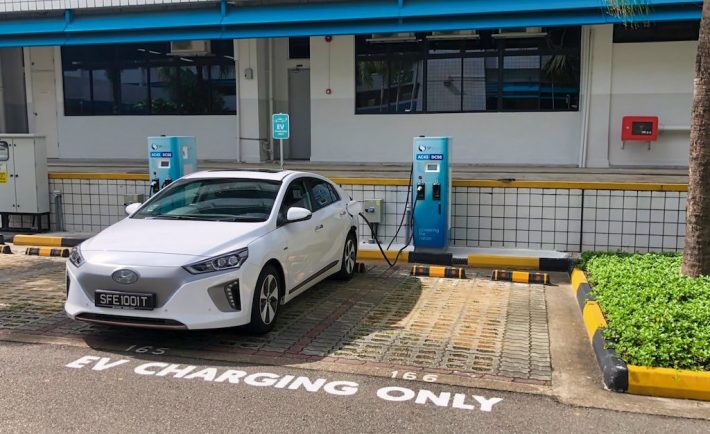
an EV charging point in Singapore

Do you know that the question of whether electric vehicles (EVs) can replace petrol and diesel vehicles in Singapore was examined since 1994?

Ex-Nominated Member of Parliament Kanwaljit Soin suggested the possibility of Singapore being one of the world’s first cities to increase the use of EVs.

To that, former Environment Minister Mah Bow Tan said that his ministry was monitoring EVs’ development in other countries. He added that Singapore would look into their use in our little red dot when such vehicles are commercially feasible.

Indeed, many years have passed, and there has been fast growth in the EV industry. This includes improvements in battery and charging technologies.

According to a Bloomberg report in December 2020, the price of battery packs for EVs is falling so much that manufacturers may be able to devise vehicles similar to combustion engine models without tax rebates.

News has it that two years from now, the average price per kilowatt-hour for a lithium-ion battery pack will cost only US$101.

And to bring our attention back to what’s happening presently, Finance Minister Heng Swee Keat announced in his Budget speech on Feb 16 that there will be more incentives to encourage EVs’ early adoption.

Here’s a quick look if you’ve missed out on that piece of news:
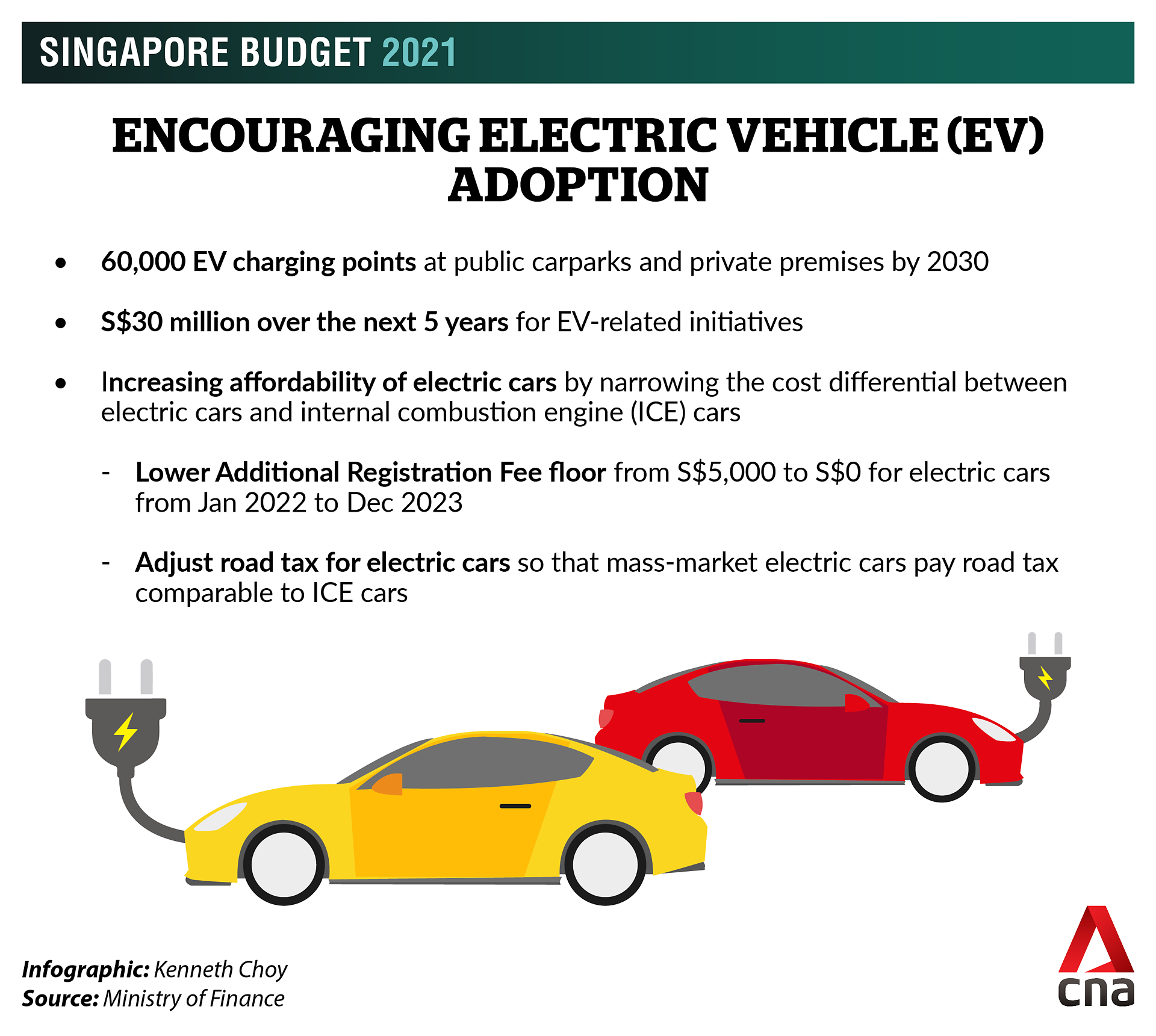
Singapore to encourage EV adoption

Image Credits: CNA

You may also be interested in reading our recent article on custom ordering a Tesla Model 3 online from S$112,845 (excluding COE).

Meanwhile, here’s a look at Singapore’s journey with EVs from 2009.

2009

Government authorities began to create an EV task force to determine benefits, nationwide costs, and feasibility of such vehicles on our sunny island.

2011

Two years later, the task force started EV test-bedding, putting us as one of the world’s first cities to test EVs at the systems level. There were only three outdoor and two indoor charging stations and nine such vehicles then.

2012
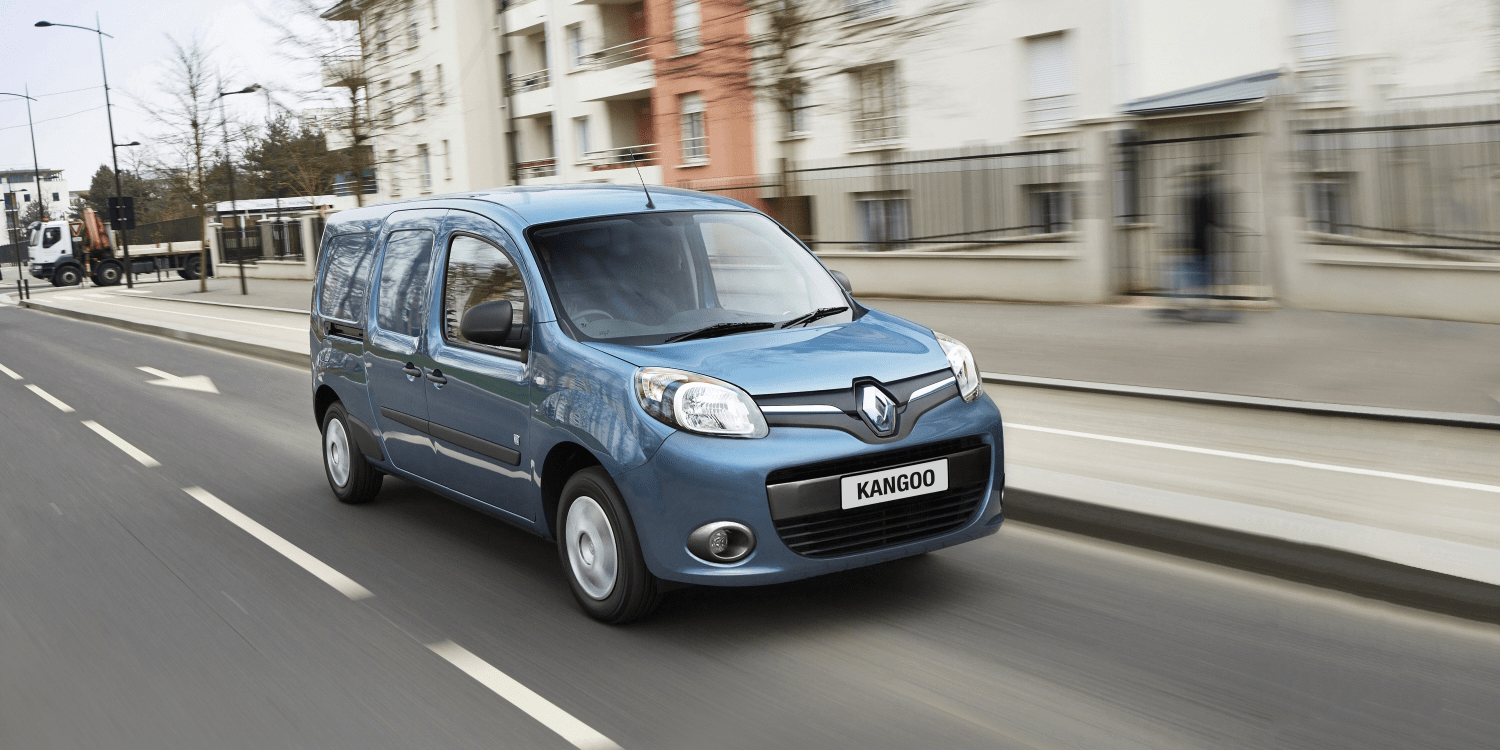
electric Renault Kangoo

Image Credits: electrive.com

A study was initiated to look into the impact of EV charging on the electricity grid just a year after. Three electric Renault Kangoos were used to aid testing. The EV test-bed also increased with more charging stations and EVs on the road.

2014

2014 marks the start of the EV car-sharing programme trial with 1,000 EVs. The task force then had an RFI (request for information) for companies to submit proposals for the test. They were keen to examine whether a one-way car-sharing model was a possible option.

2016

This was the year where a secondhand Tesla Model S imported from Hong Kong was slapped with a S$15,000 carbon surcharge. The Land Transport Authority (LTA) later relooked at the case and commented that they were in talks with Tesla engineers to see if the Model S was tested correctly.

2017
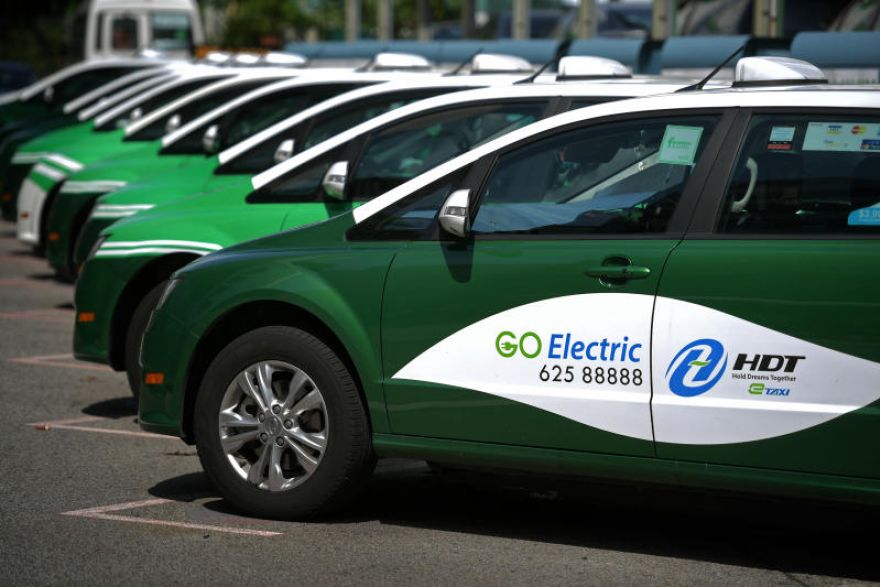
HDT Singapore Taxis

Image Credits: The Business Times

HDT Singapore Taxi introduced Singapore’s first fleet of e-taxis. BlueSG was also selected from the 2014 RFI exercise to run a fleet of 1,000 EVs. This was in alignment with Singapore’s car-lite vision as it would reduce dependence on private vehicles. The task force also had plans to facilitate 2,000 charging points across Singapore then.

2019

Tesla’s CEO Elon Musk asserted that our government has been unsupportive of EVs. To that, former Environment and Water Resources Minister Masagos Zulkifli responded that Singapore is keen to consider solutions that will address climate problems instead of lifestyle ones.

He also shared the difficulty of having enough charging stations in Singapore, considering a high percentage of our population living in high-density public housing. He added that hydrogen was a better long-term solution.

2020

As part of Singapore’s efforts to fight climate change and transit to a low-carbon, low-emissions economy, Mr Heng revealed in Budget 2020 that EV buyers would get a discount of up to 45 per cent on the additional registration fee, with a S$20,000 cap.

He said that Singapore is placing a bet on electric vehicles because it is the most assuring technology. It was also made known that Singapore had plans to phase out ICE (internal combustion engine) vehicles. This would pave the way to cleaner energy by 2040.

These were the three measures highlighted to help Singapore achieve its aim:

  • Widening public charging infrastructure for EVs
  • Enhancing incentives to promote early EV adoption
  • Relooking road tax methodology for cars starting January 2021
2021
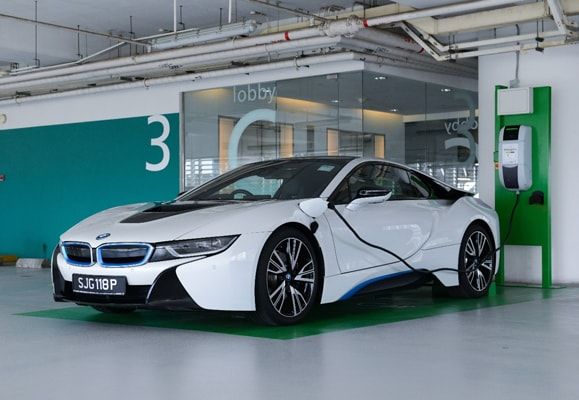
an EV charging station with a BMW parked

Image Credits: capitaland.com

Finally, this year, the government unveiled the inter-ministerial Singapore Green Plan 2030. This initiative would steer Singapore to be more environmentally sustainable over the next decade.

Prime Minister Lee Hsien Loong also wrote in a Facebook post that Singapore residents could look forward to more electric vehicles on the roads. New goals pertaining to cleaner energy and lowering Singapore’s overall carbon footprint were added:

  • More EV charging points (60,000 to be exact) by 2030
  • All newly registered cars need to be of cleaner-energy models from 2030

With that said, Mr Heng also announced on Feb 16 the hiked petrol duty rates as Singapore steps up to fight climate change. Here are the numbers to note:

  • Premium grade petrol: 79 cents/litre, up by 15 cents/litre.
  • Intermediate grade petrol: 66 cents/litre, raised by 10 cents/litre.

For visual learners, this might be more informative:
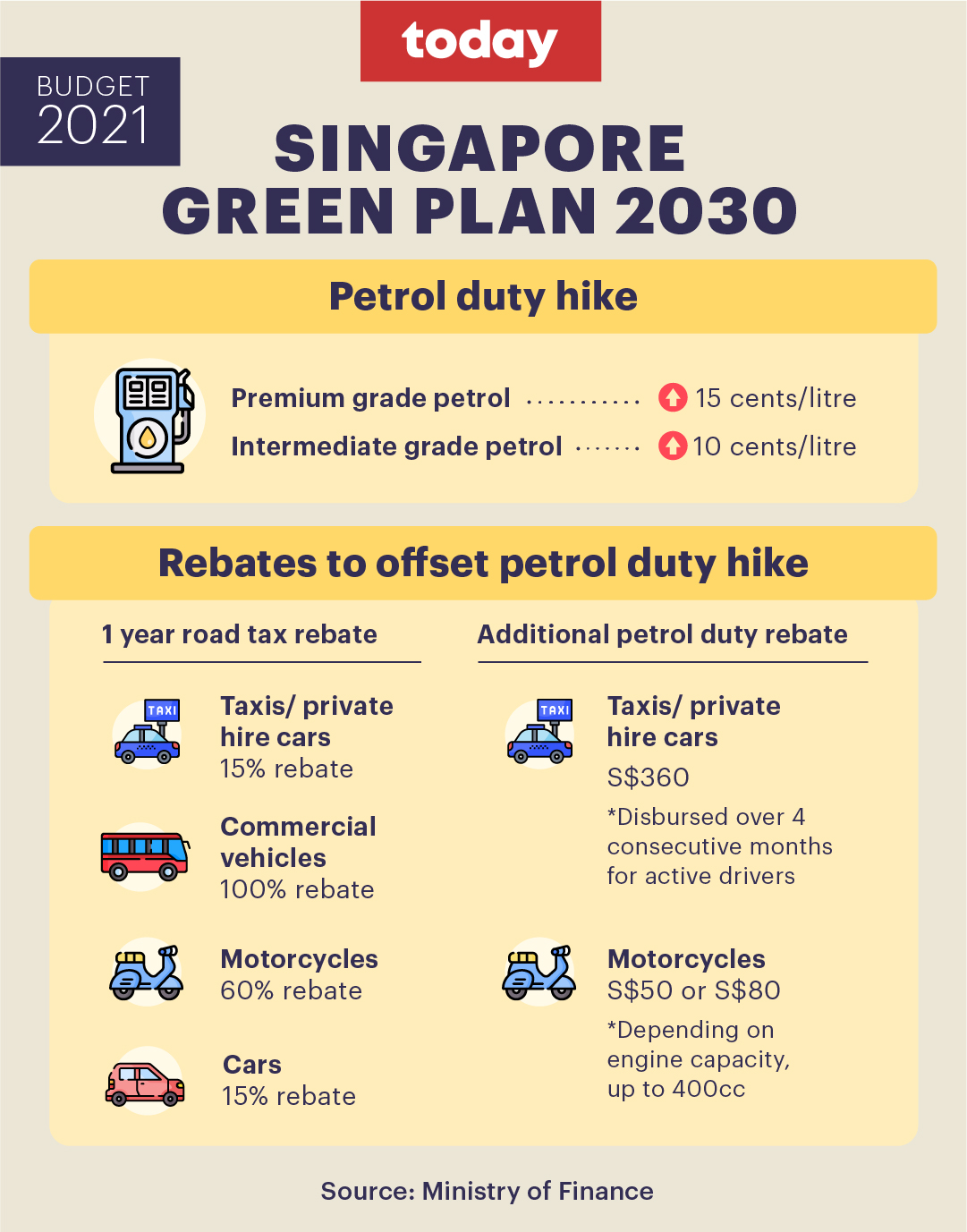
hiked petrol duty rates in Singapore

Image Credits: todayonline.com

If you’re not ready to make the switch right away, that’s okay. Not everyone is prepared to jump on the EV ownership bandwagon. However, it would make sense to start thinking about it, considering the changing times.
Read More...

7 challenges to help you save more money

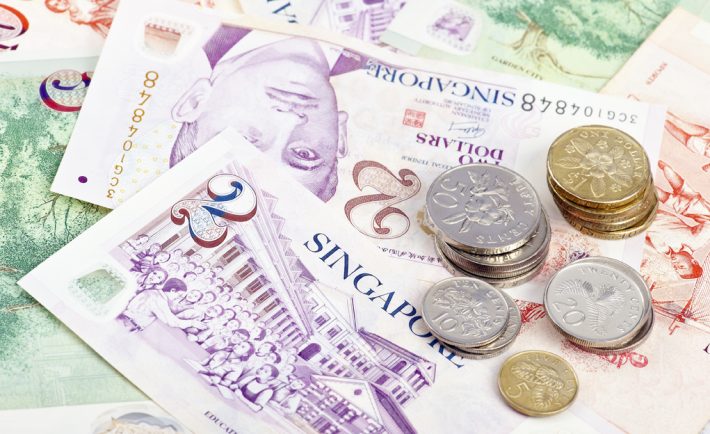
Singapore currency

Are you beginning to plan for your financial future? Or are you hoping to make a down payment on a big purchase or preparing to start a family?

Saving money is an integral part of personal finances, but it can be hard to refine and practice. For some, saving money can feel downright impossible! However, with practice and patience, you can turn a new leaf on your money-saving journey.

Need some motivation? Building up your savings account can be easier if you take on these money-saving challenges that are sure to guide you to more excellent financial health in the near future.

#1: Introduce a “no extra spend” week

One of the hardest things to do when saving money is figuring out where in your budget that extra cash will come from.

Cutting out excess spending can be a great way to create more cash flow, but it’s important to ease into it so you don’t become overwhelmed and give up too quickly. Try setting aside a single week and limit all your spending to absolute essentials: bills, groceries, and any necessary transport costs.

#2: Exercise the 1% trial
1 per cent

Image Credits: blackthorn.io

The 1% challenge is a well-known financial trend to help get in the habit of automatically setting aside a portion of your income every month for your savings.

Determine a small percentage of your monthly income (be it 1%, 5%, or even 10%) and arrange an automatic transfer that pulls that money into your savings account as soon as your paycheck lands. Over time, that will build up into some substantial added savings!

#3: Clear out your food pantry

Especially since the pandemic has made food delivery so inviting, it can be hard to remember what’s left in your food pantry. We know just how it feels like as foodpanda-ing or dapao-ing something is much faster and convenient.

But still, you want to force yourself to clean out all the food in your cupboards and intentionally cook or use up everything you have been storing for too long. This will aid you to save money and make more space in your kitchen!

#4: Borrow, don’t buy
a lady asking if she can borrow a dress

Image Credits: thespruce.com

Are you struggling with the need to bring in new items but don’t want to spend the cash? Try swapping out buying for borrowing for a month.

Every time you feel the urge to purchase something new, see if a friend or coworker (or even a close neighbour) has a version you can borrow. You would be surprised by how much money you save just by sticking to this principle!

#5: Set aside your spare change

Do you use a lot of cash daily? Start saving even more of that money by designating a certain amount as your spare.

For example, it can be a simple S$1 coin. Every time you receive S$1 from your favourite aunty at the Kopitiam, drop it into a piggy bank. These spare change can add up!

Check out a range of visually appealing piggy banks from Lazada here if you need help getting started.

#6: Give yourself 52 weeks
white and gold calendar template

Image Credits: unsplash.com

Other than the 1% challenge introduced earlier, the 52-week challenge is also one of the most famous money-saving techniques.

It has you begin setting aside a small (and increasingly growing) amount of money every week. That money sits in a jar or drawer and increases with every new week when you add to it. The best thing is that you just need to start with a dollar from the first week.

Keep increasing a dollar as you go (S$2 in the second week, S$3 in the third, and so on), and by the end of your 52-week challenge, you would have saved a little less than S$1,400!

Or if you think you can raise your game, why not go for the 365-day difficulty instead? This means rather than saving an amount each week; you do it for every single day of the year. But do set a realistic amount lest you backslide and abandon the whole challenge altogether.

#7: Sell your stuff online

There are several platforms to sell your stuff online. Ladies with neverending piles of clothes can try selling their clothes with Refash. Simply pack, send, and receive cash or credit in 30 days! Click here for more information.

For more general kinds of stuff, you can check out Carousell if you haven’t already. I’ve personally sold a couple of items on the Singapore-based app and think it’s a rather innovative platform for buyers and sellers to interact.

Or since most of us own a Facebook account, why not try Facebook Marketplace? You can easily create a listing under various categories, including home goods, pet supplies, and even properties for rent/sale.

Beware of scammers, though.

Final thoughts
a woman standing in front of a kitchen cupboard

Image Credits: ediblecommunities.com

You don’t have to take on the abovementioned challenges all at once since that would be overwhelming. Pick and partake in the ones you think are interesting and feasible. For example, after reading this article, why not put down your phone and start emptying your food pantry?

Little actions can lead to unexpected outcomes. Keep at it!

Read More...

An economist says these 3 countries are poised to prosper in the next 10 years

Namsan Tower in Korea

With the new year’s arrival and a new president in the United States, international cooperation and trade are sure to be very different this year than in the past.

Because of the anticipation that looms behind future developments, we must pay attention to the up and rising economies, which may directly or indirectly affect us.

According to economist Kaushik Basu, three countries might just live up to expectations in their development process. They are South Korea, Vietnam, and Mexico.

South Korea is an advanced economy, so there’s no doubt about it. As for Vietnam and Mexico, the World Bank deems the two as a lower-middle-income economy and upper-middle-income country, respectively. There’s good reason to believe that both countries will exceed others over the next decade.

Without further ado, let’s dive into some of the reasons South Korea, Vietnam, and Mexico are set for success.

#1: South Korea
a palace in Seoul

Image Credits: unsplash.com

South Korea is one of the safest picks.

Despite the 1997 East Asian financial crisis that affected the country’s two-decade-long growth run since the final few years of Park Chung-hee’s presidency during the late 1970s, South Korea’s investment in human capital is finally paying off.

For instance, in 2019, South Korea had about 3,319 patent applications per million population. To put that number into perspective, Japan only had 1,943 while China and the United States had 890 and 869, respectively. As such, South Korea is beating out some of our world’s top power economies.

The East Asian country was also the first country to begin a 5G campaign that covered the entire nation in April 2019, aiming to take a 15 per cent share of the global 5G market by 2026. 

Furthermore, South Korea has taken steps to solve a pressing issue worldwide – teacher selection. Because of the good benefits of teaching, South Korea has attracted various talents into its education industry.

As such, the former chief economist of the World Bank expects South Korea’s per capita income to overtake Japan within the next decade.

#2: Vietnam
time lapse photo of Hanoi

Image Credits: unsplash.com

When Vietnam’s economy finally changed from a command economy to more of a market-oriented model, that was the catalyst that would help transform Vietnam into the top three fastest-growing economies.

Since 2010, Vietnam has kept up with its sustained growth. It has enacted policies that make trading and foreign investments far more accessible, such as cutting tariff rates and investing in human capital. 

Additionally, Vietnam’s successful handling of the pandemic situation has produced a 2.9 per cent economic growth in 2020, a period where most global economies suffered. As incoming international investments flow into Vietnam, the sky’s the limit for the country’s development as one of the world’s leading manufacturing hubs. 

#3: Mexico
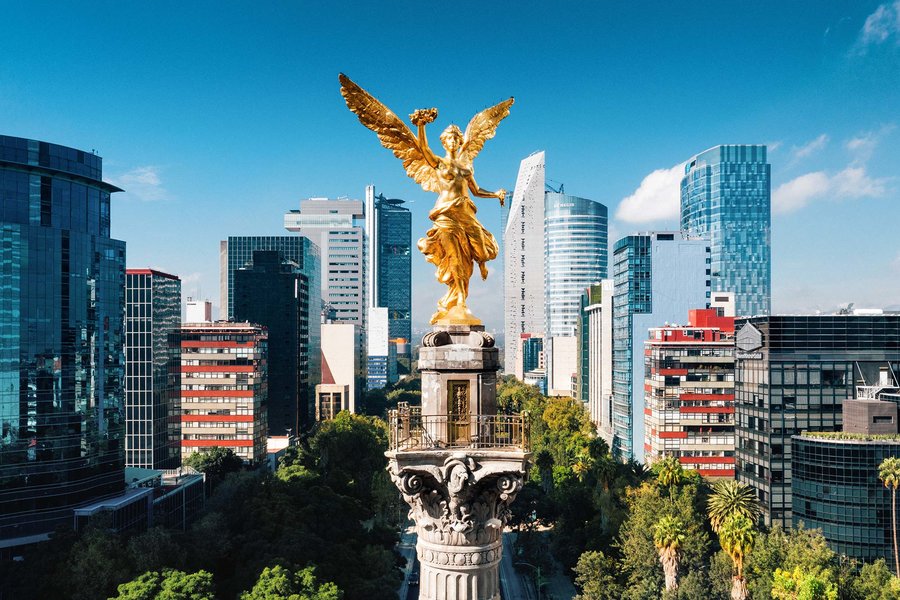
The Angel of Independence in Mexico

Image Credits: departures.com

Despite the toll that the pandemic has taken upon Mexico, the presidency of Andrés Manuel López Obrador (AMLO) in 2018 has brought new hope to the country.

This is because he began Mexico’s “Fourth Transformation”, an economic plan that will bring prosperity, growth, and a lower wealth gap between the rich and poor. Similarly to South Korea’s President Moon Jae-in, AMLO opted to live outside of the official presidential mansion, sending a symbolic message to the people.

Furthermore, Mexico will most likely be another global manufacturing hub due to arrangements such as the United States-Mexico-Canada Agreement (USMCA). With the USMCA in place, Mexico stands a chance to integrate its economy with the other two powerful forces.

Together, the trilateral agreement brings capital, labour force, and technology to the table, which can outshine China. Mexico has indeed a huge potential for growth in the years to come.

Read More...

Beginner’s Guide To Growing Houseplants

From vibrant succulents to the elusive variegated Monstera, the popularity of growing your own houseplants spiked during the pandemic. Visually driven social media has become a haven for foliage fanatics. Simply ask your friends, who are proud plant-dads or plant-moms, about their collections and they will gush with enthusiasm.

Although this botanic popularity may seem like a fad, people have long been maintaining a love affair with plants. Let us focus on the Millennial generation. Their love of plants roots from the self-care and wellness movements. This generation spend money on wellness categories such as boutique fitness classes and athleisure wear. It only make sense that they embrace the physical and mental health benefits offered by plants. Swipe through Instagram to see what I mean!

Image Credits: pixabay.com

Growing your own greens is a healthy way to save money and to enjoy fresh produce at home. When done correctly, you will be able to significantly cut down your grocery budget. Moreover, growing houseplants can help improve the indoor air quality. You just have to set aside a budget for gardening.

The total bill for a DIY garden will vary by the type of plant grown, the number of plants purchased, and other factors. To calculate the true cost of starting and maintaining a garden throughout the year, add the following factors together.

Cost of plants or seeds
Cost to provide nutrient-rich soil (i.e., dirt, fertilizer, and worms)
Cost to water plants
Cost to protect and structure plants (e.g., cages, coverings, and fences)
Cost of tools and accessories (e.g., garden forks, gloves, and spade)

Do your research when growing an arsenal of tools. You can start with these basic tools.

1. Gloves

Gardening is a wonderful hobby. Keep things on the pleasant side and avoid a thorny situation by using the right pair of gloves. Garden gloves should be durable, but not bulky.

2. Garden Fork

Garden forks can dig into dense soil better than spades. Forks with straight tines are used for digging and are great for rocky or clay soil. Forks with square tines are stronger than flat tines. Lastly, forks with slight curves to the spines are useful for scooping mulch or turning compost piles.

3. Spade

Spades are short-handled square shovels. A spade will help you to dig holes, create edges, and move small mounds of dirt from one are to another. It may be pricey, but a good spade will last for a long time.

4. Hoe

Hoes are useful in cutting down weeds and preparing your flower beds. You garden will dictate which hoe suits it best. For instance, a veggie garden may require a sturdy and wide hoe.

5. Watering Can

There are hundreds of styles, sizes, colors, and nozzle options when buying a watering can. However, the two basic types are plastic and metal. The plastic type may not last as long as the metal type.

6. Trowel

A trowel is useful for moving soil, digging, removing weeds, mixing fertilizer and much more. It is essentially a handheld shovel.

Image Credits: pixabay.com

I hope that this article gave you enough information to get you started. With everything else, do not forget to have fun! Embrace the physical and mental benefits that plants have to offer.

Sources: 1 & 2

Read More...

New Insurance Savings Product: Dash PET offers 1.7% p.a.* on the first $10,000!

* Update 27 April 2021: The crediting rates for new Dash PET sign ups with effect from 27 April 2021 will be 1.3%* p.a. for the first year for the first $10,000, and 0.3%* p.a. for the first year for amount more than $10,000. Crediting rate is non-guaranteed.

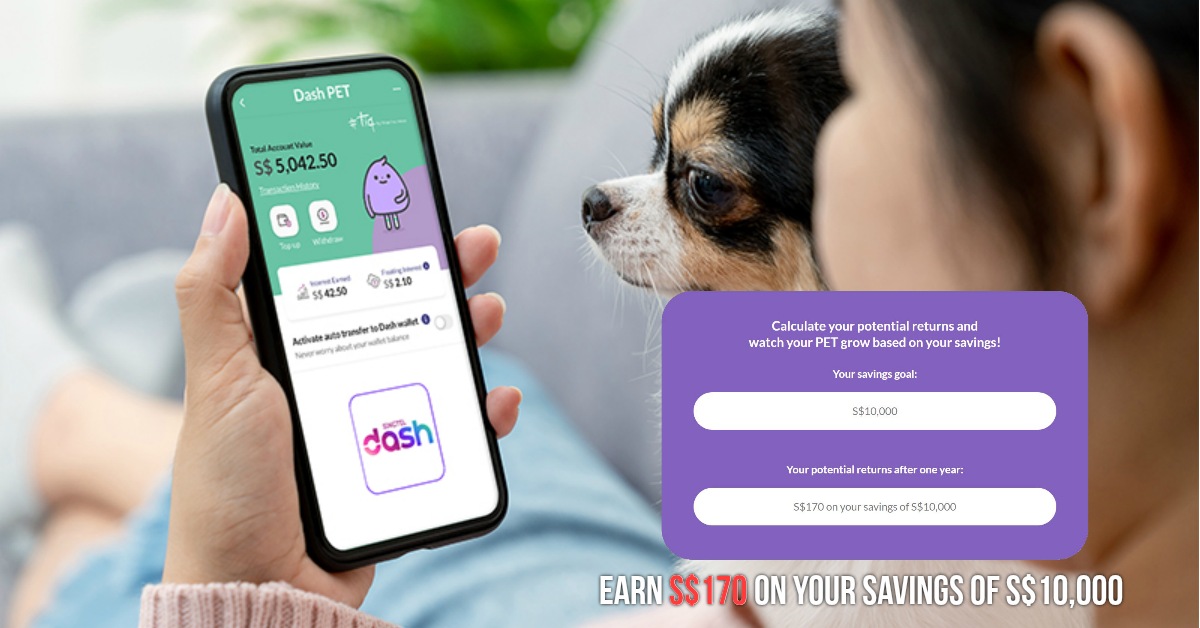
Dash PET by Etiqa Insurance, the latest insurance savings plan available on Singtel Dash, allows users to Protect, Earn and Transact – basically taking care of you! You can earn up to 1.7% p.a.* with no additional criteria required, making it absolutely hassle-free! At 1.7% p.a.*, this makes Dash PET highly attractive especially given the current climate of uncertainty and falling bank savings interest rates. Here’s how Dash PET can take care of you.

Singtel Dash is an all-in-one mobile wallet for your everyday needs, from your commute to paying at your favourite hawkers, supermarkets and restaurants, and even for your online purchases.

Enjoy attractive returns with capital guaranteed

Earn 1.7% p.a.* for your first S$50 – $10,000, and 1.2%* for amounts above S$10,000! This means that up to the first S$30,000 earn attractive returns of $410 (1.37%) per year. Ensure that you maintain a minimum account value of S$50 to start earning these high interest rates on your funds. You will be glad to know that your capital in Dash PET is guaranteed.  It also comes with SDIC protection.

You won’t be kept on a tight leash with Dash PET (pardon the pun)

This insurance savings product offers the ultimate flexibility by having no lock-in period. Once your account is active, you can top up your funds anytime! This can be done at your convenience via Dash wallet or PayNow from S$1, or via eNets (minimum S$50 top up).

If you wish to use your money, you may withdraw anytime from S$1 to your Dash wallet (free) or to your bank account via PayNow (S$0.70 transaction fee applies for each transaction).

Highly accessible given low entry barriers

Some financial instruments in the market may require hefty contributions or long lock-in periods, which may not fit into some people’s financial needs. With Dash PET, all you need is S$50 to start saving and insuring. For instance, students can save their allowance or internship pay into Dash PET first to earn attractive returns. They can then withdraw via their Dash wallets to pay for their everyday expenses like their favourite bubble teas and even hawker meals.

Self-employed or gig economy workers who may not have regular monthly income can take advantage of Dash PET to save as it does not require them to complete the myriad of tasks required (e.g. meeting monthly salary crediting, minimum spends, etc) to unlock bonus interest rates.

Finally, there is no fall-below fee if the account runs low, so savers are not penalised when they have higher expenses for the month. One thing to note though, you’ll need to maintain at least S$50 average daily Account Value for the calendar month to enjoy the rates of return and Dash PET benefits.

Takes Care of You

The value provided by Dash PET is immense. It allows your capital to grow at an attractive rate, offers the flexibility for you to withdraw funds for everyday expenses and protects you by offering insurance coverage. Furthermore, the Protect element comes from the layer of insurance coverage of up to 105% of account value in case of death as well as financial assistance benefit for Covid-19.

As demonstrated, Dash PET is the PET that takes care of you by helping you to save and insure better!

All it takes are 3 simple steps to start your savings journey with Dash PET:

  1. Download the Dash mobile app (if you are not an existing user)
  2. Sign up for Dash PET through the Dash mobile app
  3. Top up your Dash PET account from either Dash Wallet, eNets or PayNow

In these uncertain times, it is prudent to consider safe and flexible options to start saving smarter and allow your hard-earned savings to work harder. With Dash PET, Singtel Dash aims to be the companion app for saving, insurance, payments and more!

Disclaimers

  • The information is meant purely for informational purposes and should not be relied upon as financial advice.
  • Dash PET is not a bank account or a fixed deposit. It is an insurance savings plan that earns a crediting interest rate.
  • * Guaranteed 1% p.a. + 0.7% p.a. bonus on first S$10,000 for first policy year. Guaranteed 1% p.a. + 0.2% p.a. bonus on above first S$10,000 for first policy year.
  • This policy is underwritten by Etiqa Insurance Pte. Ltd. (Company Reg. No. 201331905K). This advertisement is for general information only. Terms apply. Full details of the policy terms and conditions can be found in the policy contract on dash.com.sg/dashpet. Protected up to specified limits by SDIC. As buying a life insurance policy is a long-term commitment, an early termination of the policy usually involves high costs and the surrender value, if any, that is payable to you may be zero or less than the total premiums paid. You should seek advice from a financial adviser before deciding to purchase the policy. If you choose not to seek advice, you should consider if the policy is suitable for you. This advertisement has not been reviewed by the Monetary Authority of Singapore. Information is accurate as at 1 February 2021.

Read More...