
Upgrade Your Style By Making Your Low-Priced Clothes Look Voguish

No matter how much fashion and lifestyle magazines clamor over the S$1000 pair of Christian Louboutin heels, the average person cannot afford to have a shoe rack full of it. Fortunately, you can dress up fashionably without having to break the bank! All you have to do is make the low-priced clothing look more expensive. Try these tips:

1. BACK TO BASICS

The old saying is true: “Simplicity is the ultimate sophistication”. This is why you must avoid handbags or clothes that are filled with bargain embellishments or distressed denim patterns. If you want to accessorize, opt for a thick bracelet rather than stacking three little ones to increase the outfit’s impact. Remember: the sleeker and simpler – the better.

2. CHOOSE MONOCHROMATIC

Since splashing yourself with every color on the rainbow can look cheap, wear one color or one shade of color from head-to-toe. This creates an illusion of supreme quality. For example, you can wear the different shades of black, from Jet-Licorice, to look slimmer and fashionable. Although, this does not mean that you will avoid experimenting with color all together. You may suit up with bold pastels or deep jewel tones.

3. CHANGE THE BUTTONS

One of the tricks that stylists do is to replace the inexpensive plastic buttons with pearl or metal ones. You can purchase affordable and beautiful vintage, metal, pearl, and crystal buttons for as low as S$6.93 at Etsy.com.

Image Credits: Erich Ferdinand via Flickr with Creative Commons License

Image Credits: Erich Ferdinand via Flickr with Creative Commons License

4. SELECT THE RIGHT FABRIC

Cheaper fabrics are always obvious especially if there are loose threads hanging on the side. So, prefer pieces that are made with cotton, linen, and tweed. The prices of these materials may be reasonable but they often seem more expensive.

5. TAILOR EVERYTHING

Tailoring your jeans for about S$5-12 is worth every buck as it can transform your S$13 Forever21 jeans into a designer looking one. It goes the same for a tailored blazer or a tailored dress. Aside from having it tailored by a professional, you can save more money by mastering these simple alteration stitches.
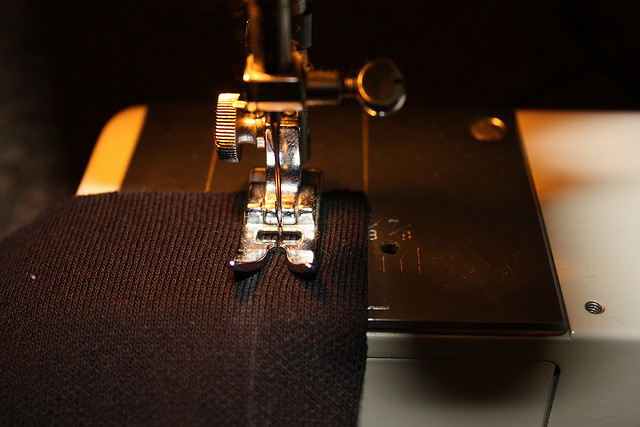
Image Credits: Hillary via Flickr with Creative Commons License Attribution-ShareAlike

Image Credits: Hillary via Flickr with Creative Commons License Attribution-ShareAlike

Do not let the tight clothing budget fool you into thinking you’re not Vogue-worthy! 🙂

Sources: 1 & 2

Read More...

6 Money Hacks To Keep You On Budget

Are you having a difficulty to stay on budget every month? Perhaps it is about time to try a new approach. Here are just some ways to improve your financial situation…

1. MAKE SAVINGS THE FOCAL POINT

I am assuming that you are already set with your budget. You know how much money is coming in and how much money you have now. To grow that money and to prepare for major spending (e.g., buying a property or a car), you must focus on saving. Set up a savings account to make things easier for you. Then, allot an amount to save each month. Seeing your savings balance increase will be a treat to your eyes.

2. SPEND THE CASH YOU HAVE

Whenever I am going out, I leave my credit/debit cards behind and put a relatively small amount of cash in my wallet. This amount is enough for me to survive the day. Furthermore, I am not tempted to buy unnecessary things even if there are several shopping malls along the way.

You can also apply this trick to stay on your budget and be mindful about how much you spend. Try it for a few weeks first to get used to it.

3. REVAMP AND RECYCLE YOUR STUFF

Fix, refurbish, or recycle your furniture, decor, or appliance that are still in good condition instead of saving up money to replace these. As you revamp your stuff, use warm colored paints to brighten up the mood! Or, recycle your old drawer and turn it into a shelf. There are many ways you can think of to upgrade the look of your home without having to spend so, get your creative juices going!

Image Credits: Sean and Lauren via Flickr with Creative Commons License

Image Credits: Sean and Lauren via Flickr with Creative Commons License

4. CUT DOWN ON UNHEALTHY HABITS

Unhealthy habits, such as drinking alcohol or smoking tobacco, that you enjoy on a regular basis can not only increase your insurance premiums but also your daily expenses. When you decide to stop drinking and smoking entirely, you will see your bills going down and you will feel improvements in your health – in no time.

5. PRESERVE THE RECEIPTS

To make a budget, you probably stored a bunch of receipts and monitored your expenses for a month. But, you still need to keep an eye on it in order to stick on your budget. Save up all your receipts and categorize them. If you find something that you spend too much on, analyze if you lower your spending on it. For instance, frequent restaurant take-outs can put a toll on your budget.

6. REWARD YOURSELF

One of the quickest ways to adapt a new approach is to have a reward system. Reward yourself each time you reach your financial goal. You do not have to spend a hefty amount to indulge. Have a sleepover with your friends or read a delightful book. Finding ways to associate the budgeting process to a positive feeling will help you reinforce more good habits and get rid of the unhealthy ones.

Image Credits: Vox Efx via Flickr with Creative Commons License

Image Credits: Vox Efx via Flickr with Creative Commons License

Sources: 1 & 2

Read More...

Countries That Offer Unbelievably Free University Education For All

As the cost of higher education catapult over the years, undergraduates around the world have one thing in common – they are susceptible to an enormous pile of debt. The Tuition Fee Loan Schemes and total student debt vary globally.

For instance, in Japan, about US$5 billion in student debts were past due last 2011. In America, the college students’ debts summed to over US$1.2 trillion in 2013. Looking no further, in Singapore, one-third of the local students who graduated last 2005-2007 had an average debt of S$20,000 per student.

With these overwhelming numbers, it is surprising to know that some countries are offering free or low-cost tertiary education – in English! If you are willing to leave the Lion City for your studies, here is a concise list of those countries:

1. FINLAND

Regardless of your nationality and level of studies (i.e., diploma, degree, or Masters), tuition fee is free in Finland. But, you are expected to cover your personal living expenses that cost about 500 Euros or S$746 per month.

Image Credits: Miguel Virkkunen Carvalho via Flickr with Creative Commons License

Image Credits: Miguel Virkkunen Carvalho via Flickr with Creative Commons License

2. GERMANY

9 months ago, Germany has implemented a rule that enables all students to enjoy no-cost fees for undergraduate studies. Yes! International students are included. Currently, 900 programs are available in English to attract foreign students, as they are experiencing shortage in skilled workers. Like Finland, living expenses in Germany cost about 500 Euros or S$746 per month.

Image Credits: Moyan Brenn via Flickr with Creative Commons License

Image Credits: Moyan Brenn via Flickr with Creative Commons License

3. NORWAY

Norwegian students and foreigners studying in the country can go to undergraduate studies, Masters programs, and Ph.D. programs at no cost! Be informed, however, of the harsh weather conditions and the high cost of living. A single student’s living expenses will equate to about NOK 7,500 or S$1,261 per month.

Image Credits: Edward Dalmulder via Flickr with Creative Commons License

Image Credits: Edward Dalmulder via Flickr with Creative Commons License

With all these information at your reach, you have to understand that debts are not only rooted from school fees but also from living expenses. In fact, U.K. students have borrowed about US$10,200 per student to cover tuition fee and living expenses in 2011-2012. So, before you pack your bags, calculate whether the total cost of your education and living expenses are less here or there.

Sources: 1, 2, 3, 4, 5, & 6

Read More...

Be Healthy And Save More Money With These Awesome Veggies And Fruits Hacks

Aside from growing your greens at the community garden, use these hacks to get more nutrition and more value for your dollar…

1. COOK OR EAT BROCCOLI FIRST

Since broccoli is one of the most perishable veggies, you can save more money by eating it first. In fact, by the time you reach home, it has lost 80% of its nutritional value. This is why you must buy broccoli by heads, keep it in the perforated plastic bag (i.e., available in the grocery), and put it in the refrigerator. You must eat this within two days upon purchase.

2. OPT FOR “BIG” CARROTS

Instead of buying “baby” carrots save more money by cutting your own “big” carrots in small sticks. Also, carrots can be internally hard to break down that is why it is best to cook the carrots to get most of the beta-carotene.

Image Credits: Kona Gallagher via Flickr with Creative Commons License (ShareALike)

Image Credits: Kona Gallagher via Flickr with Creative Commons License (ShareAlike)

3. OPT FOR SMALLER AND DARKER TOMATOES

Unlike carrots, bigger tomatoes does not it is mean better. Tomatoes on the vine are more expensive too, but they do not give a huge advantage nutritionally. You can get more nutrition and save more money by choosing the smaller and darker (red) tomatoes. Cooking tomatoes minimally is healthier as it changes the Lycopene into a more Bioavailable form.

4. COOK THE KALE

Save money on medical expenses by cooking kale. Raw kale has high oxalic acid levels, which may lead to kidney stones, gout, muscle weakness, and thyroid problems. Steaming kale destroys the oxalic acid. Then, you may happily add it on your salads or smoothies.

5. PROLONG THE AVOCADO’S FRESHNESS

Did you know that avocado contains as much fiber as two bowls of oatmeal? Well, if you are left with half of this fibrous avocado, apply lemon juice or put a slice of raw onion on top to keep it from turning brown. With this hack, you can say farewell to brown and slushy leftover avocados.

Image Credits: threelayercake via Flickr with Creative Commons License (ND)

Image Credits: threelayercake via Flickr with Creative Commons License (ND)

Sources: 1 & 2

Read More...

In The Near Future, MasterCard Will Authorize Payments Via Selfie

Imagine if you can pay an online shop as quick as a taking a Selfie, how easy would that be?

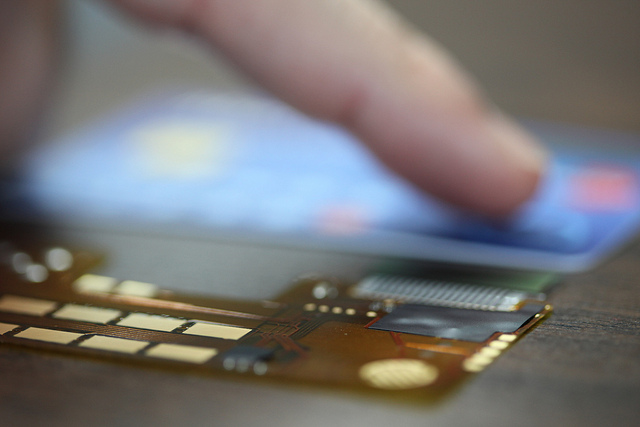
Most of us are aware of how lengthy it really is to send money or pay your purchases online. Aside from remembering your passwords, you will be tasked to verify it with a code or PIN sent via SMS or via a security token (know more about the security token, here). These steps of authorization are called two-factor authentication as it involves “what you know” (e.g., 6-digit password) and “something you have” (e.g., verification code).

But as our technology progresses, companies have pushed ways to improve our lives by making things quicker and more efficient. This is why MasterCard is testing out a new way of payment authorization that utilizes fingerprint scanning and facial recognition.

Biometrics, measurement and analysis of unique physical characteristics, is the underlying tech that enables this type of authorization to work. I bet our ancestors would not think that this would soon be possible! MasterCard is now closely working with Google, Microsoft, Apple, Samsung, and BlackBerry to introduce this project.

As passwords are likely to experience breaching, your fingerprints and facial features are less susceptible. You may be aware that swift touch of a fingerprint scanner is something Samsung and Apple have already implemented. On the other hand, facial recognition is made through taking a Selfie. I for one thought that one can cheat the system by using a photograph, but the system do not work that way. MasterCard holders are required to blink to indicate that they are live human beings.

Fast forward to that day, are you going welcome this new payment method with open arms?

Even an innovative step as astounding as this cannot please everyone, especially the generations prior to the Millennials (Generation Y). One thing is for sure though, if this method is successful, companies may work on other possible authorization methods such as voice recognition or heartbeat pattern checking.

Are you ready for that?

Image Credits: Robert Scoble via Flickr with Creative Commons License

Image Credits: Robert Scoble via Flickr with Creative Commons License

Sources: 1 & 2

Read More...