5 Dollar-Pinching Strategies For Halloween

The spooktacular time of the year will grace our calendars once again. Halloween festivities is just around the corner. Are you ready? Many Singaporeans love this event and hate the price tags attached with it.

Let us be honest! It is easy to mindlessly toss some items into your cart until you reach the cashier. As you dig in your wallet for payment, you may regret some of your hefty purchases. Certainly…there is a better way to celebrate this eerie event!

1. DECORATE IT YOURSELF

What makes Halloween unique is its spooky aesthetics. For a flat or an establishment, you can expect to spend around S$100 to transform the it into a stellar space. This price includes fake spiderwebs, vibrant inflatables, dangling decorations, and other appropriate ornaments. Lower your expenses by purchasing decors at the dollar store or by making your own decors.

Drop by the nearest dollar or discount store to collect basic decorations and supplies. You may unleash your craft bug by revamping small ornaments into massive centerpieces or wall decor. For instance, you can create a lasting impression by pasting “monsters” on your door. Use thick and colorful papers to cut the face, nose, eyes, and mouth. Let your children help you when it comes to creating the silly-looking monsters!

2. SAVE ON COSTUMES

There are two primary ways to spend less on a Halloween costume. You can either raid other people’s wardrobes or use the items that you already have. The former tip highlights the common dilemma of parents – underused costumes. So, ask your friends and family members if they are willing to lend their previous costumes for free. Just ensure that you or your child will keep it in good condition throughout the day.

The latter tip focuses on your artistic prowess. Take a look at your children’s closets as well as your own. Key items such as hats, belts, scarves, and over-sized shirts may be used as funky costumes. Use this list to get an idea.

3. CHOOSE AN ALTERNATIVE

No Halloween celebration is complete without giving out tricks and treats. In the market, there is a wide variety of candies and chocolates that you an choose from. You must not pick out the biggest bag of assortments that you can buy! It is wiser to shop around. It is usually cheaper to go for fruity and hard candies than chocolates.

Image Credits: pixabay.com

Image Credits: pixabay.com

Furthermore, buying sweets in bulk is cheaper at Value Dollar or Daiso. Walk the ailes of these discounted shops with a set budget in mind. Know how much you are willing to spend and stick firmly by it. Other alternatives for sweets include stickers and glow-in-the-dark bracelets.

4. SCORE FREE ACTIVITIES

If your budget is too tight for hosting spooky parties and you want to immerse yourself with the festive spirit, search for no-cost activities within your community. You will not believe how many there are out there! Said parties are generally organized by community centers, schools, museums, and parks.

Start by finding events on the local newspaper or the Facebook pages. I found one by visiting the Asian Civilisations Museum’s page directly. On October 28, ACM shall host a “Horror Mash Up”. This is an annual event which includes activities and performances inspired by their galleries. Activities will run from 7:00 pm to 11:00 pm while the museum operates until 12:00 midnight.

5. TEACH VALUABLE SKILLS

It is impossible that your kid will like everything inside his or her loot bag. There is bound to be some organic popcorn or sour gummy bears that your child may not be interested in. This is a good opportunity to learn the value of negotiation.

After they have accomplished the trick-or-treating, encourage your children to trade with each other (or with their friends). Swapping their sweets can help determine how much they value a particular candy or chocolate. Is a Snickers Candy Bar worth three fruity lollipops? See for yourself!
Sources: 1, 2, 3, & 4

Read More...

Newbie’s Guide To Bitcoin Investing

ACT LIKE CASH, MINED LIKE GOLD

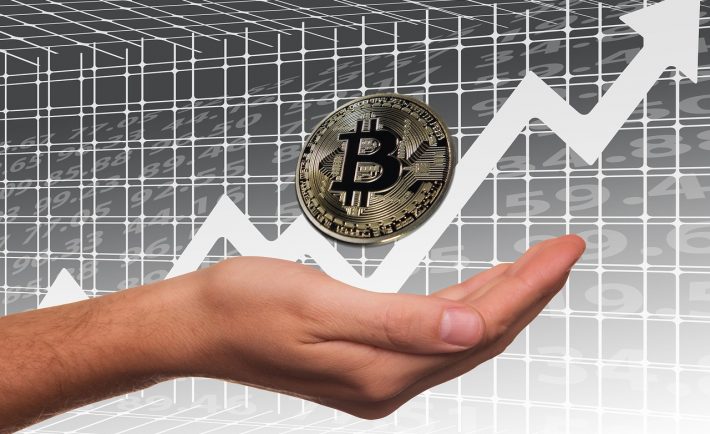
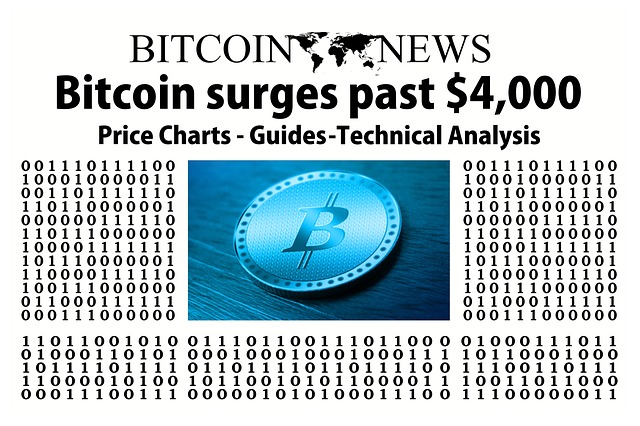
Cryptocurrency continues to gain popularity among investors and venture capital firms. Several of these individuals are betting that Bitcoin is here to stay! Before taking a stand, let us have a quick look at the basics of Bitcoin.

Bitcoin is a decentralized payment system developed by Satoshi Nakamoto (a Japanese pseudonym). This innovative digital currency was publicly released in 2009. We came a long way since then! A myriad of improvements or updates have been made by a network of developers.

Image Credits: pixabay.com

Image Credits: pixabay.com

In simple terms, bitcoins act like cash and are mined like gold. How so?

Global retailers may allow you to purchase goods and services through this “intangible” currency. However, its acquisition poses challenges. Solving extensive mathematical equations are needed to discover new bitcoins. You will have to unlock each block and be rewarded afterwards.

It is fascinating that the developer has set a finite number of bitcoins to be mined – 21 million to be exact. The uncovered bitcoins skyrocketed in the recent years. At this rate, the final bitcoin is projected to be discovered by the year 2140.

THE ART OF ACQUISITION

Develop a strategy to obtain bitcoins by weighing the advantages and disadvantages of these primary options. You can either outright buy, mine for, or receive it.

The easiest way for beginners to acquire bitcoins is to purchase from specialized companies such as the www.coinbase.com. Coinbase.com sells bitcoins to customers at a mark-up of about 1% over the current market price. On the other hand, traders can go to bitcoin exchange websites such as the BitStamp. BitStamp eliminates the middleman as it allows you to transact with other users. See for yourself!

The second option is to dedicate your time on bitcoin mining. Bitcoin miners are crucial to the completion of transactions and the validation of genuine bitcoins. Using the computer, bitcoin miners need to verify a series of transactions that are guarded by a virtual lock called “blockchains”. Miners will run a software to find the key that will open said lock. For finding the coveted key, miners get a reward of 12.5 newly generated bitcoins. Research showed that it takes 1,789,546,951.05 attempts to find the correct key. Imagine how much effort you have to exhaust for that!

Last but not least, you may receive bitcoins offline by selling goods or services. You should apply the usual precautions when meeting a stranger for the bitcoin transaction. Meet in a public place at daytime and bring a friend (i.e., if possible).

Image Credits: pixabay.com

Image Credits: pixabay.com

Are you going to embrace the future of money or treat it as a chaotic addition to the stock market?

Sources: 1, 2, & 3

Read More...

What On Earth Are Bitcoins?

In the recent years, Bitcoin has captured the attention of many Singaporeans. We are gradually embracing the new wave of modern transactions – the rise of cryptocurrency! Despite its exposure, you may still be wondering what exactly it is.

BITCOIN DEFINITION

In its core, bitcoin belongs to an alternative type of payment system called cryptocurrency. It is a digital asset that enables you to conduct transactions outside of the mainstream financial infrastructures. Balances are securely stored using private and public keys. I am not referring to the metal keys that help open doors! Instead, these keys are linked through the mathematical encryption algorithms.

Image Credits: pixabay.com

Image Credits: pixabay.com

One of the most challenging parts of sustaining a digital transaction is ensuring that nobody spends the “same bitcoin” more than once. As you can imagine, almost anything digital can be copied over and over again! Regulation is crucial to cryptocurrency. Traditionally, verification was done thru trusted central authorities (e.g., PayPal). What makes bitcoin special is its utilization of a huge peer-to-peer network to verify transactions. Bitcoin payments are non-reversible, transaction fees are significantly lower, and its corresponding accounts cannot be frozen.

BITCOIN FUNDAMENTALS

1. History: Its origin dates back to 2008 when it was created by developer Satoshi Nakamoto.

2. Operations: Transactions are fully transparent due to the publicly available ledge known as the “blockchain”.

3. Security: As mentioned above, a bitcoin transaction consists of a public key (i.e., known to everyone) and a private key (i.e., exclusive to the bitcoin user). You cannot spend coins without knowing its private key.

4. Purpose: Bitcoin provides a viable alternative to the dealings within mainstream financial infrastructures. It eliminates the hefty transaction fees and the transportation expenses.

BITCOIN MINING

The bitcoin network is only as strong as the people and institutions supporting it. It is not created by the simple copy and paste tool! Instead, you need to mine for the digital assets using extensive computers that solve complex equations. Bitcoin miners are crucial to the completion of transactions and the validation of genuine bitcoins.

Without bitcoin miners, no new coins will be brought into the circulation as no rewards would be given.

Image Credits: pixabay.com

Image Credits: pixabay.com

Sources:1, 2, 3, & 4

Read More...

Here’s how much you may get when you sell your old iPhone to pay for the iPhone X

Singaporeans looking to support their iPhone habit would do well to heed Apple’s release schedule

SINGAPORE, MONDAY 25 SEPTEMBER 2017 – Now that the iPhone X is straying perilously close to costing an actual kidney, trading in your old iPhone to help defray the cost of a new one is a more popular option than ever. But because the market has a tendency to push prices down when there are more people looking to sell their old iPhones (a well-observed economic principle – price goes down when supply goes up), you wouldn’t know if the trade-in price offered at your telco or handphone shop is a good deal or not.

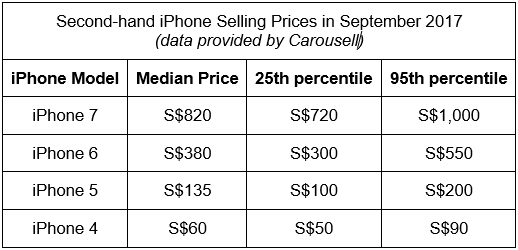
To help you avoid rip-offs, we asked everyone’s favourite online marketplace Carousell what your soon-to-be-replaced iPhone is worth on the second-hand market. Here’s what we found out.

iphone

What Do the Numbers Mean?

We apologise for triggering all the traumatic flashbacks of Statistics class you’re probably suffering right now. We wanted to make sure we dealt in scientific data, and not simply hearsay from a lazy walkabout at Tanjong Pagar Plaza. Quick explanation: The median price represents the midway point of each model’s price range. So in the case of the iPhone 7, 50% of all handsets were sold for more than S$820, and 50%, less than that. How much higher or lower? For that, we look at the numbers in the next two columns to the right. These give us a good idea of what low and high prices look like for that particular model. They do not represent the absolute lowest nor highest prices for each model. So, putting it all together: If you get offered S$800 for your iPhone 7, that’s a bit on the low side. S$850 to S$950 would be an ok price, and you shouldn’t hesitate to take any offers coming in at S$1,000 or more.

The Value of Older iPhones Declines Exponentially

Eyeballing the figures from Carousell, you can see that the value of your old iPhone suffers a dramatic decline after one generation. As at September 2017, an iPhone 7 commands a respectable median price. You’ll also notice that the spread between prices is still relatively tight.

But when it comes to an iPhone 6, the median price plunges by more than half. And it gets worse as we go down the ladder to older iPhone models, but you were probably expecting it anyway.

Actual Selling Prices Differ According to Condition

The actual price you will get for selling your old device will depend on a number of factors. Chief of these is the condition your handset is in. “While little scratches and scuffs aren’t deal-breakers – many of our users are upfront about these details and still successful in their sales – people will generally prefer and will pay more for iPhones in the best possible condition,” says Lucas Ngoo, Co-founder and CTO of Carousell. As you’d expect, a perfectly working model with all its original parts intact will fetch a higher price than one that had undergone part replacements. (Think about how damaged the internal circuitry must be after going through at shocks serious enough to shatter the screen.) If you can provide the original box and accessories (such as charging cable and adapter, and never-been-worn headphones) you can probably command top prices. And, because this is Apple we’re talking about, you can expect to charge a little higher for devices with larger storage.

Is it Worth Selling Your Old iPhone?

At this point, you may be wondering if it is even worth selling your old iPhone. The answer is: yes, especially if it’s the latest model. As Carousell’s data show, the iPhone 7 is trading hands at prices near to those of a brand-new set direct from the Apple store. This is probably as good as it gets. But even if all you have is an iPhone 6 or earlier, you can still sell it off and use the money to pay for other things you need or want. For example, while the S$60 you’ll get for selling your iPhone 4 puts nary a dent in what you have to pay for the iPhone X, you could still get a decent pair of shoes for it, or a new computer game.

A Result of Planned Obsolescence?

In case you’re not familiar with the term, planned obsolescence is an actual thing that manufacturers are doing. Basically, the products we buy are designed to last only up to a certain period. Beyond that, they are expected to fail. This practice corrals consumers onto a schedule for replacing the things that we’ve come to rely on. And it’s not just consumer electronics, car or light bulbs either. When it comes to iPhones, the message seems to be: keep up with Apple’s schedule; it’s the most rewarding way to enjoy their products. Especially in light of the record-breaking price of the iPhone X.

This article first appeared on SingSaver.com.sg.

Read Also: Receive up to S$150 worth of Grab vouchers from now till 15 Nov 17

Read More...

How to start your peer-to-peer lending investment journey with Funding Societies

In September, we gave you 5 reasons to invest in peer-to-peer (P2P) lending. If you have not already opened your account on Funding Societies’ investor platform, it’s time to start now and earn up to 14% per annum returns on your investments along with 21,000 other investors who invest in crowdfunding with Funding Societies.

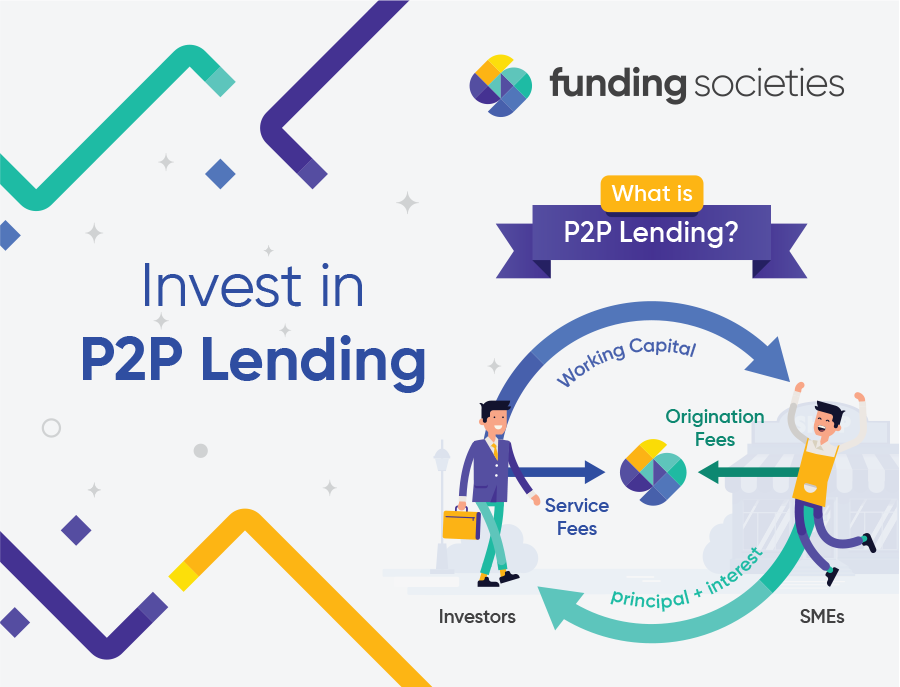
Here’s a recap of how P2P lending works

What are the products?

With Funding Societies, you can invest into the following 2 products:

Business Term Loans – Loan given to SMEs for working capital, fulfilment of contracts, acquiring new contracts etc. with tenors ranging from 1 month to 12 months. As an investor, you receive principal and interest on a monthly basis thus unlocking the cash and allowing you to reinvest the monies into new loans.

Invoice Financing (Accounts Receivables Purchase) – Funding provided to SMEs against the invoices issued to their buyers/debtors/clients with tenors ranging from 30 days to 90 days depending on the invoice credit period terms. Investors receive repayment at the end of 30/60/90 days along with interest.

Every deal could have a few hundred investors investing alongside you and thus you fund a small part of each loan/invoice and therefore also bear the same small part of the risk.

Okay, how do I start?

  1. Sign up as an investor on Funding Societies platform
  2. Receive your subscription agreement and e-sign it! (Fun fact: Funding Societies is the first P2P lending platform that has e-signing of contract so that their investors can do it on their computer or mobile anytime, anywhere)
  3. Make your first deposit of minimum $1,000
  4. Browse for opportunities on web or app platform
  5. Start investing from as little as $100
  6. Turn on Auto-Invest to let the system allocate investments based on your pre-set criteria

How do I choose which investments to go for?

Before every crowdfunding opportunity, you’ll receive an email alert for the deal. There is a detailed fact sheet that you can review hours before deciding to put your money in the loan.

Some of the investors on Funding Societies platform have placed their monies on every loan by either (i) manually investing when the crowdfunding period starts, or (ii) auto-investing (see point #6 above). For every auto-invested loan, you always have a choice to opt out from the investment before the crowdfunding starts.

However, different investors have different risk appetite, so it is common practice, and also a good one, to explore the platform and view the various opportunities before making your investment decision.

How do I track the repayments and performance of the investments?

When you invest on Funding Societies platform, the repayments are on a monthly basis.

Simply log on to the web portal and access the dashboard. Check out the screenshots here.

As an investor, you will also receive late repayment fees from SMEs who did not make the repayment on time – but hey, when you share the risk, it’s only fair that you share the returns right?

Common strategies to invest in P2P lending

While there is no one-size-fits-all formula for any type of investment, Funding Societies shares three ways you can explore for your investment portfolio with them:

  1. Diversify, Diversify, Diversify

As a matter of fact, investing in P2P lending is already one way to diversify your investment portfolio. However, within P2P lending, it makes sense to diversify your portfolio into different loans – by industries, amounts, tenure – to minimize the default risk.

  1. Create compounding effect by re-investing

Funding Societies’ repayment schedule is on a monthly basis, that means you get your original invested amount + pro-rated interests back every month based on the stated dates. While you can hold the money in the account, a smart thing to do is to use this for other investments on the platform to create a compounding effect.

  1. Free your time with Auto-Invest

As mentioned, Auto-Invest is a feature Funding Societies created to allow their investors to put in their money for loans based on their preferred criteria. Here, you can choose a range of interest rates, tenure, industries. Once it’s set up and switched on, the algorithm sets in to auto-allocate your preferred amount for the loans that fall within your criteria.

Start exploring P2P lending as an alternative investment now with Funding Societies. Sign up now by clicking here.


Disclaimers

This article is contributed by Funding Societies.

It should not be construed that Moneydigest is endorsing this article or any of the products and services provided by Funding Societies.

Nothing in this article should be construed as constitute or form a recommendation, financial advice, or an offer, invitation or solicitation from Funding Societies to buy or subscribe for any securities and/or investment products. The content and materials made available are for informational purposes only and should not be relied on without obtaining the necessary independent financial or other advice in connection therewith before making an investment or other decision as may be appropriate.

Read More...