Read these 10 well-rated books if you want to be a millionaire

“The Millionaire Fastlane” by M.J. DeMarco

So, you want to be a millionaire? Sure! But first things first, make sure you’re not spending too much money way over your budget.

For folks looking to attain financial freedom, we recently wrote on some challenges to save more money which might be of powerful assistance. Some concepts, like the 1% trial or 52-week challenge, can be new ideas to try out.

Meanwhile, for today’s article, we will look into 10 well-rated books to read if you want to be a millionaire. Let’s roll with the titles!

#1: “The Simple Path to Wealth” by JL Collins

Most of us want to become millionaires. But the questions we may not know how to answer can include:

  • How do I get started with investing?
  • Why is debt a must-avoid, and what should I do if I’m heavily indebted?
  • Is it possible to use my money wisely and not gamble it away on fluctuating stocks?

Simple, engaging, and informative, this book delivers solid advice on investments, the stock market, and real-life implementation tips.

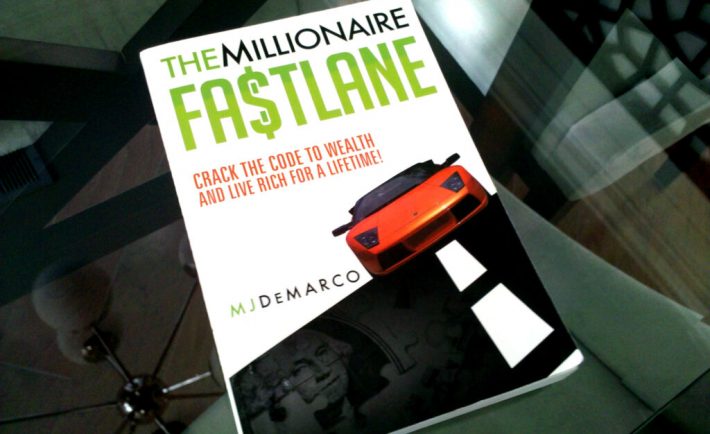
#2: “The Millionaire Fastlane” by MJ DeMarco

The Millionaire Fastlane” is a straightforward guide to wealth generation written by a self-made entrepreneur who has learned from both his successes and his failures.

A fan of non-conservative approaches, DeMarco explores the theory that success is tied to effort. You are the vehicle, and the fuel, engine, etc., can be tailored to your specific route. The author’s advice is concise and valuable for those seeking to grow their wealth via the expressway.

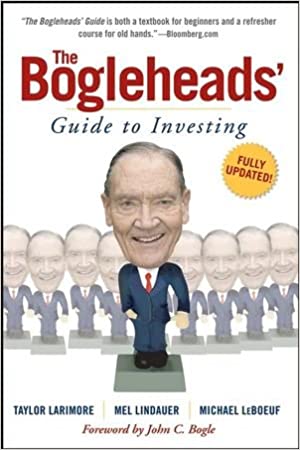
#3: “The Bogleheads’ Guide to Investing” by Taylor Larimore, Michael LeBoeuf, and Mel Lindauer
The Bogleheads' Guide to Investing

Do you know what Bogleheads are? It’s a term referring to investing enthusiasts who hold fast to the investment advice of John Bogle, the founder of Vanguard and an investor advocate.

This guidebook provides the reader with straightforward investing and financial advice designed to help the average person profit from long-term wealth creation. This book also advises readers on how to survive economic downturns and keep their footing rooted.

#4: “The Richest Man in Babylon” by George S. Clason

More a parable than a textbook, Clason’s work revolves around the subject of thrifting, financial planning, and personal wealth.

The lessons presented in this bestseller are timeless and easy to follow. You will learn how to save, spend less than you earn, and make money earn more money through seven simple rules. If you want to know, start flipping.

#5: “The Intelligent Investor” by Benjamin Graham

Known as the father of value investing, Benjamin Graham was a well-known economist and professor whose students include legends such as Warren Buffet.

Readers of “The Intelligent Investor” will focus on learning the fundamentals of value investing. Graham teaches us how to guard our investments and make them successful.

If you want to avoid common investment pitfalls like channelling too much energy to the changing sentiments of the market, this book will do the trick. Updated by famous financial journalist Jason Zweig, this edition will keep Graham’s lessons appropriate for modern demands. 

A must-read for any aspiring millionaire!

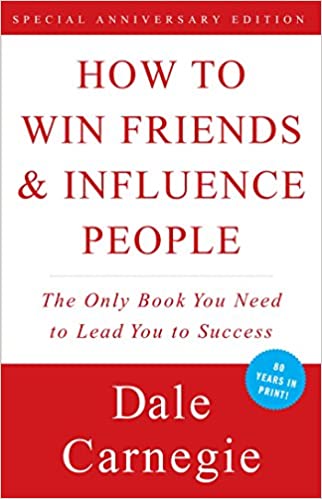
#6: “How to Win Friends and Influence People” by Dale Carnegie
How to Win Friends and Influence People

What does winning friends and influencing people have to do with getting rich? Plenty!

To achieve success, one must learn to work with others. They could be your friends and family members, investment advisers, business partners, or even salespeople.

Nobody who aspires to become a millionaire can afford to ignore Carnegie’s advice on how to win people over with your way of thinking. The tips conveyed in this book will help you think in fresh ways and cultivate relationships that lead to unlocking your maximum potential.

#7: “Conscious Business” by Fred Kofman

The author explains the term conscious business as the practice of expressing your passion and values through your work.

Rather than blindly chasing after profits, the conscious business person leverages their values into helping business stakeholders attain happiness.

Kofman explains that business people who approach their work with integrity, responsibility, and genuine leadership are more likely to achieve personal and financial success beyond the workplace.

#8: “Secrets of the Millionaire Mind” by T. Harv Eker

“Secrets of the Millionaire Mind” concentrates on identifying internal traits that can lead to financial success.

Eker does that by identifying one’s money and success blueprint hidden deep within the subconscious mind. For those whose blueprints are not built for success, the author offers a chance to reset one’s mental patterns to improve the likelihood of financial triumph.

#9: “The Millionaire Mind” by Thomas J. Stanley
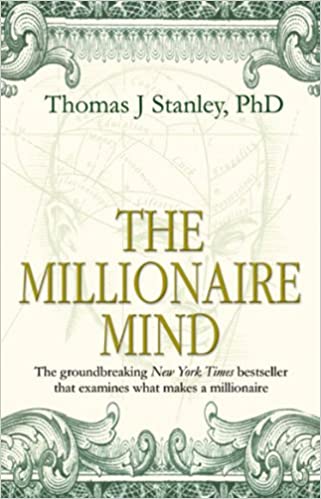
The Millionaire Mind

Peeps who are keen to explore further the interaction of mindset and wealth, Stanley’s writings can offer a glimpse into the millionaire’s headspace.

While many may assume that millionaires are well-connected graduates of prestigious schools who flaunt their wealth, the truth might be more surprising. Those who want clear road maps on how millionaires found their niches, look no further.

#10: “Think and Grow Rich” by Napoleon Hill

We will close our list with one of the classic books on wealth creation and financial success. Hill’s “Think and Grow Rich“ lets you in on money-making secrets inspired by Andrew Carnegie’s magic formula for success.

The book will share with you 13 steps towards riches. From the attainment of desire to influencing the subconscious mind and putting it into action, you will get the fortune you want if you’re ready to welcome it.


Read More...

Beginner’s Guide To Cooking Your Own Meals

Nothing screams “labor of love” louder than preparing a homecooked meal for your family. Apart from showing your affection, cooking your own meals can help you save a lot of money. With the wealth of information available online, where do you begin?

KEY BENEFITS OF COOKING AT HOME

1. Cooking at home can help you save money. In most cases, cooking your own means are cheaper than eating out. There are several factors contributing to the reduced price of your meal. For starters, cooking at home enables you to opt for affordable ingredients. Moreover, you will have the power to create your own meal plans and shopping lists. Lastly, you can reheat your leftovers when you do not have time to cook.

2. Cooking at home allows you to connect with those around you. You do not have to be a distinguished chef to prepare delicious meals with your loved ones. Spend quality time together by allowing your kids decorate the desserts you have baked or by preparing a romantic dinner with your partner.

“Cooking is all about people. Food is maybe the only universal thing that really has the power to bring everyone together. No matter what culture, everywhere around the world, people eat together.” ~ Guy Fieri

3. Cooking at home encourages control in food portions, especially for people with dietary restrictions. Restaurants do not rely on your preferred food portions. They serve you plates based on their standard portions instead. To get the most out of your money, you will likely finish the entire plate. In contrast, preparing your meals allows you to be more intentional with food servings. Filling your plate with what you can finish aids in reducing waste.

4. Cooking at home enables you to choose healthier options. Fast food typically glistens with high chemical additives, sugar, sodium, and so on. Eating fast food regularly can negatively affect your weight and mood. Eat fresh and wholesome meals by making your own food. Eating healthy meals can make you feel energized on the inside and out.

TIPS ON GETTING STARTED

1. Ask a friend to teach you the basics. Do you know someone who is kitchen savvy? Perhaps, he or she can teach you some of the cooking basics (e.g., steam, fry, and sauté). You can even invite your closest friends for a private “cooking tutorial” via Skype or Zoom.

2. Learn from a local cooking class. Many affordable culinary programs are offered at CCs islandwide. The prices of these classes start from S$16.66. Choose wisely as some of these classes are merely demonstrations with food tasting. Check out the class descriptions and book a slot in the OnePA portal.

3. Keep things simple! Start with the easy recipes and work your way from there. Learn how to sauté veggies, boil egg, and steam chicken. Add herbs, spices, or your secret sauce. Look for quick and tasty dishes online.

4. Give yourself a room for improvement. It is alright to burn the rice or overcook the noodles in your first cooking sessions. After several attempts, things will get easier and tastier. Continue practicing at home.

Image Credits: unsplash.com

As time passes, cooking will no longer become a chore. Do not give up!

Sources: 1 & 2

Read More...

Positive outcomes hypnotherapy brings to your health

hypnotherapy session

Throughout your life, you might have dismissed hypnosis as nothing more than an incredible magic trick therapists use to earn money. However, hypnosis can play a significant role in the form of psychotherapy called hypnotherapy.

In a COVID-19 world where mental and physical health may be worsening, hypnotherapy can reverse those effects by guiding you through relaxation, concentration, and attention to achieve an elevated state of awareness and mindfulness.

To discover how hypnotherapy can change your life for the better, let’s take a look at a few positive outcomes hypnotherapy can bring to your health.

#1: Lower your stress levels

Let’s face it – no one wants to deal with heightened anxiety in an already stressful world. That’s why people are often drawn to hypnotherapy for its effectiveness in lowering their stress and anxiety levels.

No matter whether your struggle comes from relationships, academic work, changing career paths, or the uncertainty that comes with the pandemic, hypnotherapy can be your go-to solution before you pop the pill.

#2: Control of alcohol addiction

Another benefit of undergoing hypnotherapy is that it empowers you with more control over your alcohol drinking habits.

Folks who’ve developed an alcohol addiction and found it hard to moderate how often you drink for work or leisure, hypnotherapy can help to rewire your mind so you can depend less on alcohol.

#3: Cope with prolonged health issues
a woman holding on to her stomach

Image Credits: scripps.org

When you’re diagnosed and dealing with chronic health problems, it’s not only hard to face those issues physically but also emotionally.

That’s where hypnotherapy can come in handy, by helping you to better cope with your conditions and power through the painful symptoms you may experience. Be it high blood pressure, irritable bowel syndrome (IBS), or migraines, you may want to give hypnotherapy a try.

#4: Build self-worth

It’s almost impossible to come across a person who has never had to question their self-worth. When life throws us all sorts of lemons, we may inevitably doubt ourselves, our abilities, or our body image.

Thankfully, all hope is not lost. Hypnotherapy can help us to focus on being more assertive from within. Give it a go if you want to strengthen your self-esteem to counter life’s most demanding challenges.

#5: Ease food phobias

Do you know that there is a medical condition for food phobias? It’s named cibophobia, and Healthline defines it as the fear of food. These are the commonly known ones:

  • Leftovers
  • Undercooked foods
  • Foods prepared by others
  • Perishables like fresh fruits
  • Foods near expiration dates

There are various ways to treat cibophobia, and hypnotherapy is one of them. A typical session would involve a hypnotherapist offering you verbal cues or suggestions to reduce the adverse reactions you have towards certain food types.

#6: Facilitate fear of nausea and vomiting
a woman covering her mouth almost vomiting

Image Credits: yourtango.com

Since we’ve just looked at food phobias, there is another phobia that hypnotherapy can heal. Emetophobia is the name to note.

According to the professionals, it’s a condition that involves an extreme concern with vomiting, watching other people puke, or simply seeing vomit or feeling sick. Though it may be uncommon, the person going through the condition can be intensely distressed.

Besides taking medications and undergoing cognitive behavioural therapy (CBT), one may want to try hypnosis.

#7: Work towards better sleep

No matter if it’s insomnia, sleeping too much, or just wacky sleep schedules in general, sleep-related issues are huge problems many people are undergoing.

Adequate sleep is essential as it’s one of the most critical factors in regulating one’s health. Hypnotherapy can play a considerable part in repairing your sleep schedule and ensuring you get a night of proper deep sleep.

Want to feel much more rested and restored than before? You know what to do.

#8: Managing the effects of tinnitus

Are you suffering from the effects of tinnitus? The persistent ringing or other noises in one or both of your ears can be annoying. In fact, it may even affect your sleep.

Your ability to concentrate or hear external sounds could also be impacted by ongoing tinnitus. If that is you, you may want to opt for hypnotherapy. By being put into a trance-like state with a trained professional, you can rework your perception of sounds.

In the long run, it can make you less bothered by it, even if your condition still lingers.

#9: Lessen the fear of needles
a man receiving an injection

Image Credits: ndtv.com

There’s rarely anybody who gets excited about getting injected at the clinic. With over 350,000 Singapore residents receiving their first dose of the COVID-19 vaccine since the start of March, it may soon be our turn.

Speaking of which, the fear of these commonly long and penetrating needles on the skin can be too much to bear for some. Despite this fear, getting injected is necessary to protect our body against harmful viruses.

To make this process a lot more stress-free, hypnotherapy can work to combat needle phobia and anxiety.

Final thoughts

Need help getting started? Check out this article on some of the best hypnotherapy sessions you can go through in Singapore or read about an actual experience here. Remember to do your due research and clarify with your hypnotherapist whenever in doubt.

Read More...

6 points to note as more head back to the office from tomorrow (5 April)

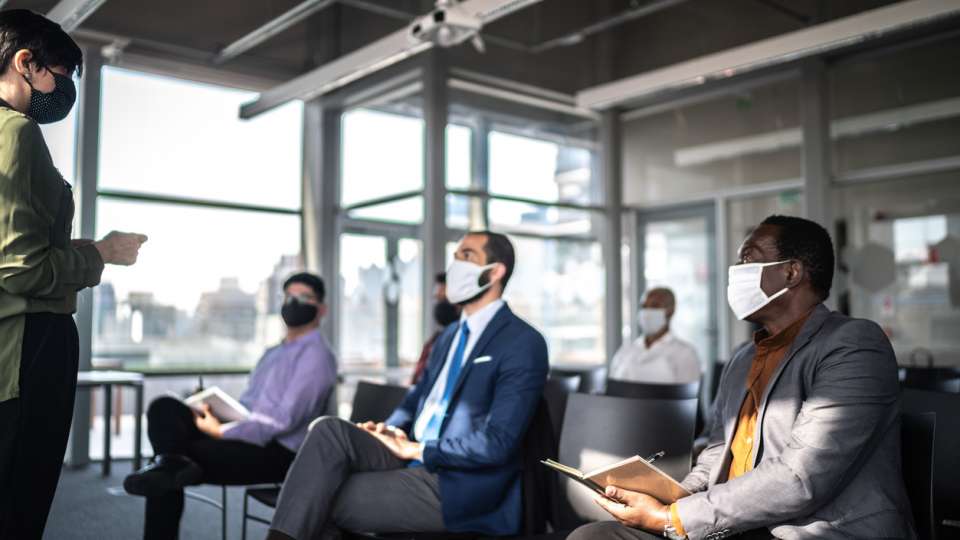
Office workers at One Raffles Place

We hope everyone had a blessed Good Friday and a well-rested Easter weekend.

It’s time to face reality. For those who haven’t caught up with the news just yet, our government has made known last month of a shift in the style of working.

The co-chair of the COVID-19 multi-ministry task force Lawrence Wong said that instead of working from home as the default, Singapore would welcome a more “flexible and hybrid way” of working.

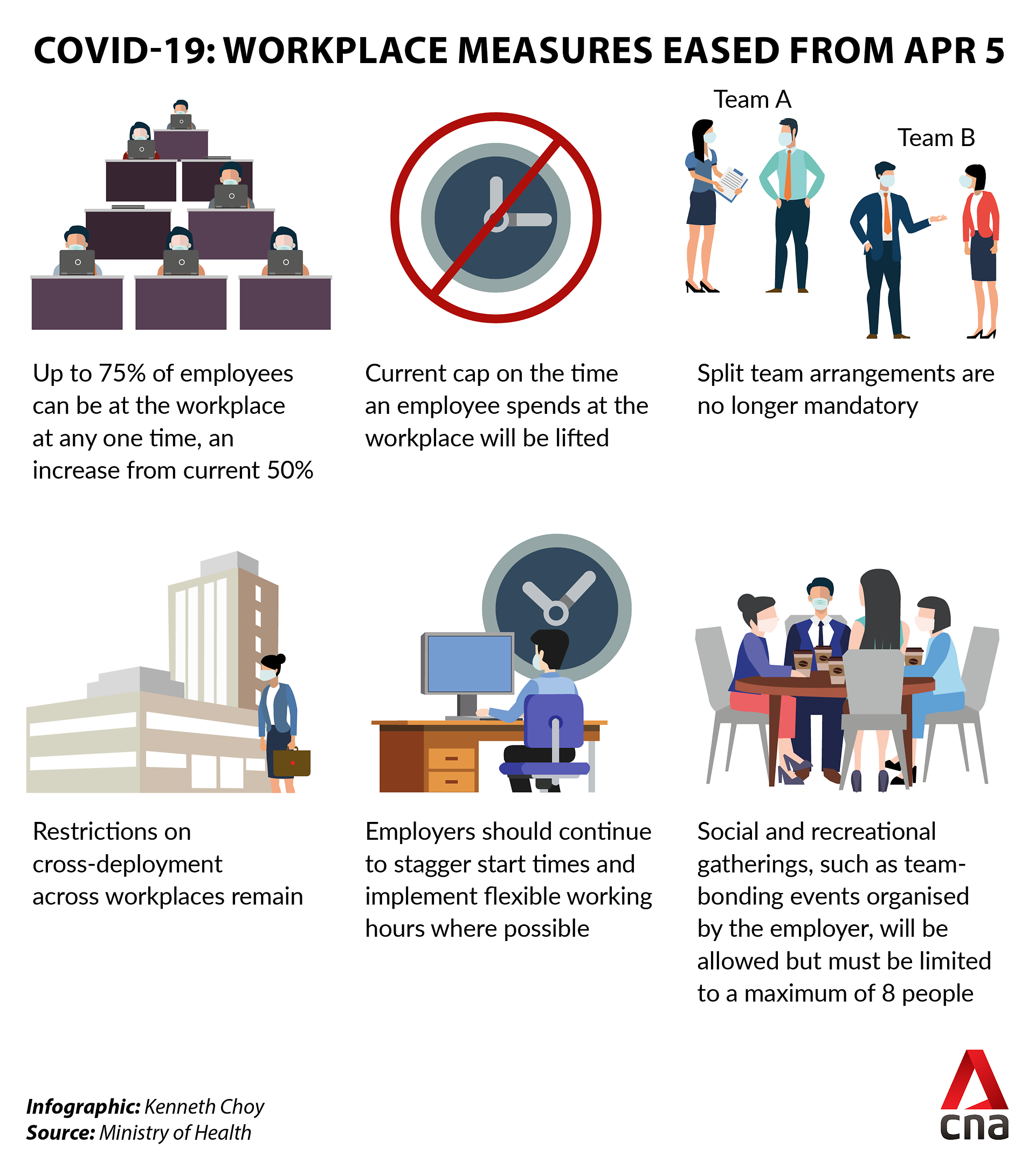
From tomorrow (5 April) onwards, more employees can return to the workplace and split team arrangements will not be compulsory. Here are some other points to note as we head back to the office from Monday.

#1: Different start times & flexibility in working hours

For those called back to the office, make sure that your boss is aware of the staggered start time requirements.

This is to make sure that there is no crowding at the office entrances or building lobbies before entry. The different start times will also ensure lesser jam-packed buses and trains.

In addition, your employer should be open to varied working hours, and as an employee, you hold the right to split your hours between working from home and clocking hours at the office.

#2: Working from home still recommended
an asian woman using her laptop on a sofa

Image Credits: The Straits Times

At the moment, only 50% of employees are allowed to return to the workplace. From 5 April, the percentage will increase to 75% instead.

As the virus still lurks in the community, employers are encouraged to allow their employees to work from home as much as possible. Unless certain business operations demand in-person meetings or collaborations, working from home is still recommended.

To that, the Ministry of Manpower (MOM) added that companies should continue to keep to online meetings instead. The decision will minimise the number of people exposed at the workplace and avoid overcrowding in areas like the pantry.

#3: Vulnerable employees to be given extra notice

Folks who are 60 years old and above, be sure that your superiors are giving you special attention to lower your transmission risk at the workplace. This also applies to patients who are immunocompromised or suffering from other medical conditions.

If your job position allows you to work from home, then reporting to the office should not take priority. But for those who need to be at the workplace physically, you should be allowed to commute during off-peak periods.

Where necessary, you may also seek redeployment to another role within the company for the time being.

#4: 50’s the limit at work-related events
work event amid COVID-19

Image Credits: Vulcan Post

Work gatherings can only allow up to 50 people to guarantee the low risk of exposure to the virus. Attendees should also keep up with the 1m safe distancing measures when interacting with other individuals.

Sorry to disappoint, but food should not be served unless the occasion calls for it, for example, due to extended periods past lunch hour or dinner time. If there’s a need to provide food, each participant must be served while seated.

Mealtimes should also be watched such that people are masked up immediately after eating.

#5: Huat number 8’s still the limit for social meetings

Please note that work events are different from social meetings. Yes, that farewell lunch for an exceptional colleague is regarded as a “social and recreational gathering”, not a work-related affair. Our tiny red dot is still in the midst of phase 3, and only up to 8 people are allowed to gather.

Even for plans like team bonding, the rule still applies. This is regardless of it being in or out of the workplace’s boundaries. For a refresher, households can only welcome up to eight visitors at any one time as well.

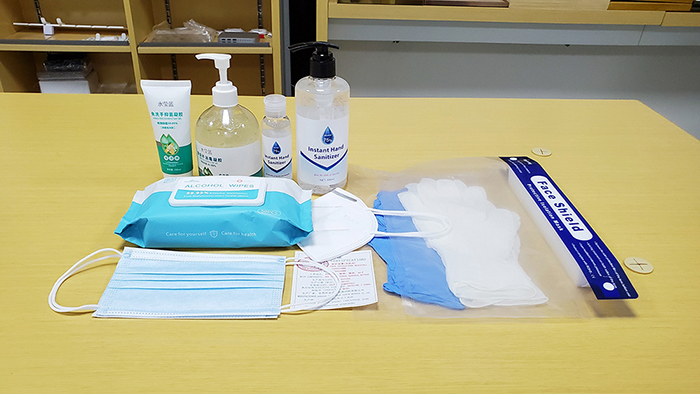
#6: Face masks and disinfectants must be provided
face masks and disinfecting agents

Image Credits: RECHI Retail

Peeps who’ve already been reporting to the office at alternate weeks or staggered schedules, we understand the pains of wearing a mask the entire workday. Especially those slogging without air-conditioners in humid conditions may find it necessary to change their masks more often.

Your employer should secure enough face masks for everyone in the company. “Where possible, employers should consider improving the working environment for employees to enable them to sustain wearing the masks,” said MOM.

There must also be sufficient handwashing soap and disinfectants such as sprays, cleansing wipes, hand sanitisers, and paper towels.

Final thoughts

For those who don’t have to return to the workplace from tomorrow (5 April), or at least not immediately, good for you if you’re enjoying it! With that said, you may be keen to check out our recently published article on “WFH tips to help you stay motivated”.

Working from home should not be a nightmare. Your boss ought to not take this as a chance to push you past your limits. Set boundaries between work and rest, so the lines are not blurred.

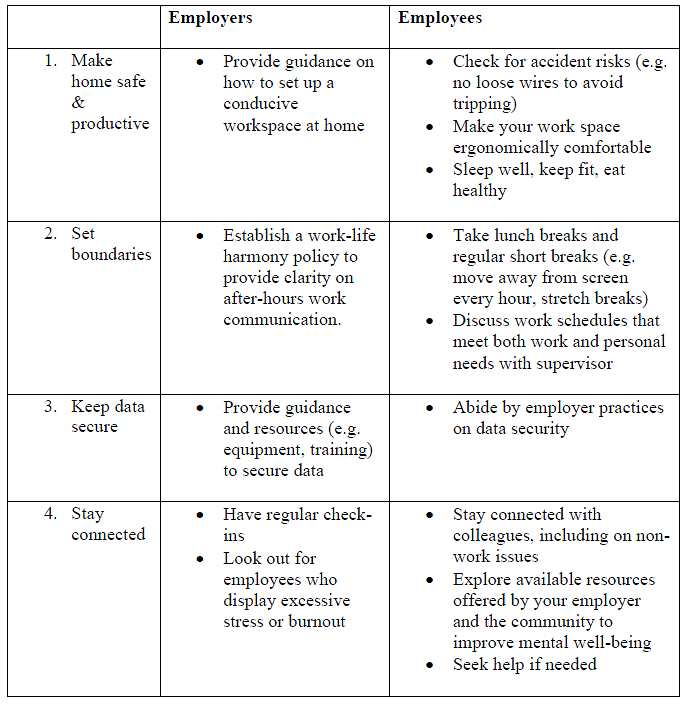
For both employers and employees reading this, you may want to heed the tripartite advisory on mental well-being formed by MOM, the National Trades Union Congress (NTUC) and the Singapore National Employers Federation (SNEF), together with HR professionals:

Tripartite Advisory on Mental Well-being at Workplaces

Image Credits: CNA

Health is wealth, so learn how to work when you need to and take that break when your body needs it.

Singapore workplace measures eased from 5 April

Read More...

Are multi-page resumes acceptable?

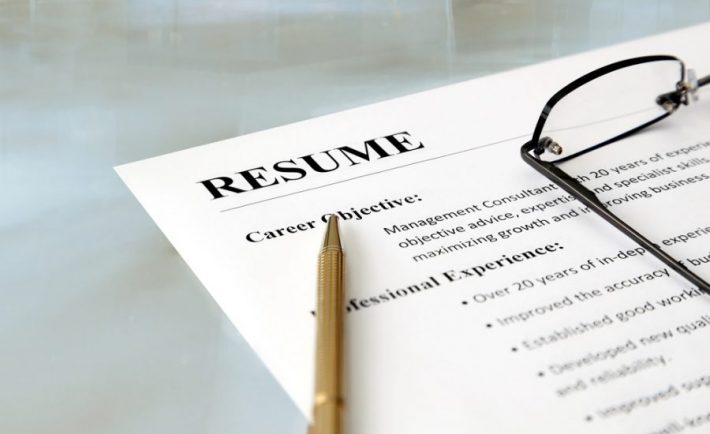
a sample resume

Anyone who’s ever written a resume knows that a fundamental rule is this: don’t go over a page.

Many recruiters may not even consider a resume more than one page and could even immediately disqualify the applicant. While other HR professionals simply don’t read past the first page and don’t take in any additional information beyond what’s easily accessible.

Keeping that in mind, the one-page resume is often the best approach for HR managers. It may even help you to stand out amid thousands of other applicants. However, it’s not always the golden standard.

Some work experiences are best suited for multiple-page resumes, particularly those requiring advanced and technical skills. When you’re applying for specific roles or trying to detail expertise in various fields, it may feel impossible to condense the most relevant information into one page.

If so, a multiple-page resume is your best bet for providing a comprehensive overview of your work experience. It can also present you as a prepared professional and highly qualified candidate.

Here are some instances where multi-page resumes are acceptable.

#1: Extensive work experience

If you’ve worked in a specific industry for many years or a decade long, your work experience can likely stretch over two pages.

Applying for positions in this same field and not including all of your career histories can be a form of short-selling. If that’s the case, go ahead and offer a complete glimpse of your talents and abilities to the hiring team.

While providing details on your most recent positions are essential, don’t be afraid to spill onto the second page if you have something substantial to flaunt regarding your past work achievements.

#2: Skilled in technicalities
Programmer at work

Image Credits: unsplash.com

Another example of a good time to pen multi-page resumes is when you have any technical skills to display.

Technical skills by nature take up more room on a page, especially if you have an extensive worth of episodes using certain technologies and software applications. You may also need to include information explaining the skills and programmes you’re familiar with, which can take up even more room.

Feel free to use an additional page but make sure that you include a brief list of technical tools and skillsets that best represent yourself.

#3: Engaged primarily in contract work

Contract work can take up page space to describe since they are usually only a year long.

When you’re covering different contracts and clients’ history, you can quickly fill up multiple pages on your resume. Recruiters likely know how contractors work, so they would be more accommodating when it comes to numerous pages of content on your resume.

But still, try to keep your main points clear and summarise the details where possible to create a weighty multi-page resume.

Final thoughts
interviewers going through a resume

Image Credits: unsplash.com

Two- to three-page resumes are likely the most a document should take up, and even then, it’s better to stick to two.

A three-page resume might be more reasonable for job seekers applying for a leadership position and have decades of experience to cover. But overall, the shorter and more concise your resume is, the higher chances it will be thoroughly read and considered.

Read More...