As you may know, many establishments and livelihoods have been put on hold due to the Coronavirus widespread. Floating in limbo led many Singaporeans to worry about their finances, particularly their bills and household expenses. This level of uncertainty is not limited to our country. It happens all over the world! Moreover, it takes a toll on developing countries whose majority relies on daily salaries and meal allowances to survive.
The Singaporean government has put a plan into place. Last Thursday, Deputy Prime Minister Heng Swee Keat said that they “will put more cash in the hands of all families to help them cope”. The cash payouts announced in Budget 2020 will be tripled!
All adult Singaporeans will receive $300, $600, or $900 depending on their income. The amount for parents with at least one Singaporean child aged 20 and younger will receive up to $300 as compared to $100 before. The Workfare Special Payment for lower-income workers will also be increased to $3,000 in cash.
Lastly, the $100 PAssion Card top-up for seniors will be given in cash instead. They will get their money directly in their bank accounts. “This is to avoid the need to queue at top-up stations during this period,” he said.
In addition to supplementary budget, the Government will freeze all fees and charges for its services for one year from April 1. Late payment charges on Housing Board mortgages will be suspended for three months. Graduates who took up Government loans for their university or polytechnic studies will receive a loan repayment suspension for a year from June 1.
Image Credits: unsplash.com
Deputy Prime Minister Heng Swee Keat also highlighted the importance of self-help groups. Grants for self-help groups will be doubled to $20 million over two years. While, community development councils will get $75 million. As he listed various initiatives on his speech, he said that they will “protect jobs, support our workers, and protect livelihoods”. All these efforts are necessary to help the citizens bounce back during these uncertain times.
Let us admit it! One of the biggest challenges that governments are facing right now is how to allocate their budget efficiently in order to fight the COVID-19. While some countries have pledged money to developing testing kits, some have spent money for community disinfecting drones.
The measures that need to be taken in order to stop the spread of the virus such as closing offices and schools or shutting down factories and airlines can lead to some companies going out of business.
Fortunately, Singapore set aside 5.6 billion Singapore dollars in the coming year financial year (April 2020 to March 2021) to help businesses and households tide through the ongoing coronavirus outbreak. This is according to the Minister of Finance, Mr. Heng Swee Keat.
For individuals, this tough situation is what Emergency Funds are for! Budgeting your spending can help you find a balance between spending and saving money throughout this period.
CONTROL YOUR SPENDING
The rise of credit cards and online banking apps paved the way for better shopping experiences. The extent to which we fall trap to these temptations boils down to our willpower. During these times of scarcity, you need to focus on the things you want rather than what you need. It is easier said than done as self-control is like a muscle that gets strained due to overuse.
It is the willpower of those who face repeated difficult financial situations that tends to deplete the most. Hence, it is important to seek the help of someone who cares. Seek professional advise, if necessary.
PLAN YOUR MEALS
One of the easiest ways to control your spending is to plan ahead. Meal planning can help you stay within the budget and control your visits to the grocery. For those who are practicing social distancing and are opting to stay at home, a meal plan is your best-friend!
If you know what you are going to consume for a week or a month and have shopped accordingly, there will be no need for extra store visits that will lead to more spending and more food wastage. Allot a specific portion of your budget for weekly meal plans.
PRIORITIZE YOUR SPENDING
Each of your expenses should be placed in appropriate budget categories such as food, toiletries, and utilities. When faced with a decision to see what gets paid this month and what gets the least portion of the budget, it is important to prioritize. Essentials go up the ladder! These are followed by your creditors and your non-essentials.
You need to accept the situation you are in. Expenses that are core to your survival should be prioritized. The rest can wait.
CUT DOWN YOUR SPENDING
One of the major things you can do to help yourself and your budget during these tough times is to figure out what you are currently spending on and what you can live without. Whether you are cutting down your monthly cable bill or reducing your trips to Starbucks, there are various ways to reduce your expenses. I am referring to little unnecessary expenses that tend to pile up.
It is best to know where your money goes. If you are using a debit card, keep track of the payments. If you are using cash, keep the receipts and review them. Watch out where your money goes and adjust accordingly.
STAY POSITIVE
In times like this, all we can do is to hope for a better future. Staying positive can help lift your mood throughout a bad situation. As bills come in and your debt continues to increase, keeping a positive mindset with a strategic plan can help you.
Image Credits: unsplash.com
Remember that what you are going through is temporary and will not last forever. We can get through the setbacks brought by COVID-19!
Australian dollar dives towards a new low against the Singdollar
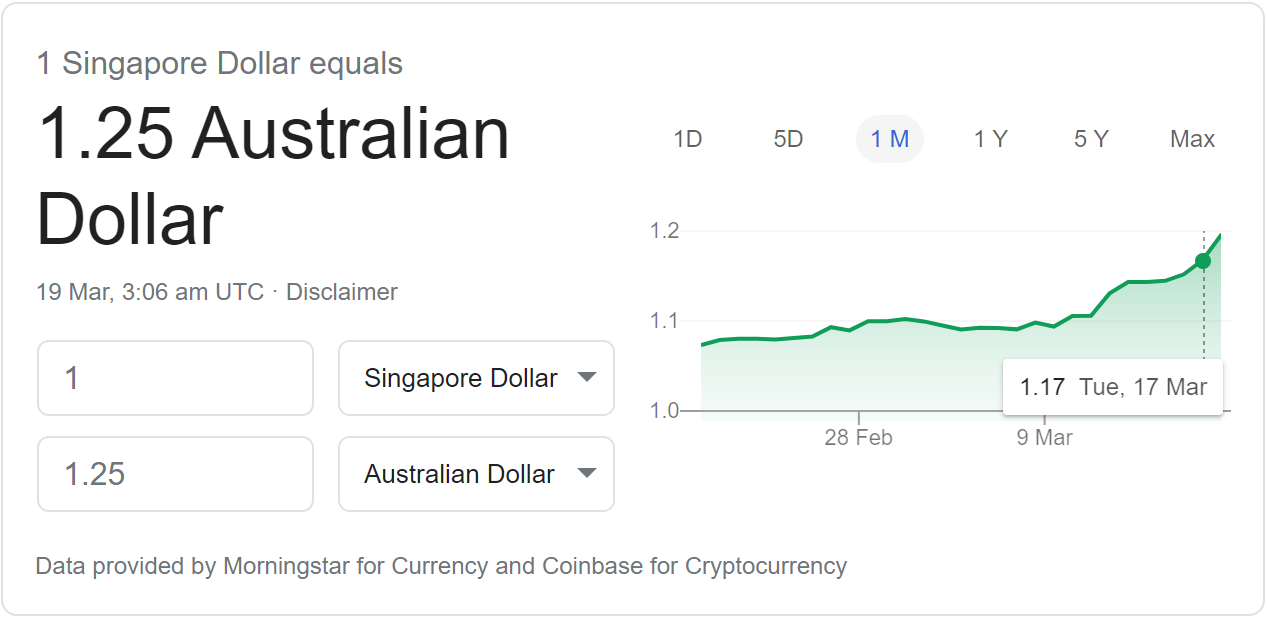
The Australian dollar has dropped further against the Singapore dollar, pointing towards an all-time low of 1.25, a rate never seen before since September 2001 when it hits 1.18 according to Investing.com.
The AUD has plummeted amid ongoing concern regarding the coronavirus pandemic and could sink further as it takes its toll on the economy.
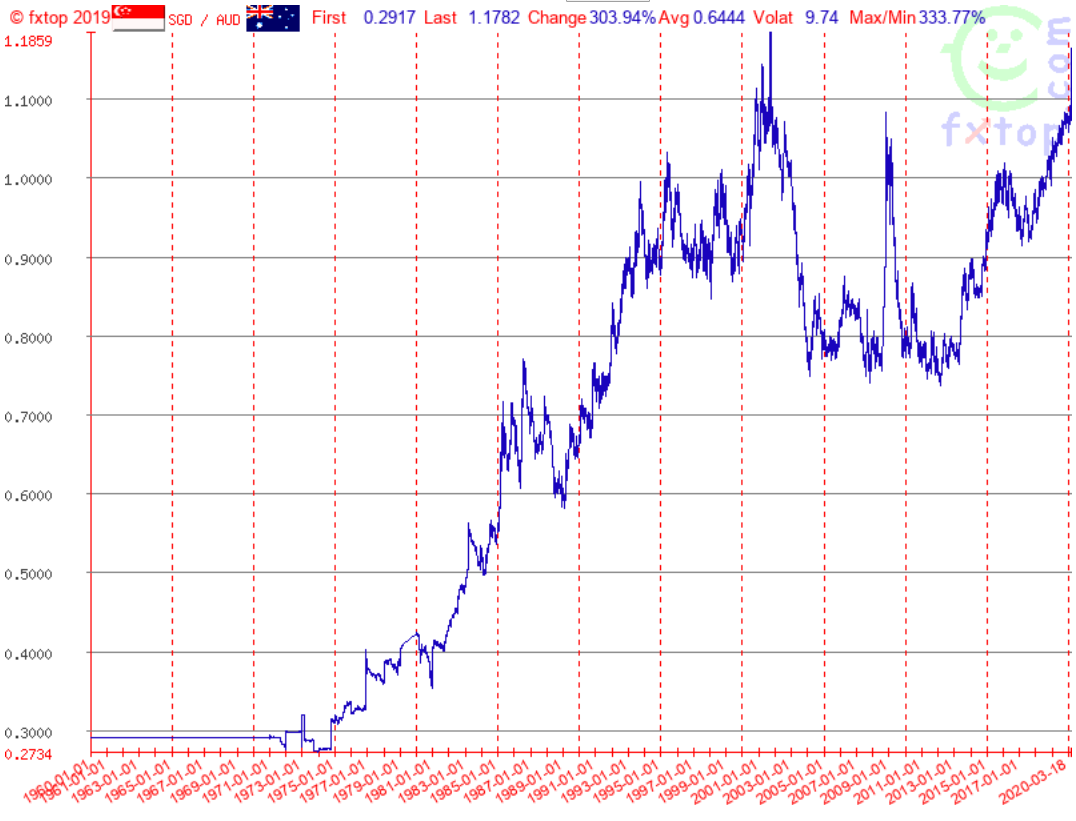
The historical rates of the SGD/AUD pair from fxtop.com shows it briefly hits 1.18 in 2001 before the AUD started to recover and appreciate against the Singdollar going as high as 0.74:
The Reserve Bank of Australia (RBA) is set to announce measures later today (19 Mar) and could cut interest rates to stimulate growth.
In 2012, S$10,000 can only get you about AUD7,400 — a lot lesser than what the Singdollar is worth today where S$10,000 can get you AUD12,500. It can be good news for those who are planning for a vacation or studying abroad in the Down Under after the pandemic.
Interested in investing in REITs but don’t know where to start?
For starters, it’s going to take a lot of work.
Like. A LOT.
Imagine this.
You just got home after a long day at work.
All you want is a shower, dinner, and to relax.
You wouldn’t want to waste time cooking a meal when you could be catching the latest episode of that new Netflix series that everyone’s talking about.
Source: American Dad | Giphy
And the last thing you would want to do is pore through pages of financial statements or do your own valuation of data just to pick the best Singapore REITs to invest in.
Not that there’s anything wrong with doing that… but wouldn’t you want to spend your time doing something else that you REALLY like?
I mean, why isn’t there a magical resource or tool that can help people start their REITs investing journey?
Enter: The Seedly REITs Tool
With up-to-date data, sound analyses, and tonnes of information just a click or tap away.
The Seedly REITs Tool is a REITs investor’s best friend — no matter whether you’re a noob or a pro at REITs.
Best of all?
It’s FREE TO USE.
If You’re a REITs Investing Noob
If you’re just starting out, you’re probably feeling lost and have no idea where to start when it comes to REITs investing.
With the Seedly REITs Tool, you have a one-stop resource where you can get useful information like:
What are REITs?
What are the types of REITs which you can invest in?
A simple 10-step checklist to pick the best Singapore REITs
Feeling more confident now that you know what you’re getting yourself into?
In order to make an informed decision, important information like:
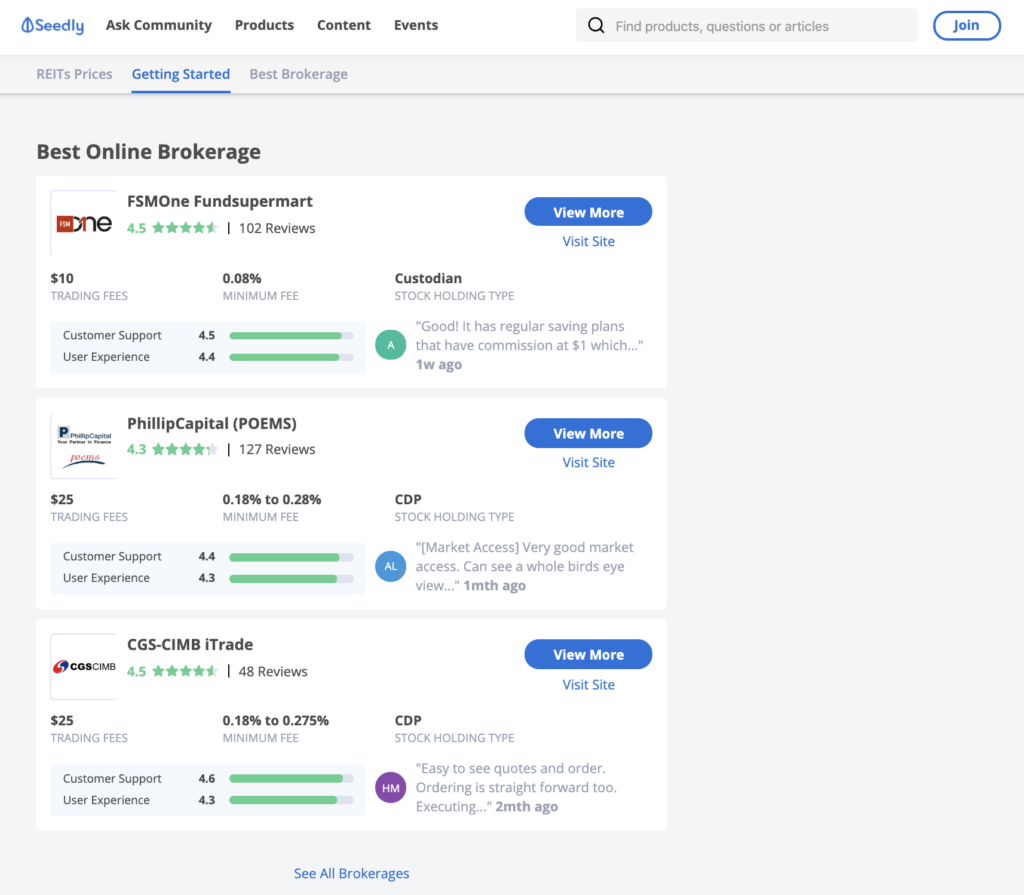
Trading fees charged
Minimum fees charged
Stock holding type (if you’d prefer not to use a custodian account)
are all available at a glance!
Prefer to find out what others have to say about their personal experience with these online brokerages?
You can also read real-user reviews to get insights like:
Customer support
Market access (in case you want to invest in global markets)
Products on offer (in case you wish to invest in more than REITs)
User experience (because you’re allergic to lousy user interfaces)
This way you know for sure what you’re getting yourself into when you sign up with your choice of brokerage.
Made up your mind?
Just click on ‘Visit Site’ to sign up and you can begin investing in REITs!
If You Already Know About REITs Investing
The first thing you’ll probably want to do is check up on the fundamentals of the REITs you’re interested in.
While you could go about your standard routine of going to the individual REITs website or SGX to look for the REIT’s financial statements or annual reports.
Why not use the Seedly REITs Tool to find what you need without going all over the place?
Just search for the REIT you want, click on it and…
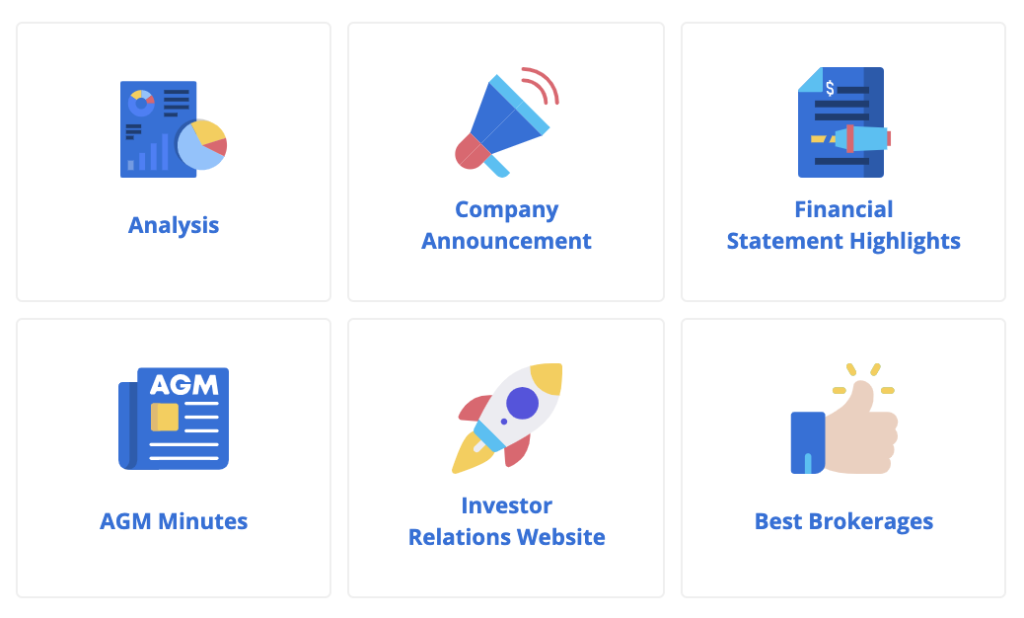
You’ll have immediate access to:
Sound and in-depth REITs Analyses (researched and written by Seedly’s very own content team; we aren’t paid by anyone to write about them so you know that our analyses are objective!)
Company Announcements
Financial Statements
AGM Minutes
Investor Relations website (just in case you need more information about the REIT)
Best brokerages available
“How about REITs valuation data? Do I have to calculate that myself?”
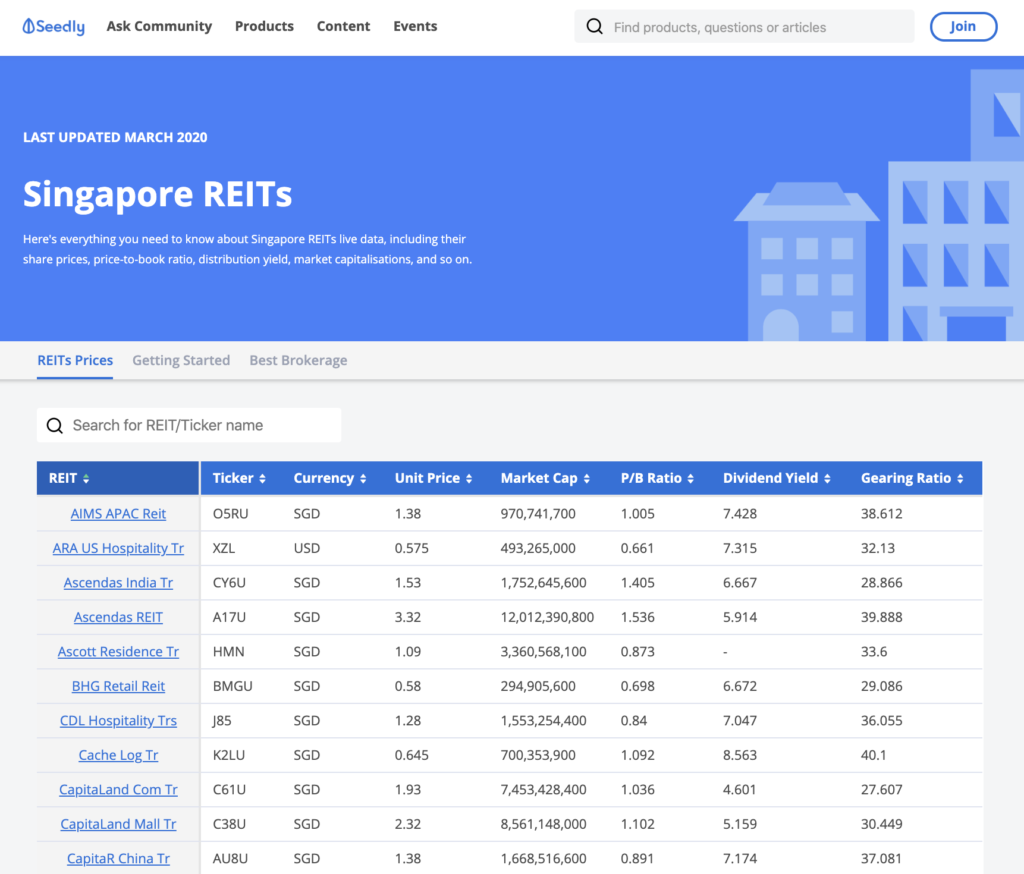
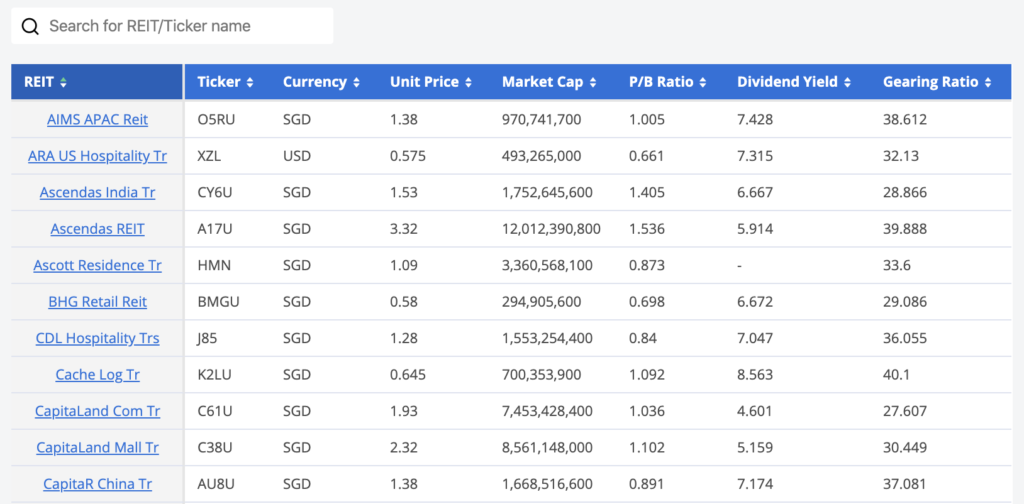
The Seedly REITs tool gives you easy access to data like:
Unit Price
Market Capitalisation
P/B Ratio
Dividend Yield
Gearing Ratio
that is updated daily at the end of every day.
And because the information is readily available on the same page.
You can do your comparisons easily without having to navigate back and forth or go through multiple pages on different sites!
The Seedly REITs Tool Sounds Great and All… but Why Is Seedly Doing This?
The Seedly team believes that everyone deserves to achieve financial independence and freedom.
And the reason why so many people don’t start investing is that they lack the knowledge and guidance to take the first step.
This is why they created the Seedly REITs Tool and made it free for any and everyone to use.
If you understand what REITs can do for you and believe that they can play an important part in your investment portfolio.
Then the Seedly REITs Tool is the perfect accompaniment to help you start or make your REITs investment journey a little easier.
So when you come home from work…
Source: American Dad | Giphy
you can focus more on relaxing and collecting dividends.
There is a scarcity of resources wherever you look. Toilet papers are flying off the shelves like the migratory Great snipe. People are typically seen hoarding cleaning supplies such as disinfectant sprays, antibacterial wipes, hand sanitizers, and so on. It is difficult to source out masks too!
With the scarcity of supplies, travel restrictions, and the limited capacity to work, the global COVID-19 pandemic has affected the economy in more ways than one. Last week, Wall Street plunged with Dow Jones confirming a bear market for the first time since the 2008 financial crisis. The escalating health fears sent the stock market into a nosedive, which is its worst state since the 1987 market crash.
The Dow Jones Industrial Average fell 1,464.63 points, bringing it 20% below its record set last month. This is what Wall Street calls a “bear market”. A bear market is a condition in which securities’ prices go 20% down or more from its recent highs. It is usually due to the widespread pessimism and negative investor sentiment. S&P 500 lost 140.84 points, which is just 1% point away from falling into the bear territory. While, Nasdaq Composite dropped 392.20 points.
Stocks dove even lower after the World Health Organization declared the virus outbreak as a pandemic. Stock prices reflect expectations of future profits and investors heavily perceive that the virus can reduce profits. Thus, a huge number of investors sought for the coordination of governments and central banks around the world to help control the economical threat of this virus. Until the extent of the decline is clearer, the natural reaction of many is to sell stocks.
The economic trajectory that seemed reasonable a few months a go is not going to be the same for a few months or a year. The wave of corporate conference cancellations, music festival cancellations, directives to work from home, and travel bans will exact a cost on businesses. Airlines, industrial companies, small businesses, educational establishments, service industries, and tech companies are all affected. We are all affected because the spending habits of consumers drive much of our economic activity.
Image Credits: unsplash.com
How long will this economic disruptions last and how deep will the economic market go?