Don’t do these things during a recession

cosigning a loan

According to a senior economist from DBS bank, Singapore is very likely out of a full-fledged recession. To be exact, a recent news report in April this year revealed that our economy grew by 0.2% in the first quarter.

While it’s good news, it might be too early to rejoice over the numbers. Economists noted that the trend does not necessarily mean that the economy is doing well. But it’s on its baby steps to pre-pandemic levels.

Since COVID-19 has been with us for 1.5 years and will eventually become endemic, it’s always wise to prepare for rainy weather. If you share the same sentiments, don’t do these things during a recession.

#1: Accept the request to be a cosigner

Maybe your long-time best friend or a family member has requested your help to be a cosigner for a loan they’re planning to take. But in uncertain times, it’s better not to accept the plea.

No matter how much you can vouch for the person’s personality to repay the loan, nothing is an absolute guarantee. Just think about the possible consequences should the borrower disappears or is simply unable to pay back the loan due to sudden unemployment or downward spiralling financial status.

#2: Taking out a personal loan
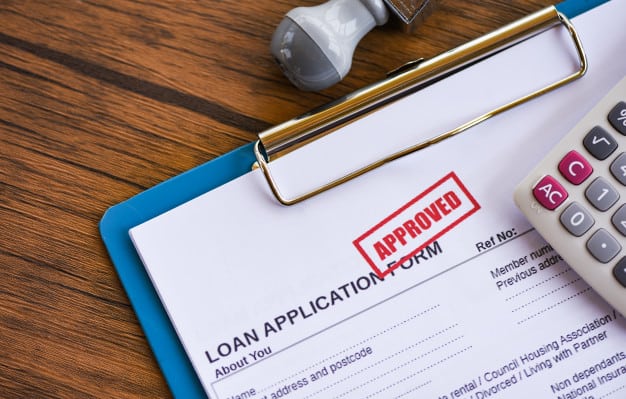
a loan application form

Image Credits: fortunecredit.com.sg

Speaking of debts, it’s advisable that you don’t pick up a personal loan when the economy is terrible.

That new car you’ve been dreaming of having or that private housing you would like to own with your future spouse can wait. During a recession, you may lose your job on short notice, which will significantly affect your ability to repay your monthly loans. The worse thing is to be faced with bankruptcy should the situation aggravates.

#3: Slack on your job

Unless you’re planning to force your superior to fire you, now’s not the time to slack on your job. 

Yes, working from home is still the default as Singapore slowly moves to Phase 3 (Heightened Alert). But that doesn’t mean you can take this opportunity to produce mediocre work. If you want to prove that you’re worthy of the salary or position you’re holding, be sure to demonstrate that you’re an indispensable team member.

#4: Make sudden investments

It may be tempting to put your money into investments right now, considering that you don’t want to be working your arse off and still possibly be on the company’s chopping board when there’s an economic slowdown.

However, don’t make sudden investments without prior extensive research. Be sure that you’re able to weather the storm if your money’s gone up in a cloud of smoke due to unforeseen circumstances. Remember that the stock market will always be volatile. Don’t play the game just because everyone else is doing so.

Perhaps now’s apt to relook into your monthly budget or consider running a side business to boost income?


Read More...

How To Manage Your Money In Your 30s

As you enter your thirties, your focus is geared towards saving money and meeting your financial obligations. This is the time to figure out the future you want to have to lay its groundwork.

On that note, let this article give you an idea on some of the financial goals that you need to set when you are in your 30s.

#1: REVISIT YOUR BUDGET

Are you still following the same budget you set in your 20s? If so, it is time for an upgrade. Your responsibilities and financial capacities evolve as time passes. Food, housing, childcare, and medical expenses will require a different type of budgetary attention as you enter your 30s. Examine your current budget and make necessary changes.

#2: GROW YOUR EMERGENCY FUND

If you are still on the fence on whether you should start an emergency fund or not, just think about the uncertainties brought by the pandemic. It is a concrete example of why people need to have a cushion for unforeseen events.

Most financial experts recommend having a savings that will cover your expenses for a minimum of 6 months. However, this amount varies per person. Adults with dependents need to consider putting more money in their emergency fund. The more funds you put aside, the more money you can use for unexpected expenses.

#3: GET INSURANCE

Due to the many demands brought by your professional and personal life, prioritizing your health is vital in your thirties. Having health and life insurance plans will not only be beneficial for you, but also for your family. You see, insurance premiums increase as you age. It is cheaper to get an insurance plan now. Shop around for the best insurance plans that suit your needs and your budget.

#4: PAY OFF DEBTS

While you are building an emergency fund and revisiting your current budget, identify how much debt you still have. Debts can negatively impact your financial health and your ability to accomplish your long-term goals. Why not start paying off your debts? The sooner you can reduce or eliminate debts, the sooner you can focus on turning your dreams to reality.

#5: THINK ABOUT YOUR RETIREMENT PLAN

Although you are decades away from retirement, thinking about your retirement plan will help you to allocate your retirement funds. Whether your employer has a company retirement plan or not, it is a good idea to think about what you want to do once you stop working.

Image Credits: unsplash.com

How much you need to save for your retirement will rely on the kind of lifestyle you want to have when you retire. Fortunately for you, there are many financial resources online. Do your research!

Read More...

5 Steps To Protect Your Debit & Credit Cards When Shopping Online

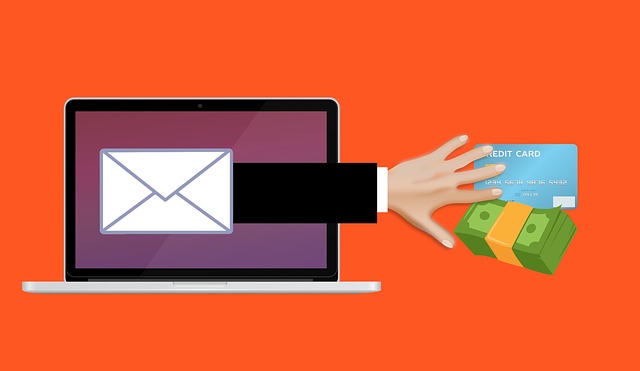
Swindlers and scammers are always on the lookout for opportunities to gain access to your money. Since the pandemic, many types of scams have emerged. As cashless payments became vital to the new normal, adding layers of cybersecurity to your debit and credit card transactions will reduce your chances of becoming their victims.

This article highlights the 5 steps that you can take to protect your debit and credit cards. Fraud is prevalent, but you can act now!

#1: NEVER DISCLOSE YOUR PERSONAL INFORMATION

Fraudsters typically pretend to be bank representatives to steal personal information or to perform unauthorized transactions. Be smart when it comes to what you share online. Do not get too excited about sharing personal information, even via screenshots or through your 24-hour daily stories (e.g., sharing a snap of your QDL). Despite having restrictions with your target audience, you will never know how fraudsters can work their way around.

As much as possible, use different passwords for your online banking and social media accounts. Try using different email addresses for your online banking and social media accounts too.

#2: IDENTIFY WHETHER YOUR EMAIL ADDRESS AND HANDPHONE NUMBER WERE COMPROMISED

The personal data of over 500 million Facebook users was leaked online. You are vulnerable if you are using the same email address and handphone number for your online banking and social media accounts.

To know whether your email address or personal number has been compromised, you can visit helpful websites such as Have I Been Pwned. Have I Been Pwned allows you to know whether you experienced data breaching in the past or not.

#3: USE YOUR CARDS ON WEBSITES YOU TRUST

When you are shopping with your debit or credit card online, it is important that you only go to websites that you trust. Ensure that you typed in the correct website and not phony one. You can also print a copy of your online purchases for future reference.

While shopping in your favorite website, avoid clicking on email links and suspicious images because these could take you to a phony website whose sole purpose is to steal your credit card information.

#4: ACTIVATE THE OTP OR TWO-FACTOR AUTHENTICATION

A one-time password (OTP) is a dynamic pin that is valid for a single login transaction on a digital device. It is an automatically generated alphanumeric or numeric string of characters that authenticates the user for a transaction. Activating this security feature will enable you to be notified whenever your accounts or cards are used. The OTP is usually sent via SMS or via email.

Similarly, the two-factor authentication (2FA) adds a layer of security by authenticating the credentials of the user. Most email providers such as Google and Yahoo! have this feature. Activate it to prevent other people from logging in to your email/s.

#5: BE VIGILANT AT ALL TIMES

Be vigilant when it comes to identifying phishing emails. Fraudsters may send you emails and newsletters that copy your bank’s promotional campaigns. Check the email sender to ensure that it is from the financial institution itself. Remember that most banks use corporate email addresses when sending newsletters and not personal Gmail or Yahoo Mail accounts.

Image Credits: pixabay.com

As mentioned above, avoid clicking links or buttons that can potentially lead you to unsecured websites. Keep your eye on the email address of the sender and the grammar of the message sent to you. If many words are misspelled, you can easily spot a red flag.

Read More...

Tighter COVID-19 measures have led to Singapore shares reaching more than two-month low

watching the stock market

The tighter measures made known by the Ministry of Health (MOH) yesterday (14 May) probably came as a shock to many.

However, it’s absolutely necessary in response to the spike in COVID-19 community cases recently. As we gear up to work from home, there are also daily and social routines to make adjustments to.

In terms of investments, Singapore shares aren’t looking that good. With the latest restrictions announced, investors are reacting accordingly.

Straits Times Index (STI) fell more than 3% initially

After the news report, the benchmark STI dropped by 3% before closing down at 2.2% or 3,055.02 points. Since 8 March, the decline on 14 May marks STI’s lowest level.

DailyFX’s strategist Margaret Yang commented that the market is not ready for the newly set COVID-19 measures, considering that the social gatherings group limit was only cut from eight to five people just a week ago.

“On the economic level, there will also definitely be some adverse impact on the services and travel sectors,” she added.

To that, IG’s market strategist Yeap Jun Rong said that the current situation had cast doubt on the pace of economic recovery ahead. Since a significant portion of STI’s constituents is cyclical, the economic cycle will have a massive impact on its numbers.

Aviation-related counters most badly hit
an SIA flight

Image Credits: CNBC

It’s probably not a surprise that the aviation-related counters are the ones most affected.

To give you some numbers, Singapore Airlines (SIA) fell 5.7% to an 11-week low of S$4.50, while flight caterer SATS plunged 3.9% to S$3.69. Integrated resort operator Genting Singapore also dropped 3.1% to S$0.79.

Ms Yang noted that investors were hoping for the vaccine roll-out to spur economic recovery and border reopening. But with Singapore now reversing, this means that it will probably take more time for the aviation industry to get back on track.

What’s next for the stock market?

According to CMC Markets analyst Kelvin Wong, the unlinked community cases will play a vital part in deciding how the stock market will react for the rest of May. Should it see an increase, more stringent measures may pass and, travel-related stocks will further weaken.

While it is too early to comment, Mr Yeap expects retail, hospitality, and entertainment-related stocks to come under pressure if the COVID-19 situation continues to spiral downward in Singapore.

“That said, the overall downside impact may be limited considering that prompt action was taken to limit the virus spread and more than 20% of Singapore’s population has been fully vaccinated,” he added.


Read More...

Do these things to bring down your cost of living

a man holding on to his car key

The term “cost of living” can be translated as the money needed to uphold our current lifestyle habits.

When finances are on a stretch, lowering the cost of living can weigh heavily on our minds. If you’re ready to hit the pause button on your spendings or make lifestyle changes because of a recent job loss or pay cut, that’s not impossible.

Try doing these things to bring down your cost of living.

Move to a smaller home

Downgrading can be a powerful punch in the face for the prideful. But when it comes to finances, it’s a massive boost for maintenance. Take a good look at your money matters right now and decide if it makes sense for you to downsize. Remember that selling your property takes time, so plan ahead and get started early.

But sometimes, selling your home can be made secondary by getting rid of your car instead. With most of us shifting back to working from home, maybe you don’t really need a vehicle to add to your existing financial burdens?

Rent out rooms
a room with a double bed

Image Credits: ohmyhome.com

For peeps who are not so keen on selling their house, see if you can empty a room or two to rent out. This presents a quick solution to bring in extra cash every month, on top of your salary.

Alternatively, you can also choose to downsize and then rent out a small room for someone to occupy temporarily. But this method might only be suitable for people who don’t mind sharing their living spaces with an outsider. Be sure to discuss thoroughly with your family members beforehand.

Minimise your energy consumption

Your current electricity appliances can be the culprit contributing to your steep monthly bills. Check to see if they are energy-efficient and make the switch if they aren’t. Since they are products you use for a long time to come, be sure to do your research and ask the salesperson about the specs before buying.

Another factor to consider is your air-conditioner. Yes, we get how Singapore’s weather is so humid and unbearable at times, but if you want to bring down your cost of living significantly, learn how to embrace the warmness. Can’t seem to give up on that? Use the timer setting to work your way around it when you hit the sack.

Rework your budget
budgeting with a calculator

Image Credits: procurementexpress.com

As we approach mid-year, maybe it’s time that you take a look at the budget you’ve drawn at the start of 2021. Changes are inevitable, and it’s okay to replan your spreadsheet to accommodate your income changes.

Study the spendings closely you have each month and maybe let go of a few inactive subscriptions. Examine if you genuinely require multiple content streaming services, or you could just do with one for the time being.

Singapore is undoubtedly a city with a high cost of living and seems to rise a little more each year. Unless you’re planning to move to another country with a lower cost of living, consider the above strategies to cut your money outputs.

Read More...