Straits Times Index (STI) fell more than 3% initially
After the news report, the benchmark STI dropped by 3% before closing down at 2.2% or 3,055.02 points. Since 8 March, the decline on 14 May marks STI’s lowest level.
DailyFX’s strategist Margaret Yang commented that the market is not ready for the newly set COVID-19 measures, considering that the social gatherings group limit was only cut from eight to five people just a week ago.
“On the economic level, there will also definitely be some adverse impact on the services and travel sectors,” she added.
To that, IG’s market strategist Yeap Jun Rong said that the current situation had cast doubt on the pace of economic recovery ahead. Since a significant portion of STI’s constituents is cyclical, the economic cycle will have a massive impact on its numbers.
Aviation-related counters most badly hit
Image Credits: CNBC
It’s probably not a surprise that the aviation-related counters are the ones most affected.
To give you some numbers, Singapore Airlines (SIA) fell 5.7% to an 11-week low of S$4.50, while flight caterer SATS plunged 3.9% to S$3.69. Integrated resort operator Genting Singapore also dropped 3.1% to S$0.79.
Ms Yang noted that investors were hoping for the vaccine roll-out to spur economic recovery and border reopening. But with Singapore now reversing, this means that it will probably take more time for the aviation industry to get back on track.
What’s next for the stock market?
According to CMC Markets analyst Kelvin Wong, the unlinked community cases will play a vital part in deciding how the stock market will react for the rest of May. Should it see an increase, more stringent measures may pass and, travel-related stocks will further weaken.
While it is too early to comment, Mr Yeap expects retail, hospitality, and entertainment-related stocks to come under pressure if the COVID-19 situation continues to spiral downward in Singapore.
“That said, the overall downside impact may be limited considering that prompt action was taken to limit the virus spread and more than 20% of Singapore’s population has been fully vaccinated,” he added.
What are the gemstones that come to mind when we mention “investment-worthy”?
Maybe some of you might be thinking of rubies, emeralds, and diamonds. While the three are definitely high in value, they are not the only stones deserving of all your attention.
According to Danilo Giannoni, a Singapore-based Italian jeweller, there are other sparkly rocks likely to grow in value. So, stay on this page if you want to work out your next investment move.
#1: Royal blue sapphire
Image Credits: Arte Oro
Since a saturated royal blue sapphire is internationally recognised and highly sought after, an investment in that would be considered “safe”. Expect to spend in the range of US$50,000 per carat if you’re looking to purchase a decent-grade blue sapphire.
However, it’s also worth noting that other colours are quickly gaining popularity. You will want to spend some time researching the saturation and tones to find the right sapphire for investment.
#2: Scarcely precious tanzanite
Image Credits: Arte Oro / Client’s private collection
When something is in short supply compared to the demand for it, its value shoots up. This is a simple concept most of us understand, especially since the early days of the pandemic has led to high prices of face masks being sold.
Similarly, since tanzanite can only be sourced from a small area in Tanzania, supplies are limited. The prices are currently reasonable at US$1,000 to US$5,000 per carat, way lower than sapphires. But still, it’s forecasted to rise sharply in price should interests peak.
#3: Mid-range toned Paraiba tourmaline
Image Credits: Arte Oro
Speaking of rarity, the Paraiba tourmaline wins the comparison against tanzanite. They can only be extracted from three mines situated in the remote areas of northeastern Brazil.
Thus, you can expect its high price tag of up to US$100,000 per carat, though its exact figure greatly depends on tones and colours. While clarity is essential, it’s not the top deciding factor for the best returns.
#4: Beautifully reactive alexandrite
Image Credits: brides.com
When we say reactive, we mean that this precious mineral reacts to various light sources to emit its colour-changing characteristic. Thanks to its chemical composition, a person who owns this gem can observe its colour change from blue-green to red-purple from day to night.
It’s not just stunningly beautiful to observe, but it also performs well in the markets. Over the last few years, alexandrite has seen double-digit annual returns by collectors worldwide. An extraordinary carat with top-tier quality can cost up to US$100,000.
#5: Bright pink-red spinels
Image Credits: Arte Oro
As we come to a close, we have bright pink-red spinels to end us off this list. Spinels may not have been popular a few years back, but now, it’s a whole different story. With more buyers attracted to candy-coloured designer jewellery collections in recent years, spinel has climbed up the ranks to be considered investment-worthy.
Interestingly, it’s not the pure colourless spinel that is desired but the red, hot pink, and flame orange ones that are now in the spotlight. To be exact, neon pink-red spinels from Tanzania are the ones with tremendous investment potential, with prices up to US$50,000 per carat.
Now that you have an idea of what’s trending, do your due research and start collecting!
So, you want to be a millionaire? Sure! But first things first, make sure you’re not spending too much money way over your budget.
For folks looking to attain financial freedom, we recently wrote on some challenges to save more money which might be of powerful assistance. Some concepts, like the 1% trial or 52-week challenge, can be new ideas to try out.
Meanwhile, for today’s article, we will look into 10 well-rated books to read if you want to be a millionaire. Let’s roll with the titles!
“The Millionaire Fastlane” is a straightforward guide to wealth generation written by a self-made entrepreneur who has learned from both his successes and his failures.
A fan of non-conservative approaches, DeMarco explores the theory that success is tied to effort. You are the vehicle, and the fuel, engine, etc., can be tailored to your specific route. The author’s advice is concise and valuable for those seeking to grow their wealth via the expressway.
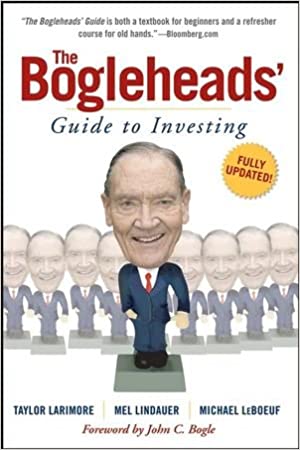
Do you know what Bogleheads are? It’s a term referring to investing enthusiasts who hold fast to the investment advice of John Bogle, the founder of Vanguard and an investor advocate.
This guidebook provides the reader with straightforward investing and financial advice designed to help the average person profit from long-term wealth creation. This book also advises readers on how to survive economic downturns and keep their footing rooted.
More a parable than a textbook, Clason’s work revolves around the subject of thrifting, financial planning, and personal wealth.
The lessons presented in this bestseller are timeless and easy to follow. You will learn how to save, spend less than you earn, and make money earn more money through seven simple rules. If you want to know, start flipping.
Known as the father of value investing, Benjamin Graham was a well-known economist and professor whose students include legends such as Warren Buffet.
Readers of “The Intelligent Investor” will focus on learning the fundamentals of value investing. Graham teaches us how to guard our investments and make them successful.
If you want to avoid common investment pitfalls like channelling too much energy to the changing sentiments of the market, this book will do the trick. Updated by famous financial journalist Jason Zweig, this edition will keep Graham’s lessons appropriate for modern demands.
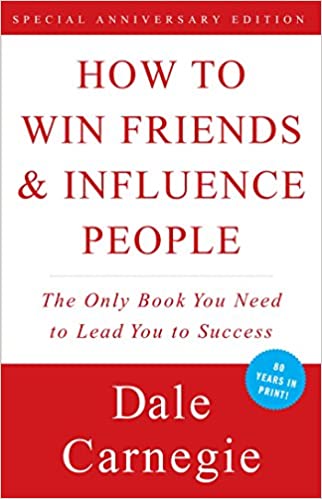
What does winning friends and influencing people have to do with getting rich? Plenty!
To achieve success, one must learn to work with others. They could be your friends and family members, investment advisers, business partners, or even salespeople.
Nobody who aspires to become a millionaire can afford to ignore Carnegie’s advice on how to win people over with your way of thinking. The tips conveyed in this book will help you think in fresh ways and cultivate relationships that lead to unlocking your maximum potential.
The author explains the term conscious business as the practice of expressing your passion and values through your work.
Rather than blindly chasing after profits, the conscious business person leverages their values into helping business stakeholders attain happiness.
Kofman explains that business people who approach their work with integrity, responsibility, and genuine leadership are more likely to achieve personal and financial success beyond the workplace.
“Secrets of the Millionaire Mind” concentrates on identifying internal traits that can lead to financial success.
Eker does that by identifying one’s money and success blueprint hidden deep within the subconscious mind. For those whose blueprints are not built for success, the author offers a chance to reset one’s mental patterns to improve the likelihood of financial triumph.
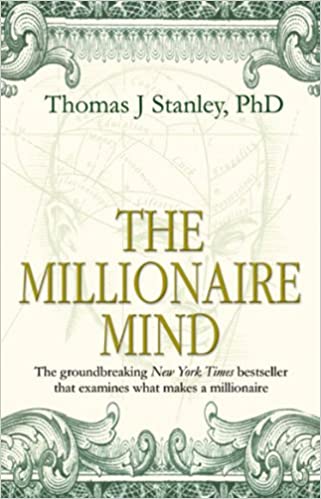
Peeps who are keen to explore further the interaction of mindset and wealth, Stanley’s writings can offer a glimpse into the millionaire’s headspace.
While many may assume that millionaires are well-connected graduates of prestigious schools who flaunt their wealth, the truth might be more surprising. Those who want clear road maps on how millionaires found their niches, look no further.
We will close our list with one of the classic books on wealth creation and financial success. Hill’s “Think and Grow Rich“ lets you in on money-making secrets inspired by Andrew Carnegie’s magic formula for success.
The book will share with you 13 steps towards riches. From the attainment of desire to influencing the subconscious mind and putting it into action, you will get the fortune you want if you’re ready to welcome it.
Peer-to-Peer or more commonly known as P2P lending started in the US and UK in 2005, and has since taken the world by storm. Back home in Singapore, P2P lending contributed to approximately USD 207 million in financing offered to businesses here in 2020. Investors on P2P lending platforms can participate in these financing and earn returns in the form of interests.
Take for example Funding Societies, a popular P2P investment platform amongst Singaporean investors. It is currently licensed in Singapore and has operations in 3 other SEA countries. Backed by Sequoia India, Softbank Ventures Asia, SGInnovate amongst many others, the platform has grown at a rapid pace since launching in Singapore 6 years ago. Here are some things to note when investing with Funding Societies:
Low barrier to entry: Investors can invest as low as $20 per loan
Short tenor: Investment tenors are quite short ranging from 1 to 12 months
Returns on Investment for each Product Type: Interest rates usually range between
3% – 5% per annum for a Guaranteed Investment product;
6% – 8% per annum for a Property-backed investment product;
8% – 18% per annum for Invoice financing and Working capital related investments products
Risks and Returns of P2P lending in Singapore
Investors are able to invest by crowdfunding the business financing available on the platforms and potentially earn returns in the form of interests typically ranging in the mid to high single digits. The investment amount starts as low as $20 at Funding Societies, which investors can leverage on for their portfolio diversification. Depending on the loan product, payouts can be done monthly so investors get their investments and returns in a shorter time frame. Compounding returns, as well as a rather short learning curve, are also attractive incentives as well.
That said, repayments can be delayed or go completely unpaid. This is why it is imperative for the P2P lending platform to first do a preliminary round of due diligence and present the facts comprehensively to investors, before allowing investors to decide whether or not to proceed. There is also a risk of the P2P lending platform shutting down if it is not financially stable on its own. To mitigate this risk, P2P platforms regulated by MAS can engage an independent escrow agent to handle all investor funds separate from its business account, such that the escrow agent will hold the funds even if the platform goes under. Funding Societies does just that to provide peace of mind to investors. As such, there is a need to do your due diligence and ensure such investments match your risk appetite.
How can Diversification help to minimise risks in P2P lending?
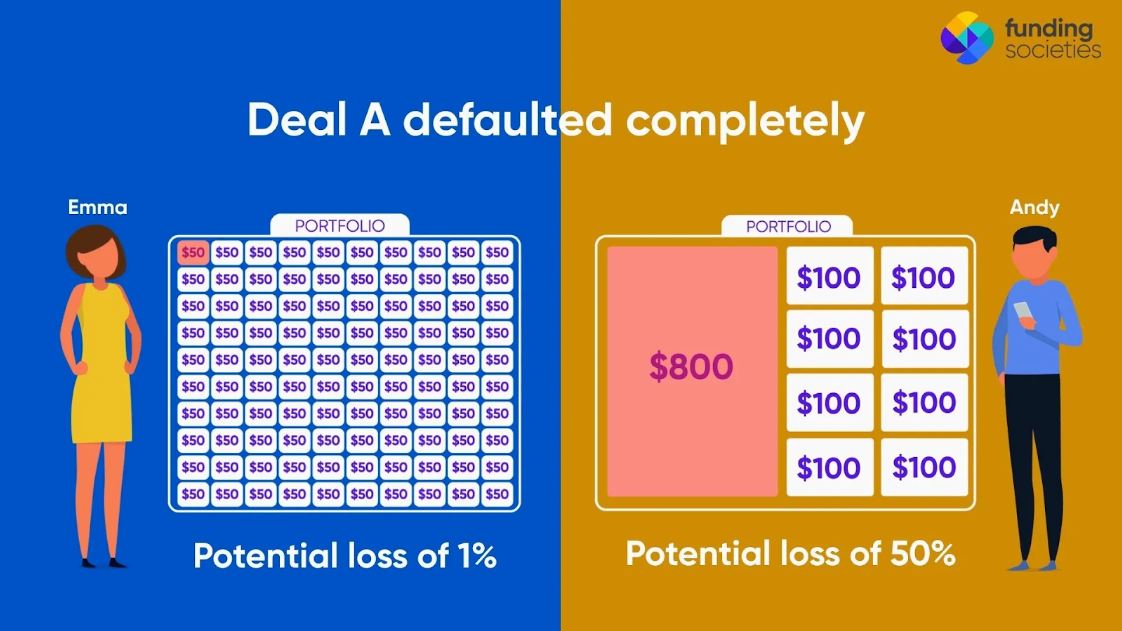
One of the largest risks in investing in a P2P lending platform like Funding Societies is the risk of a SME defaulting. Portfolio diversification by means of investing into a good mix of notes and industries on the platform is one way to mitigate concentration and default risks and optimize your portfolio returns in the long run.
Taking the above scenario as an example, we see that Andy invested S$800 into a single deal and this single investment makes up 50% of his overall portfolio. Whereas in the other scenario, Emma invested S$50 uniformly across 100 deals, making a single investment just 1% of her overall portfolio. In the event that Deal A defaults, Emma’s potential loss will only be 1% of her overall portfolio whereas Andy might face a potential loss of half of his overall portfolio.
Conclusion
Although P2P lending is still a fairly young industry within Singapore, the demand is ever increasing. Given that 99% of businesses in Singapore are SMEsand that the returns on investments typically range in the mid to high single digits interest rate per annum, P2P lending in Singapore serves both the needs of SMEs and investors. With all that said, it is important for investors to do their own due diligence and measure the risks involved against their own risk appetite.
Investors must sign up with the aforementioned promo code and make a total investment of at least S$200 by 30th Apr 2021 to be eligible for the $20 cashback. Cashback will be credited into the eligible investors’ accounts by the end of May 2021. Funding Societies’ investor T&Cs apply.
Funding Societies is the largest SME digital financing platform in Southeast Asia. It is available in Singapore, Indonesia, Malaysia and Thailand, and backed by Sequoia India, Softbank Ventures Asia Corp and SGInnovate amongst many others. It provides business financing to small and medium-sized enterprises (SMEs), which is crowdfunded by individual and institutional investors. Investors can invest from as low as S$20 with a tenor of no more than 12 months.
Disclaimers:
This article is contributed by Funding Societies.
It should not be construed that Moneydigest is endorsing this article or any of the products and services provided by Funding Societies.
The content and materials made available are for informational purposes only and should not be relied on without obtaining the necessary independent financial or other advice in connection therewith before making an investment or other decision as may be appropriate.
Actual returns may be lower than the expected rates of return, and historical rates of returns may not reflect future returns. The Product type interest rates indicated in the article are derived from historical rates of returns and are exclusive of service fees.
All information in this article is accurate as of 29th March 2021
Vicki Botnick, a therapist from California, shares that our decision-making process usually involves a list of options. As we progress, we begin narrowing this list down, removing choices that are unfeasible. But a person with analysis paralysis will often find themselves trapped.
“They feel ever-expanding, endless, and all equally probable,” she adds.
Sounds familiar? Do you find yourself not acting on the plan you have made after all those time spent in planning? If you are stuck on making a decision, then it is about time you stop being in a state of analysis paralysis.
Investing is not that difficult if you’ve done your due research. The only thing you probably need right now is the courage to jump in and start! While it’s not guaranteed that you will make money or succeed, take heart if you have a promising investment strategy.
For those who are still sitting on the fence and waiting for the right moment to take the first step, this article will help you. It’s time to hold back no more and get your head in the game.
Those undergoing analysis paralysis often end up waiting for the perfect scenario. You need to know that such occasions don’t come by often, and you will only end up wasting time and effort.
For example, some investors were sitting on the fence of Netflix Inc (NASDAQ: NFLX). Yes, while it’s true that they have burnt billions to build the business, with many questioning their business model, 2021 might be their year to becoming self-sustainable.
If you’d trusted your guts with Netflix against what other investors thought, then maybe you wouldn’t have to deal with their recent share price spike of over 10%. Be a perfectionist in investing, and we assure you there will be a slow success.
#2: Narrow down on what matters
Image Credits: romania2019.eu
Many time, overthinking happens when you don’t have an idea of what to focus on. That is why we’re suggesting that you narrow down on what matters. In other words, prioritise the main objectives regarding your investment strategy.
Let’s say you’re considering between these three:
ETFs that track benchmarks
Growth technology companies
Value consumer discretionary companies
Rather than going with all at one go, it would be wise to start investing with just one or two to get your engine moving.
Whenever you are thinking about investing, try to start with a small amount. Don’t get fooled by “experts” who advise you to go big or go home.
So, what is the right amount to start with? We think a few hundred dollars is an ideal sum if you’re new to the venture. Once you’re comfortable dealing with the market fluctuations, you can gradually increase the stakes with higher-risk investments.
Starting small is a direction that works not just in investments but life in general too. This is especially true if you’re entering as a greenhorn.
#4: Cut out neighbouring negativity
Image Credits: The Balance Careers
It also pays to not dwell too much into the negative news about losing your money.
The main point here is that if you have a sound strategy, then all is well. You don’t need to listen to friends or neighbours who are discouraging your idea of investing money in the stock market.
While other people’s pitfalls are good to know, shut it out if you know it will only hold you back. Ultimately, it’s your money you’re playing with, and you possess the key to unlocking the door of investments.
Don’t get us wrong when we say to welcome a little impulsivity. We assume that you’ve spent a considerable amount of time crafting a solid investment strategy. If so, then maybe what you need is that little nudge of impulsivity to get started.
Please don’t take this piece of advice out of context.
Final thoughts
The stock market will not stop for you. As Professor Karyl Leggio of Loyola University Maryland rightly points out, “The reality is you aren’t able to time the market. Over time, you miss more opportunities than you save by trying to time the market.”
Continue letting analysis paralysis grab hold of you, and you will be missing out on several golden investment chances. Recognise that you don’t have to be a perfectionist to begin. Focus on what matters, start small, and don’t get buried in negativity.
Take that little spontaneous step forward, and good luck!