Read these 10 well-rated books if you want to be a millionaire

“The Millionaire Fastlane” by M.J. DeMarco

So, you want to be a millionaire? Sure! But first things first, make sure you’re not spending too much money way over your budget.

For folks looking to attain financial freedom, we recently wrote on some challenges to save more money which might be of powerful assistance. Some concepts, like the 1% trial or 52-week challenge, can be new ideas to try out.

Meanwhile, for today’s article, we will look into 10 well-rated books to read if you want to be a millionaire. Let’s roll with the titles!

#1: “The Simple Path to Wealth” by JL Collins

Most of us want to become millionaires. But the questions we may not know how to answer can include:

  • How do I get started with investing?
  • Why is debt a must-avoid, and what should I do if I’m heavily indebted?
  • Is it possible to use my money wisely and not gamble it away on fluctuating stocks?

Simple, engaging, and informative, this book delivers solid advice on investments, the stock market, and real-life implementation tips.

#2: “The Millionaire Fastlane” by MJ DeMarco

The Millionaire Fastlane” is a straightforward guide to wealth generation written by a self-made entrepreneur who has learned from both his successes and his failures.

A fan of non-conservative approaches, DeMarco explores the theory that success is tied to effort. You are the vehicle, and the fuel, engine, etc., can be tailored to your specific route. The author’s advice is concise and valuable for those seeking to grow their wealth via the expressway.

#3: “The Bogleheads’ Guide to Investing” by Taylor Larimore, Michael LeBoeuf, and Mel Lindauer
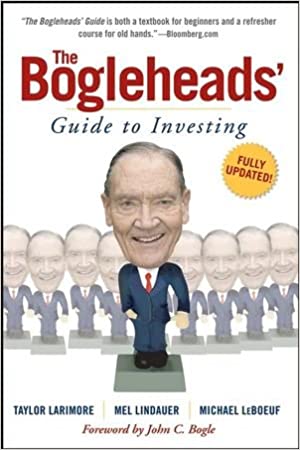
The Bogleheads' Guide to Investing

Do you know what Bogleheads are? It’s a term referring to investing enthusiasts who hold fast to the investment advice of John Bogle, the founder of Vanguard and an investor advocate.

This guidebook provides the reader with straightforward investing and financial advice designed to help the average person profit from long-term wealth creation. This book also advises readers on how to survive economic downturns and keep their footing rooted.

#4: “The Richest Man in Babylon” by George S. Clason

More a parable than a textbook, Clason’s work revolves around the subject of thrifting, financial planning, and personal wealth.

The lessons presented in this bestseller are timeless and easy to follow. You will learn how to save, spend less than you earn, and make money earn more money through seven simple rules. If you want to know, start flipping.

#5: “The Intelligent Investor” by Benjamin Graham

Known as the father of value investing, Benjamin Graham was a well-known economist and professor whose students include legends such as Warren Buffet.

Readers of “The Intelligent Investor” will focus on learning the fundamentals of value investing. Graham teaches us how to guard our investments and make them successful.

If you want to avoid common investment pitfalls like channelling too much energy to the changing sentiments of the market, this book will do the trick. Updated by famous financial journalist Jason Zweig, this edition will keep Graham’s lessons appropriate for modern demands. 

A must-read for any aspiring millionaire!

#6: “How to Win Friends and Influence People” by Dale Carnegie

How to Win Friends and Influence People

What does winning friends and influencing people have to do with getting rich? Plenty!

To achieve success, one must learn to work with others. They could be your friends and family members, investment advisers, business partners, or even salespeople.

Nobody who aspires to become a millionaire can afford to ignore Carnegie’s advice on how to win people over with your way of thinking. The tips conveyed in this book will help you think in fresh ways and cultivate relationships that lead to unlocking your maximum potential.

#7: “Conscious Business” by Fred Kofman

The author explains the term conscious business as the practice of expressing your passion and values through your work.

Rather than blindly chasing after profits, the conscious business person leverages their values into helping business stakeholders attain happiness.

Kofman explains that business people who approach their work with integrity, responsibility, and genuine leadership are more likely to achieve personal and financial success beyond the workplace.

#8: “Secrets of the Millionaire Mind” by T. Harv Eker

“Secrets of the Millionaire Mind” concentrates on identifying internal traits that can lead to financial success.

Eker does that by identifying one’s money and success blueprint hidden deep within the subconscious mind. For those whose blueprints are not built for success, the author offers a chance to reset one’s mental patterns to improve the likelihood of financial triumph.

#9: “The Millionaire Mind” by Thomas J. Stanley

The Millionaire Mind

Peeps who are keen to explore further the interaction of mindset and wealth, Stanley’s writings can offer a glimpse into the millionaire’s headspace.

While many may assume that millionaires are well-connected graduates of prestigious schools who flaunt their wealth, the truth might be more surprising. Those who want clear road maps on how millionaires found their niches, look no further.

#10: “Think and Grow Rich” by Napoleon Hill

We will close our list with one of the classic books on wealth creation and financial success. Hill’s “Think and Grow Rich“ lets you in on money-making secrets inspired by Andrew Carnegie’s magic formula for success.

The book will share with you 13 steps towards riches. From the attainment of desire to influencing the subconscious mind and putting it into action, you will get the fortune you want if you’re ready to welcome it.

Read More...

Join 200k Investors in SEA to Invest with this Award Winning Investment Platform and Get $20 Cashback

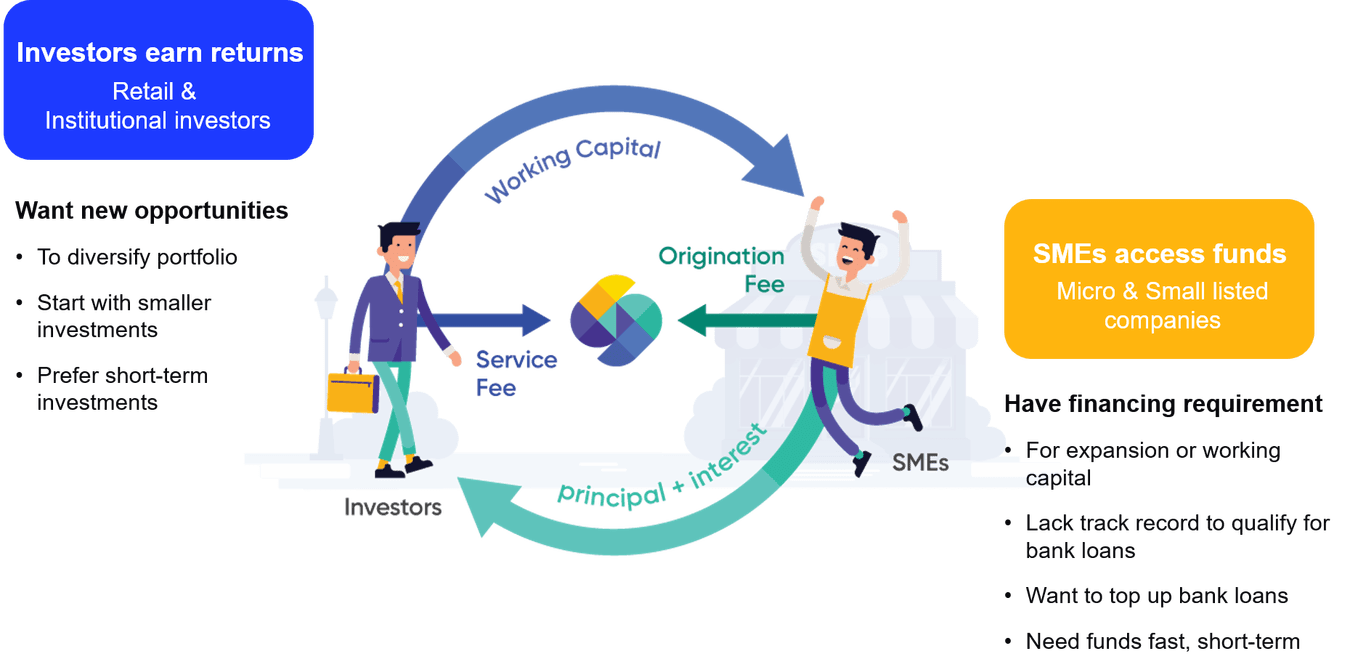
Peer-to-Peer or more commonly known as P2P lending started in the US and UK in 2005, and has since taken the world by storm. Back home in Singapore, P2P lending contributed to approximately USD 207 million in financing offered to businesses here in 2020. Investors on P2P lending platforms can participate in these financing and earn returns in the form of interests. 

Take for example Funding Societies, a popular P2P investment platform amongst Singaporean investors. It is currently licensed in Singapore and has operations in 3 other SEA countries. Backed by Sequoia India, Softbank Ventures Asia, SGInnovate amongst many others, the platform has grown at a rapid pace since launching in Singapore 6 years ago. Here are some things to note when investing with Funding Societies:

  • Low barrier to entry: Investors can invest as low as $20 per loan
  • Short tenor: Investment tenors are quite short ranging from 1 to 12 months
  • Returns on Investment for each Product Type: Interest rates usually range between 
    • 3% – 5% per annum for a Guaranteed Investment product;
    • 6% – 8% per annum for a Property-backed investment product;
    • 8% – 18% per annum for Invoice financing and Working capital related investments products

Risks and Returns of P2P lending in Singapore

Investors are able to invest by crowdfunding the business financing available on the platforms and potentially earn returns in the form of interests typically ranging in the mid to high single digits. The investment amount starts as low as $20 at Funding Societies, which investors can leverage on for their portfolio diversification. Depending on the loan product, payouts can be done monthly so investors get their investments and returns in a shorter time frame. Compounding returns, as well as a rather short learning curve, are also attractive incentives as well.

That said, repayments can be delayed or go completely unpaid. This is why it is imperative for the P2P lending platform to first do a preliminary round of due diligence and present the facts comprehensively to investors, before allowing investors to decide whether or not to proceed. There is also a risk of the P2P lending platform shutting down if it is not financially stable on its own. To mitigate this risk, P2P platforms regulated by MAS can engage an independent escrow agent to handle all investor funds separate from its business account, such that the escrow agent will hold the  funds even if the platform goes under. Funding Societies does just that to provide peace of mind to investors. As such, there is a need to do your due diligence and ensure such investments match your risk appetite.

Get a S$20 cashback when you sign up on Funding Societies with the exclusive promo code MONEY21 and make a total investment of S$200 by 30th April 2021. 

How can Diversification help to minimise risks in P2P lending?

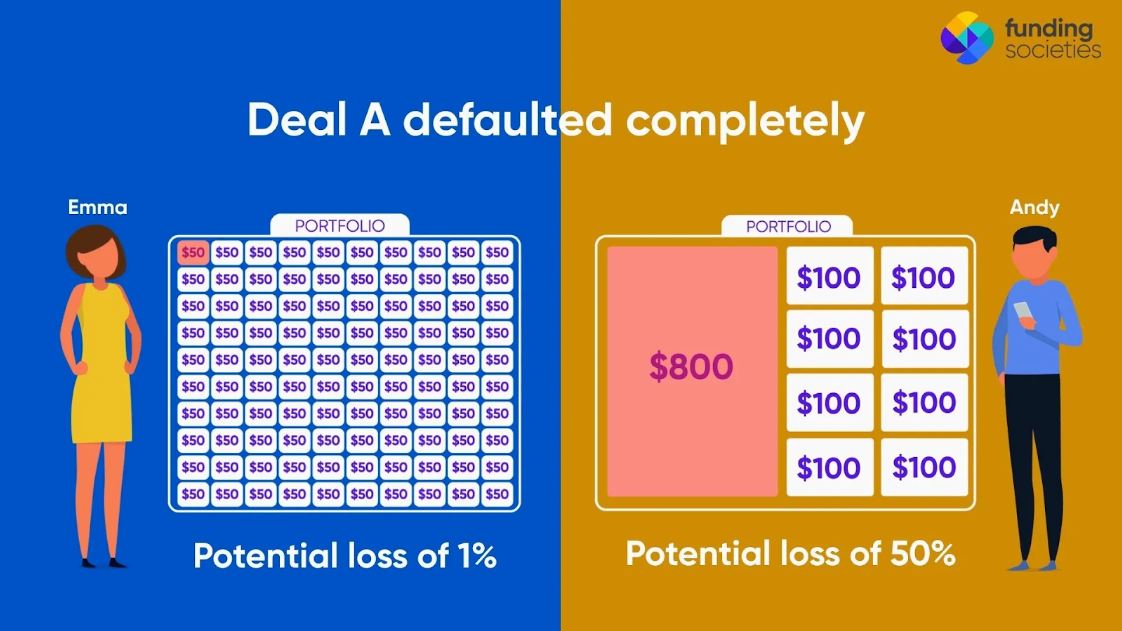
One of the largest risks in investing in a P2P lending platform like Funding Societies is the risk of a SME defaulting. Portfolio diversification by means of investing into a good mix of notes and industries on the platform is one way to mitigate concentration and default risks and optimize your portfolio returns in the long run. 

Taking the above scenario as an example, we see that Andy invested S$800 into a single deal and this single investment makes up 50% of his overall portfolio. Whereas in the other scenario, Emma invested S$50 uniformly across 100 deals, making a single investment just 1% of her overall portfolio. In the event that Deal A defaults, Emma’s potential loss will only be 1% of her overall portfolio whereas Andy might face a potential loss of half of his overall portfolio.

Conclusion

Although P2P lending is still a fairly young industry within Singapore, the demand is ever increasing. Given that 99% of businesses in Singapore are SMEs and that the returns on investments typically range in the mid to high single digits interest rate per annum, P2P lending in Singapore serves both the needs of SMEs and investors. With all that said, it is important for investors to do their own due diligence and measure the risks involved against their own risk appetite. 

Get a S$20 cashback when you sign up on Funding Societies with the exclusive promo code MONEY21 and make a total investment of S$200 by 30th April 2021. 

Terms and Conditions apply

Investors must sign up with the aforementioned promo code and make a total investment of at least S$200 by 30th Apr 2021 to be eligible for the $20 cashback. Cashback will be credited into the eligible investors’ accounts by the end of May 2021. Funding Societies’ investor T&Cs apply.

Funding Societies is the largest SME digital financing platform in Southeast Asia. It is available  in Singapore, Indonesia, Malaysia and Thailand, and backed by Sequoia India, Softbank Ventures Asia Corp and SGInnovate amongst many others. It provides business financing to small and medium-sized enterprises (SMEs), which is crowdfunded by individual and institutional investors. Investors can invest from as low as S$20 with a tenor of no more than 12 months. 


Disclaimers:

This article is contributed by Funding Societies.

It should not be construed that Moneydigest is endorsing this article or any of the products and services provided by Funding Societies.

The content and materials made available are for informational purposes only and should not be relied on without obtaining the necessary independent financial or other advice in connection therewith before making an investment or other decision as may be appropriate.

Actual returns may be lower than the expected rates of return, and historical rates of returns may not reflect future returns. The Product type interest rates indicated in the article are derived from historical rates of returns and are exclusive of service fees.

All information in this article is accurate as of 29th March 2021

Read More...

Tips on overcoming analysis paralysis in investments

investment risks

Many people face analysis paralysis when making decisions. Do you know what the term means?

According to Healthline, analysis paralysis is a type of overthinking which results in a neverending loop of “what if this, what if that” scenarios.

Vicki Botnick, a therapist from California, shares that our decision-making process usually involves a list of options. As we progress, we begin narrowing this list down, removing choices that are unfeasible. But a person with analysis paralysis will often find themselves trapped.

“They feel ever-expanding, endless, and all equally probable,” she adds.

What is analysis paralysis in investments?
a stressed man in front of a laptop

Image Credits: esquireme.com

Putting things into perspective in the financial realm, analysis paralysis makes perfect sense too. In this case, it refers to a situation where you overanalyse investments so much that your ultimate decision becomes paralysed. You end up freezing and are not able to make a move.

Sounds familiar? Do you find yourself not acting on the plan you have made after all those time spent in planning? If you are stuck on making a decision, then it is about time you stop being in a state of analysis paralysis.

Investing is not that difficult if you’ve done your due research. The only thing you probably need right now is the courage to jump in and start! While it’s not guaranteed that you will make money or succeed, take heart if you have a promising investment strategy.

For those who are still sitting on the fence and waiting for the right moment to take the first step, this article will help you. It’s time to hold back no more and get your head in the game.

#1: Don’t be a perfectionist

via GIPHY

Those undergoing analysis paralysis often end up waiting for the perfect scenario. You need to know that such occasions don’t come by often, and you will only end up wasting time and effort.

For example, some investors were sitting on the fence of Netflix Inc (NASDAQ: NFLX). Yes, while it’s true that they have burnt billions to build the business, with many questioning their business model, 2021 might be their year to becoming self-sustainable.

If you’d trusted your guts with Netflix against what other investors thought, then maybe you wouldn’t have to deal with their recent share price spike of over 10%. Be a perfectionist in investing, and we assure you there will be a slow success.

#2: Narrow down on what matters
priorities

Image Credits: romania2019.eu

Many time, overthinking happens when you don’t have an idea of what to focus on. That is why we’re suggesting that you narrow down on what matters. In other words, prioritise the main objectives regarding your investment strategy.

Let’s say you’re considering between these three:

  • ETFs that track benchmarks
  • Growth technology companies
  • Value consumer discretionary companies

Rather than going with all at one go, it would be wise to start investing with just one or two to get your engine moving.

This perfectly leads us to the next point.

#3: Scale as you go

via GIPHY

Whenever you are thinking about investing, try to start with a small amount. Don’t get fooled by “experts” who advise you to go big or go home.

So, what is the right amount to start with? We think a few hundred dollars is an ideal sum if you’re new to the venture. Once you’re comfortable dealing with the market fluctuations, you can gradually increase the stakes with higher-risk investments.

Starting small is a direction that works not just in investments but life in general too. This is especially true if you’re entering as a greenhorn.

#4: Cut out neighbouring negativity
two-business-people-having-serious-discussion-in-the-office

Image Credits: The Balance Careers

It also pays to not dwell too much into the negative news about losing your money.

The main point here is that if you have a sound strategy, then all is well. You don’t need to listen to friends or neighbours who are discouraging your idea of investing money in the stock market.

While other people’s pitfalls are good to know, shut it out if you know it will only hold you back. Ultimately, it’s your money you’re playing with, and you possess the key to unlocking the door of investments.

#5: Welcome a little impulsivity

via GIPHY

Don’t get us wrong when we say to welcome a little impulsivity. We assume that you’ve spent a considerable amount of time crafting a solid investment strategy. If so, then maybe what you need is that little nudge of impulsivity to get started.

Research done by automated investment firm Stashaway revealed that impulsive investors who withdrew their money during a market correction lost about 2.2% on average. That’s why we want to reiterate that hasty investments will do you no good in a general sense.

Please don’t take this piece of advice out of context.

Final thoughts

The stock market will not stop for you. As Professor Karyl Leggio of Loyola University Maryland rightly points out, “The reality is you aren’t able to time the market. Over time, you miss more opportunities than you save by trying to time the market.”

Continue letting analysis paralysis grab hold of you, and you will be missing out on several golden investment chances. Recognise that you don’t have to be a perfectionist to begin. Focus on what matters, start small, and don’t get buried in negativity.

Take that little spontaneous step forward, and good luck!

Read More...

Should you let a robo-adviser dictate how you invest your money?

UOBAM robo-adviser

Several consumer-facing Financial Technology (FinTech) companies, from digital payments to insurance and transfer payments, have arisen to support Singaporeans’ personal finances. You may have heard of robo-adviser companies such as StashAway, Syfe, and AutoWealth that help with investments.

What are robo-advisers?

To optimise investment portfolios according to the risk profile of the customer, Robo-advisers rely on algorithms. In reaction to market changes, portfolio readjustment is performed automatically.

As such, there is little need for active monitoring by the investor with all these automatic features. As seen from various posts and comment threads on local financial platforms, the low fees paid in relation to human investment advisors have further raised interest in robo-advisers.

A Statista study forecasts that assets under watch by local robo-advisers and user numbers are estimated to rise by over 50 per cent in 2021 to hit US$1.06 billion and 105,000 users accordingly.

Robo-advisers help break barriers to entry
asian-man-using-mobile-phone

Image Credits: Freepik

The perceived difficulty of gaining financial expertise and the scarcity of time for investment and fund management are two widely quoted reasons for not investing.

With technology assistance, robo-advisers eliminate these hurdles, making them a fantastic way to kickstart investing, particularly for beginners. This is not to mention that the procedure of signing-up is reasonably straightforward.

In 15 minutes, a profile can be registered. To propose an appropriate portfolio concerning the investor’s financial targets and risk aversion, one only needs to answer some preliminary questions.

Standard considerations include age, gender, marital status, salary, investment horizon, and priorities, such as funding for a house versus retirement planning. At the same time, risk evaluation focuses on experience with multiple financial instruments and gain and loss perception.

Once that is in place, algorithms based on current financial models will handle the portfolio. Easy peasy, isn’t it?

Advantages of using robo-advisers

The isolation of feelings from investing using robo-advisers is a gain. Investors are far less likely to respond irrationally to disruptive market developments and exit from the market out of panic, with investments using advanced automated trading.

Robo-advisers often foster healthy financial habits by encouraging clients to add to their investments on a routine basis. This induces investors to take advantage of the dollar-cost averaging (DCA), which has been proven to be a successful method for allowing the long-term accumulation of capital by novice investors.

A look at the downsides
having a discussion

Image Credits: fa.com.sg

No one thing in the world is perfect, and this applies to robo-advisers too. Given their emphasis on ease and effectiveness, robo-advisers cannot make investment decisions precisely personalised to each user’s financial condition.

Instead, they enable clients to pick from pre-selected portfolios from a restricted menu. They deal only with personal finance’s investment facets and miss the human touch of actual financial advisors.

Human financial planners devote much more time to identifying the needs of their customers. Thus, they can provide numerous solutions that cover various holistic financial management elements, including savings and coverage.

Is investor passivity harmful?

The low percentage of investor participation needed is one of the principal selling points of robo-advisers. But is the lack of investor involvement a cause for concern?

Investor indifference may foster a laid-back approach towards other areas of financial planning. Since computers and algorithms can assign this seemingly cumbersome task, this may lead to a refusal to gain financial expertise going forward.

Although robo-advisers cater to tech-savvy, passive, and limited-capital investors, automated investment does not appeal to active investors. This is especially so for those who want to have portfolio ownership and may be dissatisfied with having a bot controlling their assets entirely.

According to an HSBC survey done last June, only one-quarter of Singaporeans had used mobile banking to invest. This hesitation in handling digital capital shows the real lack of investment expertise or trust. It also highlights the need to empower Singaporeans with financial knowledge.

Lack of financial knowledge can be devastating
investment-stock-photo

Image Credits: City Nomads

Dr Gordon Tan Kuo Siong, Faculty Early Career Award Fellow at the Singapore University of Technology and Design, shared how a lack of financial knowledge can be devastating.

Using the story of Alex Kearns, he brings out the importance of financial literacy. Last June, the news reported the death of the 20-year-old trader by suicide. After Kearns mistakenly thought he lost hundreds of thousands of dollars on Robinhood, a free-trading app, he took his own life.

For sound investment and financial planning, the acquisition of knowledge is necessary. As the term “caveat emptor” indicates, consumers’ ultimate responsibility is to perform proper research when making a transaction. Buyers should request information on the details of the items they purchase.

In short, consumers should arm themselves with the information they need on the investment products that robo-advisors suggest. As for the businesses who promote these services, it is vital to ensure adequate resources on how their products operate.

Some deets on local robo-advisers

Several local robo-advisers have also launched educational initiatives to develop more educated investors. A set of courses covering personal finance and trading on its app, as well as frequent newsletters and market insights, have been made freely available by StashAway.

Syfe posts short articles and conducts online seminars to provide the public with financial information. These programs are praiseworthy and should not be treated as unnecessary supplements.

In conclusion, if robo-advisers boost their customers’ financial literacy and consumers make an effort to consider what they are investing into, buyers will have much more interest in creating machine-enhanced financial decisions and endow their money to a robot.

Read More...

A Singaporean’s Guide to P2P investments with Funding Societies & S$20 cashback up for grabs

What is P2P investment?

P2P investments or more commonly known as Peer-to-Peer (P2P) lending is a type of debt-based crowdfunding enabled by digital platforms that connect borrowers with investors without going through a traditional financial intermediary such as a bank. This concept will see investors lending to borrowers (i.e. SMEs) via the platform as a form of investment, and the interest earned from it will be their returns. Despite being a relatively new concept in Singapore, it has grown significantly over the years and has shown no signs of slowing down.

How does P2P investment work for investors?

For investors, it is a means for diversification into another asset class. As most P2P investments offer a frequent repayment schedule (monthly or within 90-120 days period), it can be considered a great supplement to more traditional long term asset classes like stocks or bonds. With interest rates on saving accounts heading south, investors can look for alternative ways to earn interest on their cash.

How much can investors earn?

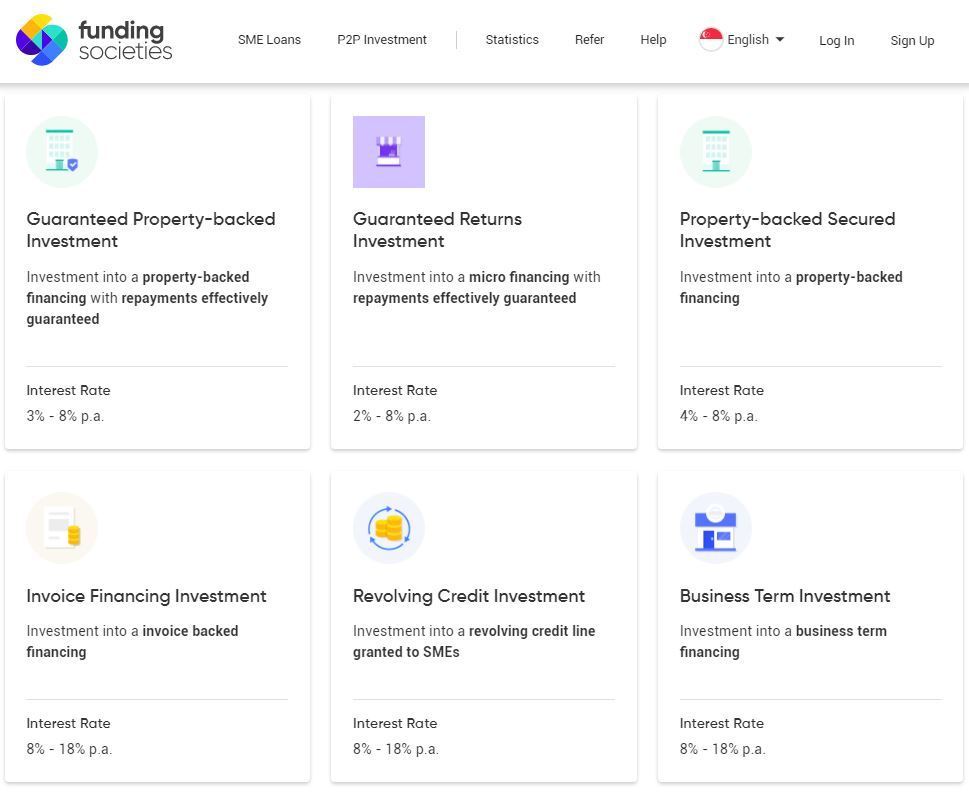
Be it an individual or institutional investor, the reward on their investment will come in the form of the interest payments serviced by the borrower. At Funding Societies, investors can choose to participate across 6 different investment products with interest rates ranging from 3% – 18% per annum.

Risks and returns go hand-in-hand and the difference in interest rates range is tied to the risk associated with the product. For example, a guaranteed returns investment will yield an interest of between 3% – 5% p.a. while an unsecured business term investment can fetch between 8% – 18% p.a..

How much to invest in P2P investment?

There are no hard and fast rules on how much of one’s portfolio should be allocated to any particular investment assets, and this is the same for P2P investing. What is important is that investors should always consider diversifying across many notes and avoid concentration risk to create a healthy well balanced portfolio.

At Funding Societies, investments start from S$20 onwards and most products provide a periodic repayment of principal and interest. Jointly, it is a great recipe for investors to diversify and reinvest their investments.

P2P investment with Funding Societies

Funding Societies is Southeast Asia’s largest P2P lending platform with over S$1.7b in SME financing funded. In Singapore, the platform holds a Capital Markets Services (CMS) Licence and is regulated by the local authorities. Over the years, they have been able to raise several rounds of equity funding led by investors such as Sequoia India, Softbank Ventures Asia and SGInnovate to name a few. A few things to note when investing with Funding Societies:

  • Interest returns are exempted from tax: For interests earned in year 2020 onwards
  • Low barrier to entry: Investments start from $20 per note
  • Short tenor: Investment tenors ranges from 1 to 12 months
  • Returns on Investment: Interest rates usually range between 3% to 5% per annum for a Guaranteed Investment product, 6% to 8% per annum for a Property-backed investment and 8% to 18% per annum for Invoice financing and unsecured business term investments
  • Default Rate: The Singapore platform default rate is 1.89%

P2P investment products

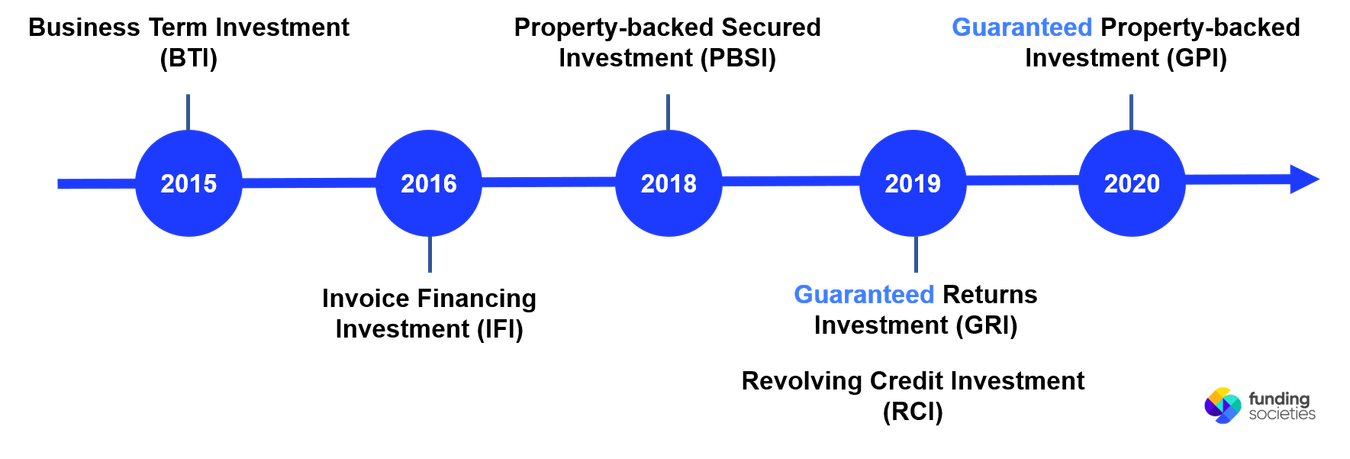
As the investor base grew overtime, they needed to continuously innovate new products to meet the needs of a wider range of investor profiles. Having launched the first product back in 2015, Funding Societies has now grown to offer 6 different investment products with varying levels of risk-return profiles.

TL;DR: P2P Investment Products Overview

1. Property-backed Secured Investment

The Property-backed Secured Investment (PBSI) is a rather unique collateral-backed investment product launched to provide investors with an additional security in the form of a local Singapore property to back the investment. The property is pledged by the SME undertaking the financing.

Funding Societies holds first charge on the property on behalf of investors and it can be auctioned off to recover funds should the SME defaults.

To alleviate concerns on property value fluctuations, the percentage of financing amount varies as per the property types (residential/commercial/industrial) and in most cases is only up to 70% of the property value. The forced value of the property is also considered while arriving at the financing quantum. By doing so, Funding Societies maintains a buffer for fluctuation in property prices as well as for distress sale situations. The interest rate for this investment product is typically between 4% – 8% per annum.

2. Guaranteed Property-backed Investment

Launched in July 2020, Guaranteed Property-backed Investment (GPI) is an investment into a Property-backed Secured Investment with an additional effective guarantee of repayments to investors. Likewise to Property-backed Secured Investment, Funding Societies has the right to liquidate the property to recover the funds should the SME fail to fulfil their obligations.

Falling under the Guaranteed line of products means that both the principal & interest repayments are effectively guaranteed to the investor regardless of the SME’s status. The interest rate for this investment product is typically between 3% – 8% per annum.

3. Guaranteed Returns Investment

Guaranteed Returns Investment (GRI) is another investment product under the Guaranteed line of products. This product was first launched in August 2019 as a means to offer more investment opportunities to investors.

GRI is an investment into a micro financing with repayments effectively guaranteed. Similar to GPI, investors are effectively guaranteed to receive both the principal & interest repayments when they participate in this investment product. The interest rate for this investment product is typically between 3% – 5% per annum.

Please invest with the knowledge that while returns are effectively guaranteed by FS Capital Pte. Ltd., there may be a chance where we might not be able to fulfil the obligations under this arrangement. To mitigate this risk, a cash reserve buffer to allow for repayments to be made on time is maintained.

4. Invoice Financing Investment

The Invoice Financing Investment (IFI) product allows investors to invest into an invoice backed financing offered to SMEs. SMEs take this financing by pledging against the receivables of an invoice. By doing so, it helps to bridge the cash flow gap between actual sales and receipt of payments.

Due to the nature of the financing, investors in this product usually enjoy a relatively short tenor of 30 – 120 days. The short tenor enables investors to receive and reinvest their money relatively quickly. The interest rate for this investment product is typically between 8% – 18% per annum.

5. Revolving Credit Investment

If you own a credit card, you will probably be aware of how revolving credit or more commonly known as a line of credit works. Based on one’s credit standing, they will be issued a credit limit to draw down from over time. Likewise in the case of Revolving Credit Investment (RCI), it is an investment into a revolving credit line granted to SMEs. The SME can repay anytime within the approved tenor and draw down again so long as the amount outstanding is within the limit.

As an investor, you can participate in a single or multiple drawdowns, each with a tenor typically between 1 to 12 months with a chance of early partial or full repayments. The interest rate for this investment product is typically between 8% – 18% per annum.

6. Business Term Investment

Business Term Investment (BTI) was the first product offered alongside the launch of the Funding Societies platform back in 2015. It is an unsecured financing undertaken by SMEs as a means for working capital, expansion or bridging needs. The interest rate for this investment product is typically between 8% – 18% per annum.

Be it a way to diversify your investment portfolio or to beat the falling savings account interest rates, investors can consider to embark on their P2P investment journey with a platform like Funding Societies. If you have done your own due diligence and decided to invest with Funding Societies, they currently have a promotion for new investors. Sign up with promo code MDXMAS20 and make a total investment of S$200 by 31st Jan 2021 to get a S$20 cashback.


Terms and Conditions apply
Investors must sign up with the aforementioned promo code and make a total investment of at least S$200 by 31st Jan 2021 to be eligible for the $20 cashback. Cashback will be credited into the eligible investors’ accounts by the end of February 2021. Funding Societies’ investor T&Cs apply.

Funding Societies is the largest SME digital financing platform in Southeast Asia. It is licensed in Singapore, Indonesia and Malaysia, and backed by Sequoia India, Softbank Ventures Asia Corp and SGInnovate amongst many others. It provides business financing to small and medium-sized enterprises (SMEs), which is crowdfunded by individual and institutional investors. Investors can invest from as low as S$20 with a tenor of no more than 12 months. Depending on the investment product, interest rates can range between 2% to 18% per annum.

Read More...