4 Great Things You Learn Indirectly When Investing

4 Great Things You Learn Indirectly When Investing

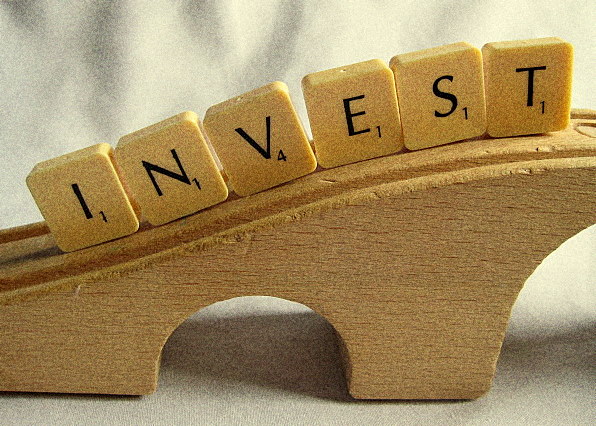
Like you, I was young and fresh to the world of investing. I was 18 and finally eligible to invest! I remember thinking to myself; I can finally put everything that I have learnt into practice! Along the way, I have learnt so much more, directly and indirectly, about investing.

1) Saving

Saving
The first obvious thing about investing is that you can’t even start it when you have nothing to start with. My growing interest in investment was a very strong motivation for me to save. I knew I had to have enough to get into the playground of the rich. Diligently, I put aside half my allowance every week and continued that way for months. Eventually, I had enough to make my first investment. From there on, I never stopped the habit of saving at least half my allowance to put into investments. You’ll be surprised how little you actually need once you begin on this journey of budgeting your week. Also, I advocate cash payments instead of credit cards because it is easier to track how much you have left and be less likely to overspend or spend unnecessarily.

2) No more reckless purchases

Keep Calm
Having begun investing and seeing the kind of return it can give, I learnt to forsake a lot of luxury purchases just because my friends around me have it. A $1000 investment can make me $100 or it could buy me some stuff that I don’t really need and impede on my investing journey of creating a sizable portfolio. I chose to focus on growing my investment portfolio instead of indulging in luxury purchases. Of course, that’s not to say that it’s wrong to indulge. Indulge when necessary, not all the time!

Eg. If I wanted to buy something $100, I would want to make that $100 off the market before buying it instead of using my capital of $1000, depleting it to just $900. If you choose not to spend, you’ll still be rewarded with the compounded growth! This method of spending teaches you to delay gratification and to give you time to think twice before making a purchase. Also, you will cherish and enjoy your purchase even more, knowing that it comes from the fruit of your investment. You not only get what you want, you learn valuable lessons about investing as well!

3) Investing shows your true self

True Self
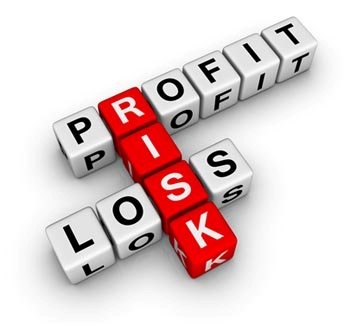
Investing will show you your true self and what kind of a person you truly are when money is involved. Are you the same person when you make a lot of money or lose a lot of money? When I first started investing, I definitely did not expect that I would be in for an emotional roller coaster ride. One moment I was feeling good about myself for making the right decision to buy a particular stock. The next moment I was feeling angry at myself for being greedy to want more instead of taking my profits. From profits, they turned into losses. Over the years, I have grown to stabilise my emotions and accept that market swings are normal. I was then able to embrace them and learn to see the bigger picture instead of allowing my emotions to get in the way over short-term market noises.

4) How well can you tolerate risk?

Risk

When it comes to risk tolerance, it is all about discipline. When the share price hits your target, are you willing to stick to your target and take your profits? Or, will you continue to let it run hoping that it continues to go further up and disregard your primary research on the existing resistance level? Too often, traders in the market lose money due to the lack of discipline to take profit or to cut their losses. We all know that it is best to ‘Buy low and Sell high’. However, when real money is involved, greed and fear often overcome logic. Discipline is what will keep your rationality and nurture emotional stability. This would eventually translate into profits that you put into your pocket!


Read More...

Singapore: What does deflation means to us?

Singapore - Deflation

Singapore experiences its first deflation in 5 years when consumer prices fell 0.3% in November on a year-to-year basis. Deflation, in economics is defined the decrease in average price level of good and services.

While it may be good news to the consumers as their purchasing power increases with more money in their pocket for other things, investors and the government get cautious over a sustained decrease in the price level.

‘Decrease? I am still paying the same for my food, public transport and medical bills.’

Prices of food, healthcare and education amongst other items has in fact, avoided the drop and in fact rise by 2.9%, 1.8% and 2.7% respectively. For the average consumers, there is nothing to cheer about besides a drop of 2.1% in clothing and footwear.

What led to the overall fell in prices is mainly due to the fall in the price of private road transport – a decline of 7% as compared to last year. This is attributed to the decrease in the price of COE premiums from almost $100,000 in January 2013 to around $76,094 for Cat E in the first round of bidding in December 2014. With over 100,000 cars hitting 10 years old next year, these decade old cars is due for de-registration and thus expect an influx of COE supply and prices to fall further.

The fall in Brent crude oil from US$115 a barrel in June to the current price of US$61 a barrel has caused downward pressure to the average price level of good and services. With the advent of better technology such as hydraulic drilling in the US and the use of alternative fuel, coupled with a slow growth in China and OPEC’s price war, it is unlikely that prices will hit the US$100 mark in the near future.

The housing sector is also affected as the property and rental market start to slow down.

What does it means to the consumers?

If there is sustained deflation, there will be a downward deflationary spiral where aggregate demands will fall and companies to cut down on production. Consumers will put off spending knowing that future prices will be cheaper and this hurts the economy and increases unemployment. With lower wage, the problem exacerbates and price declines further – something you witness in Japan over two decades.

Fortunately, Singapore seems poised to be able to resist the deflationary pressure due to a tight labour market and increasing population. The fall in the general price level is unlikely to be passed on to the consumers as companies face high rental cost and sticky wages. So don’t expect the price of your groceries, MRT and Bus fares  and other necessities to fall.

What about investors?

Investors should remain cautious if the prices of Brent continues to decline to inflection point. The slide will cause concerns for companies in the offshore and marine industry such as Sembcorp, Keppel and COSCO as profits dwindled with declining global demands.

The roubles crisis may further inject uncertainties to the market and may often lead to spillover effects on countries that are exposed to Russia such as the US, Germany and eastern Europe that relied heavily on Russian economy. For example, Germany’s company Siemens lost 14% of the revenue, Volkswagen has lost 20% in the same period and Adidas has shut down stores in Russia. American companies like McDonalds, FordMotors and ExxonMobil were also hurt by the fallout due to sanctions and decline in sales.

While there are mixed results from the falling prices, there is no cause of concern for Singapore, for now. Core inflation is expected to average between 2 to 3 per cent in 2015.


Read More...

Investing like Warren Buffett

Investing Like Warren Buffett

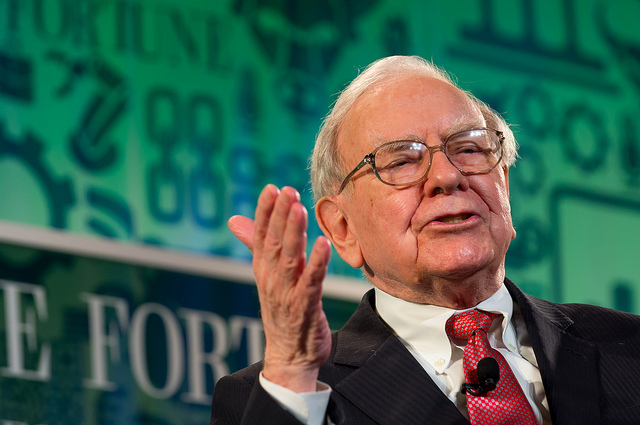
The ‘Oracle of Omaha’ invests like no other – successfully. He isn’t a fierce and aggressive investor though, rather a calculative and risk-free businessmen. One might question the kind of companies he invests in, but his methods are clean, careful and even somewhat conservative. Warren Buffett ranks with currently 71.6 billion US dollar among the wealthiest individuals in the world. Born to a Congressman in Nebraska, he made his first money selling chewing gum. More than half a century later he is the CEO of Berkshire Hathaway, an American multinational conglomerate holding company.

Many young businessmen continuously seek advice and answers to how he made such a large amount of money. The answers are rather simple and surprising. Unlike the risky investors one has increasingly encountered in the last decades, he hardly ever makes a rush and not-thought-through investment. Furthermore, he isn’t bothered by the market or other investors, which is probably one of his biggest strengths.

Although he reads up to five different newspapers everyday, the daily fluctuations of the stock exchange don’t influence his decisions. His attitude towards investments is different compared to most modern investors. The daily numbers on Wall Street can often cause a frenzy of hasty buying and selling of shares. Warren Buffett considers his investments to be long-term. Romanticising his approach, one could say he is ‘old school’. When Buffet bought his first shares half a century ago, the average time for holding a share was more than a month. Nowadays, this average has dropped to scary 22 seconds. Considering that a share represents a part of company, one could say 22 seconds isn’t really an investment in anything.

He credo is to invest in what he knows. There isn’t a chance he buys shares worth millions of dollars from a company that he doesn’t entirely understand. He does his homework and buys shares as if he was buying the entire business. This investment is not based on the fluctuation of the share, but rather on long-term interests in the company. One could actually argue that Buffett’s categories are extremely conservative. When considering an investment, he questions whether the company is simple and understandable, has a positive operational history and if there is a favourable future for the business.

This strategy isn’t flexible at all, but safe and sound. Warren Buffett is known for not being irritable by the market. His holding company for example owns significant parts of Coca Cola, American Express and IBM – companies that are consistently successful.

Another strength of his is his sense of realism. He knows that it is impossible to predict the day-to-day movements of the market and therefore the direction of the economy. Most investors try to form a package of shares and investments that will be beneficial with their predicted direction of the market. However, this always includes a risk. If the prediction isn’t entirely correct, not all shares will be profitable. Buffett’s investments are outside of these predictions. He understands that he cannot, despite his vast influence and financial power, control and continuously predict the economy. He therefore only invests in businesses that are superior to these fluctuations. There are certain businesses that always will prosper and generate revenue – such as Coca Cola and IBM.

The simple principle behind Buffett’s strategies isn’t to minimise risk, but to eliminate risk in the first place. He was famously quoted saying that the stock market doesn’t really exist for him. It is only there to see if anyone offers anything foolish, he said. This exemplifies his attitude towards the daily swings of the market that most investors are influenced by – he ignores them completely.

It isn’t intelligible for him to invest in a company that he doesn’t understand and whose business isn’t transparent. Modern day trading on the stock market is mainly based on sudden impulses and spontaneous movements of the shares. Investors, buyers and traders, for the most part, no longer look at the company and its values, but rather at their day-to-day performance. As Warren Buffett tends to do long-term investments, he does exactly the opposite.

He is convinced that taking a risk with certain shares is never a good idea, as he equals a risk with not knowing. Why invest in something that you are not sure off? That is exactly his credo. No investment should be made, unless there is certainty. Once the latter is guaranteed, one can even make a heavy investment. Modern day trading is often compared to gambling at the casino. Surely, it often seems that way. False investments cannot only cause a heavy damage, but can create a ripple effect if the investment was made with borrowed money.

Warren Buffett chooses not to gamble, but place his money on the safe side. Why would you bet on black, if you know it is going to be red? Buffett might invest conservatively, but therefore only does so whenever he is sure of profit and convinced of the company itself.

One might ask, how he knows which shares and companies will be prosperous and safe. Buffett does he research. He might not be influenced by the daily fluctuations, but he does his homework concerning financial news and business developments. Once he makes an investment in a company, he usually buys a huge quantity of shares and keeps it. Many investors don’t keep shares, as the cash flow might stagnate. Warren Buffett has a certain funding, which he can easily invest without having to worry about accessibility of funds. However, also he has started small. His earnings on the market did not instantly rocket into the millions.

Warren Buffett might posses 71.7 Billion US Dollar, but also he has started small. He has made his first billion only in 1990. Considering he has then already been trading for over thirty years, one understands that consistency and persistency are part of his success. It is, however, difficult to apply all his tactics. Around 60 Billion US Dollar of cash pool allow him and his company to move quickly like no other investor, if necessary. Hence, his principles and attitude are admirable, but if one aspires to be the next Warren Buffett, one should make some time.

Read More...

What to learn from the sinking oil price?

Falling Oil Prices

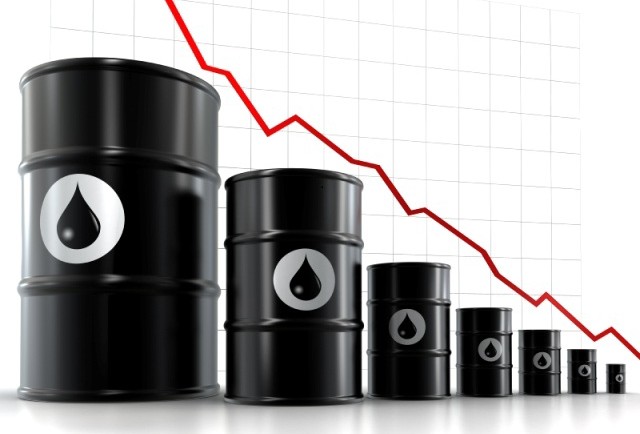
The black gold is without question, still one of the most valuable goods in the trading market. Many countries are dependent on the consumption of it, while other economies are entirely based on the selling of oil. When the oil price suddenly falls heavily, some people are getting extremely worried and others buy frenetically. In the last weeks and months, the oil price has been experiencing the biggest plunge since the mid-year drop in 2008. The price has currently reached almost half of what it still was June 2014.

Traders and consumers are not only buying, but also asking themselves how this drop came about and how it might affect the economy. Oil was already to run out in the 1970s and only expected to excel in price, if anything at all. The sudden fall of the oil price is not only unexpected, but also creates a certain anxiety – is it the first sign of a collapsing economy? Looking more closely at the events, one can learn a few things.

Falling demand

Firstly, the world is less dependent on American and Middle-Eastern oil than one might have thought. In September the U.S. Energy Information Administration has reported the highest monthly production rate in 28 years. On the other hand, Europe and China are buying less oil, as the demands shifts to gas and renewable resources. The supply has increased and the demand decreased, hence the price fell.

When the price for oil was high, economists blamed the American government for slowing down the economy as subsequent high gasoline prices damaged shipping, trade and travel. Now that the price is low, the same voices expressed accusations towards the same government for bringing a decline to the oil industry. Areas in Texas and North Dakota, in which the oil industry is a heavyweight, fear job cuts, as the production of oil might need to be reduced to stabilise the oil price.

If both high and low oil prices are bad for the economy, then when is it good for the economy? The truth is that the oil price alone is not responsible neither for a flourishing nor for a stagnating American or international economy. Neither is the president nor the government directly responsible for the fluctuation of the oil price. Morgan Stanley predicts that the price can even further drop in the beginning of the New Year. Fact is though, no matter whether high or low oil price, there will be benefiters either way. The world economy surely is related to the oil price. However, some critics wrongly believe that the falling and rising of the oil price regulates the international economy – it is the other way around.

Government regulation

Related to the problem of the falling and rising of the oil price is the issue of government regulations. The question is whether it is necessary and beneficial to regulate the drilling for oil and the oil market itself. Once again, there are critics arguing both ways. Furthermore, there have been regulations in place both when the oil price was rising and falling as it is now. Every time again the market has regulated itself. ‘How come?’, one might ask. It is due to one of the oldest economic principles – demand and supply.

Oil is a good that can be traded. However, it is often treated just like a currency, which it obviously isn’t. Regulations surely can have an effect on a good being traded, but in the case of oil, the market will regulate itself. The current decrease of the oil price is such a self-regulation. Softer or stronger restrictions on oil drillings would have had only a small impact – considering the entirety of the world market and trade movements. If the government hadn’t restricted drillings, the price would have dropped perhaps faster, but it couldn’t have been prevented.

The black gold isn’t any weapon or tool that can be used to stir the economy into a particular direction. Oil, no matter whether coming from the US or the Middle East, is subject to the market. If the supply is surpassing the demand, the price will simply go down – period. The only question remaining is, whether critics in awe of economic regulations will understand it.

The oil price will mainly remain a victim to demand and supply. However, there is another lesson to be learned. If China and Europe keep cutting down on their need for oil, the self-regulation of the oil market might result in a downward spiral in the long run. If the demand for oil will continuously decrease, the production and drilling will eventually do the same. The industry tends not to react to short-term movements, such as the current one. However, there is a good chance that the demand will not pick up, which will result in cutbacks.

Reduction in oil drilling

What does that does? The American economy is not entirely based on the production of oil. However, it is one of the biggest industries in the country. Although the U.S. consumes plenty of oil by themselves, the cutback in international demand can have a significant effect on the industry. Therefore, it is relatively safe to consider a reduction in oil drilling in the long run. This is not only due to a lack of demand, but also because the benefit margin in the oil industry will become increasingly thinner than it already is, due to high and continuously increasing production cost. Not only are subsidies being given to renewable energies, but also the infrastructure of the oil industry will not survive another renewal.

There is, however, one counterexample, which is the arms industry in the United States. The oil industry in the U.S can be compared to the arms industry. The latter is a major player in the American economy, but for a substantial part kept alive due to the government’s own spending in arms. Therefore, plenty of jobs are being maintained because the United States is at war. Only if a similar scenario will occur within the oil industry, there will be a chance for the long-term security for the industry.

Read More...

8 Books Young Investors Should Read

8 Books Young Investors Should Read

Every young people should invest their money. That’s the best advice i heard since i was in college. When you are young and in your twenties, the most valuable asset is not money – but time.

When you are young, you not only have the time horizon to ride out market fluctuations, there are plenty of time for the effect of compounding to work in your favour. Investors who start young will have the flexibility to take on risk and recover from any missteps.

Many young investors procrastinate because they think that investment is confusing and trying to comprehend investment jargons is akin to reading the entire encyclopaedia. That’s a common mistake to make by not starting at all.

My favourite way of learning to pick up investment is to start reading books. Books are a good way to increase your knowledge of a particular topic as they were written by people who have had vast amount of experience in the field.

We picked 8 investment books to read for beginners. Unless you have a knack of picking winning lottery numbers or you were born with skills of a perfect investor, make sure you read a couple of these books before you start to ride the bull and bear roller coaster.

In no particular order:

1. The Intelligent Investor by Benjamin Graham 

Ever since it was first published in 1949, it has sold more than a million copies worldwide. If you do not know who Benjamin Graham is, you better know who Warren Buffett is – the second richest man in the world. Benjamin Graham is the mentor of Warren Buffett, so it is no doubt that this book is acclaimed as the “bible to investing”. In his book, Graham tries to explain behavioural investing and to develop an intrinsic valuation of a stocks. Despite being a heavy read, i highly recommend reading this before entering the stock market.

2. The Little Book of Common Sense Investing by John C. Bogle

John Bogle is the founder and retired CEO of Vanguard Group which is one of the largest mutual fund provider in the U.S. He is also the person who created the first index mutual fund available to individual investor.

His philosophy of investing in index fund is clearly explained in his books where the stock market is a zero-sum game. For every stock that beats the market, there is a stock that doesn’t beat the market. That is to say for an average investor, half of the stocks picked would beat the market and half will not beat the market. What is left, is the investment less off fees – a net loss. His focus on costs minimisation and low-cost investing is his manifesto to success.

3. A Random Walk Down Wall Street by Burton G. Malkiel

Malkiel explains both technical and fundamental analysis in this book where he thrashes out technical analysis as a “a run of luck or misfortune of the ordinary gambler”.  The market is full of randomness and trying to impose any sense of order is spurious at best. He also talks about the bubbles throughout history: Tulipomania, Wall Street Crash of 1929 and the South Sea bubble and addresses market efficiency in his book.

4. Irrational Exuberance by Robert J. Shiller

As per book title, irrational exuberance purports the notion of human emotions as illogical herd mentality. His analysis was spot on and warned about the dot-com bubble before it crashes. He also challenged the efficient-market hypothesis where investors value a stock base on expectation of future dividend discounted to present value. His take? Market volatility was greater than what could be explained by any rational view of investors – taking reference to the performance of the U.S stock market since 1920s. A good read albeit being lengthy and verbose.

5. Why Stocks Go Up (and Down) by William Pike

This should be read before reading any other investment books. You will understand why as this book is packed with many investment fundamentals such as financial statement analysis, stock price valuation and more. Terms such as price/earning ratio, diluted earnings, enterprise value/EBITDA are succinctly explained in his book. Have a go at this first to build up a strong investment basics before loading yourself up with capital market maxims.

6. Bull: A History of the Boom and Bust, 1982-2004 by Maggie Mahar

We know that past prices is not an indicator of future performance – a common mistake every investors make. What’s a better lesson than learning and picking up from a mistake? Mara began by examining the history of the Dow since 1982 which hovered below 1000 before it peaked around 11,000 in 1999. It came to an end when it crashes in 2000. She teaches many valuable lesson in her book and noted that euphoria is self-blinding – a regular feature of every bull market. It is easier to pick trend rather than timing them.

7. One Up On Wall Street: How To Use What You Already Know To Make Money In The Market by Peter Lynch

Peter Lynch is touted as a legendary mutual-fund manager and in his book he advocates two rules which he stands strongly by: “Invest in what you understand” and “Invest in companies you like”. Average investors can beat any professionals and achieve financial success. He also offer guidance on investing for the long-term and how it can reward you. His style is witty and entertaining and offers a good read for anyone who wants to invest on their own.

8. Buffett: “The Making of an American Capitalist” by Roger Lowenstein

Nothing is better than learning more about the most successful investor Warren Buffett. Roger Lowenstein’s prose in his biography of Buffett is well-crafted. Besides knowing deep into Buffett and his family, this book shares insights on Buffett’s investment strategy and how he avoided the dot-com bubble. There were many “how-tos” and noted Buffett’s long-term strategy of focusing on undervalued stocks and holding them to their worth. A rather lengthy read but it pays to know how this man has amassed a fortune from investing where many would envy.

Note that the list is not exhaustive and neither of these books are money-making recipe. They form a bedrock to your future investment journey and there could be no better time to pick up these valuable knowledge when you are still young and intellectually competent.


Read More...