
Should You Get a Wedding Planner in Singapore?

Wedding planners or coordinators are consultants that work very closely with you to create your dream wedding.

Hiring a wedding planner in Singapore is not as expensive as you think. You see, you can opt for their on-the-day expertise and use them as support for a few hours. Although you are paying for a few hours, the wedding planners offer a variety of services. These services include creating your seating plan for your guests, hosting your ceremony, contacting your vendors, and more.

For couples who reside in Singapore or couples who plan to have a destination wedding here, getting a wedding planner on board the journey may help you overcome the wedding blues!

3 Things to Consider Before Getting a Wedding Planner

Discuss these things with your partner. You will be able to move forward with your wedding planning once you figure out your budget, priorities, and time allowance.

1. BUDGET

Apart from deciding the overall budget for the wedding, you must decide how much you are willing to set aside for professional help. The price range for a planner depends on the scope of service you require. Your budget will determine the scope of help you can get.

2. PRIORITIES

What are your prenuptial and wedding priorities? Do you want to experience a stress-free wedding planning, or do you want to ensure that your wedding is Instagram-worthy? Logistics may be important for you and your partner too. So, identify what is most important to you.

3. TIME

How much time do you have left before getting married? Are you willing to set aside your commitments to focus on wedding planning? This would include sourcing for vendors, creating the guest lists, establishing a ceremony theme, shopping for essentials, and communicating with the guests.

3 Benefits of Having a Wedding Planner

Wedding planning can make you experience a roller-coaster of emotions. A wedding planner can help you create your dream wedding celebration and bring you other benefits.

Image Credits: pixabay.com

1. RELIEVING STRESS

Leaving the most stressful tasks to the hands of a trustworthy wedding planner will allow the bride and groom to fully immerse themselves in the bliss of the moment. You do not have to think of the trivial details alone. A competent wedding planner will ensure that every detail is executed according to the plan. Moreover, the planner can play an important part in creating your dream wedding celebration.

2. INCREASING YOUR NETWORK

When looking for professionals to provide hair, makeup, floral, or catering services, there are many individuals with competent skills and elaborate marketing strategies. How should you begin your search? A good wedding planner would have the best network of suppliers that would suit your requirements. For couples who have a tight budget, wedding planners can help you avoid getting ripped off by vendors.

3. EXPANDING YOUR LOCAL GRASP

Having a Singaporean wedding planner will allow you to reap the benefits of their local expertise. There are many beautiful indoor and outdoor locations for holding a wedding ceremony, and Singaporean wedding planners would know the good places to do so.

3 Singapore Wedding Planners

Here is a list of skilled wedding planners in Singapore.

Image Credits: pixabay.com

1. CHÈRE WEDDINGS & EVENTS

Chère has left a mark on over 100 happy clients that have trusted their planning to a team of experts. Whether you are planning a gala dinner with thousands of guests or an intimate wedding reception, you can seek their help.

Website: www.chere.com.sg/

2. SPELLBOUND

Spellbound has over 18 years of experience. With its years of experience in event management and planning, you can expect that Spellbound has the right set of networks to help you plan for your wedding. You can even ask their team to help you plan for a destination wedding.

Website: www.spellbound.com.sg/

3. TE PLANNER

Te Planner provides an abundance of different packages, allowing the clients to select the best option for them. Couples can choose from an all-inclusive wedding package or a venue décor package. Te Planner will help you to design your wedding, exactly how you envisioned it.

Website: teplanner.com.sg/

Sources: 1 & 2

Read More...

How to Save Money on Healthcare in Singapore

When it comes to healthcare costs, we are wired to believe that things cost the way they do. If you have an insurance provider, chances are, you are paying a premium on a regular basis. If you are uninsured, you might be avoiding visits to the nearby clinic or hospital.

You can still save money on healthcare! To get the most value for your dollar, follow these money-saving tips.

#1: PRACTICE PREVENTIVE CARE

Do not get sick! One of the best things you can do to limit your healthcare costs is to establish a healthy routine that incorporates good nutrition, regular exercise, and stress management. Choose a wellness routine that works for you. When you nourish your body and spirit, you can have a meaningful impact on your future health and prevent healthcare costs.

#2: SELECT A SUITABLE HEALTH INSURANCE

Health insurance aids you in paying for your medical expenses when you get sick, get injured, or become disabled. Although all Singaporeans and Permanent Residents are covered by Medishield Life, you may face some restrictions to your uses and claims. Payouts correspond to the prices for the Class B2 and C wards in public hospitals. So, you must be prepared to pay a large amount of money if you want to stay in a Class B1 or A ward. You can combat this by enhancing your health insurance coverage with an Integrated Shield plan.

#3: OPT FOR GENERIC MEDICATIONS

Brand-name medications are more expensive than generic brands. From a medical standpoint, previous literature has shown that generic medications seem to perform in the same manner as brand-name medications. Instead of poking a hole in your pocket, you can opt for generics to reap its benefits.

For instance, you can pay S$11.50 for 100 tablets of Paracetamol (500 mg) instead of paying S$10.50 for 20 tablets of Panadol.

#4: DROP BY YOUR LOCAL PHARMACY

For mild conditions, you can visit your local pharmacy to ask for advice. According to Unity’s website, their pharmacists can assist you with advice on minor ailments, medication concerns, travel medication, and so on.

For instance, you can consult their pharmacists if you have questions on your medications for your constipation. If you are experiencing mild ailments such as constipation, you can skip the clinic queues and go straight to the pharmacy. However, you must see a doctor if you are certainly unwell.

#5: SCREEN FOR LESS

Screen for Life is a national screening program that encourages Singapore Citizens and Permanent Residents to go for regular health screening. Singaporean citizens only need to pay S$0 to S$5 per screening visit*. While Permanent Residents can check with their CHAS GP clinic on the screening test rates offered under the said program. The doctor consultation will be charged accordingly by the respective CHAS GP clinics.

Note: *Rates apply only at Community Health Assist Scheme (CHAS) General Practitioner (GP) clinics

#6: GO TO THE NEIGHBORHOOD POLYCLINIC FOR AFFORDABLE DENTAL CARE

If you are looking for a dental option for regular check-up and oral maintenance, search no further than the neighborhood polyclinic. Neighborhood polyclinics offer subsidized dental treatment and care. Both SingHealth and National Healthcare Group polyclinics have dental services, and it is easy to make an appointment online.

Recommended: 5 Most Affordable Dental Clinics In Singapore

Alternatively, you may utilize the company dental and health screening benefits. Check with your employee handbook or ask your Human Resources department to know which medical benefits you are eligible for.

#7: FREE VACCINATIONS AT POLYCLINICS FOR INFANTS

The National Childhood Immunization Program offers immunization against certain diseases, which are fully-subsidized. Full subsidies* for vaccinations under this program are available for Singaporean children at CHAS GP clinics and polyclinics.

Image Credits: pixabay.com

Note: *This is applicable for certain vaccine brands. Refer to go.gov.sg/vaccine-list for the list of the latest subsidized vaccine brands.

Sources: 1, 2, 3, & 4

Read More...

Optimize Manpower by Improving Your Organizational Learning & Development

Dave Ulrich once said: “The most important thing Human Resources can give an employer is a company that wins in the marketplace.” Learning and Development strategies can help with that!

Learning and Development is a systematic process used to enhance an employee’s skills, knowledge, and competency. This process can result in better performance in the workplace. Here are some of the terms that you need to be familiar with.

a. LEARNING: acquisition of knowledge, skills, and attitudes
b. DEVELOPMENT: deepening of knowledge in line with one’s goals
c. EDUCATION: formal manner of broadening one’s knowledge
d. TRAINING: teaching immediately applicable knowledge, skills, and attitudes for a specific position

4 PHASES OF LEARNING & DEVELOPMENT PROCESSES

These four phrases are according to the pedagogical analysis by van Gelder and colleagues (1970).

1. Training Needs Analysis
2. Specifying the Learning Objectives
3. Designing of Training Content and Method
4. Monitoring and Evaluation

PHASE 1

Analysis of the current situation and prior knowledge to identify training needs is the first step. You don’t want the employees to learn for the sake of learning! That is a waste of money and resources. Instead, you want them to acquire new knowledge, skills, and attitudes that are relevant for their future functions.

PHASE 2

Learning objectives serve as the starting point for the design of the training’s content and method. It will serve as your guide as you assess your training goals.

Start by identifying specific objectives. Then, outline the conditions required for efficient behavior. Lastly, set specific and measurable training goals.

PHASE 3

The third phase includes the identification of learning methods, teaching materials, and learning activities. It is often done by an external trainer or a training provider. Aside from these, techniques and settings are determined.

It is important to know that training can either be trainer-centered or trainee-centered. Trainer-centered methods include seminars, presentations, lectures, keynotes, and lessons. In contrast, trainee-centered methods are more interactive. This includes case studies, role-playing, self-directed lessons, on-the-job training, simulation, games, and so on. Effective training includes a healthy a mix of methods.

PHASE 4

The last phase pertains to the evaluation of the learning objectives and learning effectiveness. A particularly useful model for evaluating learning effectiveness is Bloom’s taxonomy, which we will tap later.

BLOOM’S TAXONOMY

This model is used to evaluate learning effectiveness. It captures several levels of information processing. The assumption here is that to analyze information, an individual needs to be able to remember it, understand it, and apply it.

Image Credits: unsplash.com

Remember that an effective training should result to a change in behavior! It is important for supervisors and HR personnel to religiously evaluate not just the training execution, but also the employee’s performance. The profits and other pleasant effects on your business will follow.

Source: 1

Read More...

Singapore’s Total Number of Monkeypox Cases Grew to Four

Infection with the monkeypox virus causes the rare disease called Monkeypox. Monkeypox virus belongs to the Orthopoxvirus genus, which includes variola virus (which causes smallpox), vaccinia virus, and cowpox virus. This disease, which can cause serious skin rash, appears to be spreading via direct contact with the skin or saliva of an infected person.

LOCAL SPREAD

On July 8, the Ministry of Health (MOH) reported one more imported case of Monkeypox in the country. This brings the total number of confirmed cases to four since June. The country’s Monkeypox cases consist of one local infection and three imported ones. The fourth case is a 30-year-old patient who lives in Singapore and had recently returned from Germany.

The man experienced rashes in the groin area last June 30 and had a fever a week later. He sought medical treatment and was taken to the National Centre for Infectious Diseases on July 7. He tested positive for monkeypox on July 8 and is currently in a stable condition, according to MOH. Contact tracing is ongoing.

CURRENT SITUATION IN AFRICA

Health authorities in Africa are treating its expanding Monkeypox outbreak as an emergency. To avoid the immense problems seen during the COVID-19 pandemic, they are exhausting their resources and are asking for other leaders to share the world’s limited supply of vaccines.

Monkeypox has been spreading in parts of Central and West Africa for decades, however the weak surveillance and the lack of laboratory diagnosis contribute to many cases being left undetected. Currently, countries in Africa have reported more than 1,800 suspected cases including 70 deaths with only 109 of them being lab-confirmed.

Ahmed Ogwell, the acting director of the Africa Centers for Disease Control, said:
“This particular outbreak for us means an emergency. We want to be able to address monkeypox as an emergency now so that it does not cause more pain and suffering.”

GLOBAL UPDATES

The World Health Organization said that the expanding monkeypox outbreak was worrying but did not yet warrant being declared as a global health emergency. The U.N. health agency said it would reconsider its decision if Monkeypox continued spreading across more borders, began infecting vulnerable groups, and showed signs of increased severity.

Image Credits: unsplash.com

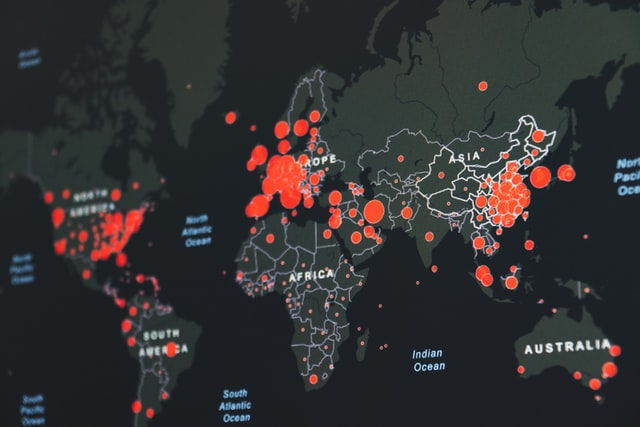
Worldwide, more than 5,000 cases of Monkeypox have been reported in 51 countries (in time of writing). The majority of these cases are in Europe and no deaths beyond Africa have been reported.

Sources: 1,2, 3, & 4

Read More...