
4 Essential Money Questions Poly And Uni Students Shall Ask

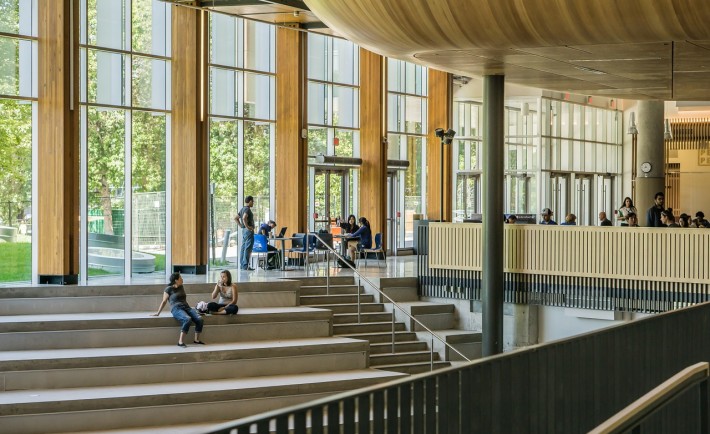
Entering Polytechnic or going straight to University can be exhilarating! Some even move to different countries and make significant decisions by themselves. Managing your personal finances at this age can be challenging but it is always a good idea to start early.

Because of the hefty fees and other expenses parallel to Polytechnics and Universities, it is important to consider these aspects of your finances…

1. WHO IS RESPONSIBLE FOR PAYING WHAT?

Poly and Uni students can collect money from different streams such as their part-time jobs, parents, loans, grants, scholarships, or a combination of all these. On the other hand, the categories of expenses are varied too. You will be paying for tuition fee, books, transportation, food, living expenses (if applicable), and so on.

Sit down with your parents to discuss who is responsible for paying each of the expenses. Offer to help if possible.

2. HOW DO YOU MAKE A REALISTIC BUDGET?

It is easy to get complacent with your finances as a student especially because you do not have to pay for mortgages, for childcare, and for other “adult” responsibilities. However, it is easy to lose track of your cash flow if you are to lax about your money. Remember that your income is limited and infrequent so you have to save the most of it.

Start by creating an easy yet realistic budget with the envelope system. With this system, tracking your spending and analyzing which category to cut down does not take too much of your time.

3. WHAT IF I WAS SHORT OF CASH?

Say unexpected events happen and you run short of cash, will your parents help you out or not? If so, will the money be given as a gift or as a loan? Is it possible to get a part-time job instead?

During my first year in Uni, I did not expect the influx of social expenses such as club registration fee and school dinners. I had to save up some of my allowance and pack some lunch in order to settle this unforeseen expenses. Aside from this, you can gravitate toward part-time jobs. Your part-time job can either add to your school allowance or buffer emergency fees. Know how to hunt for a job through this simple guide.

4. WHERE DO YOU LOOK FOR FINANCIAL GUIDANCE?

Every student has a different financial circumstance influenced by how much or how little the parental involvement is. I was very fortunate that my parents supported me all throughout my years as a student. I did not even have my own bank account then! Thus I can say that my parents were the ones who guided me financially as a student.

In contrast with my situation, I had two friends who were basically financially independent during their Poly and Uni years. One was a scholar while the other was in army. They monitor their own bank accounts, control their own budgets, and dictate their own spending. For financial guidance, they still seek their parents’ advice at times but mostly do everything on their own.

Image Credits: pixabay.com

Image Credits: pixabay.com

If that is not enough for you, you can always consider getting useful guidance from qualified financial professionals.


Sources: 1, 2, 3,& 4


Read More...

Handling Money As An Introvert Versus An Extrovert

If you are classified as the shy or quiet one, you most likely belong to a special group of people who are known as the introverts. Contrary to the popular belief, introverts are drained by social interaction. Many introverts can socialize easily but they just prefer not to. In fact, they are more emphatic and interpersonally connected than their counterpart – extroverts.

Extroversion is a strong factor of personality that is difficult to alter. Generally, extroverts have an advantage in the professional scene due to their approachable and outgoing nature. They flow through life in search of interpersonal interactions, leadership opportunities, and new experiences.

You must use your unique introverted or extroverted qualities to your advantage to enhance your financial life. If you do not know which type you belong to, please take the free test here.

FOR INTROVERTS

Image Credits: pixabay.com

Image Credits: pixabay.com

a. INTROVERTS PROCEED WITH CAUTION

When it comes to money, introverts tend to be more cautious at risk-taking as they make sound investments and goal-directed savings. They secure their future by carefully avoiding scams and financial schemes.

b. INTROVERTS SHOP AROUND

As introverts are observers by nature, they collect information from various sources first before making a financial decision. To get the best deal, they also read through the fine print and consider its every aspect.

c. INTROVERTS ARE MORE CREATIVE AT EARNING

Introverts are more likely to strategically plan things and think of creative ideas before finally making a decision. Hence, they can think of more innovative ways to earn money and properly manage the money they already have.

d. INTROVERTS SPEND LESS ON SOCIAL GATHERINGS

Since introverts are less inclined to participate in social gatherings, social expenses are the least of their worries. Furthermore, they may not be easily swayed by what the crowd is doing (e.g., avoiding costly bandwagon trends).

FOR EXTROVERTS

Image Credits: pixabay.com

Image Credits: pixabay.com

a. EXTROVERTS MAKE QUICKER DECISIONS

Extroverts are willing to grab the opportunity faster once it knocks. In some cases, this quick judgment can be advantageous for one’s financial life but it can also be disastrous in other circumstances.

b. EXTROVERTS ARE MORE CREATIVE AT INVESTING

As extroverts are more likely to engage in networking, they are able to learn more about the different types of investments or the new investment strategies. Their fearless and confident attitude can be rewarded when the right investment choices are made.

c. EXTROVERTS TRY NEW THINGS

Introverts tend to stay back while extroverts embrace new experiences with open arms. Extroverts are able to earn and save more by taking risks on new perspectives, jobs, ideas, and products.

d. EXTROVERTS GET FAIR DEALS

When extroverts are in a negotiation or bargaining situation, they may be more aggressive about setting things straight. Introverts may want to avoid confrontation but extroverts will not back down until they feel that they received a fair deal. Getting the value of your money is not a  bad thing for your finances!

Sources: 1 & 2

Read More...

Sensible Steps To Prepare For Your Child’s Tertiary Education

1. ESTIMATE YOUR TOTAL COSTS
The education system in Singapore follows high standards of quality and fosters excellence in its students. Offering various choices for pre-school, primary, secondary and tertiary education, it is worth taking a careful consideration at Singapore’s local schools. Not only do they provide a more affordable rate but they also set the bar for all the universities across the nation.
Estimate how much you have to pay for the school fees, living expenses, and other miscellaneous. Do not forget to factor in the inflation rate. For example: If the school fee at NTU or NUS is about S$27,560 last 2010, it will increase to up to S$38,000 by 2030 due to the annual inflation rate of 1.6%. How do you plan to save up for that?
2. LOWER THE COSTS
If the total spending capacity of your household is tight, consider reducing your child’s university expenses. Take up scholarships and other financial aids available at the school. Also, it is important for your child to figure out what he or she really desires to become before venturing off to a course and later shifting to another. An education fund for four years is definitely cheaper than a fund for six.
3. CHOOSE THE FINANCIAL PACKAGE WISELY
There are tons of financial packages tailored to help you save for your child’s tertiary education. Before deciding to commit to one, you must…(a) set your goals first, (b) assess if the package meets your needs, (c) determine how much you can afford, (d) and know how much risk you are willing to take.
After clearing those things up, you must choose between:
a. LIFE INSURANCE PLANS
If you are going to rely on whole life policies, note that only a part of the policy value is guaranteed. The rest of the non-guaranteed value relies on the performance of the insurer’s participating fund. While investment-linked policies do not guarantee the fund values. Said values rely on the investment performance of underlying funds.
b. UNIT TRUSTS AND EXCHANGE TRADED FUNDS (ETF)
The underlying assets that your unit trust or ETF is invested in determines the value of your investment. Given that your investment path is fixed until your child enters tertiary education, you must select a unit trust or ETF that accommodates your timeline and investment objective.
c. BONDS
Bonds, usually regarded as less risky than equities, are primarily fixed income-securities. You shall receive the bond face amount on maturity. However, it comes with the credit default risk of the issuer. A decreasing credit quality of the issuer may cause its bond’s price to decline.
Image Credits: pixabay.com (CC0 Public Domain)

Image Credits: pixabay.com (CC0 Public Domain)

d. TUITION FEE LOAN SCHEME
Aside from the options above, you can consider loans such as the Tuition Fee Loan Scheme for approved schools. The loan has 0% interest during the period of study.
e. CPF EDUCATION SCHEME
The CPF Education Scheme allows you to borrow from your CPF ordinary account to sustain your child’s local tertiary education costs at approved schools. It is subjected to a withdrawal cap. After graduating, your child will be required to repay the amount withdrawn plus additional interest.
Sources: 1, 2, & 3

Read More...

Affordable Summer Looks And Fashionable DIY Ideas

Since Singapore is geographically located near the equator, it is relatively hot all year round. With no particular period for summer, it is cool to dress the part while you go out and while you travel.

1. REVAMP YOUR DULL FLATS

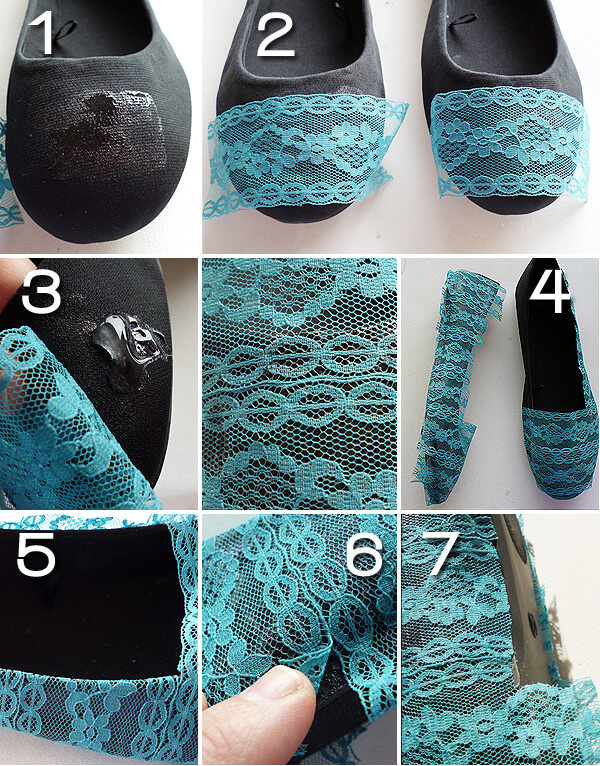
Exude the summer vibe to your shoes by decorating it with bright laces or ribbons. Simply place a large amount of glue to your shoes and even it out with a bristled paint brush. Once everything is laid out nicely, push the lace down on the top. Place the “scalloped” portion of the lace on the curves to keep everything uniform and to avoid overlaps. Using your scissors, cut the excess lace around the edges of the shoes. Try to make all your lines as straight as possible.

Purchase inexpensive laces or ribbons at Spotlight Singapore.

Image Credits: dreamalittlebigger.com/post/shoesday-tuesday-fun-lacy-flats-revamp.html

Image Credits: dreamalittlebigger.com

2. HAVE A COTTON ON HAUL

Indulge on Cotton On’s sale items that are suitable for the hot weather. For women, you may purchase the Caged-back Cami that is fitted and detailed to stay cool and ready for spontaneous workouts. It retails for only S$5. Pair this with comfy denim shorts and gorgeous Coco Sandal. The Coco Sandal, that comes in multiple colors, retails for only S$10.

Men on the other hand can enjoy the breeze running through their slim Anchor Tank (S$10). You can pair it with just about anything from swimming shorts to skinny denim jeans.

3. PURCHASE TIMELY ACCESSORIES

To complete your overall look, purchase appropriate summer accessories such as sunglasses and hats. UV-protective tinted lenses are best to beat the hit. Adding a dash of style with the S$9.90 sunglasses from H&M would not hurt your wallets (for women and men)! And as for Bohemian hats and sun visors that will cost you less than S$10, shop at qoo10.sg.

4. BLEACH YOUR OLD SHORTS

Tired of your denim shorts? Turn it up a notch by giving it a stylish ombre look. To do so, soak your shorts in water first then dip it into a mixture of bleach and water. Let the mixture hit up to three inches below where you want it to reach as it will run upwards eventually. Set it in place for 30 minutes and rinse it out with white vinegar and water. Lastly, you must wash and dry your trendy ombre shorts. Pair it with jewel wedges or a neon top to embrace the summer colors!

A liter of bleach is sold for only S$1.10 at FairPrice.

Read More...

6 Things To Consider Before Buying The More Affordable HDB Flats

1. THE SIZE

When purchasing a flat, put the foreseen future to the equation. For instance, you must consider a bigger flat if you are moving in with your parents or planning to have kids soon. Planning in advance will help ease your stress and avoid the hassle of acquiring another home.

2. THE LOANS

Be open and honest with your credit score as your chances of getting a loan is affected by it. Consider how you can budget your income in order to support your family and pay fully for your loan through the years.

3. THE NEIGHBORHOOD

Your new HDB flat comes with a different environment – study it. You do not deserve to live next to a neighbor who throws parties every night or one who is constantly bothered by loan sharks. You deserve to live in a place where you can come home safely. As much as you can, talk to your potential neighbors and follow your guts about the place.

4. THE INSPECTION

Although you are purchasing a new flat, it does not hurt to have someone inspect it. This is not only to ensure the true value of the home but also to ensure that everything is working perfectly. This helps you save money for unwanted repairs. Look no further for an inspector as HDB provides this service for a price.

5. THE PRIORITIES

As a client, you must determine what you really want in a pad. Are the available facilities and specifications in lined with your priorities and wants? If not, are you ready to compromise? It is difficult to get everything you desire in a flat but your necessities should be on the top priority.

6. THE PRICE

Good news: HDB flats had become more affordable since 2013! According to the Housing & Development Board, the proportion of a household’s monthly income used to repay the loan installment decreased from 24% in 2013 to 19% in 2015. In fact, 8 out of 10 first-time buyers of new flats in non-mature estates were able to fully repay their monthly mortgage installments using only their CPF savings over the past 3 years. In the end of the house hunting, it truly comes down to the price.

It is best to compare the prices of the flats in the area before making a decision. This price must include other factors such as facilities in the building, quality of construction, specifications of the flat, and more. You must understand that the cheapest flat may not necessarily be the most economical option.

Image Credits: pixabay.com (CC0 Public Domain)

Image Credits: pixabay.com (CC0 Public Domain)

Sources: 1, 2, & 3

Read More...