
Pros And Cons Of Selling On Lazada And Shopee

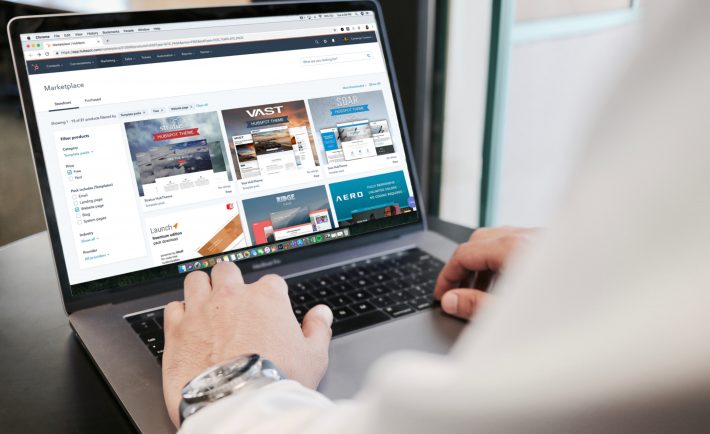
One cannot deny how vital online marketplaces in today’s society. Among the top e-commerce marketplaces in Southeast Asia are Lazada and Shopee. Both of these can help budding sellers gain exposure for their products. In return, the wide array of available products allow these marketplaces to flourish.

As such, some Singaporeans who want to sell their own products wonder whether they should sell on Lazada or Shopee.

THE BRIGHT SIDE

HIGH TRAFFIC CHANNELS

It comes as no surprise that two of the most popular marketplaces have ever-growing scales of online presence. Both Shopee and Lazada have created images that people trust. The millions of audience they have collated help your online business to get noticed. You can never really get so much attention when you are starting out by yourself. So, it is good to have a little push.

SURPLUS OF NEW CONSUMERS

With different marketing strategies such as birthday discounts and holiday promos, Lazada and Shopee have a growing number of new customer each year. These new customers may not be searching for your store specifically. However, they may search for a product that you have listed before. Once you get noticed, you can transform the customer into a loyal buyer by providing excellent service and product satisfaction.

GOOD SHIPPING TERMS

The strong online presence of these top marketplaces are backed by powerful logistics. Both websites have reliable shipping terms, which include the return policy. But, I cannot deny that return policy on Shopee is simpler than Lazada. The former’s return process is simply fast, while the latter’s return process is more complicated.

FLEXIBILITY OF ACCOUNT CREATION

A seller has an opportunity to decide whether he or she wants to open a single account on Shopee or several staff accounts on Lazada. You may do both too. You see, Shopee works for a single seller. In contrast, Lazada allows you to build staff accounts. You can give each of your team member a specific account needed for each role.

THE DARK SIDE

PAYMENT FEE OF 1%

It is free to create a seller account on both Lazada and Shopee as there are no registration or annual fees. You can start selling right away! Isn’t that convenient? Freely boosting your online business does not entail that these marketplaces will not get their cuts. Other than an approximate of 1% payment fee, you get to keep the rest of your profits.

FOCUSING ON CUSTOMERS

Whether you like it or not, these marketplaces are customer-focused and not seller-focused. They improve the quality of experience of the customers to help your business grow and their websites as well. While they improve the customer satisfaction, they may restrict a lot of things on your end.

NO OUTSIDE THE BORDER TRANSACTIONS

Lazada and Shopee have international websites such as in our neighboring countries – Malaysia and Philippines. However, you may not be able to sell your brand outside Singapore. If you want to sell on Lazada Malaysia, you will need to incorporate a Malaysian business. That is the limitation.

VARIOUS TECHNICAL BOUNDS

Taking advantage of the prevalent mobile use and consumer behavior in Singapore, Shopee has launched as a mobile e-commerce marketplace here and all over Asia. On the other hand, Lazada is yet to perfect its seller app. It remains buggy and customers still prefer shopping on its desktop version. When comparing the two marketplaces, you will notice that Shopee is mobile-first and Lazada is desktop-first.

Image Credits: unsplash.com

The question remains: “Is it better to sell on Lazada or Shopee?” I say, do both to reap the benefits of their incredible online presence.


Sources: 1 & 2

Read More...

Useful Schemes And Grants For Startups And SMEs

Sourcing funds as a startup business is not as easy as it seems. Focus on making sure that you set realistic and achievable goals with the help of the following schemes and grants.

#1: ANGEL INVESTORS

Believe it or not, angels are among us. These “angels” let startups and small businesses fly by providing necessary funds. Angel Investors invest money to said businesses at their seed stage despite having no proven success in their business model. In Singapore, here are some Angel Investor networks that you can tap.

BUSINESS ANGEL SCHEME (BAS)

Supervised by SPRING SEEDS, Business Angel Scheme is an equity investment scheme for Singapore-based businesses. It partners up with angel group investors to let them invest in innovative startups. SEEDS can invest up to a maximum amount of S$1.5 million! They profit by taking an equity share from the startup, which is in proportion to their investment.

SINGAPORE ANGEL NETWORK (SGAN)

There is a network of angel investors that invest in the later stage of the startup’s financial requirements. This network is none other than the Singapore Angel Network (SGAN). SGAN is the investment arm of Thakral Group of Companies. Interestingly, this network does not target any specific industry. This means that startups will have an equal chance of being selected. In fact, this network invests in other countries as well.

#2: ANGEL INVESTORS TAX DEDUCTION SCHEME

Be an angel! Invest in start-up companies in Singapore to receive a huge tax benefit from the Angel Investors Tax Deduction Scheme. You read that right! The Government introduced this incentive scheme to help businesses grow through their management expertise and expansions.

Valid until March 2020, angel investors can enjoy 50% tax deduction on the investment costs at the end of a two-year holding period. It is capped at S$500,000 worth of investments in each Year of Assessment.

#3: MAS FINANCIAL SECTOR TECHNOLOGY AND INNOVATION SCHEME (FSTI)

Launched by the Momentary Authority of Singapore (MAS), the Financial Sector Technology and Innovation (FSTI) scheme aims to provide support for the vibrant ecosystem of innovation. It attracts fintech companies to set up their labs, to develop solutions, and to build their technology infrastructures.

Under this is the sub scheme called FSTI-Proof of Concept. Through this sub scheme, you can receive support of up to 50-70 percent of qualifying costs capped at S$200,000 for up to 18 months.

#4: BUSINESS IMPROVEMENT FUND

Business Improvement Fund (BIF) is open to all Singapore-registered businesses with projects directed to tourism. It comes as surprise that it is run by the Singapore Tourism Board.

Eligible SME applicants can receive a funding support of a whopping 70% of qualifying costs. On the other hand, non-SME applicants can receive a funding support of up to 50% of qualifying costs.

#5: ALTERNATIVE OPTION: VENTURE CAPITALISTS

Venture Capitalists (VCs) are investors who provide capital to support small companies or to aid startup ventures. They strategically invest on businesses that will generate significant profit and experience extensive growth.

Image Credits: pixabay.com

More and more venture capitalist firms (VCF) have entered the shores of Singapore in the recent years. Exhaust your resources to familiarize yourself with the available firms, which are in lined with what your company represents.

a. SEQUOIA CAPITAL (focused on financial, healthcare, energy, mobile and internet startups)

b. 500 STARTUPS (a seed fund and startup accelerator)

c. SPH MEDIA FUND (Singapore Press Holdings’s investment arm)

d. SINGTEL INNOV8 (Singtel’s investment arm focused on digital media, internet apps, and other tech startups)

e. Life.SREDA (focused on fintech companies)

Sources: 1 & 2

Read More...

Financial Benefits Of Having A Second Job

For the longest time, moonlighting was seen as a means to take on extra work in order to supplement one’s full-time employment. It was exclusively for underpaid employees or those who are severely strapped for cash. Nowadays, moonlighting and having a second job are seen as acceptable means to expand one’s income without the weight of stereotypes.

Having a second job does not only expand your wallet, but also maximize your skills and talents. Many employers are open to the idea of giving their employees the freedom and flexibility to take on other jobs to keep up with the rising cost of living. To illustrate, combining your full-time job with a 20-hour per week sideline can pull in a greater income. You may also combine two part-time positions to get an income that will equate to a full-time position while working for less hours per week.

That is just the beginning. The following are other benefits of having a second job.

LESSENING YOUR TRANSPORTATION COSTS

Four years ago, I juggled my work as an enrichment teacher and as a freelance writer. As a teacher, I needed to travel three to four times per week around Singapore. While, my job as a freelance writer brought me to the comforts of my own home.

If your second job is either at a home office or at a place near you, you will be able to save more money on transportation costs. This situational advantage can help you shave dollars on monthly petrol consumption or EZ-Link top-up.

OPENING NEW JOB OPPORTUNITIES

We cannot fully guarantee that the economy will stay the same in a few years time. Say you lost your job. If you are running out of full-time job options, you may try your luck in several part-time employment positions that can eventually turn into a coveted full-time slot. After all, it is more cost-efficient for an employer to hire individuals who are already trained than to hire individuals who are unfamiliar with the field.

When given the chance to partake in a team as a part-timer, show how eager you are to know the tricks of the trade. Volunteer your time and exhaust your energy as much as possible. Do not waste the opportunities given to you.

GIVING MORE MEANS TO PURSUE OTHER ACTIVITIES

Freedom – is easier said than acquired. Experts say that people who have second jobs or second careers have a higher sense of freedom such as the feeling of not being shackled to one company. Furthermore, practicing in a different field gives you a financial cushion in case the economy becomes sour towards your other career.

Having a second job gives you more freedom to pursue other activities that will showcase your skills. If you are thinking of switching careers and want to minimize the risk, take on a part-time position that will enable you to test the waters. For those people who lack prerequisites or academic credentials to pursue their dream job, a part-time position may serve as a stepping stone that provides free training and meaningful experiences. While, others may use part-time positions as a means to climb the ladder within an existing field. For instance, a teacher may obtain an entry-level part-time work in order to finance his graduate studies. Further education will land him a more lucrative job in the field.

Image Credits: pixabay.com

It is up to you to find ways to maximize your income and make the most out of your second job.

Sources: 1 & 2

Read More...

How P2P Lending Works In Singapore

BY DEFINITION

P2P Lending, short for Peer-to-Peer lending, took off in 2005. It sprung due to many companies’ efforts to deviate from the financial institutions that let them borrow money. Borrowing from banks took about two to three years’ worth of records. And, many companies do not have the luxury of time. Instead, they turn to the Internet for help.

P2P websites allowed private people from around the world to lend money to various companies. For instance, you can lend S$100,000 to a company requiring money for an expansion. In return, you will receive repayments with interest from the company. P2P lending is very attractive to lenders due to the extremely high interest, which is up to 20% per annum.

SINGAPORE: THE ASIAN CENTER

Singapore reigns as a the Asian center for P2P lending due to being a regional hub for trading, a safe storage of precious metals, and a well- established economy. Singapore is appreciated for its direct approach to lending and borrowing as supervised by the Monetary Authority of Singapore. It even issues promissory letters.

Moreover, Singapore has a cash-intensive economy where a great deal of lending happens outside of the banking system and inside of the online platforms.

HOW TO START LENDING

Take Part In A Larger Portfolio

A well balanced portfolio has a mix of low-risk assets and high-risk assets. By nature, P2P lending is a high-risk asset that invites high returns. It can be used to offset the low returns from your conservative assets such as fixed deposits or Singapore Savings Bonds (SSBs).

Seek help from a qualified wealth manager to balance out your portfolio. As a rule of thumb, experts suggest that high-risk assets should not take more than 15% of your portfolio.

Invest On What You Can Afford To Lose

One of the leading advantages of investing in P2P lending is that you can take on small amounts. You can have various investors pitch small amounts of S$1,000 to fulfill your business goals.

Limit your potential losses by investing only what you can afford to lose. Do not gamble your savings away! Any amount that you cannot recoup within two months is too much.

Spread Out Your Investments

Try not to bury your eggs in one nest. As much as possible, choose to spread out your investments in a list of companies found in a P2P website.

If one company fails to repay you, the rest can do better for your account. It is less likely that every company you chose will fail to repay you. Furthermore, a company may repay you less for a long period of time. You have to get some cushion.

Sources: 1 & 2

Read More...

Cheap Investment Opportunities In Singapore

Many Singaporeans think that should accumulate a significant amount of wealth before investing in the stock market. Well, let me prove you wrong! You can start investing with as little as S$100.

This seemingly low amount has three investment options. Choose wisely!

OPTION #1: REGULAR SHARES SAVINGS (RSS)

Regular Shares Savings plans (RSS) are also called monthly investment plans. Your mere S$100 can turn into a stock on the Singapore Exchange (SGX) as long as you commit to it monthly. Simply open an RSS plan with one of the four leading banks in Singapore. For instance, you may choose OCBC bluechip investment or POSB Investment-Saver.

The broker for the financial firm will invest your fixed amount based on the instructions you gave. I may instruct the broker to invest to Strait Times (STI) every month or to other bluechip companies. Do your research before spending! The best part about it is that you have full control over your investment decisions. What’s more? Your instructions can be submitted online thru the bank’s platform.

OPTION #2: UNIT TRUSTS

One a scale of risk taking, you may fall under the conservative end. Fortunately for you, you can invest your money in unit trusts. Unit trust works by combining money from a set of investors. The pool of money will then be invested by a professional fund manager. The professional fund manager will have control over your investment.

Nonetheless, you must educate yourself about the type of unit trusts wish to invest in. Unit trusts can be bought for about S$100 in various local banks.

OPTION #3: ROBO-ADVISORS

The future is upon us! Investors can use robo-advisors to allocate their assets in the portfolio. Robo-advisors automatically help investors by tapping on the formulas to manage their assets.

It is a relatively new system in Singapore. Hence, there are only a few brands to choose from. For instance, you may hop to Smartly or AutoWealth. However, the latter has a minimum investment of S$3,000 while the former does not. These two platforms use different algorithms to arrive at optimal solutions. Moreover, these platforms can charge up to 1% per annum for managing your money. The fee is calculate based on the percentage of the total portfolio held in your account.

Source: dollarsandsense

Read More...