5 reasons why any time is a good time to visit South Africa

If you’re planning a holiday to South Africa, a wonderful mix of culture and adventure awaits.  From relaxing beaches to wild and wacky tours, there’s always something to do here, no matter the time of year.

  1. You can spend a day out of the ordinary and swim with wild penguins at Boulders beach
  2. Go whale watching in the Cape Peninsula Enjoy the majesty of the largest mammals on earth when you go whale watching in the Cape Peninsula
  3. Take a cable car ride to the top of Table Mountain to see heart-stopping views of Cape Town and discover flora not found anywhere else on earth
  4. Get up close and personal with wild animals at Blyde River Canyon Nature Reserve safari
  5. Enter an unusual game of Ostrich racing in Karoo and go head to head with some of the locals

The possibilities abound, as do the plethora of wildlife available that can be seen only in Africa. The prime tourist season runs from November to March as tourists from the northern hemisphere flock here to enjoy the warmer climate. Be sure to book your tickets to South Africa well in advance if you plan on coming at this time.

Etihad Airways and South African Airways announced a major expansion of their strategic partnership, at the end of last year, making flights from Abu Dhabi to South Africa (and vice versa) all the more accessible.

As part of the extended cooperation, South African Airways will launch a daily service between Johannesburg and Abu Dhabi on 29 March 2015, which will complement Etihad Airways’ existing flights between the two cities to offer a combined double-daily frequency on the route.

As a result, business and leisure travellers will benefit from the convenience of multiple options between Johannesburg and Abu Dhabi within the same day. More than 1,000 connections will also be offered each week over Etihad Airways’ Abu Dhabi hub to key markets including the GCC region, Middle East, Indian subcontinent, and North and South East Asia.

The airlines have also significantly developed their codeshare agreement to include a total of 49 routes, more than double the previous number. Subject to regulatory approval, Etihad Airways will place its ‘EY’ code on South African Airways’ new Johannesburg-Abu Dhabi flights, in addition to 16 of the airline’s other services from Johannesburg to key destinations across the African continent. In return, South African Airways will place its ‘SA’ code on 32 Etihad Airways routes beyond Abu Dhabi to a range of destinations worldwide.

Etihad Airways and South African Airways’ Johannesburg – Abu Dhabi schedule

Effective 29 March 2015:

Route Flight No. Departure Arrival Aircraft Frequency
Johannesburg (JNB) – Abu Dhabi (AUH) SA278 10:05 20:25 Airbus A330 Daily
Abu Dhabi (AUH) – Johannesburg (JNB) SA279 02:05 08:15 Airbus A330 Daily
Johannesburg (JNB) – Abu Dhabi (AUH) EY603 20:30 06:50 +1 Airbus A330 Daily
Abu Dhabi (AUH) – Johannesburg (JNB) EY604 09:30 16:05 Airbus A330 Daily

Note: All departures and arrivals are listed in local time.

  • SAA to operate daily flight between Johannesburg and Abu Dhabi from 29 March 2015

Read More...

Plan A Thrifty Vacation To Europe With These 6 Tips

The global economy may be unstable, but your wanderlust heart remains powerful – for a good reason. It is possible to travel in Europe without breaking the bank as long as you have a few smart tricks up your sleeve!

1. PLAN HOW TO REACH EUROPE

It is always a good idea to do prior research before visiting an unknown land. Start your investigative methods by researching the off-peak season of your dream destination. Avoid the months when said destination receives most of its visitors. For instance, most cities in Europe are at its peak from July until the middle of September. Universal public holidays such as Christmas and New Year’s Eve are crowded too.

Consider reaching Europe in October through April. You will not only get cheaper plane seats but you will also find cheaper accommodation. Furthermore, you will meet more locals and less tourists. Get the an authentic European experience as you indulge on the local culture and enjoy the shorter queues.

2. PLAN WHERE YOU WILL STAY

Speaking of accommodation, you can stretch your buck by embracing other options aside from hotels. Hotel prices may drop from August to October, but they are still heftier than apartment rentals and home sharing.

Visit websites such as airbnb.com and homeexchange.com to get a grasp of what I am saying. These websites participate in the sharing economy by connecting like-minded travelers and locals together. They allow you to save a great deal of money and to have an access to extra amenities (e.g., kitchen).

You may also ask your local landlord to give you insider tips and maximize your stay!

3. PLAN HOW TO MOVE AROUND

One of the categories that will take a huge chunk of your travel budget is transportation. There are various ways to explore the beauty of Europe on a tight budget including boarding the train or the bus as well as renting a vehicle. For extensive or long-distance journeys, more people opt for availing the Eurail Passes. These passes are used to travel a single country or across multiple countries. Of course, it is cheaper to travel in short distances through the efficient European rail system.

Alternatively, you may board the public buses. Several buses are aimed at connecting the major European cities. Lastly, you can rent a car and share the price among your peers by taking advantage of the sharing economy.

4. PLAN HOW TO REMAIN CONNECTED

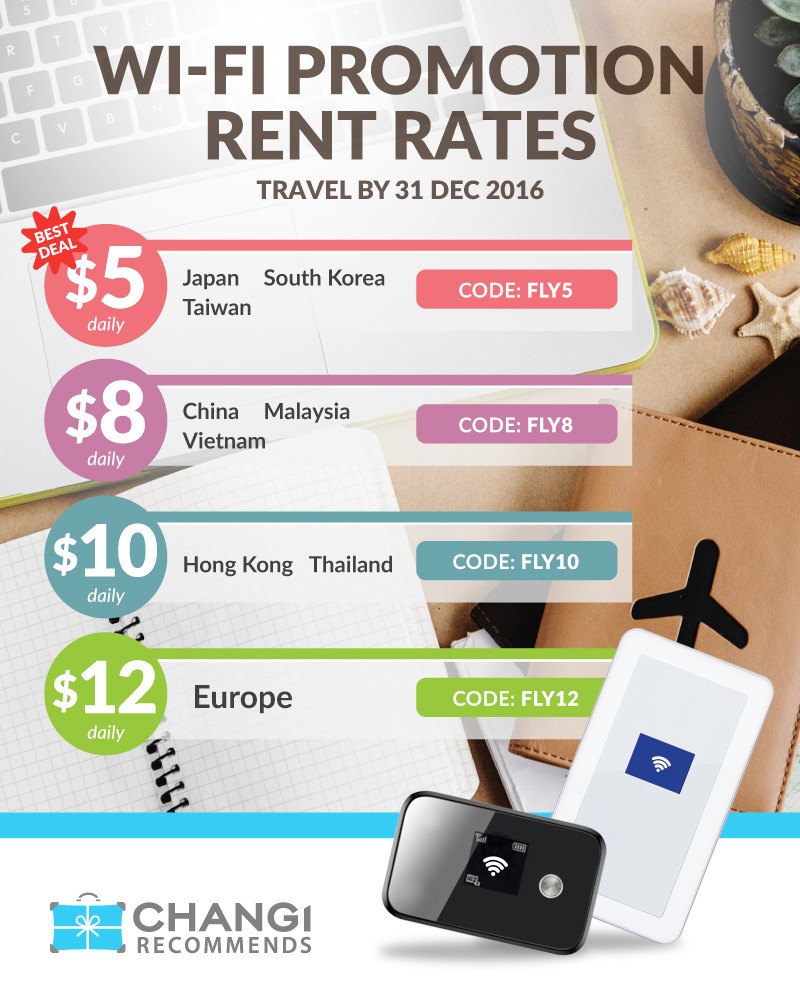
Staying connected no matter where you are in the world is beginning to be a necessity for most of us. However, data roaming fees are ridiculously expensive! Consider visiting the nearest public space or eatery that offers free Wi-Fi. Or, you may rent a pocket Wi-Fi device at Changi Airport.

It is easy to travel anywhere with the Changi Recommends’ pocket Wi-Fi. You simply have to pay a promotional price of S$12 per day. Equip with this, you can regularly update your friends and family back home via FaceTime or Skype. You may also manage your business by checking up on your employees through Whatsapp or Gmail.

Image Credits: changirecommends.com

Image Credits: changirecommends.com

Related Post: How To Save And Travel Like A Local In Hong Kong With The Changi Recommends’ Wi-Fi Router

5. PLAN WHERE TO EAT

Who does not love to eat, especially when it is thrifty? Save more cash on food by either cooking your own meals or dining like the locals.

Staying at the apartment or home rentals will allow you to access a fully functional kitchen. Use it to your advantage by preparing meals for you and your travel buddies. Amp up the adventure by having a lovely picnic at the nearest park. Many groceries have deli sections so invest in those. Or, you may skip the picnic and eat at the department store cafeteria instead. That is what some locals do!

Follow the locals’ lead for cheap eats instead of frequenting the tourist spots that puncture holes in your wallet. Ask around the town or read this helpful article.

6. PLAN HOW TO RETRIEVE CASH

For fuss-free retrieval of cash (European currency) in the quickest way possible, you may use the set of ATM scattered around Europe. All you need to do is to activate your card’s magnetic stripe. For instance, you can ask for the help of a bank personnel to help you enable the overseas access of your UOB debit card. It only takes a few minutes!

The only drawback with this method is that you will have to minimize your transaction fees by making larger and fewer withdrawals. In my experience, UOB charged me S$5 for every withdrawal in the neighboring Asian countries. It goes without saying that you must keep this advance encashment in a safe place.

Recommended Read:  How to travel Europe on a shoestring budget

Image Credits: pixabay.com

Image Credits: pixabay.com

Cutting your travel budget does not necessarily mean that you have to sacrifice the quality of your trip! 🙂

Sources: 12, & 3

Read More...

5 Tips On How To Book Cheaper Flights

Holiday season is just around the corner and this is when we start posting throwback photos of our previous travels, stare longingly at the planes that pass overhead, browse through online travel guides, and daydream about jetting off to a distant land.

Did a quick check of your bank account just stop you dead in your tracks? Hold up right there, all is not lost yet. Here are 5 tips on how you can book flights for less than expected!

  1. Go Incognito

incog

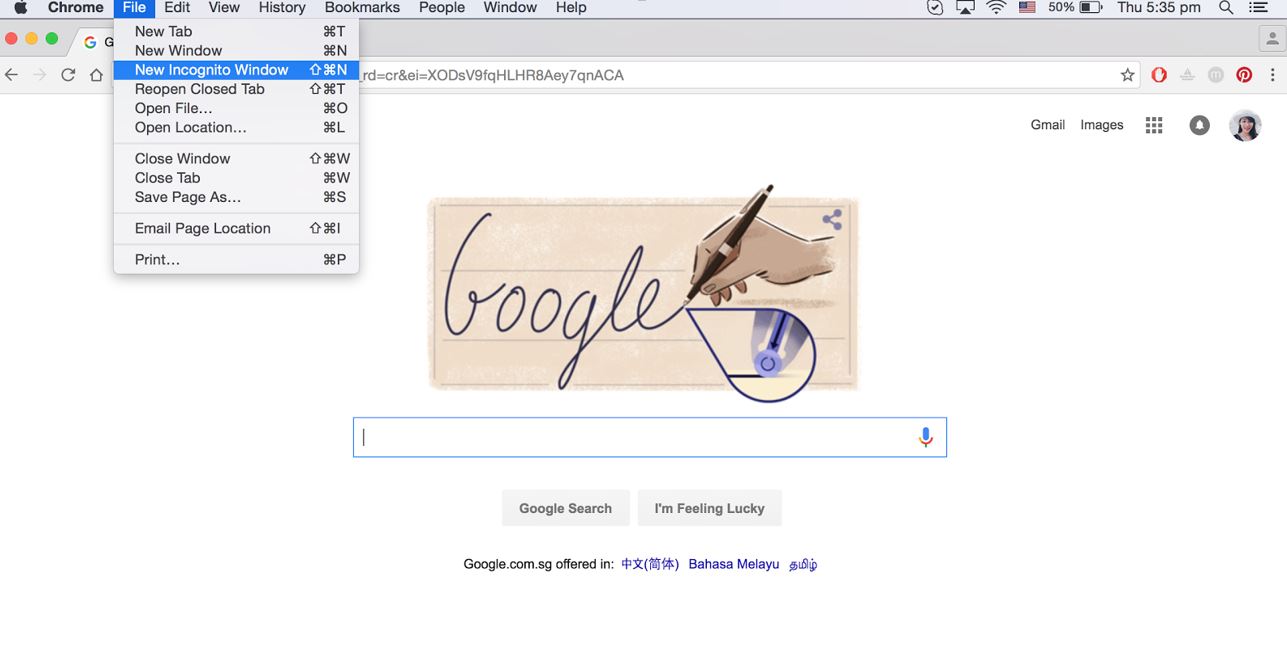
Cookies are not always a good thing, unless they come in a lovely golden brown dotted with chocolate chips. Most websites use cookies to track your activities. If it notices that you have been searching for a certain route a few times over the past few days, higher flight prices might show each time you search, as the site wants to ‘push’ you into making a decision quickly before prices rise further.

To avoid these scare tactics, clear your cookies before you start searching or switch to incognito (Google Chrome) or private browsing mode.

  1. Be Flexible

flexible

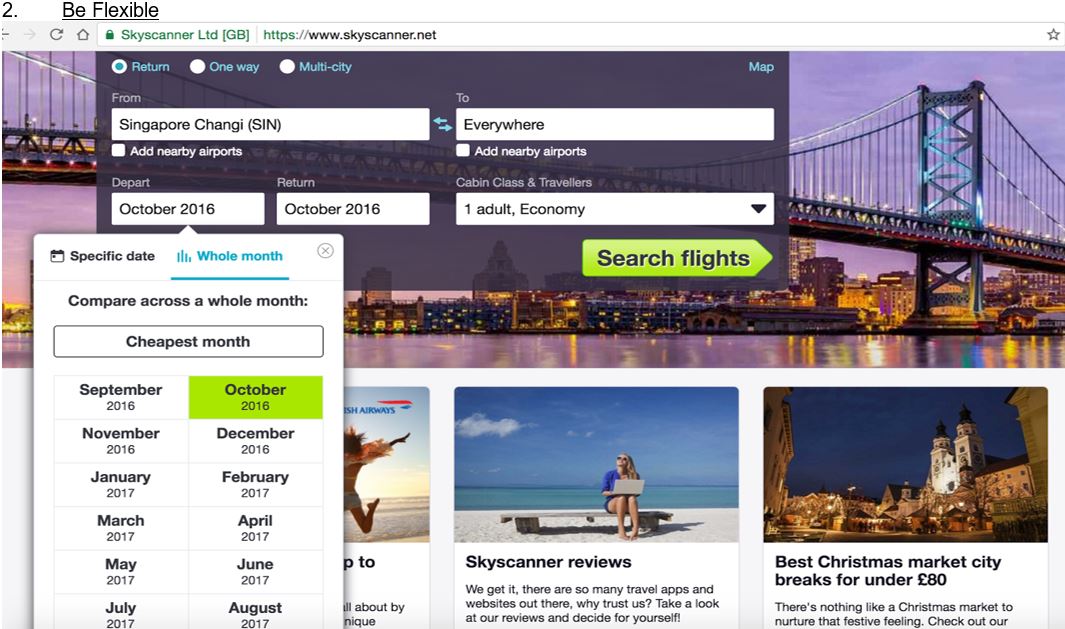
Sometimes the destinations you have in mind might be very expensive during your desired travel period. Keep an open mind and you might just stumble upon fare deals and bargains to places you never thought about going to before.

For a start, sites like Skyscanner, Airfare Watchdog and Google Flights are great to get a general sense of flight prices and compare flight prices on different dates and to different destinations. For example, instead of selecting specific dates of travel, Skyscanner allows you compare flight prices across the whole month. You can also select “Everywhere” as your arrival destination and Skyscanner will show you a list of the cheapest destinations to fly to.

Google Flights has a similar function where users can see average flight prices to different countries within a region, helping you find the cheapest point of entry. This is especially useful if for example, you are thinking about travelling around Europe. As domestic travel options are relatively cheap there, you can easily take a flight into one city and travel to your intended destination at a lower price than a direct flight.

  1. Mid-Week Is Your Best Bet

It has been said that the best day to book a flight is on a Tuesday afternoon as this is when airlines tend to launch promotional deals or hold flash sales events. More people might be searching for and booking flights on weekends, so fares are likely to be higher due to the high demand. So while you may have more time over the weekend to do your research, taking some time off on Tuesdays might save you a fair bit.

Also, a general trend observed is that the least expensive days to fly tend to be on Tuesdays, Wednesdays. If your schedule works out, play around with different days of departure and arrival to find your best combination.

Of course, the most important thing is to not leave your booking till too late, especially if you’re looking to travel during peak season. As demand increases and seats are quickly getting filled, prices for the flight you want are bound to be higher than average. Also, many advertised flight deals usually have an advance purchase requirement, so booking too close to your intended date of departure might mean having to forgo the deal.

  1. Check Social Media

social-media

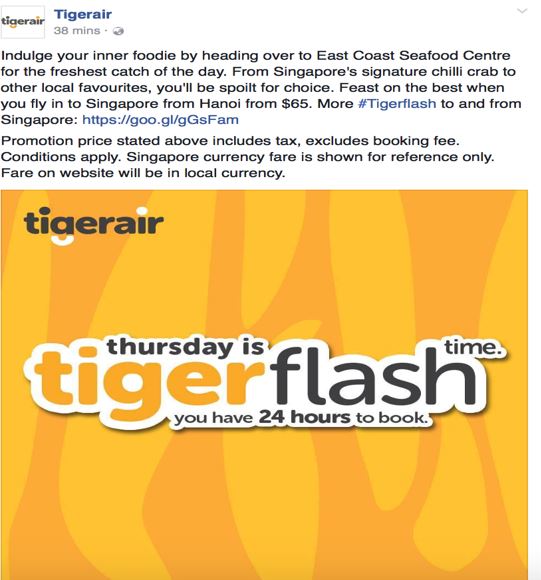
As useful as they may be, sites like Google Flights or Skyscanner usually do not reflect any special promotional fares that the airline has. This is when keeping up with social media pays off. We may not check the different airline websites everyday, but social media is something most of us scroll through everyday out of habit. Ads or posts on the airlines’ social profiles can be a good way to learn about things like early-bird fare deals, 24-hour flash sales, or any credit card promotions that will give you a decent discount if you book with that card. So if you’re thinking about going on a holiday, start keeping an eye out on your social media accounts!

  1. Mix and Match

We all have one or two favourite airlines that we like to fly on, and sometimes this pays off in terms of getting frequent flyer miles or points that can be stacked up to redeem discounts. However, sometimes mixing and matching one-way flights on different airlines, or flying into and out of different airports, might be cheaper than booking a return flight on a single airline.

CheapAir.com has a handy “Mix & Match” category on the flights results page that will help you combine one way fares to form the most cost-efficient or convenient round trip. This may not necessarily be a cheaper option but it won’t cost you anything to do a comparison. So why not?

Now that you’re armed with some tricks up your sleeve, that dream holiday is soon to become a reality!

(This is a guest post by Trip101. Author: Eunice Lee)

Read More...

4 Places For Best Money Exchange Rates In Singapore

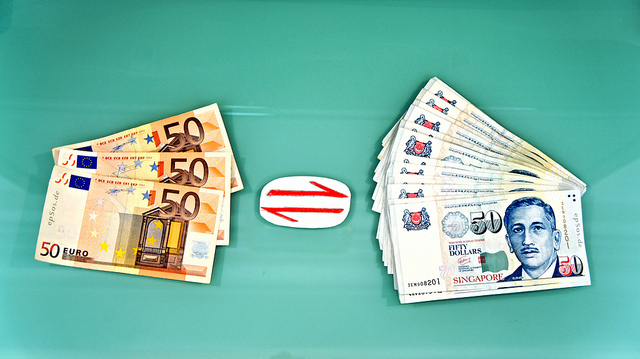
Currency, as we know it, is a result of a period of evolution. Long time ago, there were no coins, there was only barter – simple exchange of goods for goods. Now, money (i.e., in the form of coins, paper, etc.) around the world has its equivalent value.

When you travel, it is quintessential to find a good place to change the currency of your money. Luckily for travelers, Singapore provides a wide array of reliable and licensed money changers that offer best rates for most foreign currencies. If you are unaware of the best money changers out there, here is a swift list for you…

1. PEER TO PEER – MARCO POLEE (Update: 15 Sep 16)

Since our article has gone out, we’ve discovered Marco Polee – a currency exchange platform that networks people to exchange currency between each other. Customers can create a new listing, which consists of where they’d like to exchange, and the amount. The best bit is that the exchange rate is locked to the market exchange rate (midmarket rate)! With absolutely no fees, no commissions, and the ability to exchange at market rates – this service is definitely worth taking a look at. Marco Polee’s goal is to provide travellers with a better option as they believe the people deserve better than to lose money just to exchange currency.

Website: Marco Polee 

2. PARKWAY PARADE

Do you live around the Katong area? Parkway Parade Shopping Centre, a building with about 300 shops, is the most convenient place for you to change your money. In here, the suggested money changers are located at the Level 1 as it provides the best rates for THB, USD, JPY, MYR, and HKD.

Suggested Money Changers: Sino Money Changer, Yakadir Enterprises, Everpeace Money Changer, and Parkway Money Changer

Address: Parkway Parade 80 Marine Parade Road, Singapore 449269

3. THE ARCADE AT RAFFLES PLACE

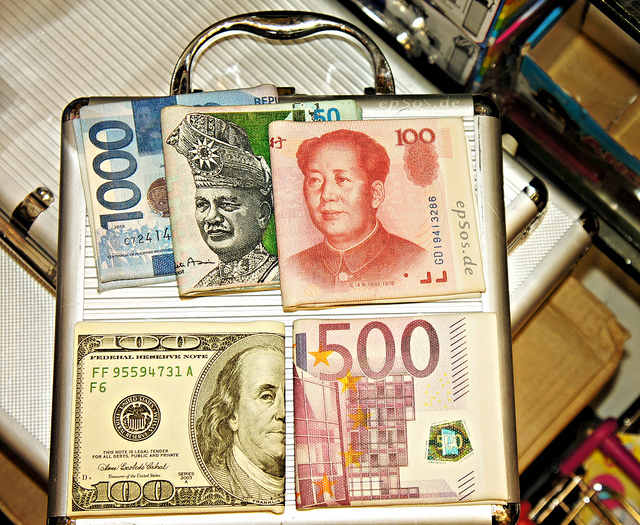
A busy business center in Singapore, Raffles Place has proven to be a good place for changing your currencies. Offering good rates for USD, GBP, EUR, JPY, THB, MYR, and TWD all year round.

Suggested Money Changers: Arcade Plaza Traders Pte Ltd, Sheen International Exchange, People’s Corner Money Changer, and Arcade Money Changers

Address: The Arcade, 11 Collyer Quay, Singapore 049317

4. PEOPLE’S PARK COMPLEX CHINATOWN

An old building located at the heart of Chinatown, People’s Park Complex, is one the most famous places to exchange your money. The money changers here are numerous that you can compare rates by hopping from shop to shop. Nonetheless they offer good rates for CNY, PHP, THB, HKD, and MYR.

Suggested Money Changers: Today’s Money Exchange, Crante Money Changer, AK Money Changer & Department Store, and Emerald Money Changer

Address: People’s Park Complex 1 Park Road, Singapore 059108

5. LUCKY PLAZA

For tourists that are around the Orchard area, money changers at Lucky Plaza is your most convenient choice. With shopping centers around the area, it is a good place to exchange rates for PHP, MYR, and THB.

Suggested Money Changers: Rahiman Trading, Rabi Trading, Fajar Money Changer, and True Blue Money Changer

Address: Lucky Plaza 304 Orchard Road, Singapore 238863

Image Credits: epSos .de via Flickr

Image Credits: epSos .de via Flickr

Remember to compare the rates in different money changers in the building to get the best rates! Some money changers offer updates via their website so, be aware of that.

(* Now that you’ve get the best of your exchange rate, use our hotels search engine to search for the best price guaranteed hotels: http://hotels.moneydigest.sg)


Read More...

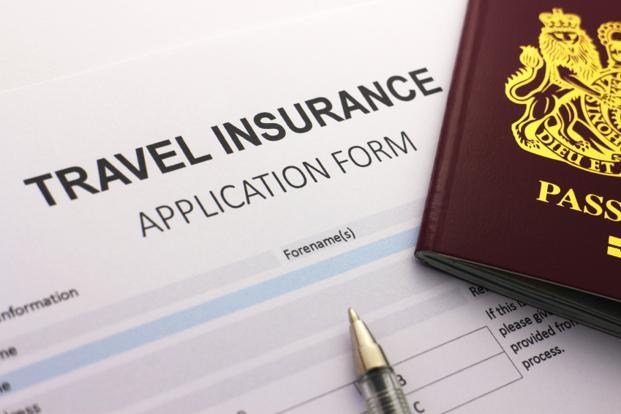
Why Some Singaporeans Don’t Buy Travel Insurance Anymore

Some Singaporeans have gone off the idea of travel insurance. While it used to be considered an absolute necessity, more travellers now think of it as an unnecessary waste of S$50 to S$100.

This is particularly true of those who go on short trips, to whom travel insurance becomes a significant expense. But are they doing the right thing?

Why No Travel Insurance?

The most common reasons are:

  • They have personal accident insurance
  • They feel the claims process is unrealistic and restrictive
  • The seek cost-efficiency
  • They are already covered by credit card
  • They are covered under their employer’s insurance
  • They Have Personal Accident Insurance

For some travellers, their main concern is their healthcare related. They do not want to face medical expenses if they suffer from a fall, get hit by a car, etc.

They are less concerned about the other things that travel insurance covers. These are things like lost jewellery (they may not be carrying anything valuable), flight delays (not an issue if they have airline memberships that already compensate them), or tour agency issues (they may not be on a package tour).

For those travelling to countries where they have friends or family, some of the emergency assistance from travel insurance may be irrelevant. For example, if you are travelling to stay with your uncle in Canada for a few days, it may not be a big deal if your luggage is diverted for a day or two. The inconvenience may not be worth a S$100 insurance policy.

(It might be a different story if you are travelling alone, and know nobody where you’re going).

These travellers typically add personal accident coverage to their existing insurance policies, in the form of a rider. This can give them comprehensive protection wherever they are, for a fairly low cost (e.g. under S$30 a month).

If they are going skiing, for example, they may be happy to rely on their personal accident coverage, without adding travel insurance.

  1. They Don’t Want to Go Through the Claims Process

Some seasoned travellers are intimately aware of travel insurance terms, and are dissatisfied with them.

For example, many policies do not allow you to make claims for lost jewellery. For lost cash, the maximum claimable amount might be too small to be relevant (e.g. The maximum claimable amount is S$250 regardless of how much you lose, and then insurance policy alone is already over S$100).

There are often tight limits on maximum claim amounts, on a per item basis. Even if the policy insures you for you to S$1 million, for example, the maximum claimable amount on your broken iPad may only be S$500.

Some travellers also feel the claims process is unrealistic, or too convoluted. For example, you may be required to present original receipts if you want to make a claim for your broken laptop.

With regard to trip cancellations, some policies only pay out only under specific conditions. For example, a policy may not pay out if the cause of the cancelled trip is the Singapore haze or a strike (the trip may only be insured against poor weather).

As such, a subset of travellers believe travel insurance has too many restrictions to be useful. If you want to join their ranks though, you will have to be sure that you make up for lack of travel insurance with the right safety precautions, and the right personal insurance policies.

  1. They Seek Cost-Efficiency

As a rule of thumb, it is not cost-effective to insure expenses you can pay out of pocket.

For example, it would not make sense to pay premiums to insure your socks, or to insure cheap canned food in your kitchen pantry – the odds of losing them are so low, and the cost of replacement so cheap, that the premiums would just be a waste of money.

The same theory can be expanded to things like second-hand laptops, cheap watches, old clothes in your bag, etc. Some travellers would feel no significant pain from losing these items, and prefer to have more cash on hand for shopping or better accommodations. Should they lose the items, they have more than sufficient money to replace them immediately.

(Note: if your worry is losing your luggage and having no clothes, toiletries, etc., you should note that most airlines provide supplies or funds for passengers whose luggage they lose).

  1. Their Credit Card Offers Free Travel Insurance

Many air miles credit cards, such as the Citi PremierMiles Visa Card, come with complimentary travel insurance if you charge your travel tickets to it. The Citi PremierMiles Visa Card covers up to S$1,000,000 in case of death or permanent disablement from accident in a common carrier, up to S$40,000 for medical expenses during a trip, and travel inconvenience.

If you are satisfied with these, there’s no need to buy more travel insurance.

  1. They are Covered by Their Employer’s Insurance

Many people overlook this, so make sure you don’t.

If you are flying abroad for business, check with Human Resources on whether you are covered under your employer’s insurance. If there already is one, you do not need to buy your own.

Some companies have generous corporate insurance plans, that will cover you even if you are not on official business. If so, all you need to do is familiarise yourself with the terms (and get private only if you are unsatisfied).  


(This article is brought to you by Singsaver.com.sg)

Read More...