Why More Singapore Investors Are Treating Bitcoin as a Long-Term Portfolio Asset

For several years after launching in 2009, Bitcoin was viewed by many investors as something of a speculative bet that might deliver quick gains if they got lucky. However, today, most now see it as a legitimate long-term investment that is just as good an option as, if not better than, shares, property, bonds, gold and other assets.

This shift is particularly noticeable in Singapore, where investors have traditionally been successful in balancing innovation with wealth preservation. Indeed, as digital assets become more widely accepted in the country, many more investors are exploring how Bitcoin could fit into a diversified portfolio.

That being the case, you may be wondering why they are treating Bitcoin as a long-term portfolio asset rather than a short-term trade. Let’s take a look at this in more detail.

Why Are More Singapore Investors Looking Beyond Traditional Assets?

Many investors build their wealth through a combination of assets, such as property, equities, bonds and cash. However, while these investments have remained popular over many years, the constant uncertainty and changing economic conditions have encouraged people to explore alternative assets that offer different opportunities.

They include global uncertainty, inflation concerns, and fluctuating interest rates. All of which have prompted investors to look for investments that do not always move in lockstep with traditional markets. This search for portfolio diversification has led many to pay more attention to digital assets, particularly Bitcoin.

As the largest and most established cryptocurrency, Bitcoin has become a common entry point for investors looking to explore the opportunities presented by digital assets.

What Has Changed in the Way People View Bitcoin?

Perhaps the main reason why the perception of Bitcoin has evolved significantly over the past decade is that financial institutions, fund managers and everyday investors have increasingly adopted it.

Indeed, several large investment firms and publicly listed companies have added Bitcoin to their balance sheets or investment products, which has helped increase overall confidence in the asset.

As a result, many investors now see Bitcoin as a distinct asset class. While they understand that Bitcoin price volatility remains part and parcel of the investment experience, many long-term holders often focus their attention on broader adoption trends, scarcity and future demand rather than short-term price movements.

Why Are Investors Adding Bitcoin to a Diversified Portfolio?

One of the most common reasons investors are looking to buy BTC with Independent Reserve, or another similar platform, is portfolio diversification. As every asset class behaves differently under various economic conditions, investors often seek exposure to a range of assets rather than relying on a single investment type.

What makes Bitcoin so attractive is that it offers access to a market that operates independently of many traditional financial systems. This doesn’t mean that it is immune to broader market movements. However, its unique characteristics have piqued the interest of many investors seeking additional growth opportunities.

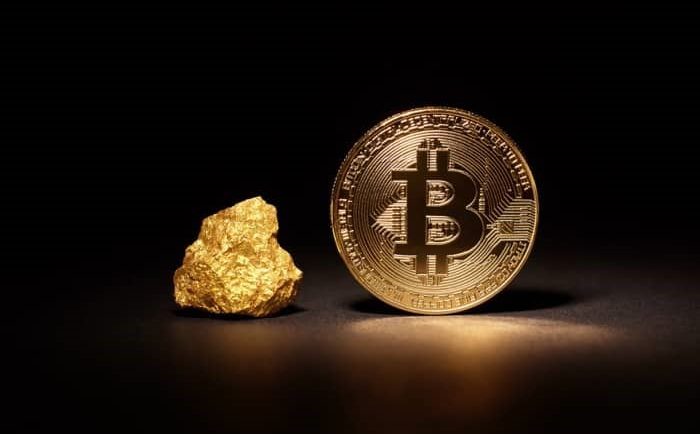
Another factor, undoubtedly, is Bitcoin’s limited supply. Because only 21 million Bitcoins will ever exist, it possesses a scarcity that appeals to many. Indeed, some investors compare it to gold, viewing it as a potential store of value and even a form of digital gold.

How Much Bitcoin Are Long-Term Investors Typically Holding?

Most investors who allocate funds to Bitcoin do so as part of their overall investment strategy. Rather than allocating all their capital to a single asset.

Having said that, individual portfolio allocations vary depending on a range of factors, including the investor’s personal goals, financial circumstances, and risk tolerance. Subsequently, some investors choose to dedicate only a small percentage of their portfolio to digital assets. Others maintain larger positions in shares, property and other investments.

This approach not only allows investors to participate in potential growth opportunities, but also limits the impact of cryptocurrency market fluctuations on their overall portfolio.

What Risks Should Investors Understand Before Buying Bitcoin?

There’s no question that Bitcoin offers opportunities. But it is important to recognise that it also carries risks that should be understood before you invest.

Arguably, the biggest risk is price volatility, as Bitcoin’s price can move sharply over short periods. This can be uncomfortable for investors who are accustomed to more stable asset classes. Security is something else you’ll need to get a handle on, especially with regards to how cryptocurrency is stored, protected and transferred. It is important to choose reputable platforms and follow strong security practices to reduce many of the common risks associated with digital assets.

You should also be mindful that many long-term investors focus on a multi-year timeframe rather than simply reacting to daily market movements. That’s not to say that short-term fluctuations can’t be significant. However, many holders view Bitcoin as an asset that may develop over years rather than weeks or months. So, you might want to do the same.

What Role Could Bitcoin Play in the Future of Wealth Building?

Bitcoin’s future remains a topic of intense debate. But there is little doubt that it has become a permanent part of the global financial landscape.

Some investors see Bitcoin as a growth-focused asset. Others view it as a hedge against inflation or a tool for wealth preservation. Whichever way you look at it, increasing institutional adoption and wider acceptance of digital assets should give you the confidence to invest in it.

As financial markets continue to evolve, it seems clear that Bitcoin will play an increasingly important role within diversified portfolios. In particular, among investors who are comfortable allocating a portion of their wealth to alternative assets.
 

Read More...

Investing in Cryptocurrency: Risks & Rewards

Cryptocurrency has taken the world by storm, and Singapore is no exception. Although the worldwide cryptocurrency ownership rates were around 4.2% in 2022, Singapore and Thailand are leading the way in Southeast Asia with significantly higher adoption rates of 11.05% and 6.47%, respectively. These numbers are mainly attributed to the digital savviness of their populations and the supportive regulatory environment in both countries. While investing in cryptocurrencies can be attractive and lucrative, it is also not without risks.

Firstly, let’s discuss the rewards. Cryptocurrency is decentralized, meaning it is not controlled by any government or financial institution. This makes it a popular investment option for those looking to diversify their portfolio and reduce their reliance on traditional banking systems. Cryptocurrencies can also provide quick and easy access to liquidity, making it an attractive option for those looking to make quick profits. For example, digital artists can easily sell their artwork using cryptocurrencies and still own its copyrights.

Furthermore, the Monetary Authority of Singapore (MAS) has issued guidelines for the trading and exchange of cryptocurrencies, making it easier for investors to enter the market. To address money laundering and illegal activities, MAS issued Notice PSN02, also known as the detailed Anti-Money Laundering (AML) and Combating the Financing of Terrorism (CFT) guidelines for Digital Payment Token service providers.

However, investing in cryptocurrency also comes with its own set of risks. One of the biggest risks is volatility. Despite Singapore’s ambitions to become a global crypto hub, it has been cracking down on the industry after many retail investors lost their life savings to crypto trading. The country has repeatedly warned that cryptocurrency trading is “highly risky and not suitable for the general public” due to its volatile and speculative nature.

The general public must know that cryptocurrencies are subject to unpredictable price fluctuations. As they are less regulated, their value is influenced by other factors, such as psychological hype. For example, in 2017, Bitcoin’s price reached an all-time high of nearly $20,000, only to crash to $3,000 the following year. Another example is the rise of the first meme coin called Dogecoin.

Image Credits: unsplash.com

Another risk is security. Cryptocurrencies are stored in digital wallets, which can be vulnerable to hacking and cyber-attacks. If a hacker gains access to an investor’s wallet, they can steal their digital assets, resulting in significant losses. Can you imagine betting your life savings on cryptocurrencies and losing it all in a day?

Lastly, to thrive in the cryptocurrency scene, a certain level of technical knowledge is required. Don’t fall victim to frauds and scams by lacking technical knowledge. Investors need to understand how the blockchain works, how to manage digital wallets, and how to navigate cryptocurrency exchanges.

Despite the risks, the interest in cryptocurrency investment remains high among investors in Singapore. To minimize these risks, it is essential for investors to conduct comprehensive research before investing, keep their digital assets in secure wallets, and only invest a reasonable amount they can afford to lose. With prudence and caution, investing in cryptocurrency can be a fulfilling experience for Singaporean investors.

Sources: 1, 2, 3 & 4

Read More...

MAS Says Dealing in Any Cryptocurrency is Hazardous

To clarify some questions and misconceptions surrounding the collapse of FTX.com, the Monetary Authority of Singapore (MAS) has recently issued a statement. The Bahamas-based crypto exchange company filed for bankruptcy in the US on Nov 11, 2022 and is said to owe about US$3.1 billion (S$4.26 billion) to its top fifty creditors. Its short reign started last 2019.

In the statement released by MAS last Nov 21, MAS highlighted three key points.

#1: IT IS NOT POSSIBLE TO PROTECT LOCAL USERS FROM FTX.COM

Since the company is not licensed under MAS and operates offshore, it is not possible to protect the local users who dealt with the bankruptcy of FTX.com. “MAS has consistently warned about the dangers of dealing with unregulated entities,” the central bank said.

#2: THERE WAS A CLEAR DIFFERENCE BETWEEN BINANCE.COM AND FTX.COM

To the central bank, there was a clear difference between fellow crypto exchange companies Binance.com and FTX.com. While both companies are not licensed in Singapore, Binance.com was actively soliciting users in Singapore while FTX was not.

“Binance.com in fact went to the extent of offering listings in Singapore dollars and accepted Singapore-specific payment modes such as PayNow and PayLah,” according to the statement released by MAS. Thus, it was placed on the Investor Alert List (IAL).

#3: IT IS IMPOSSIBLE TO LIST ALL CRYPTO EXCHANGES ON IAL

Hundreds of such exchanges and thousands of other entities offshore exist so, MAS says that it is not possible to create an exhaustive list of all offshore crypto exchanges in the world on the IAL. The purpose of the IAL is to “warn the public of entities that may be wrongly perceived as being MAS-regulated, especially those which solicit Singapore customers for financial business without the requisite MAS license.”

Image Credits: pixabay.com

Users looking to refer to all the MAS-regulated entities should refer to the Financial Institutions Directory. This directory keeps an exhaustive list of such entities. It is important to remember that crypto exchanges can and do fail.

“Even if a crypto exchange is licensed in Singapore, it would be currently only regulated to address money-laundering risks, not to protect investors,” says MAS.

Sources: 1 & 2

Read More...

Why Could Bitcoin Be a Better Investment Than Gold?

Ever since Bitcoin came around, the debate between the digital asset and gold has been ongoing, trying to determine which is the better store of value. Proponents of each asset have numerous reasons why they believe one is better than the other. The interesting thing is that both share some traits like scarcity, which has led to Bitcoin being referred to as digital gold.

In terms of price, Bitcoin seems to have the upper hand over gold, with its value ten times more than that of its physical counterpart. The digital asset currently trades above $18,000 after gaining 18% over the past week, while gold prices sit at around $1,800. Bitcoin is on pace to beat it’s all-time high of $20,000 attained towards the end of 2017, and the latest bull run seems to have spiked the number of Google searches on how to trade Bitcoin. Unlike conventional cryptocurrency exchanges, PrimeXBT allows users to trade CFDs for BTC and profit from any positive or negative price changes. CFD products allow one to speculate on financial markets like crypto without having to own the underlying asset.

Billionaire Investor Who Loves Bitcoin

Recently Stanley Druckenmiller, a former hedge fund manager and billionaire investor revealed he owned a portion of his investment portfolio in BTC before explaining why it could be a better investment than gold.

Druckenmiller founded Duquesne Capital back in 1981 and ran it for almost three decades before shutting it down in August 2010. Within the period, he managed money for prominent individuals like George Soros, and together they made massive profits betting against the British pound in 1992.

Speaking to CNBC last week, the investor worth $4.4 billion, according to Forbes, said that even though he was “a bit of a dinosaur,” he had opened up to the idea that BTC could be a better asset class than gold with lots of attraction as a store of value.

He added that since it was created around 12 years ago, Bitcoin has picked up more stabilization with each passing day. Interestingly, other than BTC, Druckenmiller claims to have a lot of gold in his portfolio, more than BTC.

JPMorgan Believe Bitcoin Will Thrive

In a note to investors recently, JPMorgan claimed Bitcoin competes better than gold as an alternative currency. BTC is up 157% since the beginning of the year, with its latest rally fueled by the PayPal announcement. The company will allow its users to buy, sell, and hold the digital asset in their accounts in a few weeks. PayPal noted that more than 26 million merchants using the platform would have the ability to accept crypto as a funding source.

JPMorgan believes BTC can compete against gold because of its attractiveness to millennials, who are set to become a more important participant in the market over the coming decades. Therefore, their preference for BTC over gold should set up the cryptocurrency for success. Still, BTC has a long way to go if it’s to match the gold market, which is valued at around $9 trillion.

Currently, the Bitcoin market cap is around $330 billion. And if it’s to gain tractions as an alternative currency to gold, JPMorgan sees its price doubling or even tripling in the near future, making the current price of $18,000 modest.

Besides being a store of value, crypto drives its value for its utility as a means of payment. According to JPMorgan, the “more economic agents accept cryptocurrencies as a means of payment in the future, the higher their utility and value.”

BTC Is Better On Some Measures

Bitcoin is a clear winner compared to gold when it comes to portability. It’s a digital asset that exists on computers as code; therefore can be quickly sent and received to any corner of the world as long as there is an internet connection. Banks do not control it, so it’s easy and fast to send and receive payments in the asset across borders.

On the other hand, if you don’t hold the gold yourself accessing it is a problem, and even if you have it, moving it around can be inconvenient. Additionally, there have been cases where the government has tried to ban privately owning gold like it was the case in the US for 41 years. Such censorship can be inconveniencing and isn’t possible with an asset like Bitcoin that isn’t controlled by anyone in particular.


Read More...

Cryptocurrency A to Z – Everything You Need to Know in 2019

A little over a year ago, cryptocurrency received a lot of attention thanks to its sudden boom. Bitcoin went all the way to $9,000 in just a few weeks and went on to reach an all-time high of over $19,000 soon after. The market was ablaze, and a lot of new investors started investing in cryptocurrencies during that time.

The cryptocurrency market may not be as volatile as it was over a year ago, but experts believe that the lack of volatility is a good sign. Steadier, more manageable growth – and market changes – make cryptocurrency a better option for investors in 2019. Before you start looking into different coins and how you can invest, however, here is everything you need to know about cryptocurrency in 2019.

The Era of the Rivals

A few years ago, Bitcoin and Ethereum were the two biggest coins on the market. These cryptocurrencies showed the most growth and were widely accepted; they are still among the most-used cryptocurrencies today.

However, expect to see the rise of BTC and ETH rivals in 2019. The market has been showing a lot of interesting developments. Coins.live, the leading source of cryptocurrency market prices, confirmed what experts believe to be a series of future hits.

If you see their cryptocurrency tracker, you will find some interesting changes indeed. BTC still leads in terms of market cap, but XRP is now closing in on ETH in the same department. More importantly, we have coins like Litecoin and EOS challenging ETH’s growth.

More Mainstream Players

In an interesting move, eToro announced its new cryptocurrency exchange in the United States. Cryptocurrency exchanges are not new to the market, but the move by eToro is a clear signal of more mainstream financial institutions supporting cryptocurrencies in the future.

Talks about similar exchanges and investment products based on cryptocurrencies have sparked interest of more investors, particularly mainstream investors who are used to the financial markets. Outside of the US, the developments are even more interesting.

Binance Labs and the Argentinian government are co-investing in blockchain and the use of cryptocurrency. Bigger players like Goldman Sachs have been backing crypto startups and are showing signs of more developments in the future.

It’s Accessible

These changes have led to one major development: cryptocurrency becoming more accessible than ever. The support from stakeholders is apparent and there will be more exchanges and investment products based on cryptocurrencies in the near future.

That same support is also seen across the tech industry. The recently released Samsung GALAXY S10 has a built-in crypto wallet that can store blockchain keys. This is a development that will become extremely important for the industry as a whole.

Samsung and its GALAXY S line are everywhere. The built-in Blockchain Keystore wallet supports Ethereum out of the box, making the coin not only more accessible, but also more credible. Security will no longer be an issue with the built-in crypto wallet.

Crypto for Savings

Getting started with investing in cryptocurrency is very easy. As mentioned before, you can rely on Coins.live for market prices and real-time developments. However, a new trend is forming on the market: cryptocurrency savings products.

The first to announce the initiative was BlockFi, offering more than 5% APY for Bitcoin and Ethereum savings accounts. The move is also backed by Gemini Trust Company, which runs its own Gemini cryptocurrency exchange.

If you think the cryptocurrency industry is slowing down after the big boom in 2017, you may want to reconsider. Experts believe that the industry is just getting started, and the signs and trends we’ve been seeing seem to confirm that analysis. 2019 will be a great year for cryptocurrencies and investors alike.

Read More...