4 Types Of Car Loans In Singapore

1. BANK’S CAR LOANS

Bank car loans are the most accepted, traditional, and typical route consumers take. Due to their traditional nature, loaning money in the bank requires the completion of fixed procedures that attest your financial stability.

You will be asked to complete a loan application that may include: your name, NRIC, date of birth, address, current and previous employers, length of employment, occupation, sources of income, total monthly income, and information about existing credit accounts. This along with your application shall help the bank decide if you are trustworthy and credible enough to pay the loan. This is why you must have a stable income and good financial history if you are considering this option.

The interest rates for bank car loans can go as low as 2.28% (DBS Car Loans) or 3.25% per annum (Maybank Car Loan).

2. FINANCE COMPANY’S CAR LOANS

Finance companies, licensed under the Finance Companies Act, are focused on providing saving deposits and credit facilities to individuals and firms.

They typically work with banks, insurance companies, and auto dealers to give the best possible deals to their clients. If you are striving for the cheapest price for a used car, get a loan from a finance company that is also an auto dealer. Such company purchases vehicles from various sellers for resale. Aside from this, finance companies are a great source for refinancing loans.

For example, Speed Credit Pte Ltd offers a car-refinancing loan with a maximum amount of 80% of its Prevailing Quota Premium.

3. LICENSED MONEY LENDER’S LOANS

Licensed money lenders are businesses that are regulated by the country’s law. Unlike the loan sharks that lend with high interest rates, licensed money lenders’ fees are controlled by the parameters of the law, which means you can expect to have a fair deal. Some of the known money lenders in Singapore are Max Credit and CashMax Credit.

It is important to realize that the loans offered by the licensed money lenders are heavily influenced by your annual income. If your annual income is more than S$30,000 but does not exceed $120,000 then you can loan up to 4 times the amount of your monthly income. And if your annual income is at least S$120,000, you can loan as much as you want.

So if your annual income is less than S$20,000, licensed money lenders are the ideal option for smaller loans such as repairing your existing car.

4. SELLER’S CAR LOAN

An unconventional loan option is arranging a deal directly with the seller. You can either pay the seller in installments or pay the seller with a deposit. By paying in installments, you can only get the full ownership of the used car once you have paid the complete amount. By paying the seller with a deposit equal to what he has paid in the bank, the balance will be your responsibility after transferring the ownership to you.

Image Credits: pixabay.com (CC0 Public Domain)

Image Credits: pixabay.com (CC0 Public Domain)

This option only applies to used cars.

Sources: 1, 2, 3

Read More...

You Wouldn’t Believe How Much Gold’s Price Has Fallen

Dan Gable once said: “Gold medals aren’t really made of gold. They’re made of sweat, determination, and a hard-to-find alloy called guts.”

In his own definition, gold’s essence translated to the person’s special characteristics. However, majority of the world perceives gold as a value commodity.

“What makes gold so valuable?”, you may ask. For starters, it lasts for a long period of time, it can be easily manipulated, and its appearance is very appealing.

But aside from this, gold is a rare element because no mine has an unlimited supply of it. Once all the gold is sold and spent, the mining company’s stock will fall. Any efforts to get more gold will affect the company’s wealth.

Gold’s rarity makes it more valuable than other common elements such as aluminum or iron. Its prices are not set by a single organization, rather they are influenced by the cost of production and the amount people are willing to pay for it. For instance, when the demand of gold is relatively high at a given base price and the competition is higher than expected, it is just right to increase the base price in order to regulate the demand of gold. And if not so many people are interested in purchasing gold, its price will stay closer to its actual production cost. Whether you like it or not, we are currently observing the latter statement about gold.

Gold’s price has dropped by about 1.4% last Thursday (14th April) – that is US$1,228.70 (S$1676.32) per ounce. This is in conjunction with the rising Asian shares and the strengthening of US dollar. Moreover, regional currencies weakened against the greenback after the country’s central bank set the rate of appreciation of the Singapore dollar policy band at 0%.

According to Gold Rate 24, a website that partakes information about the gold’s prices around the world, an ounce of 24K gold is priced at S$1,672.04 (US$1,226.99) while a gram of 24K gold is priced at S$53.76 (US$39.45) as of today. A substantial drop has been seen within 30 days from S$1,702.81/oz to S$1,672.04/oz.

HSBC analyst James Steel was quoted saying:

“Gold is weakening on a recovery in investor risk appetite. The sharp (equities) rally and the leveling off of gold-ETF demand recently argue for some period of price consolidation.”

Steel’s claim of the lowering investor risk appetite towards gold is supported by the figures of the world’s largest gold-backed exchange-traded fund – SPDR Gold Trust. Assets of SPDR Gold Trust fell 5.05 tones to 806.82 tones last Thursday, its lowest in a month.

The demand drop of gold affects the prices of other valuable elements such as silver, platinum, and palladium.

Sources: 1, 2,  3, 4 & 5

Read More...

Newbie’s Guide To Collecting Currency In Singapore

Welcome to the wonderful world of currency collection!

History manifested coin and banknote collection as a pastime for scholars. Nowadays, being a scholar is not a mandatory feature of a collector. It is the interest towards currency collecting that drives this hobby into motion.

Banknotes are unique collectible pieces that  embody arts, culture, politics, history, and distinct serial numbers. Coin collecting, on the other hand, has been popular since the medieval times (collected by the European monarchs in 1500s).

As a start, you can collect the banknotes and coins available in Singapore and in the neighboring countries. If you have a limited budget, it is more inexpensive to collect currencies in lower denominations. Joining a currency collection club and attending related exhibitions are useful ways to update your knowledge. For instance, the Singapore Historical Banknote Collections’s Facebook page announced the “Singapore International Coin Fair” last April 1-3. It is a coin and banknotes exhibition that happens only once a year. Follow their page to stay informed.

Newbie collectors are advised to specialize not only because of a tight budget but also because of the opportunity to become an expert on a certain series. Currency collection with a face value can both signify a hobby and an investment.

TYPES OF BANKNOTES

  • UN-CIRCULATED COINS: These notes are taken out from a pack of unused banknotes and are placed carefully in protective holders.
  • COMMEMORATIVE ISSUES: These notes are issued to honor a special event such as the ones issued to celebrate SG50.
  • RARE NOTES: These were created with misprints or errors. Being one of its kind, these are sold at a high premium.
  • NOTES WITH DISTINCTIVE MARKS: These are notes with distinctive logos, commemorative text, and serialized numbering of notes printed.
  • NOTES WITH LIMITED CIRCULATION: These are sought after notes due to its limited supply.
  • NOTES WITH AUSPICIOUS NUMBERS: In the Chinese culture, there is a widespread belief of auspicious or lucky numbers. These auspicious feature can only be found in notes where numbers are serialized.

TYPES OF COINS

  • SINGAPORE CIRCULATION COINS: A complete set of all the coins in Singapore must start in 1967. There are 6 denomination of coins in circulation such as 1 cent, 5 cents, 10 cents, 20 cents, 50 cents, and $1.
  • CIRCULATION COINS: One of the least expensive and the most popular collection among beginners.
  • EARLY COINAGE OF SINGAPORE: These are the coins issued before the formation of the Republic (expanding way back to 1819).
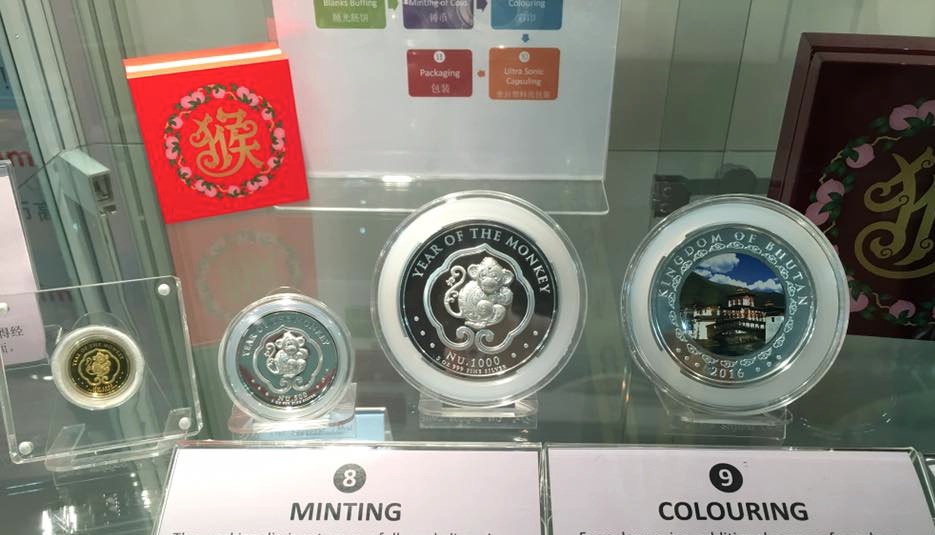
  • NUMISMATIC & COMMEMORATIVE COINS: These are released occasionally at various times of the year.
  • COINS BY THEME: These are collectible coins with themes such as people, endangered species, sports, and many more.
  • BULLION COINS: These coins are mainly minted with gold, silver, and other precious metals. They are sold at premiums marginally above their “gold content” to entice investors.
Image Credits: facebook.com/SingaporeCoinsAndNotesMuseum

Image Credits: facebook.com/SingaporeCoinsAndNotesMuseum

Sources: 1 & 2

Read More...

Score Great Deals At Hotels In Just 6 Ways

1. BE FLEXIBLE

The quickest way to save money on your next hotel booking is to shake up your travel dates. If you are flexible enough to travel a few days earlier or later especially in the midweek, you will be able to avoid the hefty prices of the weekend rooms. Also, traveling during the off-peak season is usually advantageous. Aside from the lower prices of the hotel rooms, you will be able to indulge more on sightseeing as there is less crowds.

For example, you can host your stag party in Las Vegas on August instead of December to save about 50% off on hotels.

2. INCLUDE THE HOTEL’S PERKS

When choosing a hotel, include the its free perks to your travel budget as they can impact it significantly. For instance, the complimentary breakfast meals help you save a couple of dollars for your whole trip. And if your hotel has a game room, a gym, and a swimming pool, you can spend countless hours on free entertainment. Some hotels even go beyond by offering free drinks at the their bar, discounts at their spa, and free shuttle services.

3. TALK THE “TALK”

Much like any other professions, hotel staff has their own jargons or “lingo” that you must be aware of in order to increase your chances of getting the best price. Instead of asking for the “best deal on a room”, you must ask for the “cheapest non-refundable rate”.  Reduce the ambiguity of your statements.

4. USE CREDIT CARDS WITH HOTEL REWARDS PROGRAMS

When paying for hotel reservations, use a credit card with hotel rewards program. Your credit card can either reward you with points to avail a free hotel room or discounts at the affiliated hotels.

In Singapore, redeem OCBC$ to get free hotel stay packages with your OCBC Titanium MasterCard Credit Card or enjoy 12% savings at several hotels with the American Express Personal Card.

5. DOWNLOAD AN APP

Worry not about your emergency accommodation! HotelQuickly, as the name suggests, allows you to book last-minute discounted hotels within seconds. They bring you exclusive deals on Asia-Pacific’s top-rated hotels located in New Zealand, Cambodia, Hong Kong, Myanmar, Indonesia, Macau, Malaysia, Philippines, Vietnam, Singapore, South Korea, Taiwan, Thailand, Laos, and Australia. Keep an eye with their featured accommodation to enjoy discounts up to 70%.

It’s available on Android and iOS.

6. COMPARE PRICES

Most people avail the services of travel agencies thinking that they offer the cheapest prices in town. However, they add service fees to the prices and make it more expensive. On the flip side, some people compare the hotel prices of 2 specific websites thinking it is enough. But it is not! A better option is to use our hotel comparison tool- hotels.moneydigest.sg. It is an extensive tool that helps you narrow down the best deal on various websites such as Expedia, Hotels.com, HotelTravel.com, and so much more.

Hotels-Comparison

Never underestimate the money you will save by comparing hotel prices! It may just boost your travel fund by a lot.

Sources: 1, 2& 3

Read More...

Surefire Ways To Get Things Done…Fast!

1. WAKE UP EARLY

Waking up early gives you an opportunity to get more things done and to earn more in the process. As mornings are typically the time of the day when your brain is most focus and alert, you will be more productive. Not to mention, there are fewer distractions in the early hours of the day anyway. You can really achieve more things smoothly.

2. ANSWER EMAILS SWIFTLY

One of the most useful tools invented in the last 4 decades was the electronic mail or email, for short. It can also give way to procrastination despite its efficacy. You see, the Psychological pay-off of checking emails is seemingly the same as gambling. It is addictive because the behavior is reinforced. This is why you must answer your emails at defined and discrete times throughout the day.

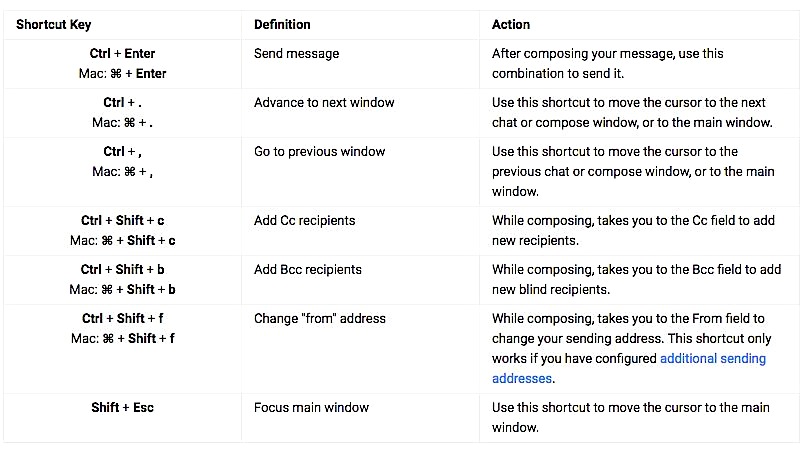
Stretch your productivity even more by learning the keyboard shortcuts to Gmail, such as Ctrl + Enter or + Enter to send a message.

Screen-grabbed from support.google.com/mail/answer/8260

Screen-grabbed from support.google.com/mail/answer/8260

And if you want to insert a link to your text, type Ctrl + k or + k.

3. TAKE BREAKS

Much like a computer, your brain needs resetting, refreshing, and de-fragmenting of data in order for the information and memory to work smoothly. And if you are able to organize your memory and thoughts properly, you will receive and digest new information easily. Furthermore, you can even solve the problems you had pending.

So break up your day into timed chunks with at least 5-20 minutes break to refresh the processes of your brain.

4. LEARN TO SAY “NO”

Every time you agree to help out a fellow employee at work, you are increasing your personal workload and inhibiting your ability to quickly tackle tasks assigned to you. It is hard to refuse to friendly requests from colleagues especially if you are the type of person who loves lending a hand. However, if you want to jumpstart your productivity, it is important to learn to say “NO”.

According to a study by Vanessa Patrick and Henrik Hagtvedt, putting the words “I do not” into your workplace vocabulary can do the trick. Rather than telling your colleagues that you cannot help them out, they will respond better if you tell them that you do not have the time to do so.

5. STICK TO A SCHEDULE

It is a no brainer! If you want to get things done quickly, you must stick to a fixed schedule with the conscious thought of having limited time. Allow your schedule to guide you until it becomes a routine. Once the routinely operations become automatic, you will be able to do the tasks faster and better!

Image Credits: pixabay.com (CC0 Public Domain)

Image Credits: pixabay.com (CC0 Public Domain)

Sources: 1, 2, 3, & 4

Read More...