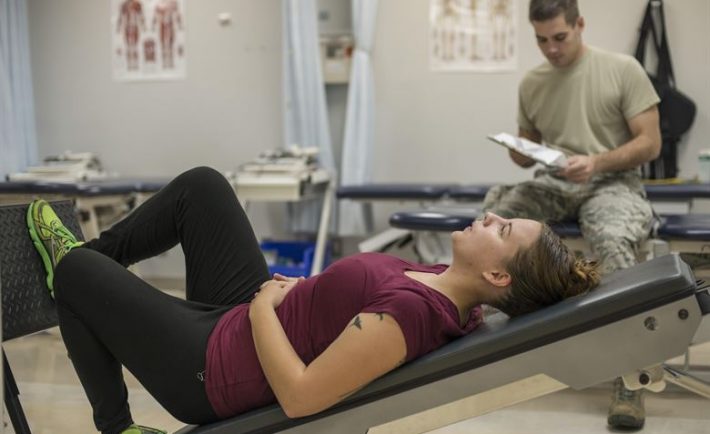
How to Get Your Life Back on Track After an Injury

Sustaining an injury can be one of the most traumatic incidents in a person’s life. No matter how big or small, having one can result in a dramatic change in the way you live your life. Not only will the scars be physical, but you may be enduring some difficult emotional troubles if your injury is serious. If you have been out of action for a while, returning to your daily life can be another obstacle you must overcome. Though everything may not be the same as before, there are some small but helpful ways you can get your life back on the track you are happy with.

Ask your friends and family for help

You may be struggling to complete tasks that you would have found a breeze before your accident, and while you are determined to do things by yourself, there is every chance that this isn’t a possibility. In time, you will be able to navigate your life in a similar way to before, but for the short term, you will need help. Knowing that it is normal to rely on a trusted group of friends and family is the first step you can take, and you should remind yourself of this every day. Asking for help will let you ease back into your regular routine, but it will also mean that you have a great support network should you need some emotional support.

Keep your doctor on call

Coming home from a hospital environment will mean that you are stripped of a lot of the resources you will have gotten used to when you had nurses there to help. Though it may be a relief to be home, that isn’t to say you won’t encounter complications after your release from the ward. In the off chance that something in your recovery was to go wrong, it’s wise for you to have the number of your doctor saved in case of an emergency. Also, you should make sure you attend all your aftercare appointments, so they can check your progress is going smoothly. This way, they will be able to suggest helpful tips on getting back on track, but they will also be able to spot any potential problems and stop them before they go any further.

Create a schedule

There is no doubt that certain aspects of your life will seem as though they are spiraling out of control, and you may not know where to start when you return home. To help keep your mind busy, write down a simple schedule that you can stick to. This will help you keep track of your progress, but it will also enable you to figure out where social life, work, and other activities can fit in around your new life. It will also act as a reminder that you are the one in control of your life, and that you have the power to change it if you are not currently happy with it.

Start exercising again

Exercise could well be the last thing on your mind after sustaining your injury, but there are countless studies to show that it can speed up the recovery process as well as improve mental health. The best way to start is by doing gentle exercises like walking. However, there are also specific exercises you can do depending on which injury you have. Your physiotherapist will suggest those that are best for you, but you can also enjoy exercises like Pilates for back pain and yoga for knee injuries. Having a relaxing and meditative form of exercise to rely on will relieve some of the mental and physical pains of your injury and will help your body on the road to recovery.

Get enough sleep

When you have an injury, your body will feel more tired than usual, as it expends energy trying to heal. Unfortunately, it could mean that your energy levels are low and that you are irritable with those around you. The key to this is getting enough rest. If you are out of action for a while, you will have plenty of time to regain your strength by interspersing your exercise with naps. Your injury might be making it more difficult for you to sleep, so make sure you invest in soft, comfortable furnishings and injury-specific tools to aid you in having a better sleep. More sleep means that your body will recover at a faster rate, but if you are spending a lot of time in bed, you might be feeling down. For resting times, make sure you have some activities to enjoy and that you aren’t spending too much time alone.

Seek emotional support

Having a serious injury can result in some difficult emotions that you might have fears over confronting, and it may also leave you with some trauma to deal with. When you are spending days in bed, cut off from the outside world, these feelings can be exacerbated. Try and communicate well to family and friends how you are feeling so that they can give you the appropriate support. For the days when it gets too hard, or when nobody is around to pick you up, you shouldn’t feel ashamed about seeking help from a therapist. It is better to talk through your emotions to save them from haunting you in the future.

Stay positive about the future

Your life may have changed immeasurably since your injury, or there could be elements that you are finding it hard to return to, but this doesn’t mean that your life is over. In fact, it could even open some new doors that you weren’t expecting, like the chance to spend more time with your family, or learning some new life skills. Though it will be impossible to stay positive every day, it will be the driving force behind you getting your life back on track if you can summon some positive energy to help you through the tough times. This will also set you up for any challenges life may throw at you in the years to come.


 

Read More...

5 Ways You Can Use Instagram to Take Better Travel Photos

Instagram has risen in popularity in the past few years, and many travellers use this platform to share their work, experience, and even tips for things related to travel and photography. It’s a good place to get travel inspiration, and also to share your travel photos.

Documenting your travel is an important part of the journey, so you can look back and remember all the adventures you’ve had. Instagram has been the place we often use to share our travel documentation, and it’s easy to print Instagram photos as travel keepsakes.

Of course, we want to make sure we take good travel photos for these purposes, and Instagram can actually help us improve our travel photography. Here’s how.

  1. Research and scout the locations

So many people these days post their travel photos and videos on Instagram, using geotags and hashtags to make them more discoverable. Thanks to these, you can get ideas for your next getaway. Moreover, Instagram can give you specific information that isn’t usually available on official tourism websites, and you get to ‘see’ the place through other people’s eyes to see whether it’s worth visiting.

What sort of information can you get from this? Plenty! For example, you can see whether there’s a good spot you can use to get a unique angle for your shot, or if there is any architecture or buildings you can use to frame your subject. If you’re want to check whether a place is crowded with tourists, you can use geotags to get a glimpse of the place.

  1. Find the ideas, and tweak them

Not only it’s a good place to research and scout the locations, Instagram (along with Pinterest) can also give you something else: an abundance of photo ideas. While in the old days we might have had to subscribe to travel magazines to learn the tricks of beautifully composed images, we can now learn from fellow Instagrammers.

See any images taken in your destination? Learn which composition works best, and try to come up with a unique angle and perspective that hasn’t been covered by other people. Having this in your plan before you travel can help you save the time when you’re there, and also prepare you to get creative with your photography.

  1. Use humans as your point of interest

It’s not always easy to take photos of a famous landmark without a few people in the frame. When it’s impossible to do that, use them to your advantage! Including them in the frame can add interest to your photo, as long as you know how to compose it. Many Instagram photos show us how we can incorporate human elements to add a sense of scale.

And while we’re on this topic, stay away from selfie shots if you want to create incredible travel photos. Ask your friend to take photos of you, or if you travel alone, ask a fellow traveller (tip: show them a shot as an example of how you want the photo to be composed, so all they have to do is replicate it. You’ll get much better results this way).

  1. Edit consistently

If there’s one thing that Instagram teaches us, it’s to have consistency, especially when it comes to editing. Not only does this make your photos and feed to look more cohesive, but it also helps you find and develop your own style in photography.

Editing plays an important role in creating a cohesive and consistent imagery. It’s where you transform your shots into images that are distinctively yours. How do you want your photos to look? Do you want them to have a warm tone with vibrant colours? Or do you favour muted colours with a darker tone? Explore your style and develop your own presets to make sure that your photos stand out.

  1. Learn how you can improve

Instagram photos can give us clues on what to improve. Pay attention to travel photos that grab your attention. Maybe it’s the negative space in the frame, or maybe it’s the human element, or the intricate details. Use Instagram feature ‘save to collection’ to build your own album of inspiration.

Another way you can learn from Instagram is by following accounts that share their tips on travel and photography. Many people use Instagram stories to share editing tutorials, travel hacks, and photography techniques, so make the most of it!

Your Instagram feed might look amazing with your holiday photos, but you need more than a display on a tiny screen for your precious travel memories. It’s really easy to print your travel photos online with Photojaanic and transform them into personalised travel keepsakes, like photobooks, wall art, postcards, or calendars.

Happy travelling!

Read More...

Immediate Steps On Dealing With A Promotion

Several people are fortunate enough to receive a promotion. The glistening promotion is a chance to better yourself and your existing skill set. Higher roles entail more responsibilities and expectations. Some of your previous co-workers may be happy for you, while others may pull you down!

Consider these tips to guide you with the new challenge ahead.

#1: DO NOT WALK IN THE DARK

When I was given the coveted promotion, a series of thoughts ran through my mind. I was deeply concerned about my new supervisor. Keep in mind that the internal roles will shift due to this promotion. Budding relationships, such as the aforementioned, shall work smoothly if you keep the streams of communication open.

Aim to schedule an appointment between you and the supervisor (or the HR representative). Discuss your upcoming responsibilities and duties, especially the operating systems that you are not familiar with. You may be tasked to hire new employees, track the department’s invoices, deal with employee reimbursements, or document employee hours. No matter what your new tasks are, you need to be familiar with the protocol for each new responsibility. Do you need your supervisor’s approval before hiring and employee?

#2: TAKE A STEP BACK

Be honest with yourself as you contemplate on the type of leader that you aim to be. Do you want to be respected or feared? Do you want to build a bridge or a gap between you and your team members? You can be a great leader and a good friend by slightly altering your behaviors.

Image Credits: pixabay.com

Some experts suggest that you must totally disconnect from your team members (i.e., including in social media). This is due to the changing workplace dynamics. You do not want others to perceive that you favor a particular person due to the “preferential treatment”. You may still attend happy hours but, not often as before. Katy Tynan, the author of Survive Your Promotion!, suggests that you continue to spend time with your team members as you need to blow off steam sometimes. Furthermore, bonding experiences let them know that you can vent out whenever necessary.

#3: SET THE FIRM TONE

Changing the manner of your speech is crucial in your daily interactions. From making a stellar interview to filling a complaint, your tone needs to change as you dive in different scenarios. Being a loyal friend on one hand and a critical boss on the other is a challenging task. Thus, you need to set a firm and authoritative tone when you are in the workplace.

Ensure that your team knows that you have their backs. However, they can no longer vent out in a “gossipy” manner. Use your bond to find a concrete solution and move forward in a professional manner instead. Focus on a solution that values customer satisfaction and employee happiness.

#4: ESTABLISH A DIALOGUE

People react differently when it comes to internal promotions. As their new supervisor, you need to be emphatic with their initial thoughts. Actively listen to their feelings and do not be swayed by them. If you dive a little deeper into a conversation, they may start comparing themselves to you. Hurtful statements such as “my performance is better than yours” or “I have more experience than you”. Defending yourself may lead to damaging your professional relationship (e.g., by saying “the CEO did not see a great managerial potential in you”. That is not healthy! It is difficult to spend your days trying to repair the relationship while focusing on your new position.

Image Credits: pixabay.com

Work together to reach a beneficial solution. Communicate your desire to talk to each team member over lunch. Let the department know about your goals and how these will be actualized. It is important to cultivate a two-way feedback between you and them.

Sources: 1,2, 3, 45

Read More...

Top Tips on How to Write a Comparative Analysis Essay

Writing a comparative essay is one of the most common tasks for students in both colleges and universities. Although it usually doesn’t have a lot of special requirements, many classmen still face some difficulties in writing this type of essay. How to write a comparative analysis essay easily and quickly? Which paper structure should you choose? What are the key elements of any successful paper? Let’s find the answers!

What are the Typical Features of the Comparative Analysis Essay?

The comparative essay is a paper that should include the detailed description of the significant similarities and differences between the two facts, events or viewpoints. This type of the essay requires analytical skills, logic, as well as an ability to combine and match various facts. Furthermore, you should meet the basic requirements for all types of academic papers and follow the rules of formatting.

How to Start?

All kinds of academic papers including the comparative essay should start with an introduction. First of all, you should provide some basic facts on the main topic. Then you need to grab reader’s attention and lead to the main subject of discussion.

The second important thing that should be described in the introduction is whether you’ve chosen to write about the differences, similarities or both. Don’t forget to add some general facts about the issue: a couple of sentences for this purpose is just what you need.

5 Tips on How to Cope with the Basic Structure of the Comparative Essay

  • Frame of reference. Being the first element of the comparative essay, frame of reference is considered to be one of the most important parts of your essay. Here you will need to provide and group the things you are going to compare. You might choose a couple of facts, ideas, theories or problems. The main idea of any frame of reference is to focus on two specific issues and provide their detailed description. Note: Avoid writing your own views and observations in this part of the essay. Use only reliable sources, investigations and studies. Adding your own theories is a common mistake of hundreds of students.
  • The grounds. Comparison grounds should be provided to inform your readers on the main reasons of your choice. Here you will need to write a couple of statements to prove your main topic was not chosen randomly.
  • Strong thesis. A successful thesis is usually connected to the comparison grounds. It is a good idea to outline the relationship between the two chosen facts in your thesis. Moreover, you will need to decide whether these issues contradict, complicate or extend each other.
  • Main text. There are two simple techniques on how to write a comparative analysis essay. The first method is to write a couple of paragraphs about the first subject and then move to another one. The second method is to write one paragraph about the first issue than gradually move to the second issue using comparison arguments. This way, you will need to repeat the trick until you describe all your similarities and differences. Both options are usually successful, so choose the easiest one for you. However, don’t leave the most necessary facts for later. Start with the most important issues and then move to simpler ones.
  • Conclusion should contain a brief summary of the previous parts of your essay. Note that you shouldn’t choose any of discussable points or add your own views and ideas. Your personal preferences should never be described in the comparative analysis essay. The only thing you need is to emphasize some basic differences and similarities of both ideas described in your paper.

Don’t forget to proofread your comparative analysis essay. This simple trick will make you avoid the majority of mistakes and misprints. Be careful with citing all your sources and double check you used the needed style (APA, MLA or any other required by your professor).

The last tip for beginners: read a few examples of comparative analysis essay to understand the main subject and the style of writing. Don’t be afraid to talk to your teachers, if you have any special questions about your essay. All this prompts will give you a clear picture on what you should right and get the highest grade with minimum efforts!


Read More...

How to find the best personal loan without damaging your credit rating

A personal loan can help you amass funds that you would require to pay for pressing expenses. However, if you have a poor credit score, you are likely to find it very difficult to get a personal loan approved. A bad credit rating will spoil your chances of acquiring a personal loan. A poor credit score or a poor credit history indicates your failure to pay back your loan amounts. Hence, if you are finding it difficult to get a personal loan approved, you should improve your credit history first.

Often we make the error of assuming that specific factors affect our credit rating when they have no impact. Factors such as your debit card usage, marital status and age have no role in determining your credit score. Other details such as your employment status, bank balance and income have no direct impact on your score, though it might influence your approval.

You will have to give individual attention to the factors that are likely to impact your credit score and the chances of getting a personal loan. Simply getting an appropriate personal loan is not sufficient as you also must have a decent credit rating to benefit from it. If you are looking for a personal loan by taking on a trial-and-error method it will be destructive and fruitless.

Let us look at some tips you can follow to find a personal loan without hurting your credit score:

Pay your dues on time

Even if you fail to pay your credit card bills and other dues on time, try to pay it within a month of the due date. Making payments within 30 days past the due date is accepted normally. By doing so, you can opt for the personal loan of your liking, without worrying about getting rejected. It will also have a positive influence on your credit score.

Avoid applying for personal loans from different lenders

If you are applying for multiple personal loans at the same time, your credit rating is likely to take a hit. This indicates your lack of confidence in obtaining a loan and which will reflect badly on your credit rating. Instead of applying for personal loans from multiple lenders, you must check the prospective rate of interest and eligibility by using a Personal Loan Eligibility Calculator.

Get a quote from the lender of your choice

If you apply for a personal loan formally, the lender will carry out a credit check. It is likely to leave a negative score on your rating. If this takes place often, your score will go down drastically. So, find out if you are eligible for a loan before applying by talking to the moneylender in person and going through the eligibility criteria.

Compare the fees charged by different lenders

Many banks offer low-interest rates but charge substantial supplementary fees. These include high prepayment penalties, excessive processing fees, arbitrary upkeep charges and more. These charges are likely to raise your burden and may lead you to miss a monthly instalment that may eventually damage your credit rating. So before applying, compare the charges and fees imposed on personal loans.

Seek help from non-banking financial institutions

Your chances of getting a loan will enhance significantly if you widen your pool of options. Apart from banks, approach non-banking financial institutions. These institutions are listed with Monetary Authority of Singapore and offer a wide range of loans. Like banks, these institutions also depend on your credit score and history to evaluate your risk as a debtor. However, these institutions may have different packages for different risk appetites.

Your credit score is the most significant financial tool to get the best personal loan. If you have the right credit score, you will easily get the approval for loans at the best available interest rates. As a result, it is very important that you make sure your lender offers you competitive interest rates and simple personal loan eligibility calculator together with other sufrepplementary benefits.

Read More...