Handling challenging conversations: How to communicate layoffs with empathy

two female coworkers have a serious conversation

Let’s face it: layoffs are never easy.

But when done with thought, they can be a little less traumatic for those affected.

In this article, we will share some tips on how to handle layoffs more compassionately. We will also provide some resources that might help make the process a little easier for everyone involved.

Be prepared for the conversation

When you’re preparing to communicate layoffs, remember that the conversation will be tough for both you and your employees.

Have all the facts at your fingertips and think about your delivery. This is not a time to pass blame or criticize anyone. Your goal is to communicate the news in a way that is respectful and empathetic.

Explain job loss with compassion

Start by explaining the situation straightforwardly without shying away from facts.

Remember that your employees are likely worried about their future and their families. Reassure them that you’re doing everything you can to help them through this tough time.

Be honest about the company’s situation and what led to the layoffs. Let your employees know that it’s not their fault and that you appreciate their hard work. Offer them resources like outplacement services or career counseling to help them transition into their next role.

Acknowledge and validate feelings

talking during an interview

Image Credits: theladders.com

You’re dealing with people. People have feelings. People have families. People have mortgages, student loans, and bills to pay.

Acknowledging and validating the feelings of the people you’re about to let go of is one of the most basic things you can do as a leader. It shows that you understand what they’re going through, and it helps to soften the blow a little.

Give adequate time to the conversation

When it comes to communicating a layoff, the last thing you want to do is rush through it. We encourage you to give yourself and your employees adequate time for conversations. They deserve plenty of time to process and ask questions.

You don’t have to be in each other’s presence for hours, but we suggest at least 30 minutes of conversation that allows room for emotions and reflection before saying goodbye—especially if you have worked together for many years.

This method also sends a strong message that you are still invested in their well-being despite the unfortunate news. Giving a person enough time can make them feel less neglected and ensure closure.

Provide resources to help cope with the change

Provide information about counseling services or financial resources available to them, such as severance packages or job placement assistance.

These resources can help ease the transition for them and provide them with a sense of security, knowing that you are invested in their success even beyond your own business.

Having access to online learning communities, such as webinars or workshops on how to adjust to the new change could be beneficial. Additionally, if you have business contacts that you can direct them to, offer those as well.

Providing tangible support they can use immediately makes the whole process less intimidating and help individuals be in control of their situation.

When you’re handling a challenging conversation like layoffs, be as empathetic as possible. Show that you understand how challenging this is for the other person, and be direct and honest with them. Explain the situation clearly and help them to see how this decision was made. It’s also good to give them some time to process the information and answer any questions they may have. Thank them for their understanding and let them know that you appreciate their contributions thus far.


Read More...

Strategies for surviving your next long-haul flight

a female passenger in-flight

Flying can be tiring, especially when it’s a long-haul flight. But it doesn’t have to be unbearable. 

With a little bit of preparation and some handy tips, you can make your next long-haul flight more endurable and maybe even enjoyable. Time to arrive at your destination feeling fresh and relaxed!

Choose the right seat

When it comes to long-haul flights, the key to survival is comfort. And the best way to ensure comfort is to choose the right seat.

There are a few things to keep in mind when selecting your seat: first, think about your needs. If you need extra legroom, choose a seat towards the front of the plane. If you want to be close to the lavatories, then pick a seat in the middle or back of the plane.

Second, take into account your personal preferences. Some people prefer to be near the window, while others find it claustrophobic. Some people like to be near the aisle so they can get up and stretch more easily, while others prefer not to have anyone climbing over them during the flight.

Third, consider your travel companions. If you’re traveling with someone else, make sure you select seats that are comfortable for both of you to interact and communicate.

Stay hydrated on board

Water, water, water. It’s the key to staying hydrated during your flight and any time you’re traveling.

When you’re on a long-haul flight, your environment is incredibly dry, and that can zap the moisture from your skin and leave you feeling dehydrated.

Drinking plenty of fluids will help counteract that, so make sure to bring a refillable water bottle with you on board. You can also ask the flight attendant for a cup of water, or purchase a bottle in-flight. Keep sipping on fluids throughout your flight; you will feel better hydrated and comfier overall.

Bring activities for mental stimulation
reading-a-book-on-a-plane

Image Credits: bonafidebookworm.com

Don’t underestimate the importance of mental stimulation during long-haul flights. It may not seem like much but it can help keep you engaged and entertained throughout the flight.

You could bring a good book or puzzles to work on. There’s also usually a good selection of movies available on flights, and some airlines even offer virtual reality headsets to help pass time. Whatever activity you choose, make sure it’s something that will keep your attention for hours at a time.

If you like listening to music or podcasts, then bring along your headphones and create your favorite playlists before you take off. Not only will it give your mind something to focus on but the music can also help reduce travel anxiety.

You could even try learning a new language if you have enough time—download an app like Duolingo for offline use and you’re all set!

Make sure to get sufficient rest before your flight

Lastly, get yourself well-rested before take-off. Sure, the idea of catching up on some sleep onboard sounds awesome, but those little airplane seats are far from comfy for many, and sleeping in them can be challenging.

To get a good night’s sleep before a long flight, create a bedtime ritual and stick to it for a week. Turn off all electronics an hour before bedtime, read a book to help you wind down, and keep your bedroom quiet and dark. Also make sure to limit caffeine, alcohol, and sugar intake before going to bed as this can impact your ability to fall asleep quickly and stay asleep.

You could also try out some relaxing breathing exercises or meditation practices right before going to sleep. This can help calm your mind and body so that you’re better able to relax and more likely to get yourself tuned into the restful zone while onboard.

As we close, know that long-haul flights don’t have to be as bad as you think. By following the abovementioned simple tips, you can make your next long-haul flight more bearable. And who knows, you might even enjoy it!

Read More...

6 Ways to Fine-Tune Your Lifestyle

Being financially responsible is vital for your health and your financial life. Spending less than what you make each month entails that you live within your means. For many Singaporeans, it is a lot easier said than done.

Start with small financial changes to alter your lifestyle!

#1: TRY BACKWARD BUDGETING

Write down your income and start subtracting each monthly expense. If you get a negative number, you are spending more than you make. You need to cut back. Focus on reducing your expenses to fit your income.

#2: SAVE FOR LARGE PURCHASES

People often use credit cards for large purchases that they cannot afford entirely, such as a new air conditioner. It is best to set aside some money each money until you have saved up enough to buy it outright. Do not purchase something that you cannot afford to buy.

#3: WAIT FOR SALES

12.12 is right around the corner! Save money on your favorite brands or large ticket purchases by waiting for sales. You can often predict when an item will be discounted. Perhaps, a new model will come along. Take advantage of year-end sales!

#4: ASK FOR A LOWER PRICE

Sometimes, all you need to do to save cash is to ask. If you are a long-term client who has never made an overdue payment, you may be entitled to a loyalty discount. Affordable vacation packages can also be offered to you once you ask for flexible travel plans.

#5: PAY WITH DEBIT OR CASH

Leave your plastic cards at home. Try to buy things that you can afford using cash or your debit card. Be strategic and calculate your moves. Consider apps to automatically put money in your savings every time you use your debit card.

Image Credits: unsplash.com

#6: STOP KEEPING UP WITH THE TRENDS

Trends come and go. Resist the pressure to have the same material things as the people around you or the people you see online. You may be able to use credit cards and loans to fake wealth for a brief period, but you will pay for it later. That is more painful.

Sources: 1 & 2

Read More...

Starting again: How to ease back into exercising post-pregnancy

woman holding a yoga pose with baby sleeping on her thighs

You’ve finally done it!

You’ve given birth to the most beautiful baby in the world. But now the hard part begins: getting your body back into shape.

Below are a few tips on easing back into exercising post-pregnancy. Just take it one step at a time, and before you know it, you will be back to your old self slowly but surely.

Start slowly and stay safe

You’ve probably been told this a million times, but it’s worth repeating: take it slow when you start exercising again.

Muscles and joints that have been inactive for nine months don’t just snap back into shape overnight. In fact, you could do more harm than good if you try to do too much, too soon.

Incorporate core exercises

Incorporating some core exercises will help you regain your strength and stability, both of which are essential when it comes to working out.

You can do a variety of core exercises, including pilates and crunches. Just make sure you take things slowly at first and listen to your body. If something doesn’t feel right, stop immediately and talk to your doctor.

Don’t push yourself too hard, or too fast
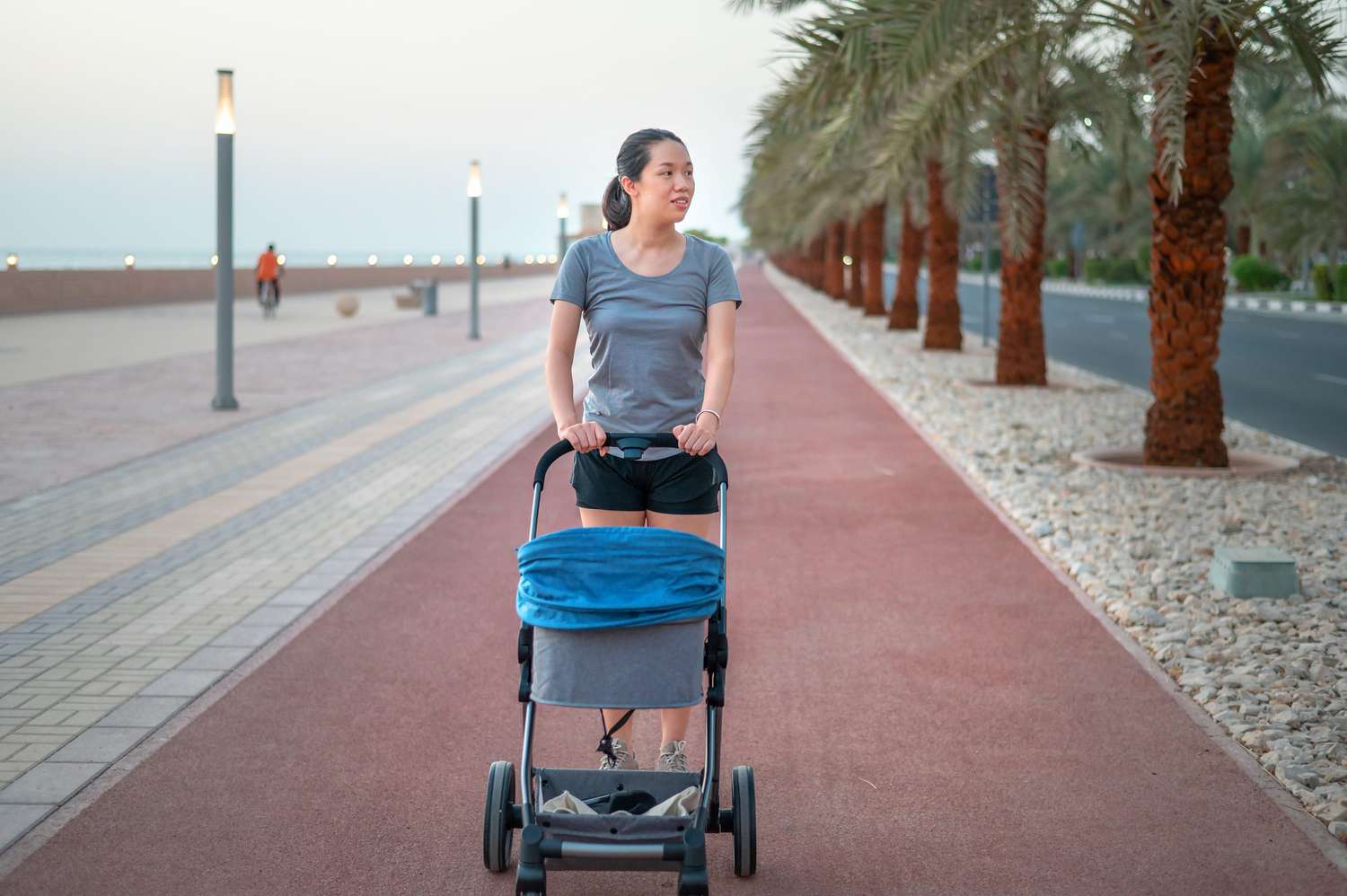
female walking while pushing a pram

Image Credits: parents.com

Yes, you’re probably eager to get back into your pre-pregnancy exercise routine, but don’t forget that your body has just gone through a lot. You need time to heal and adjust.

That’s why professionals recommend starting with low-impact exercises and gradually adding more strenuous activities as your body gets stronger. Swimming, walking, and biking are good for a start. As you get stronger, you can add in other activities.

And remember, this is a process. You’re not going to be able to do everything right away. Give yourself time to ease back in and don’t be too hard on yourself.

Follow an appropriate diet and exercise plan

Now, if you want to get your body back in shape, you need to make sure that you’re following an appropriate diet and exercise plan.

Balanced diets are key to getting all the vitamins that your body needs for recovery. Eating healthy, nutrient-packed meals will help fuel your workouts and build muscle mass.

When it comes to long-term exercise, set reasonable goals for yourself and focus on progress instead of perfection. It’s also important that you give your body time to rest and recover after each workout session.

Take advantage of this time by stretching, doing gentle yoga, or meditating—all great ways to lower cortisol levels in the body while promoting self-care and relaxation too!

Focus on strengthening your pelvic floor muscles

Strengthening your pelvic floor is essential for any postpartum exercise routine.

Because your pelvic floor is the support system for vital organs, make sure it has the strength and stability needed to support you in everyday life.

Pelvic floor exercises are relatively easy and can be done anytime, anywhere—no equipment necessary! They typically involve lying on your back with your knees bent and feet flat on the ground, gently engaging your pelvic muscles as if you were trying to stop the flow of urine.

Strengthening those muscles through targeted exercises and general workouts can help restore a sense of control over your body after pregnancy and childbirth.

Facilitating yourself back into a workout routine post-pregnancy can be daunting, but it’s doable with the right approach. Remember to listen to your body, take things slow, and focus on rebuilding your strength and energy. And most particularly, don’t be too hard on yourself—consistency wins.

Read More...

Ready, set, fly! How to prepare for your young child’s very first flight

child crying in a plane

You’ve booked your flight, packed your bags, and now all that’s left to do is get your little one ready for takeoff.

Traveling with children can be stressful for parents, but with a bit of preparation and forethought, you can make the experience a little smoother for everyone.

In this article, we will give you tips on how to prepare your young child for their first flight. From packing essentials to dealing with stress and anxiety, we’ve got you covered. So relax and sit back—we’re about to take off!

Tips for selecting the right seat

Which seat should you choose for your little one?

Ideally, you will want to sit them close to the aisle, so they can get up and move around more easily. You will also want to avoid seats near the lavatories, as they can be quite noisy.

Understanding the safety precautions

When you’re preparing your young one for their first flight, understand the safety precautions that will be in place. Each airline has its own set of rules and regulations, but there are some common themes that you can expect.

For starters, your child (at least two years old) will be given a seat and they will need to stay in it for the duration of the flight. That means no climbing on the seats or running up and down the aisles, especially during turbulence. In addition, there is a ban on most electronic devices during take-off and landing. This is for the safety of everyone.

If you have any questions or concerns, be sure to speak with a flight attendant before takeoff. They will be happy to answer any questions and help put your mind at ease.

Distractions to help the flight go smoothly
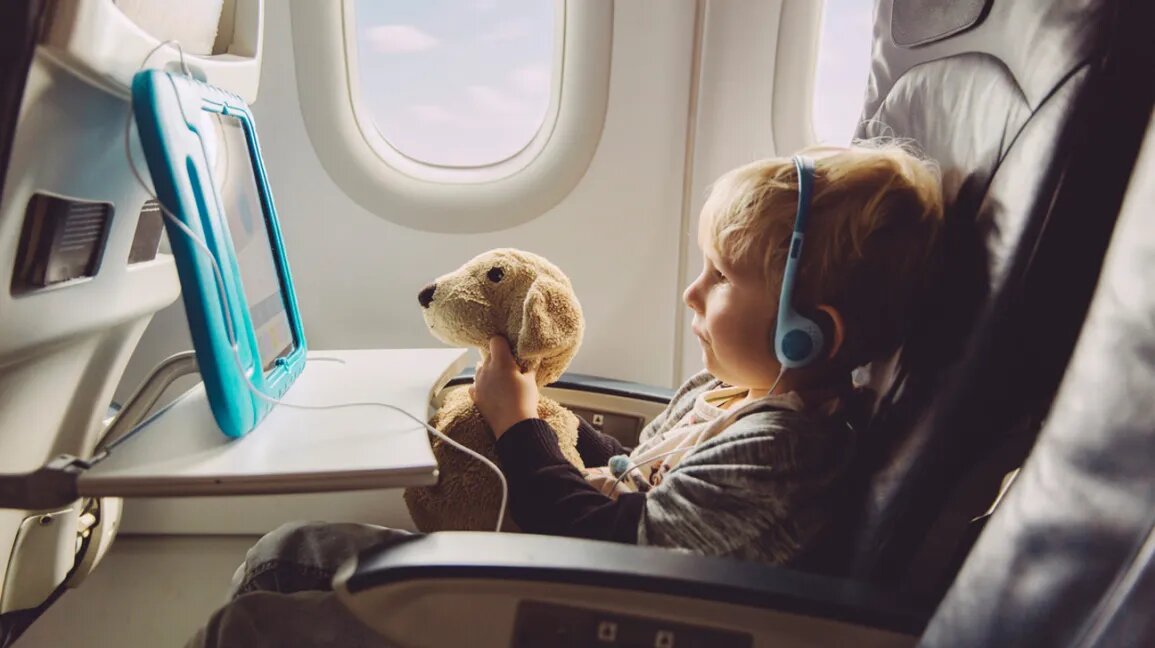
toddler with headphones holding a stuffed animal

Image Credits: healthline.com

There are a few distractions that can help your child stay occupied.

One is to bring along new toys or books to read. If your child is old enough, you can also bring along headphones so they can listen to music or watch cartoons.

Just after taking off and before landing, have them look out the window and spot all the things they can see. Let them take in the experience of flying and see it as an adventure. The more relaxed and comfortable they are, the smoother the flight will be for everyone.

Ideas for packing snacks and activities

Making sure your young child has enough snacks and activities while on their first flight is essential.

Young children don’t always have the patience expected of adults, which can make a flight long and uncomfortable. It’s important to keep your child occupied, but also remember that overly sugary snacks may make them antsy.

To ensure a good experience, here are some great ideas to consider packing in their carry-on:

  • Books, puzzles, or coloring pages
  • Healthy snacks such as nuts and cheese sticks
  • Comfortables like a blanket, stuffed animal, or small travel pillow
  • Electronic devices (like wireless headphones and tablets with pre-downloaded entertainment)
What to do if turbulence arises

Indeed, flights can sometimes be turbulent, so plan for what to do if your child gets scared or agitated.

For example, you can carry noise-canceling headphones or earplugs to help muffle the sound of the engines. Make sure the seatbelts are securely fastened and keep your child close by holding their hand or having them sit on your lap (if age appropriate).

Make sure they have something to grip onto (like a favorite stuffed animal) and encourage them to focus on activities like playing a game. Finally, talk through the turbulence and provide reassurance that it will soon pass.

No matter how you feel about flying with a young child, be prepared. With a little bit of planning, you can make the experience a lot less stressful for everyone involved. If possible, pick the right time to fly. If your child is under the age of three, you might want to consider flying during nap time or at night when they’re more likely to sleep. Make sure you have all the essentials packed in your carry-on, including snacks, drinks, toys, and a change of clothes. Finally, try to relax and enjoy the experience. Flying with a young child can be a fun adventure, and it’s a lovely way to start building lifelong memories.

Read More...