How To Alter Your Budget To Suit Your Work From Home Lifestyle

According to the multi-ministry task force handling COVID-19, Singapore may enter Phase Three by the end of 2020 should the community cases remain low in the country. The restrictions reflected by this upcoming phase may last for a year or more. That being said, more and more people are working from home.

This huge shift in the global workplace has brought many changes in our lives. Whenever big transitions occur, it is a good opportunity to re-assess all the aspects of our lives including our finances. What has changed in your budget ever since you started working from home?

Reduced costs on transportation, work clothing, daily coffee stops, and dining out were usually observed in the previous months. In contrast, many experience a spike in utilities, groceries, and online shopping fees. How can you better prepare for your future with this new set-up?

#1: RE-EVALUATE WHERE YOUR MONEY IS GOING

Get a realistic view of your finances by pulling out your bank statements, credit card bills, and other month expenses from the past three months. If you are using a budgeting app such as Mint, you may track your spending using the information inside the app. Look for unnecessary categories or recurring expenses that you can do without. This will help you spend less than what you have originally planned.

Aside from your spending, concentrate on other parts of your personal finance such as investments and emergency funds. You have the luxury of time to re-evaluate how much you are saving in your emergency funds. Ensure that the money you put inside will be sufficient to cover unforeseen events such as unemployment. We must overcome complacency during these tough times.

#2: CONSIDER DIFFERENT BUDGETING STRATEGIES

As you establish your new budget to suit your work from home lifestyle, you may employ different strategies such as goal-specific budget and the 50/30/20 method. The former focuses on the goal and not the percentages. You may start with a specific short-term goal such as saving S$50 for your emergency fund this week or a long-term goal such as putting away S$5,000 for a vacation next year. Break down your goals and allot how much you need to save per week or per month. Ensure that you meet your other financial responsibilities as you prepare for your goals too.

The 50/30/20 method entails putting 50% of your take-home pay to your fixed expenses including groceries and rent. 30% needs to go to your variable expenses such as entertainment and clothing. While, 20% is dedicated to your savings. Choose a strategy that will best work for you.

#3: STORE EXTRA CASH IN YOUR HOME

Many of us are working from home because there has been a shift in the economy due to the unpleasant effects of the pandemic. It helps to be prepared as we live within the realms of uncertainty. Store extra cash in your home for emergency situations. You may label this as your emergency fund, which can cover your expenses for at least six to nine months.

Knowing that you will be alright for a considerable amount of time before needing to use other financial resources can help you sleep better at night. This will prevent you from incurring debts.

#4: MAXIMIZE YOUR TELECOM AND INTERNET PLANS

Because most of our time are spent at home, it comes as no surprise that our utilities are higher now. Do your best to ensure that you are getting the most out of your telecom and internet plans. If your plan has an inclusion of data, try to substitute a costly mobile call for calling over at WhatsApp or Telegram. Various online platforms offer free calling and video-conferencing services worldwide. Take advantage of that!

#5: CONSERVE ENERGY

This new living and working arrangements have considerable effects on our electric bills. As much as possible, conserve energy on the devices and appliances that you work with. Unfavorable habits such as leaving your laptop constantly plugged in or forgetting to unplug your smartphone charger can cost you.
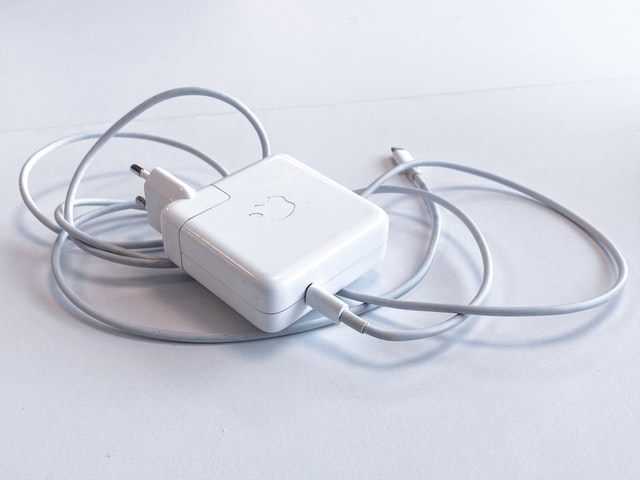
Image Sources: unsplash.com

One of the easiest ways to save energy is by ensuring that your cables or chargers are unplugged. Most devices work best with the 40-80 battery rule. You must plug the charger when your battery drops below 40% and disconnect the plug when the battery reaches 80%. Leaving a laptop or handphone constantly plugged in can cause extra wear and tear to the battery. Take care of the devices, which you use on a regular basis.


Sources: 1, 2 & 3


Read More...

Beginner’s Guide To Setting Up An Emergency Fund

WHAT IS AN EMERGENCY FUND?

An emergency fund consists of the money you set aside to cover large, unexpected expenses. It serves as your cushion to save you from drowning into debt  and other unfortunate events. It can be used for unforeseen medical expenses, home appliances replacement, automobile repairs, and managing unemployment.

HOW MUCH MUST I SAVE?

When you are starting to build your emergency fund, it is important to value what you have. No matter how small, every dollar counts. Focus on the habit and consistency of saving money. When your financial situation improves, you can increase your savings.

The right amount for you depends on your financial situation, but a good rule thumb is to have enough money to cover your living expenses for six months. If you lose your job during pandemic, you can use your emergency fund for necessities while you hunt for a new job. You can also use the money to supplement your small business. Start small and increase your savings as your financial situation improves.

WHY SHOULD I TRACK MY INCOME AND EXPENSES?

Tracking your income and expenses enable you to get a realistic view of your financial situation. It can pinpoint the amount that is sufficient to cover your living expenses for six months. You can track your cash flow by writing down how much money comes in every month and by writing down your fixed and variable expenses per month.

Do not forget to include recurring expenses such as your rent, utility bills, school fees, and childcare.

WHERE SHALL I PUT MY EMERGENCY FUND?

You can put your emergency fund inside a savings account with a high interest rate and an easy access system. Since an emergency can strike at any time, having quick means to access your funds is crucial. However, you must keep your emergency funds away from your primary bank account. This will help lessen the temptation of dipping into your reserves. Moreover, having a high interest savings account enables you to reap the benefits of compound interest.

HOW CAN I PLAN OUT MY EMERGENCY FUND?

Establishing financial goals and developing a plan to achieve those goals go hand-in-hand. Part of your plan may include specific and realistic targets to work toward. For instance, you may save S$50 per week to put into your emergency fund. Once you have created a robust plan, make sure you follow through.

Sticking to your plan can sometimes be the hardest part of saving for an emergency fund. A good way to stay on track is to save automatically. You may automate your savings and set up a systematic transfer from your primary savings account to your “emergency fund” savings account. Alternatively, you may keep a money jar and label it with: “for emergency use only”.

Sources: 1 & 2


Read More...

5 Luminous Lessons Harry Potter Taught Us About Money

The magical story of a young wizard named Harry Potter has captured the hearts of fans of all ages and with a good reason. In fact, I am wearing my Hufflepuff shirt while I am writing this.

Despite being in a fictional world, the Harry Potter characters’ financial problems cannot be solved with a wave of a wand. They also have to struggle with the challenges of saving, spending, and growing money throughout the series. Here are just some of the personal finance lessons that you can learn form the wizarding world of Harry Potter:

GET THE A DEPENDABLE AUTO-INSURANCE

In the “Harry Potter and the Chamber of Secrets” book, Ron and Harry crashed a car into a tree. It caused an irreparable damage to a car that they do not own. This scenario taught us the importance of having a car insurance.

In Singapore, it is mandatory to have your car insured. Examine your options and look for an auto-insurance that suits your needs and your budget. Some of the plans that you may consider are the FWD, Aviva, and NTUC Income auto-insurance plans. FWD has three auto-insurance plans from Classic to Prestige. Its annual premiums start from S$731.38. Aviva offers three auto-insurance plans too from Lite to Prestige. Its annual premiums start from S$883.12. Lastly, NTUC Income has Drivo Classic and Premium plans. Its annual premiums start from S$$970.35. Annual premiums are usually based on the driver’s profile and the car itself.

SORT OUT YOUR WILL

After living in an uncomfortable cupboard under the stairs for eleven years, the book’s main protagonist Harry Potter found out that he was a wizard and that his parents left him a considerable amount of money. His family’s wealth was beyond what he can imagine! Although his parents died at a very young age, when he was just a baby, it was clear that they a robust financial plan in place. They left all their wealth to Harry. This helped him secure his school supplies and daily needs throughout the years.

Unforeseen events can strike at any moment. It is important to save up for your retirement as soon as possible. Moreover, you must create a will that ensures the list of beneficiaries on all of your savings and investment accounts.

SEE THE POWER OF COMPOUND INTEREST

Harry not only benefits from his parents’ wealth, but also reap the rewards of compound interest. His money was untouched for eleven years. When he opened his vault for the first time at the Gringotts Wizarding Bank, he discovered the amount of gold and money that was in his vault. Despite having this wealth, he did not lead a lavish lifestyle.

Like Harry, you may benefit from compound interest by leaving your money untouched for years in a bank or by investing your money for the long haul.

APPRECIATE WHAT YOU HAVE

As I said above, he did not lead a lavish lifestyle. Harry was humble. In fact, he wore the same glasses for seven years. He appreciates what he has and exemplifies this trait the most in the first book. When Hagrid gifts him Hedwig the owl, he was amazed and accepted it wholeheartedly. He was also very grateful when he was gifted the Nimbus 2000 by Professor McGonagall.

In our world, it is easy to be caught by all the sale items and designer brands. However, you must remember to strike a balance between your needs and wants. Appreciate what you have and live within a realistic budget that you set.

SECURE YOUR MONEY IN A SAFE PLACE

Harry’s immense fortune was stored in the Gringotts Wizarding Bank, located in the heart of London. The bank is operated and guarded by goblins. These goblins serve as the gatekeepers to the underground vaults. It is often described as the safest place in the Wizarding World.

Image Credits: unsplash.com

While you cannot keep your wealth within the protection of magical spells and goblins, you can secure your money in other ways. Firstly, you may set up an auto-deposit scheme to send a portion of each paycheck to your savings account. Secondly, you may store your emergency fund in a place where you will not be tempted to spend it frivolously. For instance, you may set up a different account exclusively for that. Lastly, secure your online banking apps through Two-Factor Authentication.

Sources: 1, 2, & 3

Read More...

Bear & Bull Markets: Animals In The Stock Market

For investors, the terms “bull” and “bear” carry distinct weights as they frequently describe the market conditions. These terms are used to describe how the market is doing. It is your responsibility as an investor to know the direction of the stock market, because it will significantly affect your portfolio. Examine how each of these market conditions may impact your investments.

INVESTORS’ ATTITUDES AND THE MARKET

Since the financial markets are greatly influenced by the investors’ attitudes, these terms also denote how they feel about the current economic situations. A bear market occurs in an economy that is receding and where most stocks are depreciating in value. Interestingly, it is named for the way the bear attacks its victims. You see, a bear swipes downward during an attack. Thus, it became a metaphor for the market activity during this condition.

On the other hand, a bull market exists in an economy on the rise. This is where conditions of the economy are generally favorable and positive. Investors usually have faith that the uptrend will continue over a long period of time during the bull market condition. In the case of equity, a bull market denotes a rise in the prices of companies’ shares.

In a bear market, share prices are continuously dropping. This affects the investors’ attitudes negatively, which later perpetuates the downward spiral. During this time, the economy slows down and unemployment rises as companies begin laying off workers. One can only imagine how the investors felt last March 2020 when the U.S. stock market fell into the bear market due to the pandemic!

SUPPLY AND DEMAND FOR SECURITIES

More investors are looking to sell than to buy in a bear market. The demand for securities is significantly lower than the supply. As a result, share prices drop. A bear market can be more dangerous to invest in, because many equities lose value and price.

In contrast, there is a strong demand and weak supply for securities in a bull market. Many investors wish to buy securities, but only few people are willing to sell them in a bull market. As a result, share prices will rise and investors compete to obtain available equity.

SHIFT IN ECONOMIC ACTIVITY

A weak economy is often associated with the bear market. Most businesses and companies are unable to bring in huge profits due to the unwillingness of consumers to spend money. This decline in profits directly affects the way the market values stocks.

In a bull market, the opposite happens. People have more money to spend and are very much willing to spend it. This relationship towards the consumers strengthens the economy.

Image Credits: unsplash.com

THE CONCLUSION

A bear market occurs in an economy that is receding, where more stocks are depreciating in value. While, a bull market exists when the economy is sound. Both of these conditions will have a significant influence on your investments. It is a good idea to determine how the market is doing when making an investment decision.

How long a bear market will last varies wildly due to the situation. Some can last for several weeks, while others last for years. Over the long run, the stock market always has a positive return. A grand comeback, which we all have been waiting for!

Sources: 1 & 2


Read More...

How OCBC’s Online Investment Platforms May Suit Your Investment Objective

woman using her laptop

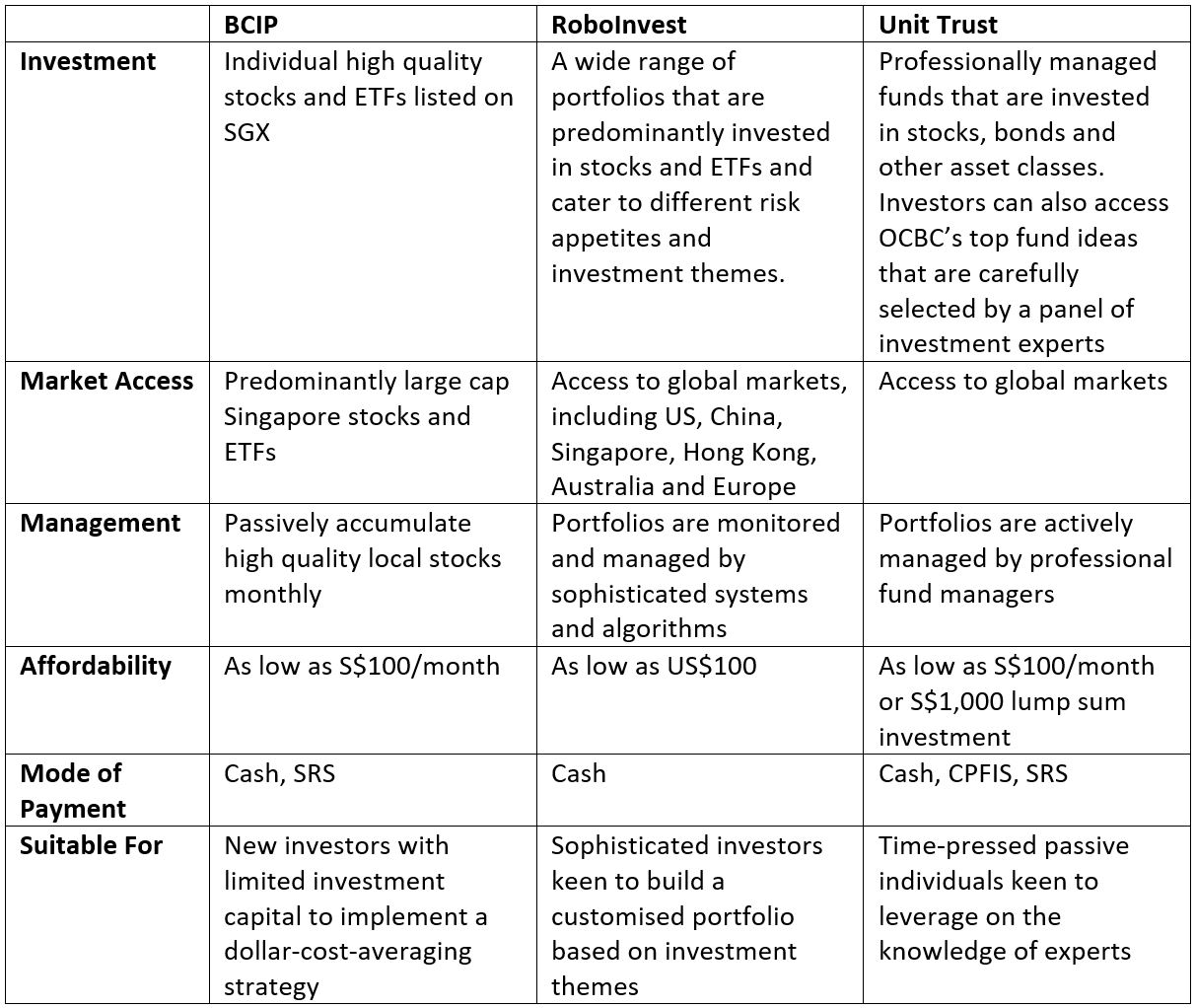
Do you know that OCBC has an investment platform that caters to a wide variety of investment objectives? Whether you are an investor who prefers to have your portfolio managed by professional fund managers, an investor who prefers accumulating stocks via a dollar-cost averaging approach or an investor who appreciates the discipline of algorithm-driven portfolio management, there is bound to be something suitable for you with OCBC’s 3 main investment platforms. Here is a comparison of OCBC’s Blue Chip Investment Plan (BCIP), RoboInvest and Unit Trust to show how they suit each investment profile.

Comparison of OCBC’s BCIP, RoboInvest and Unit Trust Platforms

OCBC RoboInvest

Photo 96059964 © Sarinya Pinngam | Dreamstime.com

OCBC’s RoboInvest delivers the best elements of high-end investing services to a retail audience. Besides wide-ranging portfolios invested across 6 different geographical markets with interesting investment themes such as Future World, Impact Investing, Gen Z etc., it also boasts a seamless user experience:

  • No need to open a securities or custodian account
  • Top up and withdraw your investments easily by using your OCBC deposit account anytime without fees and charges
  • Be notified on portfolio rebalancing opportunities to help maximise your returns based on changing market conditions

More sophisticated investors such as PMETs, who are attuned to financial news and the latest developments of the global economy would appreciate the chance to invest in portfolios constructed around such broad and popular investment themes like US technology or the rise of China. RoboInvest is therefore the answer for investors who are keen to invest in a wide-range of investment themes and enjoy automated portfolio management service without paying excessive management fees.

Meanwhile, new investors can take advantage of RoboInvest’s risk-based portfolios (defensive, conservative, balanced, growth, aggressive) to gain diversified exposure to various asset classes and geographical markets at relatively low cost. This can form the core of their investment portfolio, and they can build on it with time

OCBC Blue Chip Investment Plan (BCIP)

Photo 75624892 © Tang90246 | Dreamstime.com

The BCIP allows investor to gain access to dividend-yielding stocks and ETFs listed on the Singapore stock exchange. By making monthly investments from as low as S$100 per month, an investor is able to purchase shares in amounts below the standard lot size. Full-time national servicemen or young investors would find the ability to buy below the standard lot size very attractive given that they might not have accumulated sufficient capital for investment yet. By investing consistently each month via a dollar cost averaging approach, the BCIP allows investors to reduce their average cost of purchase over time. A strict monthly investment plan also reduces the risks associated with market timing risks and allow investors to accumulate stocks in a disciplined manner.

In addition, there is great flexibility since there is no lock-in period while counter selection and monthly investment amount can be easily tweaked. The BCIP is therefore most suitable for new investors keen to implement a dollar-cost averaging strategy by starting small and staying invested while retaining flexibility and control on their portfolios.

Unit Trust

Photo 39253582 © Ang Wee Heng John | Dreamstime.com

The OCBC Unit Trust Investment platform is one of ways to access the bank’s top fund ideas that have been carefully selected by its panel of investment experts.
Through actively managed unit trusts, investors can simply leverage on the expertise of professional fund managers who possess the experience, skills and resources to manage the portfolio on your behalf. The OCBC online platform allows the user to compare, buy, sell and monitor unit trusts with ease.

This is perfect for time-pressed individuals who do not have the time to monitor markets and recognise their own limitations in investing. For instance, working parents might gain greater utility and satisfaction by spending precious time with their children while leaving their investments to professionals looking after their portfolios. The Unit Trust Investment platform would most appeal to long-term investors who are keen to access a diversified portfolio in a more cost-effective manner whilst having a professional fund manager at the helm, monitoring and managing their investments through different market conditions. This may go a long way to provide a peace of mind.

Whether you are a new investor just starting out, a busy parent with no time to mull over investing, or a sophisticated investor looking to invest in the latest investment themes, OCBC’s various online investment platforms capably address these various investment objectives so that its clients are able to build a stable financial future with convenience and confidence.

Click here to find out more about the different investment products from OCBC.


Disclaimer:

All figures provided are for illustration purposes only. Actual figures may vary or differ depending on the actual circumstances.

This is for general information and does not take into account your particular investment and protection aims, financial situation or needs. You should seek advice from a financial adviser before committing to a purchase. Otherwise, you should consider the suitability of the product.

Investments are subject to investment risks, including the possible loss of the principal amount invested.

This advertisement has not been reviewed by the Monetary Authority of Singapore.

Read More...