Singapore banks are phasing out Singdollar checks and here’s what you need to know

checkbook

There’s a major shift happening in the world of Singapore banking and it’s all to do with our trusty Singdollar checks.

Here’s the scoop.

Starting this November, some of the biggest banks are going to start charging for Singdollar checks and more.

In fact, our local trio of DBS, OCBC, and UOB are already asking for a S$0.75 fee every time you issue or deposit a corporate check.

Maybank is doing things a bit differently now—they’re only charging for issuing checks, at the same S$0.75 fee per check. But if you hold certain accounts with them, you can enjoy up to 30 free checks a month.

But hang onto your hats, because there’s more.

DBS revealed that from 1 November 2023, they will be applying check processing charges to all Singdollar and local US dollar checks, whether they’re issued or deposited.

They’re keeping us in suspense about the details, but promise to give us more info as we get closer to November.

UOB is following a similar path, introducing charges for both Singdollar and US dollar checks. But they’re playing it cool, rolling out these fees “in phases” from November.

OCBC and Maybank are keeping things under wraps for now, but they’ve said they will spill the beans about charges in due time.
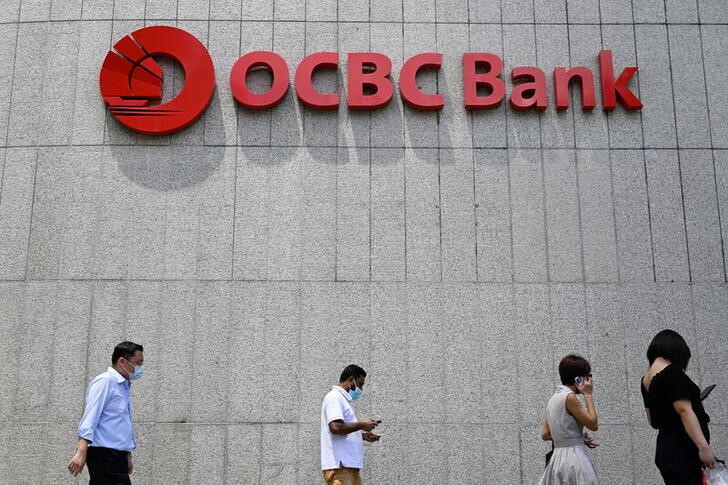
OCBC Bank

Image Credits: reuters.com

And here’s another big news: by the end of 2025, corporate checks will be a thing of the past in Singapore.

Individuals will still be able to use checks for a while longer, but we don’t have an official end date just yet.

This all comes after a public consultation conducted by MAS last year, suggesting a roadmap to phase out checks in Singapore. The use of checks has been steadily declining, thanks to the rise of e-payments among both companies and individuals.

Also, the cost of processing checks has been increasing and is expected to rise even further by 2025.

Until now, most banks have been absorbing these costs, but that’s not sustainable. Hence, they will start passing these costs onto us, the customers.

It’s not all bad news, though.

The goal is to usher in a new era of electronic deferred payment (EDP) solutions, allowing users to make deferred payments or issue a cashier’s order, without needing a physical check.

After the EDP solution is rolled out in 2025, banks will stop issuing new checkbooks to corporates. This will give businesses more time to transition to the EDP solution and other alternative payment methods.

For individuals who are still using checks, don’t worry. You will have a longer time to switch to alternative payment methods like PayNow, FAST, and GIRO.

So, if you’re one of the few who still prefers checks, it’s time to start familiarizing yourself with digital payment options.

The future is here, and it’s digital for sure.

Read More...

HDB Prices Continue Their Steady Rise in 2Q 2023

In the second quarter of 2023, HDB resale prices marked their 13th consecutive quarterly increase, rising by 1.5% quarter-on-quarter (q-o-q). This adds to the 1% q-o-q increase witnessed in the first quarter of the year, reflecting a sustained uptrend in the public housing market.

While the prices have been steadily climbing during the first half of the year, it’s worth noting that the pace of resale price growth has shown some moderation compared to the overall trend observed in 2022, where the average quarterly growth was 2.5%.

According to the latest public housing statistics, executive flats saw a significant 2.3% q-o-q increase, with prices rising from $800,000 in 1Q 2023 to $818,000 in 2Q 2023. Meanwhile, five-room flats also experienced a rise of 1.9%, with prices climbing from $638,000 to $650,000 during the same period.

Let’s take a closer look at the areas that experienced the biggest price increases for HDB estates in 2023, compared to the growth observed from 2020 to 2023:

3-Room Flats:
– Bukit Batok recorded a substantial price growth of 52.53%
– Toa Payoh followed closely with a growth of 50.35%
– Sembawang saw a rise of 43.26%
– Woodlands experienced an increase of 42.84%

4-Room Flats:
– Bukit Batok topped the list with a remarkable growth of 59.71%
– Sembawang followed with a growth of 48.82%
– Ang Mo Kio saw a rise of 43.86%
– Woodlands experienced an increase of 38.64%

5-Room Flats:
– Sembawang led the way with a substantial growth of 47.07%
– Bukit Batok closely followed with a growth of 46.03%
– Woodlands experienced an increase of 40.19%
– Choa Chu Kang saw a rise of 32.01%

The Housing Development Board (HDB) attributes the moderation in the rate of price increase to the government’s measures aimed at maintaining a stable and sustainable property market. These measures, implemented in December 2021, September 2022, and April 2023, include a 15-month wait-out period for private property owners before purchasing a non-subsidized HDB resale flat and a lowering of the loan-to-value limit for HDB housing loans.

Analysts have noted that the slower price increase observed in the second quarter is not an isolated event. Eugene Lim, key executive officer of ERA Realty Network, emphasized that 21 out of 26 HDB towns experienced price gains in the second quarter, compared to only 12 towns in the previous quarter.

Geylang stood out with the highest increase in resale flat prices at 18.7%, followed by the Central Area with 8.6% and Bedok with 4.3%, according to Mr. Lee.

It’s worth mentioning that the resale flat prices in Bukit Timah have seen a contraction for two consecutive quarters, and this could be attributed to factors such as a lack of new supply and an aging stock of resale flats.

Image Credits: unsplash.com

In conclusion, the HDB resale market continues to show strength, with prices maintaining an upward trend. While the rate of increase has slowed somewhat, the market remains dynamic, and various factors, including government measures, continue to influence price movements across different HDB towns.

Sources: 1 & 2

Read More...

Find Out How 1.5M Singaporeans Will Receive up to $700 in August

In August 2023, the Singapore government will implement an enhanced Goods and Services Tax Voucher (GSTV) – Cash scheme to assist approximately 1.5 million Singaporeans with their living expenses. This initiative, announced by Deputy Prime Minister Lawrence Wong during the Budget speech earlier this year, aims to alleviate financial burdens by offering cash aid of up to $700. Let’s explore the details of this program and how eligible individuals can benefit from it.

Under the GSTV – Cash scheme, eligible citizens will receive a one-time cash payment in August 2023. Compared to the previous year, the enhanced scheme will provide up to $300 more, with a total potential payout of $700. This initiative is part of the government’s ongoing efforts to support lower-income and elderly Singaporeans by assisting them with their GST expenses and cost of living.

Streamlined Payment Process

To simplify the payment process, the Ministry of Finance (MOF) will replace cheques with GovCash for individuals who have not provided their bank account information or linked their NRICs to PayNow. GovCash recipients will receive a payment reference number at the end of August, which they can use to withdraw their GSTV – Cash and GSTV – Cash Special Payment at OCBC ATMs across the island. Importantly, recipients do not need an OCBC bank account to withdraw the funds at these ATMs.

Furthermore, GovCash recipients can utilize the LifeSG app for payments to merchants by scanning PayNow or NETS QR codes. They can also transfer funds to their bank accounts through PayNow if they subsequently register for PayNow-NRIC. These measures aim to provide convenient and accessible options for individuals to manage their funds effectively.

MediSave Top-ups

In addition to the GSTV – Cash scheme, eligible Singaporean adults aged 65 and above in 2023 will receive MediSave top-ups through the GSTV – MediSave program. Approximately 624,000 individuals will receive up to $450 credited to their CPF MediSave Accounts. This top-up is part of the 5-Year annual MediSave Top-up initiative announced during Budget 2019 and represents the fifth year of contributions. Eligible Singaporeans born on or before December 31, 1969, who do not receive Pioneer Generation or Merdeka Generation benefits will benefit from this scheme.

Future Support

The Ministry of Finance has assured Singaporeans that additional support will be provided throughout the second half of 2023. This includes top-ups to the Child Development Account, U-Save and S&CC rebates, and the Assurance Package Cash.

Checking Eligibility and Payments

Singaporeans who have previously signed up for government disbursement schemes and are eligible for the GSTV scheme can check their allocated GSTV – Cash and MediSave amounts by logging into the official GSTV website using their Singpass. Individuals who have not registered previously will receive notifications via the Singpass app, SMS, or hardcopy letters sent to their NRIC address by the end of August 2023.

To ensure timely payments, individuals should sign up for the GSTV scheme by July 10, 2023, to receive their payment in August. Those who sign up between July 11 and August will receive their payment in September 2023. Individuals who sign up after September will receive their payments by the end of the following month. The deadline for signing up for the 2023 GSTV scheme is April 30, 2024.

Preventing Scams

To safeguard individuals against scams, the SMS notifications sent by “GSTV” will solely provide information about their benefits. Recipients will not be required to reply to the SMS, click on any links, or provide any personal information. It is important to note that no messages regarding GSTV will be sent through WhatsApp or other mobile app messaging platforms.

Image Credits: unsplash.com

BOTTOMLINE

The enhanced GSTV – Cash scheme introduced by the Singapore government aims to alleviate financial pressures and provide essential support to 1.5 million Singaporeans. By providing cash aid of up to $700, the government strives to assist lower- to middle-income individuals in covering their living expenses. With simplified payment methods and future support planned, Singaporeans can access the financial relief they need during these challenging times.

Sources: 1, 2, & 3

Read More...

What is day trading and what if I suspect my spouse is dealing with a day trading addiction?

man looking at stocks using his phone and laptop

Some people like to “gamble” with their money and they call it day trading.

If it’s your first time hearing the term, it simply means buying and selling stocks within a day to try to make quick money.

It can be likened to playing the stock market but on steroids. Something like trying to catch fish with your bare hands instead of a fishing rod because it’s too slow.

It’s no doubt high risk if you’re an absolute beginner, but also high reward when done right. But if your spouse starts to neglect their job, family, and friends, then something’s not quite right.

More about day trading

The people who do day trading like to buy and sell a lot, so they can make money from the market’s price changes in one day.

Sometimes they can make a lot of money in a short time, but sometimes they can also lose a lot.

Some folks like to do day trading because it’s very exciting, and they can work from anywhere and anytime they want.

But it’s easy to get addicted thinking it’s “easy money.”

Warning signs that signal your spouse may be addicted

If your spouse spends the whole day staring at the computer screen and forgets to keep up with personal hygiene and routines, this can be a warning sign.

He or she may also be paranoid and sensitive when talking about losing money.

If you suspect that your partner is dealing with an addiction, don’t accuse them of having an addiction right away.

How to speak to your spouse

Wait for the right time and find a quiet place. Then, use “I” statements to tell them how you feel and why you worry.

Don’t play the blame game. Take the time to listen to their side of the story—maybe they just want to earn more money for the family or they’re having a tough time at work recently.

Don’t just brush them off or start arguing. Both of you need to find a solution together, like maybe reducing trading hours or seeking professional help.

Encourage your spouse to explore alternative career options

In Singapore, we don’t have a lack of job opportunities and resources, think SkillsFuture and Workforce Singapore.

You can share it with your spouse and encourage him or her to attend some info sessions or courses to upskill.

Let your spouse know that they can (still) feed the thrill of trading better with a job that provides a steady income—with CPF and other benefits.

Seeking professional help

If your partner is already in deep waters, it’s good to see a financial counselor who can help put things into perspective.

It also doesn’t hurt to speak to a general therapist or counselor to see if deeper emotional issues are causing changes in your spouse’s behavior.

Concurrently, ask around for contacts of financial advisors that have a good reputation and reach out to them.

Make an appointment to see if they’ve got other investment schemes that are less risky, so your partner can still trade and put rice on the table.

Day trading is like a gamble where one can win big or lose big. But if you suspect that your spouse can’t seem to exercise self-control, then maybe it’s time to take action. Speak to your spouse first and then seek professional help. Better to talk to someone who knows what they doing than rely on yourself to try and fix everything. Don’t wait until it’s too late.

Read More...

How to Develop Trust in Your Financial Abilities

Managing money can be a daunting task, but it’s essential to build trust in your financial abilities. Even if you’ve faced financial struggles or made mistakes in the past, it doesn’t mean you’re destined for a lifetime of financial uncertainty.

By following these steps, you can start trusting yourself with money and pave the way for a brighter financial future.

Step 1: Set Small, Specific Goals

Breaking down your financial goals into manageable chunks increases your chances of success. By achieving these smaller milestones, you demonstrate to yourself that you’re capable of making sound financial decisions. Remember to be forgiving of any past mistakes you’ve made. Setting specific goals not only provides direction but also boosts your confidence as you see tangible progress.

Step 2: Regularly Evaluate Your Progress

Transforming your financial situation doesn’t happen overnight. It involves taking numerous steps along the way. Regular check-ins with yourself are vital to ensure you’re staying on track and to acknowledge your successes. Schedule monthly or quarterly evaluations to assess your progress and make any necessary adjustments. These check-ins are also an opportunity to celebrate your achievements, reinforcing your trust in your ability to manage your money effectively.

Step 3: Expand Your Financial Knowledge

Enhancing your financial literacy is an excellent way to improve your financial situation. There’s a wealth of resources available, such as books, websites, and podcasts, which can help you gain a better understanding of personal finance. If you need personalized support, consider seeking assistance from financial coaches or advisors. Ensure that you choose reputable sources and individuals whose advice aligns with your values and circumstances. By continuously expanding your knowledge, you empower yourself to make informed financial decisions and strengthen your trust in handling money matters.

Step 4: Celebrate Your Financial Accomplishments

It’s easy to get consumed by failures and overlook your successes. That’s why it’s crucial to keep a record of your accomplishments, no matter how small they may seem. At the end of each year, take the time to make a list of all your achievements. It doesn’t have to be solely financial accomplishments; include anything that makes you proud and excited. This activity can be enjoyable and motivating, reminding you of the progress you’ve made.

Image Credits: unsplash.com

By following these steps, you can develop a trusting relationship with your finances. Remember that building trust takes time, patience, and consistent effort. Believe in your capability to make positive financial choices and shape a brighter future for yourself.

Sources: 1 & 2

Read More...