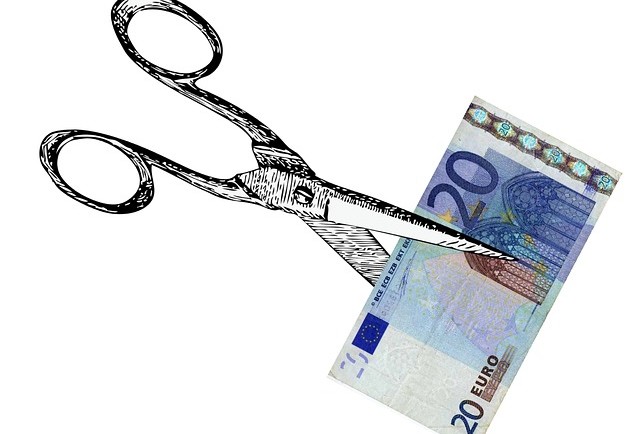
Shameful Reasons Why You Keep Breaking Your Budget

Budgeting, a quantitative plan to manage your money, has many benefits such as tracking your cash flow, controlling your expenses, and reaching your goals! However, some people find it easier to break their budget than to follow it.

Fortunately, you can do something about it. Be aware of the despicable reasons why you keep breaking your budget then, take the necessary steps to turn things around.

1. YOU MAKE EXCUSES THAT BUDGETING IS TOO COMPLEX.

There is no need to fear because budgeting is easier than you think! And, it is rewarding too. For example, if you want to splurge on a weekend vacation, all you have to do is plan ahead. That way, you would not have to create credit.

A simple budgeting method that you can try is the envelope budgeting. It only takes three steps to complete! Begin with tracking your monthly spending patterns then, devise a budget plan including different expense categories. Lastly, you must allocate your cash inside separate envelopes.

Watch this short video tutorial of the envelope budgeting to know more:

2. YOU ALWAYS SPEND A HUGE SUM OF MONEY.

The truth is, you cannot have unlimited supply of money. Even the amount of digital currency such as Bitcoins are controlled. This is why you must spend within your means.

Overspending is one of your budget’s enemies. If you want a comfortable present and a brighter tomorrow, you must stick to your budget and cut down your expenses before saving up. Start by minimizing your household expenses with these simple tips.

3. YOU FORGET IMPORTANT DEADLINES.

Another opponent that challenges your budget are unexpected bills. You will never follow your budget if you keep forgetting your irregular bills such as your yearly magazine subscriptions. Avoid this by making a list of the bills you are expecting to receive every month.

Never forget where you put the bills or what their due dates are by designating one place for them. Some bills arrive by electronic mail while some arrive by postal mail. You have to decide whether you are going to file all your bills in a tangible box or in a computer folder. For physical storage of bills, you may purchase the S$0.90 PAPPIS brown box from IKEA that is created to hold A4 size papers. Label the box accordingly and keep it in a safe place. While for virtual storage of bills, make scanned copies of those that arrive in the mail and put them into a labeled folder in your computer or laptop.

4. YOU ARE ECONOMICALLY UNINFORMED.

Most people want to improve their financial life but know nothing about how economics works. Thus, they make errors in creating and maintaining their budgets.

Economy is defined as the careful management of resources (e.g., household management). While, manage is defined as the act of succeeding in surviving especially against heavy odds. Learn more about the important terms, history of money, and its humanistic systems by watching at least two of the Best Economics Documentaries For Finance Professionals And Enthusiasts.

Image Credits: pixabay.com (License: CC0 Public Domain)


Image Credits: pixabay.com (License: CC0 Public Domain)
Sources: 1 & 2

Read More...

Cosmic Ways To Save Money Like A Jedi

Sometimes, useful financial advice can come from the unlikeliest places. Take Star Wars, for example. It is not only an epic Science fiction film series but also a good place for frugal inspiration.

Learn to save money like a Jedi with these five universal ways:

1. BUILD THINGS FROM SCRATCH

Luke Skywalker, one of the greatest Jedi in the galaxy, spend no expense by making his own lightsaber (laser sword). Like Luke, do not be afraid to Do-It-Yourself!

Start from simple crafts such as making your own shower cleaner or personalized key-chain. After which, turn the difficulty up a notch by making all the crafts for your dream wedding. This can help you save loads of cash.

2. SIZE MATTERS NOT

In “Star Wars:The Empire Strikes Back” movie, Luke was tasked to raise his X-wing (aircraft) from the swap and he complains that it is too big. This frustrates Yoda, a wise Jedi Master. Yoda then explains that size does not matter and excuses are not welcome.

In life, obstacles to saving money can seem unbearable at the moment but, it shall not stop you from pushing through. Furthermore, you must understand that the size of your salary does not matter. What matters most is how you spend and manage it.

3. SHARE AND BE BLESSED

A Jedi shares his knowledge and skills to others with no charge. Apply the hippie-like concept of sharing to your life. Share resources to your fellow classmates and you will not have to buy expensive reference books ever again. Also, you can carpool with your friends to save on gas.

4. KEEP YOUR WARDROBE SIMPLE

Much like Jedi Knights who mostly wear “brown sack-cloths with hoods” or Facebook’s founder Mark Zuckerberg who mostly wears grey shirts, you can save more money by keeping your wardrobe simple. You do not have to wear the same shirt or same outfit everyday! Just avoid hefty designer clothing by purchasing clothes from thrift shops or year-round sales.

5. DO OR DO NOT. THERE IS NO TRY.

When Luke was making excuses about his inability to levitate objects with his mind, Yoda told him these famous words: “Try not. Do or do not. There is no try.”

When you continue to make excuses to saving money or altering your spending habits, you can end up retiring broke. So, start accepting the responsibility and create a monthly budget that is suited for you. In due time, you will see that eliminating your excuses produces meaningful results.

Sources: 1, 2 , & 3

Read More...

Don’t Be Fooled By The Con: 5 Ways To Avoid Rip-Offs

With the technological advances in this day and age, scammers are becoming more sophisticated and effective. But, no matter how charismatic and persuasive a con artist can be, you can avoid losing money by following these 5 ways:

1. DO NOT GIVE YOUR BANK DETAILS OVER THE PHONE

Most of the phones today have caller ID that shows you the number of the person or the company on the other end of the line. If you do not recognize the number or the caller and he or she asked you for your valued bank details, say you will call back. Wait for a few minutes then, try to call the number again to access the validity of the caller.

It is better to not give any sensitive details over the phone, unless if you initiated the call. Simply, if you do not recognize the caller’s number and the area code is not +65 (Singapore’s area code) then, it is most likely a scam.

2. BE CAREFUL WITH THE LINKS

To avoid downloading virus or other malware, only open attachments and links that were given by your friends, family, partners, and clients.

Apply this rule for emails and social media messaging. For instance, there was a scam that used a fake Facebook game based on the popular “Twilight” series to gather the personal information of the Twilight fans.

3. BE CAREFUL WITH YOUR EMAILS

There are three “Don’ts” that you must follow to avoid becoming the target of an online scam:

a. Do not provide your personal email address freely.
b. Do not respond to emails that are asking for your personal information.
c. Do not answer emails whose senders are unknown.

Image Credits: Wikiphoto (Creative Commons License)

Image Credits: Wikiphoto (Creative Commons License)


4. KEEP AN EYE ON YOUR DEBIT AND CREDIT CARD REPORTS

If someone else assumes your identity or steals your wealth, a good way to find evidence of the crime is by checking your credit card statements. I am sure that most of the banks have online banking now so, you will have the convenience to track your spendings anytime and anywhere. Report any suspicious activity to your bank right away.

Aside from credit card fraud, you can lose more money if you are a victim of debit card fraud. Since your debit card is connected directly to your savings, losses can be more extensive. And, money will be harder to recover. This is why you must check your account frequently and be vigilant of the people who stand close to you while you are using your debit card.

5. DO NOT BE AFRAID TO DISCUSS WITH OTHERS

Con artists seek those individuals who are perceived as solitary, trusting, and gullible. If an opportunity (e.g., a new business venture or a new insurance scheme) arrives at your doorstep, do not hesitate to ask for more time to think things through.

Before making a huge decision, it is important to consider the situation and the consequences carefully. Tell the agent or the potential con artist this: “I will discuss this with my lawyer and my partner. After which, I will get back to you.”

money-bag-400301_640

Sources: 1 & 2

Read More...

Best Economics Documentaries For Finance Professionals And Enthusiasts

The best cinematic art illustrates human conditions and life in general. One type of cinematic art called “documentary”, imitates life and factual records as close as possible.

Enjoy at least two of these wonderfully made films especially if you are taking up finance and economics as a subject at school or as a career. These documentaries will not only help you understand the history of money but also the humanistic system that revolves around it.

1. FOUR HORSEMEN

Four Horsemen is one of my favorite documentaries of all time. It is controversial and eye-opening. An award-winning film by Ross Ashcroft, Four Horsemen criticizes the system of debt-based economy, fractional reserve banking, and political lobbying by banks. Join Joseph Stiglitz, Noam Chomsky, and 21 leading thinkers as they discuss how the world works and how to solve the failed systems at present time.

They travel through the centuries and examine the systems that shaped empires. These systems manipulated and even corrupted the minds of the many to serve the interests of the few. Learn more about these said systems by watching the full-length documentary, here.

2. THE FALL OF LEHMAN BROTHERS

Sometimes, we learn the most by observing and avoiding the mistakes of others. What better way to learn than by watching “The Fall of Lehman Brothers” – a firm that filed the largest bankruptcy in the United States history.

On September 15, 2008, financial services firm called the Lehman Brothers filed for Chapter 11 bankruptcy protection with Lehman holding over US$600 (S$834) billion in assets. The following day, Barclays bank announced its agreement to purchase Lehman’s North American investment-banking and trading divisions along with its New York headquarters building. Watch as these events unfold in the full-length documentary, here.

3. 25 MILLION POUNDS

Like most of the people, Nick Leeson wanted to be affluent and successful and he had extraordinary abilities of manipulation and deceit to back it up. This documentary tackles how he deceived the people around him and how these people were deceived. Lured by the possibilities of getting vast sums of money, these people lost 830 million pounds all together. This true story was so powerful that filmmakers were inspired to make an adaptation called “Rogue Trader”, which starred Ewan McGregor.

Watch how Nick Leeson uses friendship to rip-off people at this full-length documentary.

4. THE ASCENT OF MONEY

On this list, “The Ascent of Money” is the one that deeply touches the base of the world’s financial history. It will give finance professionals a greater understanding and perspective of how the financial world works. Watch as Professor Niall Furguson takes you to the beginning of the financial world from the ancient city of Babylon to the new-age financial crisis in 2008.

Be forewarned that this film lasts for 300 minutes so, you must dedicate time or chunks of it if you really want to absorb its essence.

Image Credits: pixabay.com (License: CC0 Public Domain)

Image Credits: pixabay.com (License: CC0 Public Domain)
Sources: 1 & 2

Read More...

Income versus Expenses: How Are We Faring?

Income Expenses

Singapore is not cheap, which makes you wonder, how do we thrive? To help us understand better, let’s talk about our cost of living.

Housing

In general, the property prices in Singapore are going down, thanks to the efforts of the government, including reducing the loan-to-value ratio and capping home loans up to 35 years. Moreover, you have several property options, although more than 75% of us live in HDB flats, of which the cheapest can be a 2-room home with a possible net selling price (after grants) of $52,000.

But this would need a median income of $1,500 and a monthly instalment to income ratio of 11%. So far, as of 2014, the median income calculated during the mid-year was $3,770. If you can’t afford to buy the property yet or you have no intention of doing so at least within a few years, you can take this time to start saving, managing your debt for a better total debt servicing ratio (TDSR), and comparing mortgage loans.

Healthcare

Singapore promotes a universal healthcare program. Under this are Medisave, Medishield, and Elder Shield, to name a few. A part of our CPF contributions is intended for healthcare by the time we’re old (and, yes, our population is getting way older than before). Other countries have commended our healthcare system for having some of the best hospitals and well-trained staff with training and expertise comparable to that of European and North American countries.

But our healthcare isn’t immune to inflation, and premiums for coverage such as Medishield are expected to go up. Moreover, the government provides only subsidies, which means you still have to pay for the remaining healthcare costs. If there’s some good news, it’s that many companies do provide healthcare and even life insurance at no extra cost on your end.

Education

Singapore stresses the huge importance of education, so much so that it allocates at least 20% of its annual budget to it. It is also compulsory for children between 6 and 15 years old, but it’s not unusual to see children as young as 4 to go to school, which means education expenses can also start early, and a nursery class may cost $900 per year. University is expected to go up by as much as $30,600, but subsidies can greatly help by decreasing tuition fees by as much as 26%.

Food

A huge chunk of a family’s budget goes to food, and the expenditure keeps on increasing every year. In 2013, the average food expenditure was $1,188, an increase of $239 from 2008. There are two possible explanations for this: inflation and our penchant to eat out.  We are the highest spenders in the Asia-Pacific region in terms of dining out with a monthly expense of around $324.

Can We Afford It?

The high cost of living, however, is just a partial way of evaluating our capacity to thrive in the country. The much bigger question is if we can afford our necessities. Thankfully, the answer still remains yes.

More households are earning $20,000 and above a month (including CPF contributions), and even if our total household expenditures have gone up through the years, they’re still lower than our average monthly wages.

This doesn’t mean, though, you won’t go bankrupt or continue to live from paycheque to paycheque. Your own spending habits and financial decisions can have a significant impact on your expenses and income. As an example, while you have many choices for credit cards, going for the ones that help you earn rewards with your credit card is more sensible as you can take every dollar you spent further.  

To conclude, whether you’re living in Singapore or anywhere else in the world, being financially smart can shield you from all the money woes.

(This article is brought to you by SingSaver.com.sg)

Read More...