

4 Money Decisions That Will Bring Future Satisfaction

1. BUILDING AN EMERGENCY FUND NOW

What happens next if your ridiculously expensive car needs an engine replacement? If you are like countless people in the world, you will opt for using your credit card or taking loans. This will only build piles of debt.

Instead, you must commit to building an emergency fund to use during the “rainy days”. Financial professionals recommend to save money that can cover at least 6 months’ worth of your living expenses.

2. SAVING MORE FOR RETIREMENT

If you envision a life of comfort after you leave the working scene, you will not regret your decision to maximize your contributions to your CPF account or to your retirement plan.

Remember that the amount of money you need to save depends on what type of lifestyle you want to achieve during your retirement. You will need more savings if you plan to purchase a rest house, travel the world, keep your cable TV subscription, and other luxuries. Building your retirement plan while young can bring huge advantages to your financial future because of the power of compound interest. So start boosting your retirement savings as soon as possible!

3. EVALUATING THE RISKS BEFORE INVESTING

Before you lose some or all of your savings, it is important to understand the risks of the investments. Investment hazards include credit, liquidity, market, concentration, inflation, and devaluation risks. Taking a higher risk can potentially give you higher returns. But you have consult a financial adviser first.

As you make informed choices for your wealth, you will appreciate the day that you evaluated the risks before investing.

4. AVOIDING DEBTS

The debt that you accumulate in your 20s (e.g., student or car loans) can haunt you for the rest of your life. So before you take one more responsibilities such as getting married, starting a family, and buying a flat…you must avoid and eliminate your debts first.

Start by paying off the debts with high interest such as quickly as circumstance permits. Then, avoid accumulating debt by purchasing items that you can actually afford.
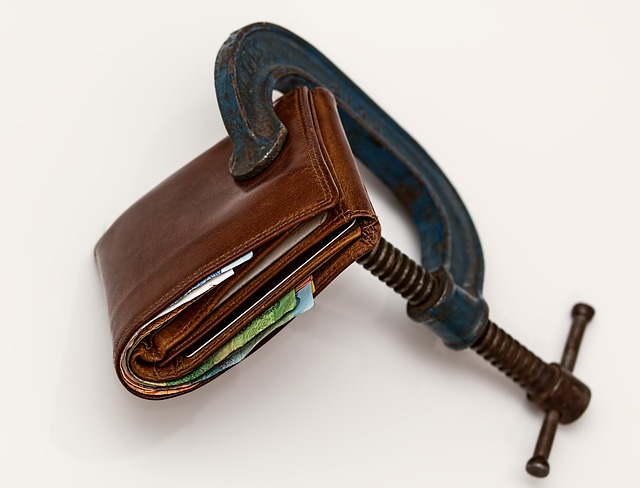
Image Credits: pixabay.com (License: CC0 Public Domain)


Image Credits: pixabay.com (License: CC0 Public Domain)

Sources: 1 & 2

Read More...

Financial Tips For People Dating In Retirement

Dating later in life can be a challenge not only because of your limited income resource but also because of the ever-so-changing dating landscape. In the era of Tinder and online dating sites, dating is entirely different from your first time. However, I believe that if your health permits (i.e.,you have no chronic illnesses or serious health concerns), it is never too late to fall in love again!

Despite its challenges, persevere with these 4 Financial Tips For People Dating In Retirement:

1. REKINDLE THE OLD FLAMES

Use modern technology to your advantage by embracing the power of social networking. Free sites such as Facebook and Twitter, allow you to look up your old friends whom you lost touch with. Do not be afraid to reconnect with your previous secondary school, university, and workmates by instant messaging or even e-mailing them. This way, you are expanding your social circle and increasing your chances of finding a date.

2. CONSIDER ONLINE DATING

If rekindling did not work for you, another inexpensive yet tricky strategy is to consider online dating. For many dating sites, you need not spend a cent as they offer free memberships. But you must proceed with caution as there may be scammers and imposters.

The leading online dating sites in Singapore include SingaporeCupid.com and
SingaporeLoveLinks.com. SingaporeCupid.com offers their services to more than 14,000 members. It has a rather retro design that may seem messy at first but you will soon get a hang of it. With its practical options, you can search for matches based on ages, locations, and other keywords. Members can either be free or deluxe. Deluxe members pay about S$16.95 for 1-month membership.

While SingaporeLoveLinks.com is operated by one of the largest niche dating networks in the world – Cupid Media. What is special about this site is that they bring together the singles of different nationalities. Also, they offer useful functions such as video exchange and instant messaging to its paid members. Members can either be gold or platinum. Gold members pay about S$29.98 for 1-month membership and platinum members pay about S$39.99 for the same time.

3. KNOW EACH OTHER’S MONETARY VALUES

Once you meet someone new, it is important to understand and know each other’s values about money. No need to talk about the specific numbers at first but you need to get an idea of how your date likes to save and spend.

Learn to put yourself in your date’s situation (i.e., spender or saver) by recognizing his or her financial strengths. For example, if your date is a saver then, he or she may view money as an important currency that shall not be wasted.

4. SET CLEAR EXPECTATIONS

After several dates, solidify your bond by maintaining good communication with your date. You must set clear expectations about who pays for what as this notion changes over time.

Time has led to both genders being relatively equals. In fact, a poll by Cosmopolitan showed that less than 25% of women believe that their partners should always pay for the bill and about 40% of women think that couples shall always split the bill.

Image Credits: pixabay.com (License: CC0 Public Domain)
Image Credits: pixabay.com (License: CC0 Public Domain)

Gone are the days when men pay for all the bills!

Sources: 1, 2, & 3

Read More...

Nightmare Is The Forecast Of Singapore’s Dividend Growth

According to Markit Ltd., Singapore’s 2016 dividend growth forecast is among the worst. On the other hand, the South Korea’s dividend growth forecast is among the best in the Asia-Pacific region. This is with the exclusion of countries such as Australia and Indonesia as they are foreseen to cut payouts.

For those of you who are less knowledgeable about the stock market, a dividend is the payout or the distribution of the company’s earnings to its stakeholders. These are issued as cash, shares of stock, or other properties.

Markit, a global provider of financial information services, based its dividends outlook on what is supposed to be reported in 2016. Thus, the year-on-year comparison is in accordance with the dividends reported in 2015 (FY14 final + FY15 interim) and in 2016 (FY15 final + FY16 interim).

Markit foresees Singapore to distribute S$15.865 billion in 2016 – only greater by 0.3% from last year’s S$15.824 billion. If specials are included, the distribution is predicted go down by 2.5% (S$16.2 billion) compared to 2015’s S$16.6 billion.

Continue to sleep well if you are a stakeholder at Singapore banks because as a sector, it remains to be the highest dividend payers.

Image Credits: Wikimedia Commons

Image Credits: Wikimedia Commons

In fact, a Markit analyst said that the three Singapore banks’ (i.e., DBS Group Holdings, OCBC Bank, and United Overseas Bank) contribution to the total dividends increased to 27.2% last year from about 25% since 2011. However, this number is estimated to go down slightly to 27.1% this 2016.

OCBC Bank and DBS Group Holdings are presumed to observe single-digit increases while United Overseas Bank is improbable to pay a special dividend in its final 2015 results. In the past few years, United Overseas Bank has paid special dividends of 5 cents in 2013-2014 and of 10 cents in 2012.

Image Credits: pixabay.com (License: CC0 Public Domain)

Image Credits: pixabay.com (License: CC0 Public Domain)

Once again, these numbers are solely based on the predictions of Markit and are not entirely carved in stone!

Sources: 1, 2, & 3

Read More...

The Good And The Bad Sides Of Jewelry Investment

More than just a sparkling indulgence, investing on jewelry is an embedded tradition in many Asian cultures. In fact in Indian and Chinese cultures, jewelry can be given as gifts as individuals approach the marrying age.

To these cultures, investing in gold jewelry is a sound investment. Truly, gold has continued to rise, up to five-fold in a decade, in value despite the worldwide economic slowdown.

However, anyone who is considering jewelry as a means of investment needs to carefully contemplate on its advantages and disadvantages.

Here are some of them:

LABELS

It is not just about what jewelry pieces you buy but where you buy them. Pieces with designer labels are more susceptible to the erosion of value (over time) as you are paying mainly for the marketing costs.

For example, a sterling silver necklace sold by a lesser known retailer in the third world country may cost about S$15 while a sterling silver necklace sold by Tiffany & Co. in the first world country may cost about S$400! They are made of the same material but the branding and craftsmanship attached to it makes the difference.

PORTABILITY

Jewelry is an investment that you can wear. Whether it be gold rings, silver necklaces, and diamond earrings, you can always carry your wealth around wherever you go.

Image Credits: pixabay.com (License: CC0 Public Domain)

Image Credits: pixabay.com (License: CC0 Public Domain)
PRICES

The craftsmanship can add up to 30% on the price of the actual jewelry pieces. So if you want to benefit from the full price of gold alone, you can invest in products and funds that are associated to gold. For example, you can consider SPDR Gold Shares as they are backed by gold exchange-traded fund.

VINTAGE

Some pieces from the past are still fashionable today. Vintage jewelry from 1920s to 1930s have strong linear designs incorporating diamonds and platinum that can very much look modern!

Furthermore, second-hand jewelry (e.g., at auctions) are less expensive than contemporary pieces as they are not affected by the mark-up of the retailers. If you purchase this from a source that has low costs, it can prove to be profitable to own.

TRADITIONS

As said above, a positive side in jewelry investment is keeping one’s heritage. In fact, India is one of the world’s largest gold market due to the cultural demands during Deepavali and wedding season (i.e.,jewelry may be offered as wedding dowry).
The embedded notion is that jewelry retains (if not increases) its value over a long period of time. Although, this is not always the case.

Image Credits: pixabay.com (License: CC0 Public Domain)

Image Credits: pixabay.com (License: CC0 Public Domain)

The value of investments and gains can go up as well as down. Sometimes your may get back a value lesser than the amount you have invested. This is why it is recommended that you seek expert financial advice first before making any investment decisions.

Sources: 1 & 2

Read More...

How to Thrive in the World’s Most Expensive City

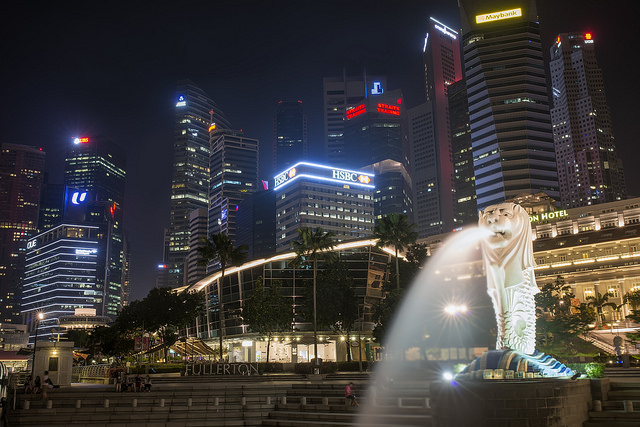
Singapore CBD Merlion

It’s common for Singaporeans to complain about the rising costs in this country, especially when Singapore has stayed on the charts for world’s most expensive city two years in a row. You can even call it a favourite pastime of residents and foreigners living here.

While it’s amazing how we’ve growth so much in a short span of time, it’s also taking a toll on us mere mortals, who can only dream about being one of the countless millionaires choosing to live here. We work hard, but it seems like we’re not going to see much increase in salary or bonuses in the year to come.

Still, it’s not impossible to save money in Singapore. The SingSaver team recently pulled together tips that have worked for us and published them in a free eBook, “100 Ways to Save Money in Singapore”. From shopping to dining out to general tips, we’ve covered every aspect of typical expenses the average Singaporean has.

Here’s an excerpt from their eBook:

  1. Know Where to Save

Stuffing your money in a pillow is as good as losing it. Due to the inflation rate (about 3% per annum in Singapore), your cash is worth less each year.

Always compare the different rates between fixed deposits, or products such as Singapore Savings Bonds (SSBs), before deciding where to store your money. You will want the highest interest possible for your deposit. Speak to a financial advisor about the best options, as they change on an almost weekly basis.

  1. Keep the Expense Ratio Below 40%

Your expense ratio is your necessary expenditures compared to your monthly income.

For example: say you earn S$3,000 a month. You have to pay at least S$300 a month toward utility bills, your phone line, loan repayments, etc. Your expense ratio is thus 10% (S$300 / S$3,000).

You should put a freeze on expenditures that raise your expense ratio above 40%.

  1. Pay with an Optimised Credit Card

Dining with friends? Pick a credit card with the best rewards or cashback for the restaurant, then place the entire bill on it. After that, collect your friends’ shares in cash. Because the card is giving you a discount in some form (cashback, more reward points, vouchers, etc.), you will usually save money.


***

There’s a lot more where that came from. If you want to save more or just want to cut down on your expenses, this guide will help you. Well, it’s definitely helped us.

Download your free copy of “100 Ways to Save Money in Singapore” here.

(This is a guest post by SingSaver.)

Read More...