
Investing in Antiques & Collectibles

Hard assets, such as art, antiques & collectibles, as a form of investment alternative?

Well, perhaps these could be the following reasons.

Assets of such, often retain their value as inflation rises, and they can also provide balance to other asset classes that suffer more from rising costs.

Collectibles include everything from high-priced antiques, gems, works of art and many others.

1) What makes collectibles valuable?

Some collectibles are valuable because they are creations born of talent, skill and workmanship.

For instance, Chinese Porcelains. Each item is inherently unique, and its value may be specific to that individual item. These types of collectibles tend to hold their value over time, generally keeping pace with inflation. Many also have the potential to appreciate in value. The value of these types of collectibles depends on many factors as well. The age of the item, rarity, craftmanship and its current popularity among collectors may all be factors in determining its value.

2) Why invest in Antiques & Collectibles?

Some but not all, increases in value, though they tend to appreciate slowly over a number of years. Another attributing factor, “The new high will always be higher”, which is why we oftenly see these items setting new records high with auction houses around the world. Collectibles, however, can act as a hedge against inflation too. This is why many investors are sometimes tempted to add them to their portfolios.

3) Upsides

As an investment, There are a number of unique upsides which you cannot replicate with anything else.

Tangible assets:

Collectibles are not influenced by inflation or interest rate headwinds.

Low-correlation to the stock market:

Collectible markets rarely move in tandem with the economy.

Growing rarity:

It is all about supply and demand.

And over time, A good piece of work, become scarce when that particular item is no longer trading in an open market.

Personal control:

You hold on to the assets; you don’t have to worry about anything like an investment bank run, or being scrutinized into a virtual world with no physical ability to control and manage. And If you’re one lucky collector with ability to capitalize on arbitrage situations, you’re against all odds.


For more information, please contact iTreasures Capital via the following channels:
Website: www.itreasures-capital.com
Email: [email protected]
Enquiry: +65 6988-6602 (9am – 5.30pm, Monday – Friday)
FaceBook: www.facebook.com/itreasurescapital

Read More...

4 things to expect when you invest in P2P lending

Peer-to-peer lending, or P2P lending, utilizes technology and big data to connect investors and small and medium-sized enterprises (SMEs) looking for business funding. To investors, it provides them with an opportunity to earn passive income by financing business loans for SMEs.

In Southeast Asia, P2P lending has witnessed significant growth in recent years, led predominantly by Singapore. To date, around 60 platforms are currently operating in the online lending and crowdfunding space, which have become an increasingly popular alternative investment option.

If you’re wondering how you can take part in investing with P2P lending, Funding Societies would be a great place to explore. As of January 2019, Funding Societies has onboarded more than 85,000 investors across Singapore, Indonesia and Malaysia and provided more than S$350 million worth of investment opportunities in crowdfunded loans.

Here are four things you can expect when investing in P2P lending through Funding Societies.

1 / Investments with short tenors

Funding Societies offers three investment products: Business Term Loan, Invoice Financing, and Property-Backed Secured Loan. Business Term Loan allows you to make investments by financing SME loans with tenors ranging from 1-12 months. In return, you will receive monthly repayments of principal and interests. You can maximize your returns by reinvesting your repayments to new loans.

Meanwhile, with Invoice Financing, SMEs would be able to cash out by pledging their invoices to Funding Societies. Invoice Financing has a shorter tenor, which generally lasts for only 30-120 days with a one-time repayment of principal and interest at the end of the tenor.

With Property-Backed Secured Loan, investments are secured by a property (residential, industrial, or commercial). Different from the other products, Property-backed Secured Loans offer security in the form of property as a collateral, and is a good option to add diversification to your investment portfolio.

2 / Potential returns up to 14% p.a.

As an investor, the returns you get from your P2P lending investments come in the form of interests paid by SMEs.

Given that P2P loans are generally more flexible in its tenor and SMEs that get financing from Funding Societies have shorter or imperfect operational track records, interest rates are determined accordingly based on risk, in the range of 8-18% p.a.. Higher risks typically come with higher returns, so investors should invest based on their appetite for risk.

3 / Regular updates from the platform

Expect to get regular updates from Funding Societies as an investor on the platform! With every important event or update, the platform sends alerts via email or in-app notifications so that investors are constantly kept up to date with us.

For instance, whenever there is an upcoming loan for crowdfunding, investors will receive an email notification. In the event of late repayment or if there’s an update for specific loans, Funding Societies will also communicate in the quickest and most transparent way. So make sure you switch on your app notifications for any important alerts!

If you need any further clarifications, Miyu, Funding Societies’ very own chatbot, and our customer experience (CX) team will be happy to answer all of your questions via live chat. Or call us at 62210958 to have a quick chat with our team.

4 / Well-designed User Interface (UI)
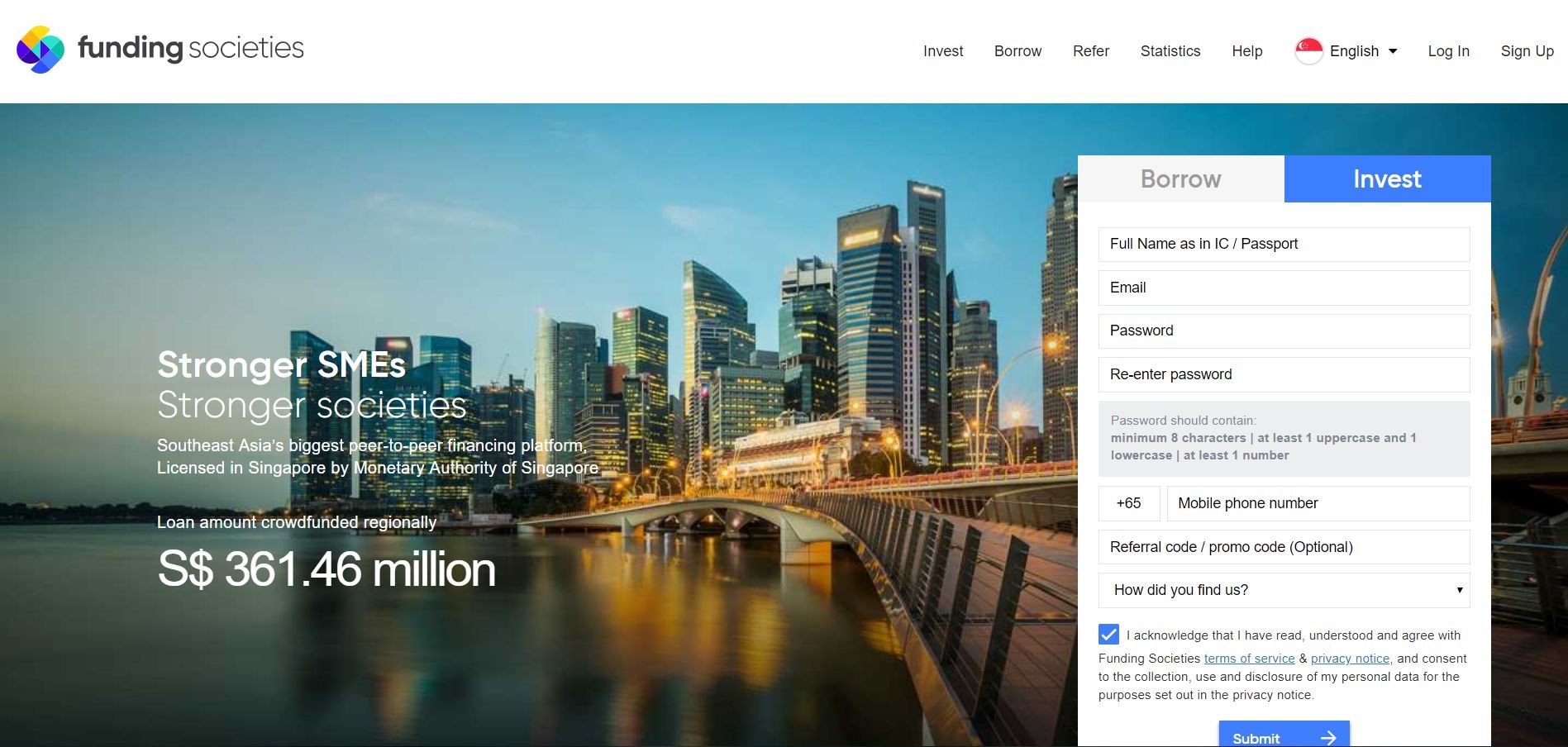
Invest with Funding Societies – User Interface
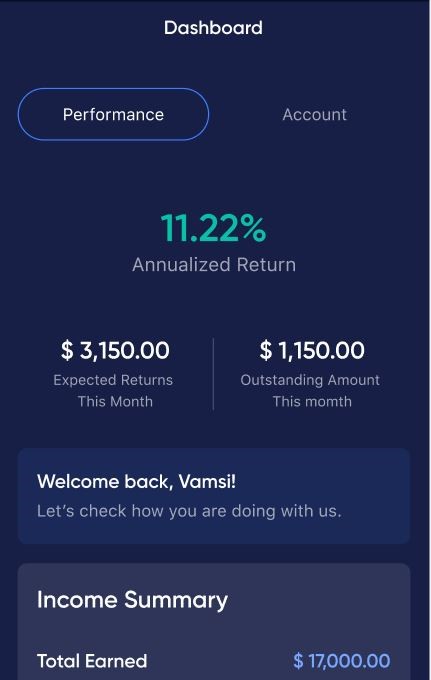
Funding Societies Mobile App – Dashboard

Investors should be able to review their portfolios easily. That’s why Funding Societies has improved its website and mobile app to provide details of your investment portfolio in a clear and concise manner.

As an investor, you can review your portfolio, change your auto-invest settings, crowdfund a loan, and even use the live chat feature — all in one mobile app! It’s so simple, convenient and efficient, which is why 80% of Funding Societies’ investors are investing on the go.

Got more questions? Ask Funding Societies on 24 January 2019!

Funding Societies is hosting an investor event on 24 January 2019 evening to share more details and insights of how P2P lending works on its platform. You’ll also be able to meet the team and get to ask them all the questions.

  • Date: 24 January 2019, Thursday
  • Time: 6.30pm – 9pm
  • Venue: Lowercase Cafe @ 1 McNally Street (Rochor MRT)

Sign up for the event here.

This article is adapted from this article which first appeared on Funding Societies’ blog.

Disclaimers:

This article is contributed by Funding Societies.

It should not be construed that Moneydigest is endorsing this article or any of the products and services provided by Funding Societies.

Nothing in this article should be construed as constitute or form a recommendation, financial advice, or an offer, invitation or solicitation from Funding Societies to buy or subscribe for any securities and/or investment products. The content and materials made available are for informational purposes only and should not be relied on without obtaining the necessary independent financial or other advice in connection therewith before making an investment or other decision as may be appropriate.


 

Read More...

5 Things You Need to Know Before Investing In A Property

A property for the purpose of investment is always good to have; it is especially beneficial if you are the type of person who loves to take advantage of the ever-growing real estate market. There are countless reasons why more people are starting to invest in properties, but it’s mostly due to the fact that property investments are income avenues that only require minimal effort.

But before you even consider embarking on this journey, it is important to understand first what it is all about. Here are things you need to keep in mind before investing in a property.

  1. Consider Flipping Your Investment

Before you invest in a property, it’s best to know all the possible options you have to maximize your earning potential. One of the most common ways of making a profit is by flipping your investment.

Most property owners tend to spend a good amount of time and money performing renovations on unappealing buildings or homes. The idea is to increase the curb appeal and overall value of the property.

In real estate, flipping refers to buying an asset with the intent of selling it as soon as possible. Basically, you’ll sell the property for a quick profit instead of waiting for its value to appreciate over time.

Flipping is beneficial if you are looking to make profit fast. It also serves as a learning experience, particularly in home improvement and construction.

  1. Take the Extra Costs into Consideration

Maybe you’re looking for a longer investment and instead of flipping, you’re going to try your hand at renting. There are several factors involved once you decide to rent out space to tenants. These expenses could be the following:

  • Repairs
  • Maintenance
  • Utilities
  • Insurance
  • Taxes

Aside from that, you will have to anticipate the possibility of footing extra bills for the property or space if you do not get a tenant right away.

  1. Understand Your Purpose

Just like any form of investment, an investment property is not something you should decide on overnight. You have to know and understand exactly what your reason behind it is. You might want to consider the following:

  • Are you looking for a way to make quick cash?
  • Do you see it as a means to move forward with an investment in the long haul?
  • Do you have plans for improving the property?
  • Do you want to have it rented out to tenants or sell it for a bigger profit?

If you do not have concrete knowledge why you are investing in a property, you should not be doing it in the first place.

  1. Know the Market Status

Once you understand and decide to invest in a property, the very next thing you need to do is research about the market. This is important because it’ll give you an idea of what to expect when investing in a property.

Basically, there are numerous factors that could help determine whether or not today is the perfect time to invest. When investing in a property, you want to buy low in order to sell high. It is really simple actually. You do not want to buy a property that would disable you from selling it for a better price. To put it simply, you want to know what exactly you are getting from this property when you put it out on the market. Is it only good for renting or does it have better chances of selling? Would it be profitable if you make renovations first before putting it out on the market?

  1. Know About The Neighborhood

Another crucial factor you need to consider before investing in a property is its location. Most buyers prefer houses that are located in ideal areas.

For instance, a property situated near hospitals, schools, police stations, and supermarkets, is likely to be sold faster because of its convenience. On the other hand, a house located in an area with difficult access to necessary establishments might make it hard to attract buyers.

It is also essential to consider the neighborhood. You might want to check the following:

  • Is the place peaceful?
  • What is the crime rate in that particular area?
  • What is the level of security in the neighborhood?
  • Is the neighborhood too crowded?

Conclusion

Investing in property is clearly an interesting journey to take and there are benefits to doing so. However, it is something that you need to heavily consider since you want to make sure it does not leave you and your family in debt. If you want to benefit from this great opportunity, think about all of the aforementioned considerations carefully. Visit https://SolidIncome.NET for all your property investment needs.


Read More...

The Myths of Investing in Commodities

It’s really time to cut through all of those misconceptions surrounding investing in commodities. One of the biggest of all the wild claims against the commodities market is that you can’t make money when trading commodities. Well we know that isn’t true, because it’s been proven over and over again by successful traders. But these myths make new traders reluctant to enter the commodities market. Do keep in mind that myths stating you can’t make money are typically investors who were not prepared beforehand. Like any sort of trading, you want to spend adequate time studying and learning before you even consider making a move. By understanding how the market works, you can protect yourself from failure and earn nice profits.

Using Leverage Wisely

Knowing how much to leverage an account is where inexperienced commodity traders can fail. Unlike the stock market, you only need to put up from 3% to 15% of your futures contract in the futures margin. This gives commodity traders incredible leverage. This is also where it’s important to learn about holding back a little. For the best long-term success, stay on the low side. Instead of trading as many contracts as allowed by the margin requirements, trade fewer. A safe rule of thumb is to only trade one or two futures at a time. This will help you avoid failing due to getting tripped up with too much leverage.

Dumping Commodities in Your Front Yard

Have you ever heard the myth that trading in commodities can mean you might get a contract of soybeans dumped in your front yard? Taking possession of commodities isn’t something that you need to think about too much, and it shouldn’t keep you from entering the commodities market. The trades that are involved with taking delivery of contracts are commercial players. You will have ample warning to close your futures contract in time. This usually happens weeks before the end of your contract. If you forget to close it before the first notice day, your broker is sure to remind you.

Trading Commodities for the Long Haul

When entering into the commodities market, think of it as a long-term investment. It is actually a zero-sum kind of situation where every time one person loses a dollar, someone else along the line profits by a dollar or two. You might not be the one who wins every time, but if you average out your winnings over a number of years you will see your profits. For those who come to the table ill-prepared, they are most likely to lose all their money in the first few months and leave with their tail between their legs. If you enjoy the trading scene but aren’t earning nice profits, at some point you need to take a close look at your strategy. Don’t stop trading but examine where you are going wrong and determine how you can make the correct adjustments. Whether you are a novice or an experienced investor, you should always periodically stop what you’re doing to check that your trading strategy is leading you towards your goals.

Read More...

What To Look For In A Chicago Real Estate Investing Online Coaching Program

Real estate is a property that consists of everything that we find on the identified land area. The buildings, fauna, livestock, mineral, and water deposits make up a real estate. In essence, a real estate is a location that has rights to everything in its territory whether above or under the ground.

There are three categories of real estate:

  • Residential Real Estate

These are properties that include houses, underdeveloped lands, townhouses, and condominiums

  • Commercial Real Estate

Commercial real estate is a property used for trade and commerce which includes office buildings, skyscrapers, shopping centers, restaurants, hotels, and the likes.

  • Industrial Real Estate

An industrial real estate is a property used for production, distribution of products, storage, and research. An example of this real estate is a manufacturing facility.

Many people invest in real estate because of its potential to give high rewards. Other entrepreneurs and realtors like the ones in bestrealestatedirectory.com make money through various real estate investing and selling techniques developed over the years.

The question is: “How can you increase its potential or its value?” Learn the tricks on how to boost the value of a real estate property by going through this article.

The Low-Cost Ways

The smallest of things can do so much more. You don’t have to spend too much to improve the quality of your real estate. These simple tips could double the value of your property:

  • Clean your real estate inside and out. A clean property means that it is well-maintained.
  • Repaint the walls and other surfaces that can quickly catch the eye. It is highly recommended to use neutral paint colors as it brings an additional appeal. A newly painted property gives a brand new impression.
  • Accessorize your property by adding attractive plants, outdoor lights, or a new mailbox. These small details invite the senses even more.
  • Replace your fixtures to bring new life to your real estate. Change the light switches, door and cabinet handle, doorknobs, and faucets. These are the things that are always touched. Give our potential buyer the brand new feel.
  • Upgrade your property’s interior design by placing the furniture strategically. Don’t put in so many details in each room as it will exhaust the eyes. Many buyers are also attracted to unconventional approaches when it comes to interior designs. So, don’t hesitate to experiment as long it doesn’t go overboard.

The High-Cost Ways

If you have money to spend, then a renovation can catapult the value of your real estate to a whole new level. Of course, the cost depends on the extent of the makeover and the materials that you will use.

Here’s what you could do:

  • Replace or add doors and windows. These upgrades can make your property more attractive, and it also improves the acoustics of the property by reducing the internal noise. New windows can bring more light. A well-positioned window or door can highlight the outside view of your property.
  • Replace the carpet and upgrade your tiles or hardwood to make it look brand new. A great looking floor is irresistible.
  • People love a quiet place. Make your property noise-free by adding insulations which include rugs, carpets, double pane windows, and even indoor plants.
  • Improve the bathroom by installing new sinks, tubs, faucets, cabinets, lighting, shower, and toilet.
  • Give your property more function by adding a room or removing a wall. This method will improve the floor area. Example: You could take down the living room wall to connect it to the dining area. This upgrade will make the interior look bigger.
  • Put in additional square footage by transforming other rooms into more functional living spaces. Example: You can turn the garage into a guest room.

A complete renovation is the most expensive way of increasing the value of your real estate. This process is time-consuming because it needs to tear down the old materials before installing the new ones. However, this makeover gives way for a more modern design which has a high value in the market.

As a general rule, do not over-improve. It is always better to go on the safe side than risk everything in an attempt to impress the others. Buyers don’t want too many details because they want to leave something for themselves to add or change. Your goal is to get a high return compared to your investment.

It is best to research before you jump into your improvement program. Know the cost of each material that you will use. Determine what will be the value of your property after the improvement to gauge how much money that you need to spend.


Read More...