Discover the magic of solo traveling

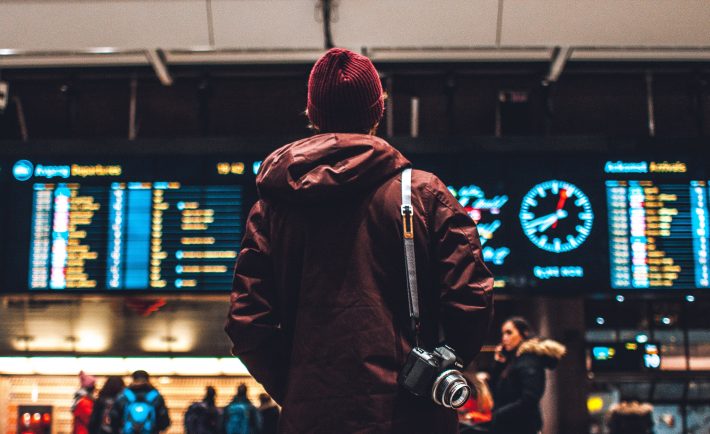
man at the airport

Have you tried solo traveling before?

As someone who has been there and done that, I’ve enjoyed it thoroughly. But at various ages and life stages, I agree that it can be different for everyone. For those who’ve tried it once but didn’t enjoy it that much, I want to say:

Give it some time, and you will notice the magic.

Overcoming the fears of traveling alone

If you’re a foreigner in the world of solo travel, you will undoubtedly experience anxiety.

But rather than dwelling non-stop on the things that can go wrong, why not channel your energy into the things that can go right?

Just think about the new people you will meet and the stories you will hear. Those really excite me. And having traveled umpteen times, I assure you that traveling alone is not that bad.

How to make the most of your time alone

Being alone doesn’t mean you have to be “alone” all the time. I mean, there are opportunities to socialize.

You can start conversations with people you meet on the streets, join day tour groups, and be open to meeting new faces—locals and foreigners.

As an introvert, I’m okay with being alone but that doesn’t mean I’m not sociable. Over the years of solo traveling, I’ve met many new friends through day tours I’ve joined via Klook and Kkday.

I’ve also met nice folks (and some weird ones) on CouchSurfing.


View this post on Instagram


A post shared by Couchsurfing (@couchsurfing)

It’s really all about keeping an open mind.

Getting ready for a safe, enjoyable vacation

If you’re an absolute newbie or don’t have much experience with solo traveling, you’re probably in need of some advice. Lucky for you, here are some pointers to get you started:

  • Choose the right destination

I’m not trying to be biased here but certain destinations are flagged as a little more dangerous than others. Just do a search online and you will probably see a list of cities you should avoid in 2023.

  • Research thoroughly

Just as you (probably) won’t walk into an expensive restaurant for a first date without researching, the same goes for your first solo trip. Information online is abundant so make use of that and read up thoroughly before you go.

  • Plan your itinerary

I’m a planner and maybe you’re not. But having a big-picture plan helps to navigate precious days abroad and this works especially if you don’t have a whole month to “waste.” Since most of us have fixed annual leave and with only a week or two to spare for a holiday, let’s make full use of it.

Beginner tips for aspiring solo travelers
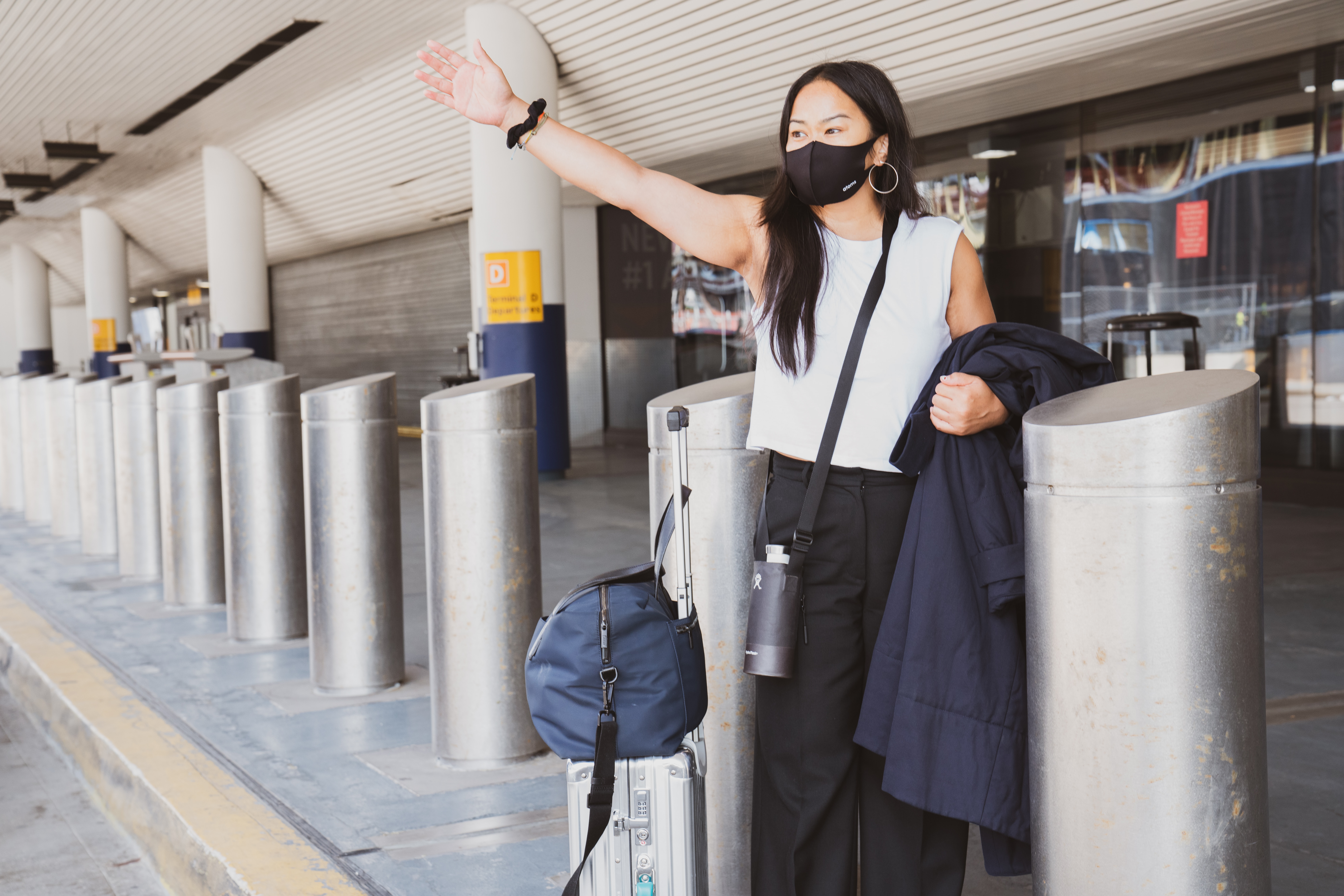
woman flagging a taxi

Image Credits: unsplash.com

If you’ve never traveled by yourself, the first trip might surprise you a little. And that’s okay. Just…

Keep an open mind. Whenever things don’t exactly go as planned, take advantage of the opportunity to try something new or simply go with the flow. Rigidity gets us nowhere. Stranger things can be fun!

Also, take small steps to get used to traveling alone. Folks who do not dare to take the first step, why not start by making short trips to neighboring countries? This will help you get used to the idea of being alone gradually without having to deal with the nerves of traveling to a faraway land right from the get-go.

And please, when in doubt, take flight. Whether it’s an invitation to visit a lesser-known local pub or a dodgy alley that doesn’t scream “Explore me!”, walk away.

Advantages of solo travel that last beyond your trip

For peeps who’ve tried it once but are still uncertain, I urge you to give it another go. That’s because the beauty of solitary travel and the advantages it brings is priceless.

There is more room for self-reflection when your daily schedule is not determined by what someone else wants to do or by the feeling that you must tread along to avoid unnecessary conflict (even besties fight on trips!). 

Because there is no one else to lean on except for yourself, you build on your confidence to face challenges, no matter how daunting they may seem. Tip: While it’s cool to navigate unfamiliar areas by yourself, choose the safer ones.

Solo travel necessitates independence and the freedom to think for oneself, whether it’s spending hours studying a map before beginning a climb or becoming engrossed in conversation with a stranger from a completely different culture.

So, what say you?

As we close, I just want to remind us that we’re people of different personalities and what is enjoyable for me may not be for you. But still, if you’ve yet to try solo traveling, I encourage you to open your mind and try. My first solo experience was not so smooth, I’ll be honest, but it was an adventure I lived to tell (more on that when the time is right). So give your guts a chance to surprise you, and you might find that solo traveling is not as bad as it seems.


Read More...

Southeast Asia Welcomes Back Chinese Tourists

Now that China’s borders have reopened, Chinese tourists are ready to take flight! Domestic and international travel by Chinese citizens boosted in the recent months. Not to mention, the processing for passport applications began last January.

Despite the increase in international travel, the travel patterns of these tourists have changed. The usual top destinations for Chinese travelers such as Australia, Paris, Canada, and Madrid no longer pique their interest. Deterred by strict entry requirements and visa issues, many Chinese tourists have veered towards their neighbors down south.

Travel website ly.com found that Southeast Asian countries including Thailand, Cambodia, Singapore, Malaysia, and Indonesia have become the most popular travel destinations for these tourists.

GRADUAL INCREASE IN TRAVEL

According to China’s National Bureau of Statistics, Chinese tourists made nearly 170 million outbound trips in 2019. The United Nations’ World Tourism Organization added that these trips amounted to approximately US$255 billion (S$340 billion), accounting for almost one-fifth of the global tourism spending.

Image Credits: unpslash.com

What is in store for 2023? Chinese Outbound Tourism Research Institute (COTRI) forecasted that Chinese outbound travel will recover around two-thirds of those 2019 highs. This covers about 110 million border crossings from China, this year.

CHANGE IN THE TRAVEL PATTERNS

COTRI Founder Wolfgang Georg Arlt said: “The Chinese tourists we will welcome this year and in the coming years are very different from those who came before.”

He believes that major tourists attractions focusing on more nature-orientated, more outdoor-orientated tourism will win the hearts of many Chinese tourists. He highlighted the gravity of trends such as family-focused trips as well as camping/glamping.

SOUTHEAST ASIAN COUNTRIES ARE MORE EXPLORED

Countries that can accommodate the shifting needs of Chinese travelers have emerged as clear winners. For instance, Thailand offers visas-on-arrival to fully vaccinated Chinese tourists who have travel insurance. Fliggy’s Chief Strategy Officer Simeon Shi noted that “Thailand welcomed 180,000 Chinese tourists from January to mid-February”. Fliggy is Alibaba Group’s online travel platform, which serves Chinese consumers.

Image Credits: unpslash.com

Southeast Asian countries including Singapore can capitalize on their unique offerings such as Singapore’s plethora of authentic local food. Our local coffee shops, shophouses, group tours, and other cultural offerings can attract more Chinese tourists in the coming months.

Sources: 1, 2, & 3

Read More...

You Can Afford to Travel Cheap in 2023!

Believe it or not, you can travel from one country to another on a tight budget.

Learning how to travel within your budget is about taking advantage of useful websites and using different techniques that save you money. To help you enjoy your vacation, here are some ways to stretch your dollar when you travel.

#1: BE EQUIPPED WITH A PLAN

Coming up with a plan will help you maximize your budget, wherever you go. You do not have to be immensely strict with the day-to-day budget. However, you have to know how long you will be spending in each city or country, how much you can shell out, and how you will be able to get there. Leaving less to chance means fewer unexpected fees and last-minute bookings.

#2: CHOOSE YOUR DESTINATION WISELY

Some places are usually much cheaper than others. Start by researching which places are doable to visit within your budget. Maybe it’s somewhere within Asia or somewhere that is easy to get to. You can also search for countries that would give you excellent value because of their exchange rate.

#3: STEER AWAY FROM TOURIST TRAPS

Big cities and tourist spots such as the Pyramids of Giza or Santorini are often more expensive than lesser-known destinations. Even within your destination, avoid restaurants on the main strip and try to eat something from the sidewalk. Seek help from the locals as they can give valuable advice.

#4: COOK YOUR OWN MEALS

The best way to save money while in a different country is to cook your own meals. Whenever possible, you can spend a week’s worth of groceries and cook hearty meals with your partner or kids. Imagine how much you will save if you skip on restaurants when you travel to expensive destinations like Iceland and Norway.

Image Credits: pixabay.com

Pro Tip: You can save even more money by booking your flights using a VPN, switching the incognito mode, or after deleting your cookies.

#5: BE SMART WITH ACCOMODATIONS

Trade lavish hotel suites for rooms in hostels. Sharing a room divides the costs between you and your friends or family. Moreover, having communal areas will allow you to meet more people. Websites such as CouchSurfing and Airbnb provide an inexpensive option for travelers. Your host can be your gateway to insider-tips for the best eateries and tourist attractions in that neighborhood.

#6: BOOK IN ADVANCE

It goes without saying that booking in advance is usually cheaper than last-minute bookings. Prices increase, the closer you get to your departure date. Accommodation, air fares, and activities can have deals and early bird rates.

#7: USE PUBLIC TRANSPORT

Buses and trains cost less than travelling everywhere by cabs. A journey overnight on a train also means that you have one less night in a hotel or hostel to pay for. Transportation passes such as Eurail Pass (Europe) and JR Pass (Japan) can help you save money during your travel. If you are travelling around the area for a while, passes such as this can be significantly more inexpensive than just booking individual trips.

#8: PACK THOUGHTFULLY

One of the most valuable tips for travelling on a budget is to take only what you need. If you forget something, it could cost more money to buy that essential missing item. So, list down what you need and review your baggage list. Pack light whenever possible because additional baggage can cost you more. For instance, Singapore Airlines can charge you anywhere between S$6 to S$225 for additional baggage.  Do you want to pay for that?

Sources: 1 & 2


Read More...

A smooth trip ahead: How to keep the peace when traveling with a new friend

Peace sign by Golden Gate Bridge

Traveling with a new friend can be a great experience, but it can also be daunting.

How do you avoid conflicts from arising? How do you make sure that you both have a good time?

Below are some tips to help make your next trip with a new friend a success.

Practicing compromise

You’re both there to enjoy yourselves, what’s the point if you’re constantly butting heads?

Resolving conflicts is all about remaining calm on the issue at hand. Take a step back, and try to figure out why the conflict is happening in the first place. Is one person trying to take over? Are you not agreeing on what to do or where to go?

Once you’ve identified the source of the conflict, it’s time to compromise. Maybe it means one person gets to decide on dinner and the other picks the movie. Or maybe you take turns choosing activities each day. The possibilities are endless, but the goal is always the same: to consider the needs of both.

Respecting personal space

Everyone travels differently and has different comfort levels.

While you may be excited to explore every inch of the city, your new friend might prefer to take things a little slower.

Respect their comfort levels and don’t try to push them outside of their comfort zone. If they’re not interested in going out to a club, don’t get mad—just find something else to do.

Pay attention to their expressions and body language. If they’re not keen on talking, give them some space. If they’re looking uncomfortable, back off. Be considerate of each other’s feelings. If someone is tired or doesn’t feel well, be understanding and allow them to rest.

Keeping the conversation going
two ladies looking at their laptop

Image Credits: unsplash.com

Before your trip, agree on boundaries. What are your expectations? How much downtime do you want? What are your triggers?

This way, there are no surprises once you’re on the road. And, if a conflict does arise, you would have already talked about it and be able to think before you speak.

Remember: long-haul travel is already tiresome enough—you don’t need added tension from a fight with your travel buddy.

Dividing planning tasks for the trip

Divvy up the tasks so that everyone has a chance to contribute and feel like they’re a part of the planning process.

If you’re the one who’s been tasked with finding accommodation, for example, you can look for hotels or Airbnbs that are centrally located and close to public transportation.

If your travel buddy is in charge of finding activities, they can look for things that would be of interest to both of you and make sure there’s the right mix of activities planned for each day.

And if you’re both struggling to agree on what to do, there are always compromise options like using a travel app that allows you to plan out your days together step-by-step.

By doing this, you can each add in the activities that are most important to you and make sure everyone is happy with the final itinerary.

Communicating priorities and expectations

Lastly, reduce the chances of conflict by communicating your expectations and priorities before you even start packing your bags.

If you like to be on the go from sunrise to sunset, but your travel buddy prefers a more relaxed pace, it’s better to know that upfront.

The same goes for other essential details like how much you’re comfortable spending on activities or where you like to stay (budget hotel or five-star resort?).

It’s also important to respect each other’s communication styles. Some people are perfectly happy planning every minute of the trip, while others prefer to go with the flow.

If you’re a planner and your friend is more laid-back, try to find a middle ground that works for both of you. Maybe you can plot the big-picture stuff and leave room for spontaneity when it comes to the day-to-day details.

When traveling with a new friend, the best way to avoid any potential conflict is to communicate openly and honestly. Let your new friend know what your travel plans and expectations are, and be willing to compromise when necessary. By establishing some ground rules and communicating effectively, you can avoid any potential problems and have a smooth and enjoyable trip to come.

Read More...

How to politely reject a travel invitation from a friend

two ladies having a conversation

You’ve been invited by a friend to come along on their next vacation.

You’re excited about the prospect of spending some time off work, but you’re not sure if that’s the friend or group you would like to hang out with.

The decision of whether or not to travel with a friend can be a tricky one. If you’re on the fence, here are a few ways to politely reject a travel invitation from a friend.

Suggesting alternatives

Here’s a template that works like magic:

“I don’t think I’ll be able to make it this time. How about we meet for a meal before you fly?”

Honesty is the best policy

You don’t want to lead them on or make them think you’re considering their offer. The easiest way to reject a travel invitation is to be direct and say “no” in a polite way.

Keep your response short and sweet, and avoid getting into any unnecessary detail. This will help sidestep any hurtful feelings. If your friend persists, be honest and let them know that you’re not interested or you have other plans.

Ways to politely reject an invitation
chatting in the cold

Image Credits: unsplash.com

First, start by expressing gratitude for the invitation.

Let them know that you appreciate them thinking of you. And if the person is a close friend, feel free to tell them a few reasons why and how much their invitation means to you. Then move into saying why you won’t be able to join them on their trip.

When it comes to the actual refusal, don’t beat around the bush by using phrases like “maybe” or “it depends.” It’s always good to be polite but firm in your response. You can even add a little bit of humor just to lighten the mood a little.

Managing your friend’s disappointment

Let them know that even though you have no intention of going with them, you value the friendship and are thankful they thought of you.

In addition, try to avoid feeling guilty or bad about declining the invite. Remember that your friend asked because they thought it sounded like fun and wanted some company—it wasn’t a life-or-death request. So if the idea of traveling together doesn’t appeal to you, there’s no need to feel guilty about saying no!

The next time you’re invited on a trip by a friend you love but hate traveling together, remember that it’s okay to say no. You don’t have to explain yourself in detail if you don’t want to, and you don’t have to feel bad. But if you can, be honest, and be grateful for the offer.

Read More...