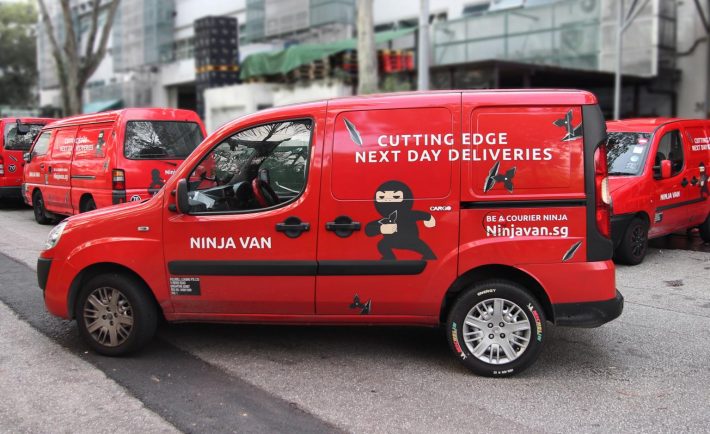
Two Ninja Van delivery drivers sentenced to jail for misappropriating items worth S$12,000, pocketing S$18,000 in cash, and mobile phones worth S$3,850

Ninja Van

If you’re an avid fan of online shopping, chances are that you’ve come across using Ninja Van as a delivery provider. When that happens, you could either be grateful or full of complaints. Well, grateful when you receive your parcels on time and possibly full of grudges when things go wrong.

I’ve had my fair share of problems dealing with Ninja Van. I’m sure the public has lots to say about the company as well – with recent news about a woman being scammed out of S$40 by a cash-on-delivery she didn’t order and frustrations about continued delays in delivery by Ninja Van.

#1: Case 1
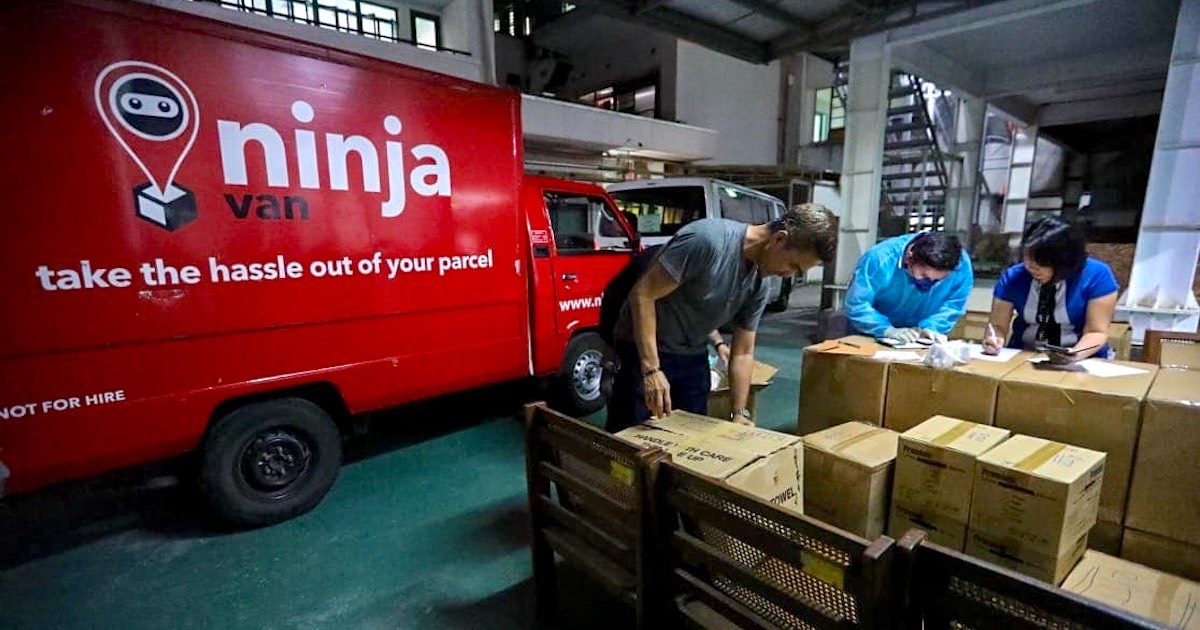
Ninja Van's warehouse

Image Credits: Vulcan Post

The first case was reported in the news on Aug 11, 2020.

Adrian Chong Yuan Kit, 38, was sentenced to seven months’ jail on Tuesday (Aug 11) for criminal breach of trust by dishonest misappropriation.

In short, over a span of three months, Chong would deliberately not scan parcels with items he wanted to keep for himself. In total, he has set aside 147 items including a massage machine, a gaming monitor, a TV set-top box, hand sanitiser, mobile phones, and soap worth up to S$12,104 for his personal gain.

The police raided Chong’s home and recovered all the items, though nothing was said regarding the customers who were affected by his crime.

How the act was discovered

End of April this year, Ninja Van conducted an internal audit to check on lost parcels in an attempt to better streamline the system. During the audit, they noticed a spike in the number of missing items under Chong’s charge since Feb 2020.

As a follow-up, a manager at Ninja Van planted a parcel containing a bottle of Dettol soap and a Huawei mobile phone meant for delivery outside Chong’s assigned route on Chong’s assigned pallet on May 21.

Based on Ninja Van’s system, Chong was supposed to receive an error message and return it to his supervisor since the parcel was not meant for him to deliver. However, even after Chong finished loading all the parcels from his assigned pallet into his van, he did not receive any error messages.

He was immediately confronted by the manager in which he then admitted to taking it dishonestly. A police report was filed the same day.

#2: Case 2
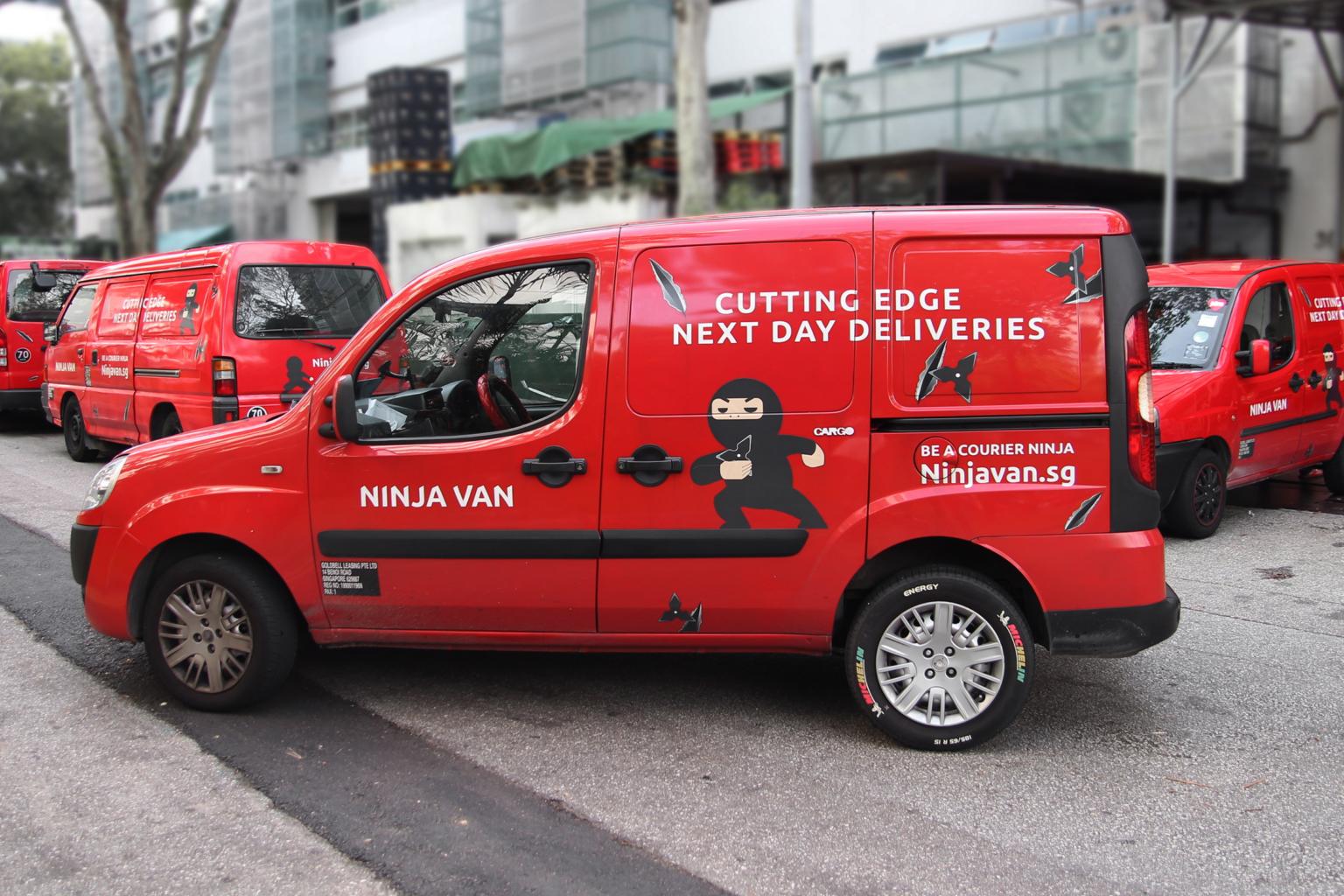
Ninja Van

Image Credits: The Business Times

The second case was reported in the news on Aug 19, 2020, a week after the first case.

Derrick Tan Jian Sheng, 35, was sentenced on Wednesday (Aug 19) to eight months’ jail for pocketing more than S$18,000 in cash as well as mobile phones worth S$3,850 from Ninja Van customers.

According to the court, Tan started committing the offences within a month of joining the company in April 2018. To be exact, between May 22 and Jun 11, Tan made 72 deliveries involving cash-on-delivery items and trade-in mobile phones.

The cash of S$18,555 he collected from customers and 16 mobile phones worth a total of S$3,850 was partly used to pay off his personal debts to the Land Transport Authority and loan sharks. Tan sold the phones on Carousell.

How the act was discovered

On Jun 8, 2018, Ninja Van’s finance department told Tan’s manager that there had been multiple inconsistencies from deliveries Tan made. Although the relevant deliveries had been completed, the money and mobile phones that Tan collected were not returned to the company.

Tan’s manager arranged to meet him but he did not show up. A police report was then filed. Tan was traced to M Hotel using the GPS in the company van assigned to him, where he admitted that he had taken the items and cash.

Food for thought

In response to the matter, a Ninja Van spokesperson said that there was “no impact to end customers as the restitution was between us and our clients in question”.

But we can’t help but wonder, how were the customers with lost parcels compensated? Based on the company’s FAQ section, it is stated that “Ninja Van will be subject to a certain amount of liability per parcel in cases of loss or damage.”

If it’s only a “certain amount of liability”, then how is this “no impact to end customers”? What are your thoughts?
Read More...

EZ-Link and Touch ‘n Go have launched a dual-currency cross-border card you can use in Singapore and Malaysia

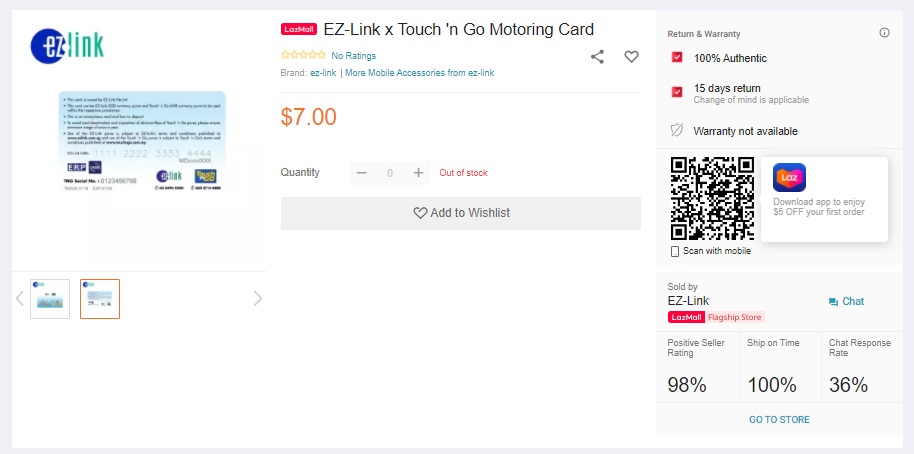
EZ-Link x Touch ’n Go Motoring Card

With the implementation of the Reciprocal Green Lane and Periodic Commuting Arrangement at the Singapore-Malaysia border, comes the news of the launch of a new dual-currency contactless card.

EZ-Link x Touch ’n Go Motoring Card

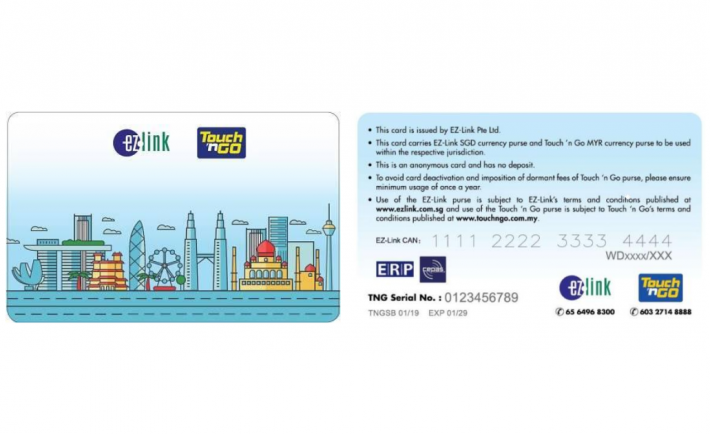
Termed as the “EZ-Link x Touch ’n Go Motoring Card”, it will allow users to store both Singapore dollars and Malaysian ringgit in two electronic purses on the same card.

“The EZ-Link x Touch ’n Go Motoring Card offers motorists the convenience and flexibility of payment options in both countries,” said EZ-Link in a news release.

“Our EZ-Link x Touch ‘n Go Motoring Card will bring a new level of convenience for motorists who have to travel between the countries often, and offer added safety and flexibility in contactless payment options,” EZ-Link Chief Executive Officer Nicholas Lee adds.

Ways to use the card

In Singapore, the EZ-Link x Touch ’n Go Motoring Card can be used for Electronic Road Pricing (ERP) payments, checkpoint toll charges, and parking fees at some car parks.

While in Malaysia, it can be used to pay highway tolls, checkpoint toll charges, parking fees, MRT, and even bus fares. It is also accepted at Touch n’ Go retail outlets.

Where to buy?

According to EZ-Link, the card can be purchased on the official EZ-Link store on Lazada at S$7 with no load value.

We wanted to purchase one but it was out of stock at the time of writing. You may want to check to see it’s available for purchase in the coming days.

EZ-Link on Lazada

If you can’t get one this month, fret not. In September, it will be available for sale at selected 7-Eleven convenience stores in Singapore for S$10 – inclusive of a S$3 load value in the EZ-Link purse.

You can top up the EZ-Link purse and the Touch ‘n Go purse at regular channels in Singapore and Malaysia respectively.

FAQs
#1: Can I use the EZ-Link x Touch ‘n Go Motoring Card to pay for foreign-vehicle entry fees at the customs when I am travelling from Singapore to Malaysia and vice versa?
For Singapore-registered cars travelling into Malaysia

You may use the EZ-Link x Touch ‘n Go Motoring Card to pay for toll fees entering into Malaysia. 

For foreign-registered cars travelling into Singapore

You can’t use it for payment of Vehicle Entry Permit (VEP) fees.

#2: Where do I top up my EZ-Link x Touch ‘n Go Motoring Card?
Topping up in Singapore

Please top up the EZ-Link purse of your EZ-Link x Touch ‘n Go Motoring Card at 7-Eleven outlets, DBS/POSB ATMs, OCBC ATMs, AXS Stations, top-up machines at PA Community Clubs and Water Venture Outlets, and at selected car parks that accept EZ-Link card payments. Top-up fees apply at certain top-up channels.

Topping up in Malaysia

Please visit this page for top-up locations for the Touch /n Go purse of your EZ-Link x Touch ‘n Go Motoring Card. Please note that top-ups are not available at all 7-Eleven outlets in Malaysia.

#3: How long can I use my EZ-Link x Touch ‘n Go Motoring Card for?

The EZ-Link purse in the EZ-Link x Touch ‘n Go Motoring Card has a lifespan of 5 years whereas the Touch ‘n Go purse has a lifespan of 10 years. You can continue using the Touch ‘n Go purse after the 5 years’ lifespan of the EZ-Link purse.

Read More...

Grab might be implementing a 0.32 SGD platform fee on each ride to help cover its costs

Grab Platform Fee Featured

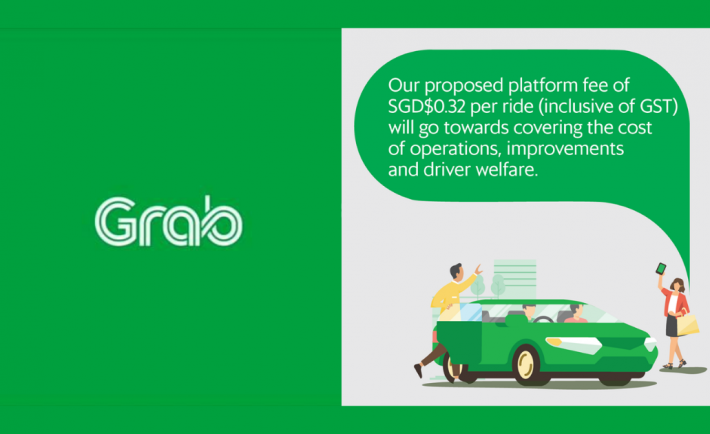
This could be bad news for passengers on a Tuesday afternoon. This is because news has it that Grab has applied to the Competition and Consumer Commission of Singapore (CCCS) to implement a 0.32 SGD (inclusive of GST) platform fee on each ride.

What a way to end the month of July.

GRAB’S JUSTIFICATION

According to CCCS, this platform fee will enable the ride-hailing company to maintain and enhance its safety measures and operating costs. One-third of the funds collected through the platform fee will be used to provide better welfare for its drivers.

Grab’s managing director for transport, Andrew Chan, has added that with the funds collected, Grab will be looking into various enhancements. These include doubling the benefit coverage of personal accident insurance for private-hire vehicles. They are also in discussions to provide training allowance for drivers to upskill and make a greater contribution to the GrabCar Medisave Match Programme.

“We hope to seek favourable responses from our driver-partners and passengers through this public consultation process, and look forward to providing an even more enjoyable ride experience that value-adds to their everyday lives to them,” said Mr Chan.  

They have also further explained that this move is in line with the ride-hailing industry as a whole. For example, Gojek has also imposed a 0.70 SGD platform fee. While other overseas ride-hailing services are also charging service or booking fees.

HEAVY INVESTMENTS ON TECH IMPROVEMENTS

To give grounds for their application to implement a platform fee, Grab has also directed the public’s attention to the heavy investments they have made on tech improvements.

Mr Chan has stated that more than 80 tech improvements were implemented on the platform in 2019. He’s referring to features like number-masking, the emergency button, and driver identity verification for its users’ safety and security. The driver telematics and heat-map also support their driver-partners’ well-being and livelihoods while they are on the roads.

APPLICATION-IN-PROGRESS

There’s nothing to worry about right now since Grab is unable to change its prices without consent from the CCCS.

In fact, after its acquisition of Uber in 2018, CCCS has issued specific directions to Grab. With the guidance in place, the company can only maintain its pre-transaction pricing, policies, and product options.

HAVE YOUR SAY IN THIS

It’s great that the public can have a say in this. Thanks to CCCS, you and I can offer our feedback on this issue from now till 11 August, by 5pm.

If you feel strongly about this implementation as a Grab user, send your feedback to CCCS via this email: [email protected].

Read More...

Fuel-saving tips as we start hitting the roads again

As Singapore moves into phase two starting 19 June, more of us are hitting the roads once again. Whether it’s to work, taking out our favourite local food, or visiting our loved ones, traffic’s going to be bustling again. If you have the privilege to continue owning a car this trying period for many, we’re truly glad for you.

However, we understand the costs that accompany car ownership in Singapore. Car insurance, servicing costs, and road tax are just some of the payments tagged to driving. Hence, we’ve curated a few fuel-saving tips to help you manage some of your expenses. As the saying goes, ‘habits maketh man’ (and women, of course) so read on and see if you can incorporate some changes to your driving style.

#1: GO EASY ON THE GAS PEDAL

If you’re feeling guilty just by reading our first tip, you’re probably not alone. Many drivers on the road seem to be having a racing competition. By that, I mean going full-on the gas pedal when the light turns green. Or suddenly braking on red lights or stop signs.

Presuming that you’ve been driving in this manner for years, it’s definitely tough to change since you’re already accustomed to this style. However, if you want to save some fuel, it’s time to start making changes. Gently step on the gas pedal to start moving and release it slowly when you want to stop. This will greatly reduce your fuel consumption and spending in the long run.

#2: REMOVE UNWANTED ITEMS

Were you expecting this fuel-saving tip? Maybe you think that the picnic mat left in the car a year ago won’t do much damage. But hold on to that mindset and you will realize that your car is currently like a dumping ground.

Apart from spring cleaning at home, do it for your car from time to time. You may be wondering why we’re advising you to do that. That’s simply because the heavier the car, the more energy it needs to get it moving. Just imagine how it was like to move around when you were at your heaviest. To make sure your car is consuming fuel at the right amount it should, start clearing and stop dumping.

#3: IDLE NOT WITH THE ENGINE ON

Image Credits: unsplash.com

Waiting for your significant other to knock off work? Or fetching the kids from their enrichment classes? Often times, we end up waiting for longer than we expect. If you think you’re going to wait in the car for more than five minutes, turn off the engine. Yes, even when you can’t bear to part with the air-conditioning.

Every minute you spend idling around with the engine on burns more fuel than you think. Restarting the engine consumes petrol of course, but you will save a whole lot more restarting, than idling for prolonged periods of time. Of course, be smart and roll down the windows first if you don’t want to open your car doors to allow air circulation.

#4: CHECK YOUR CAR’S TYRE PRESSURE

We pay little attention to our car’s tyre pressure most of the time. But it is recommended that you have it checked at least once a month. Refer back to your car manual to see the optimum tyre pressure for your car, which should be in the 32 to 35 psi range.

Staying in the recommended range is essential because low pressure will increase friction between your tyres and the road. You’ve probably recalled learning in school that energy is required to overcome friction. By now, you should know that any factor that requires energy equates to more fuel consumption. A little inspection will go a long way, my friends.

#5: SEND YOUR CAR FOR MAINTENANCE

Even if you have a can’t-be-bothered attitude, the least you can do is to send your car for regular servicing. Based on the experts, it’s best to send your car for routine servicing twice a year or at every 10,000km mileage interval. Parting with small money now will reap great benefits in the long haul. Be wise!

Read More...

Will Mixing Other Brands Of Petrol Harm Your Car?

As you may know, petrol prices in Singapore remain unchanged despite the plunge in oil prices. According to Bloomberg, a barrel of West Texas Intermediate crude was at a record low of US$1.69 last Monday (April 20). While, Brent crude was at US$25.92 compared to the US$74 usual price 12 months ago.

If you are happy with the performance of your usual petrol, that is great! You can stay loyal to that brand. However, unsatisfied customers may still search for another brand. To save money during tough economic crisis, will mixing other brands of petrol harm your car?

A short answer – it will not. Usually, any commercially available gasoline that passes industry standards would suffice for almost any gasoline-powered vehicle. Putting a higher-octane petrol into your car will neither help nor hurt your car’s performance despite the variations among engines.

The answer may vary from person to person, even among drivers who own the same vehicular models. You see, some people are strictly following the required octane fuel that their vehicles need. This is often due to the engine incompatibility with additive packages in premium fuels. Nonetheless, the brand that will give you the best fuel economy for your driving habits is the best one for your car.

To determine this, you need to monitor your fuel consumption over two to four full tanks. How often do you have to refill your car’s petrol on a monthly basis? Throughout this time, make the conscious effort to note down any driving conditions that you may encounter. The objective is to establish an average of your fuel consumption. The next step is to factor the cost per liter of your chosen fuel and switch to the other brand. Consider significant differences between the two.

Image Credits: unsplash.com

For safety purposes, please do not let your fuel run down the manufacturer’s recommended rating for your car. Check your owner’s manual thoroughly beforehand to cover all your bases. At the end of the day, it is all about choosing the petrol that will best suit your car and your needs. Most of the time, brands have very little to do with it.

Sources: 1 & 2

Read More...