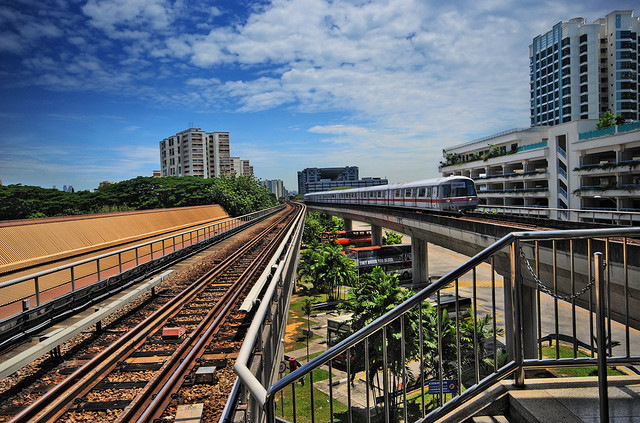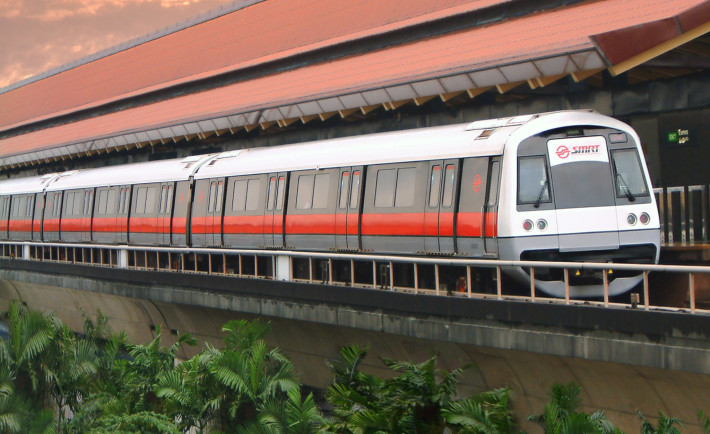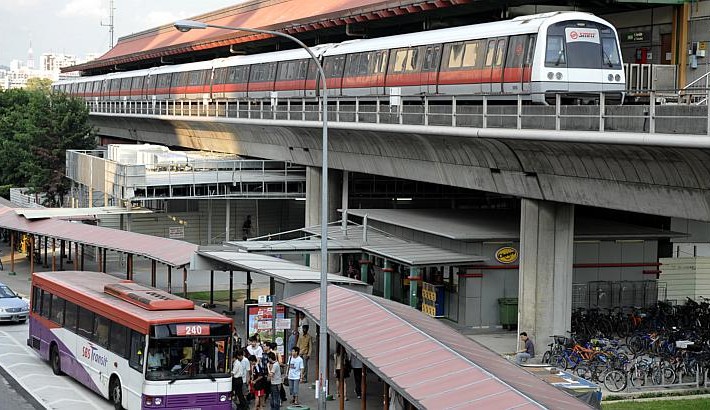
2.8 per cent hike in public transportation cost, a fare deal?

Earlier this month, Singaporeans were taken aback when we were told by the Public Transport Council (PTC) that there will be a fare hike of 2.8 per cent in April 2015. It was no surprise that it was met with public outcry when the fare adjustment did not tally with the price of crude oil which has plummeted from $110 a barrel to $45 a barrel. Gas price has in fact fallen for a record of 17 consecutive weeks as at the time of writing.

The reason that there was a increase in fare prices despite falling oil prices was because of a remaining 3.4 per cent that was rolled over from last year fare’s adjustment. Last year, fare should increase by 6.6 per cent but because implementing the full fare hike may significantly increases the expenses of an average household, the fare only went up 3.2 per cent. This year fare adjustment has in fact went down by 0.6 per cent due to lower energy cost which explained why overall there was still a 2.8 per cent increase.

The question that we may be asking is whether the increase is justifiable after taking into account various factors such as wage level, inflation rate and energy cost – the metrics used in the fare formula.

We shall look at some of the reasons that Singaporeans has voiced out.

Service level has not seen significant improvements
While it is understandable that trains, tracks and buses have their usual wear and tear, service level has not seen significant improvements since 2011 where SMRT had received two fines of $1 million for the massive disruptions in the month of December. SMRT was fined $200,000 for a 40-minute disruption in January and $100,000 for a 50-minute disruption in May last year. In 2013, SMRT was also fined $400,000 for safety breaches in October.

The most recent delay happened two days ago:

LTA and the PTOs have to restore public confidence before even talking about a fare increase – MP Liang Eng Hwa speaking in Parliament in 2013

The benefits of privatisation has not been materialised
It was believed that privatization would lead to improve efficiency and thus reduce costs. With a profit motive, transport operators will aim to innovate and be efficient in their operations. This will in turn lead to cost reduction and savings can then be passed on to the commuters.

Unfortunately this has not been the case in Singapore when the duopolistic nature of our transport system has not made our two PTOs competitive. With no overlapping of routes and a industry with a high barrier of entry, PTOs see no need to compete with each others for profits and market share. Moreover, Singaporeans also depends heavily on MRT and buses for commuting and one would fail to see how this will lead to innovation from our PTOs.

For bus services, it is clear that being privately managed does not equate to a more efficient outcome as government intervention is needed to expand the number of buses and thus improving connectivity and better service level. This is evident when the government has implemented a $1.1 billion Bus Service Enhancement Programme (BSEP) in 2012.

What about other countries? Take the British Rail for example. Railway companies in Britain had been self sufficient prior to privatisation by the government of John Major. Now Britain’s Railways are one of the most expensive in the World despite receiving four times more in taxpayers’ subsidies than a state-owned British Rail.

In fact, 60 per cent of the British have voted in favour of a public railway as they feel that it should be accountable to taxpayers than the the shareholders.
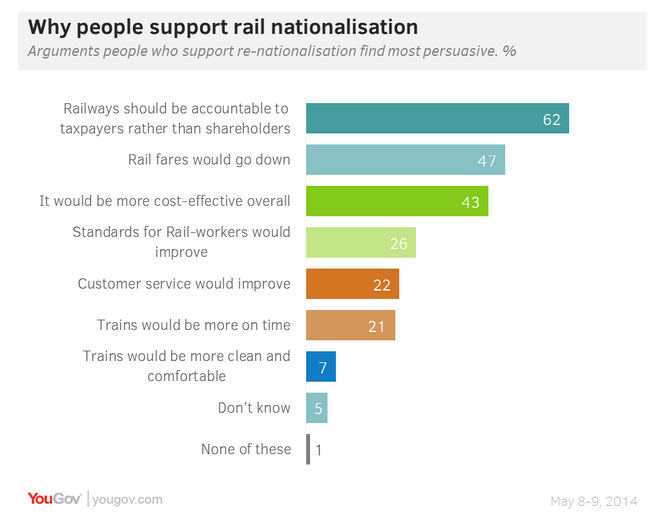
Nationalisation of British Rail

(Source: yougov.co.uk)

Comparison to Hong Kong’s MTR and Taiwan’s Metro
Hong Kong’s MTR boasts a 99.9% on-time rate for many years and is even looking at running operations in other parts of the World in Europe, Australia and other parts of Asia.
For the NSWEL performance against LTA’s Operating Performance Standards, train arrival punctuality has went south for a consecutive of 5 years.

SMRT Punctuality

Hong Kong’s MTR has also moves close to 5 million passengers a day compared to 2.5 million in Singapore, but surprisingly the frequencies and punctuality of the Hong Kong’s MTRs has managed the crowd during peak hour so well that you hardly see the crowded and congested platforms in Singapore.


If you think that commuters in Hong Kong and Taiwan are paying more for better services, you would be surprised that they actually match up or even pay lesser than what commuters in Singapore are paying.

Fares in Singapore

(Source, Public Transport Council)

Have i missed out that you can also get free WIFI at every stations in Hong Kong’s MTR, Taiwan’s Metro and even the Seoul’s Subway? Though Singapore has only recently started to offer free WIFI in selected stations, one may only wonder why we are lagging behind the rest of the Asian Tigers.

Public transport as a merit good
Public transport is considered as a merit goods and in Singapore where land is scarce, the role of MRT and buses help to reduce private vehicles ownership and thus reduce road congestion. By increasing fares when prices of fuel and COE are decreasing, are Singaporeans getting the wrong signal that one should consider owning a private vehicle? For the extra comfort and convenience, it would be no surprise to see more people choosing car as their mode of transport.

Moreover, another benefit of public transport is that it reduces pollution as less vehicle on the roads would also means less air pollutants emitted to the atmosphere. This generally leads to a better quality of living with healthier individuals.

Less taxpayer’s money is also spent on infrastructure costs such as building more expressways, expanding roads and increasing parking lots which could have been better used to improve and subsidise healthcare costs.

Public transport operators to earn supernormal profits
Should public transport operators earn supernormal profits at the expense of its citizens and taxpayers? Everyone has contributed to the construction of roads, railway tracks and depot stations (whether you use it or not) in the form of tax. In fact, public transport operators in Singapore is one of the few that is profitable in the World with a farebox recovery ratio of 125% in 2008.

The truth is taxpayers and majority of the people have no interest in SMRT or SBST. Whether the PTOs are making a dollar today or a million dollar tomorrow, unless you are its employee or shareholder, it hardly matters. What commuters are concerned about is how fares adjustment will affect them and their standard of living.

Critics may argue that profits are dwindling for the past few years due to increasing operating costs. The decline in profits is evident in the chart below.
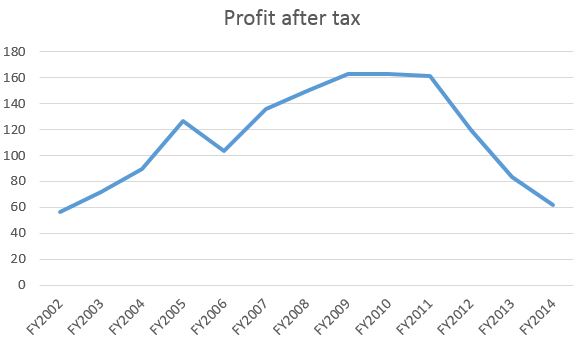
SMRT Profit After Tax

(Source: SMRT Financial Statements, in $millions)

As one may have expected after the spate of disruptions in 2011, we expect the transport operator to step up on improving its ageing trains and tracks.
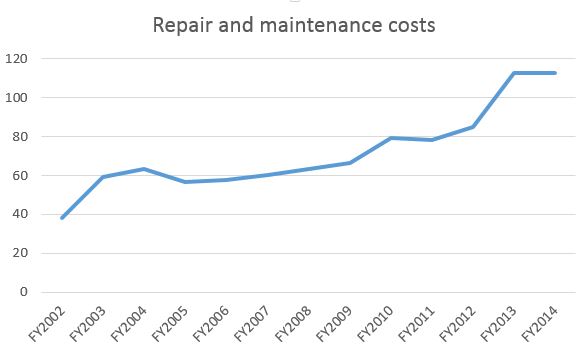
SMRT Repair & Maintenance Cost

(Source: SMRT Financial Statements, in $millions)

Staff and related costs also increased because of the need to hire more staff to handle the increased ridership in MRT and buses.
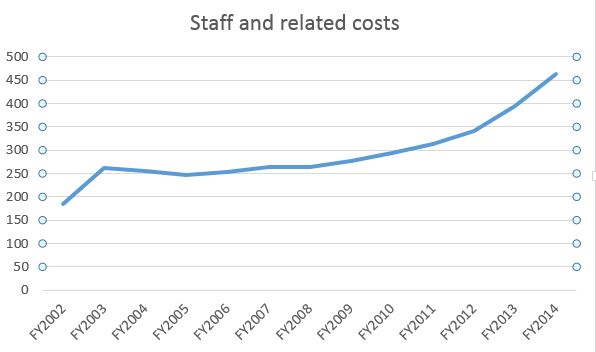
SMRT Staff Cost

(Source: SMRT Financial Statements, in $millions)

What is important here is not finding out why the profits of transport operator declined but rather asking ourselves what is the appropriate level of profits that public transport operator should make?

From the charts above, one can see that profits has climbed sharply from 2002 to 2009 while the costs has been relatively flat for the same time period. What does this tell you? One would expect the profits to soar to a high of $162.9 million in FY2010. Were the amount allocated to repairs and maintenance sufficient to keep our trains moving with minimal disruptions? The Attorney-General’s Chambers (AGC) don’t think so.

What about staff and related costs? It’s realistic to say that Singapore’s population has been increasing every year and this would thus lead to increased ridership. It is surprising to see that staff and related costs have been rather stagnant before FY2009. It is no wonder that during these period, Singaporeans were complaining about congested trains and buses and the long wait for buses on certain routes and the need for the government to implement BSEP.

The achievement would have been commendable if some of these gains were passed on to the commuters as cost savings and not as dividends to shareholders. Ideally, in a nationalised transport system, these profits would have been reinvested to improve the standard, increase reliability and keep fares affordable.

Now ask yourself if the benefits of a better, cheaper and more reliable public transport has been realised? Has the increased profitabilty of privately owned transports translated to better services?

The principle for setting fares was clear. Fares will be kept as low as possible, consisted with collecting enough revenue to meet the running costs of the MRT, replace parts and equipment regularly and provide company shareholders a reasonable return. – Transport Minister Yeo Ning Hong, 9 July 1986
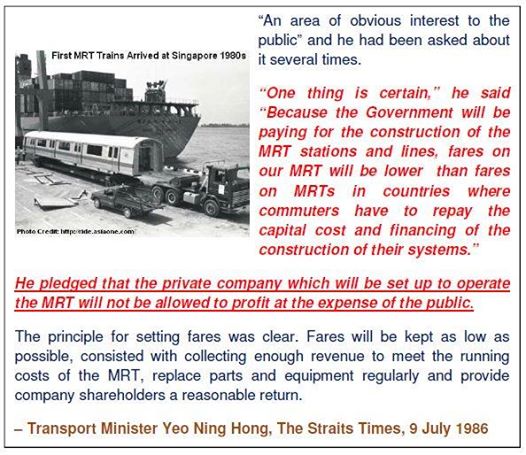
Singapore MRT 1986

What’s your view on the fare increase? Is the fare adjustment, a fair one? Share your thoughts with us.


Read More...

4 Saving Tips You Must Know Before Buying Your Dream Car

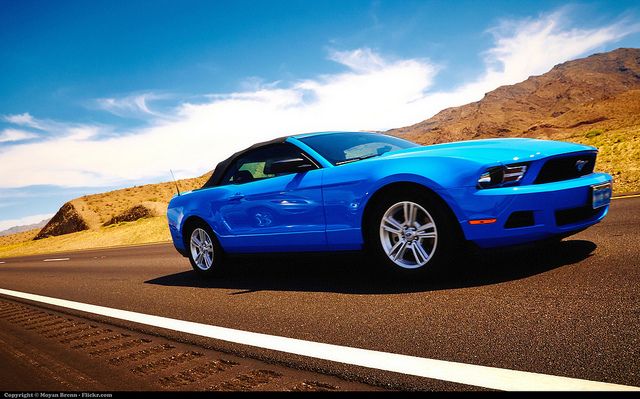
Aside from your wedding or your house, a car is one of the biggest investments you will make in your entire life. You do not want to pay more that what the car is worth or get stuck in paying your car loan. This is why it is paramount that you do it right.

1. TIME IS ESSENTIAL

Due to working hours, circumstance, and quota system, the best time to shop for a car is on the last weekdays of the month.

Most car shoppers visit the store during weekends where salespeople are usually busy. To ensure undivided attention, purchase a car early in the week. It is best to purchase later within the day, as salespeople are anxious to get home so they will spend less time negotiating. Lastly, best deals are at the end of the month especially if the dealers are just a few sales away from reaching their quota to meet their incentives.

2. BUY THE OLDER MODELS

Instead of buying a new model of car and losing a great deal of money, purchase a car that is at least 1 to 2 years older. Some may even take second-hand or used cars into consideration.

3. RESEARCH TO BE ENLIGHTENED

Determine how much you want to spend and whether you want to buy a brand new or secondhand car. This will give you a view of how long you have to save to replace your current car (if applicable). Research on the real value of your car options to see if you are getting a good deal.

4. RESIST THE UNNECESSARY

Dealers may make you pay more that you have intended so be firm and him or her that you mean business. Since they work on commission, they may offer you warranty, road service packages, and so on. If it is not needed, say no and stick to it.

Image Credits: JOHN LLOYD via Flickr

Image Credits: JOHN LLOYD via Flickr

Don’t allow yourself to feel uncomfortable and pressured into anything you are not interested in. If you go with a certain number in your head, stick to it. Now is not the time to stray from your budget.

Read More...

6 Surprisingly Fuel Efficient Cars That Will Save You Thousands of Dollars

Oh how sleek does the Lamborghini Aventador look? Despite its deceiving beauty, the annual fee of fuel will cost you about S$7, 265.

Image Credits: Corentin Foucaut via Flickr

Image Credits: Corentin Foucaut via Flickr

If you are just burning tons of gas in the process, is it really worth to purchase?

Now, fuel efficiency may undermine “beauty” but its purpose will help you save a lot in the long run.

In Singapore Streets

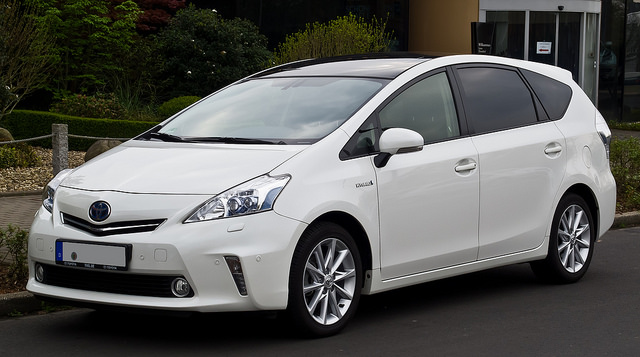
6. Toyota Prius

Masked in Singapore streets are fuel-efficient cars. One of them is the exciting Toyota Prius. It has been one of the first mass-produced hybrid vehicles.

Image Credits: Image Credits: M 93: „Dein Nordrhein-Westfalen“ via Flickr

Image Credits: M 93: „Dein Nordrhein-Westfalen“ via Flickr

The annual fuel cost is about S$1, 816.

5. Peugeot 508 RXH Diesel Hybrid4

Peugeot 508 is a large family car launched in 2010. It has a strong engine, a roomy space, and a fuel-economy. Since it runs in Diesel, it will cost you about S$1, 299 for its fuel annually.

4. Mercedes-Benz E-Class E300 BT Hybrid Sedan

If you don’t want to sacrifice beauty over fuel efficiency, then Mercedes-Benz E-Class E300 BT Hybrid Sedan is the car to be! It is equipped with high-tech safety features such as radar cruise control. Surprisingly, its fuel will only cost you about S$1, 300 annually.

In America’s 2015 Car Market

3. Mitsubishi Mirage

This one-ton transportation that comes in candy colors has a maximum fuel-economy rating of 44-mpg highway. Aside from being fuel efficient, it is also loan efficient.

It costs about S$18, 280 to own it in United States.

2. Ford Fiesta

Ford’s smallest sedan is a Diesel saver as it goes to about 45-mpg in the highway. You can choose between two engines: a standard 120-hp four-cylinder or an optional 123-hp turbocharged three-cylinder. Not only is the ride balanced but its braking is good also.

You will need about S$18, 639 to own it in United States.

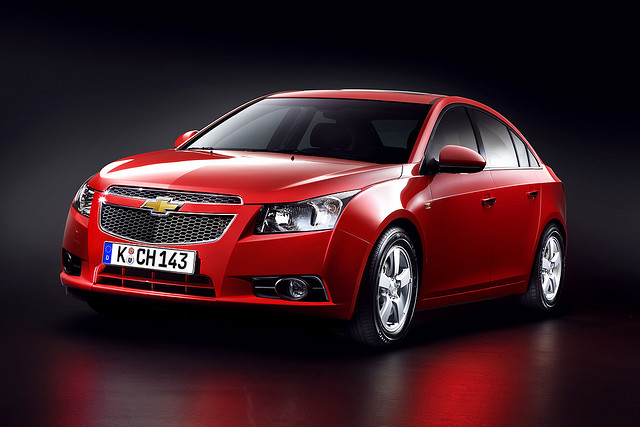
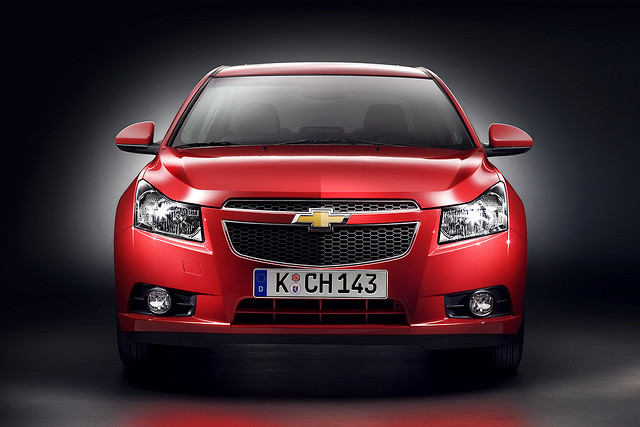
1. Chevrolet Cruze

If you value comfort and practicality then this car is for you. The Cruze will take you to a maximum of 46 mpg in the highway once Diesel is under its hood.

Image Credits: ChevroletCruze via Flickr

Image Credits: ChevroletCruze via Flickr

Its Smartphone integration and onboard Wi-Fi features will keep you connected throughout your journey. It costs about S$24, 529 to own it in United States.

Read More...

4 Free Transportation Apps in Singapore

Traveling through bus or train is certainly cheaper than owning a car. But, it is not a problem for commuters in Singapore. Singapore is celebrated by its tourists and residents because of its globally efficient public transportation services. If you think this is an exaggeration, you need to experience it yourself.

To further aid your journey, a number of mobile application rose. As you dove into iTunes and Google Play, here are 4 powerful yet Free Transportation Apps in Singapore.

1. SINGAPORE MAPS

Itunes
Google Play 

One of the challenges you will encounter if you are traveling in an unfamiliar place is to find out how to get from Point A to your destination. With Singapore Maps, you will know which route to take through bus, car, taxi or MRT. Slow internet is never a problem because you can download and unitize the maps offline!

For someone who is highly reliant on Transportation Apps, this simplistic app is the way to go. Aside from Offline Maps, it also has real-time bus arrival time when you tap the bus stop icon.

Image Credits: William Cho via Flickr

Image Credits: William Cho via Flickr

2. SGNEXT BUS

Itunes

SG NextBus, displays the estimated arrival time of public buses (SBS and SMRT) in Singapore. It can not only display the distance of the bus stop from the user but also display a widget that shows the bus arrival time. To start using it, simply tap the bus number to get its expected time of arrival.

3. SMRT BOOK A TAXI

Itunes
Google Play

If you don’t enjoy busy phone lines and long taxi queues, request taxis right on your fingertips. With the SMRT Book a Taxi app, you can book a cab without even saying your locations to a call agent. Although, booking details to be confirmed at your convenience. You may also add frequent pickup addresses through their “Favorites” feature.

Keep in mind that getting a cab during a heavy rain might be hard so it is best to secure a taxi by tapping the app and by queuing at the same time.

4. MYTRANSPORT SINGAPORE

Itunes
Google Play

The Land Transport Authority itself developed an app called MyTransport Singapore, to empower the traveling experiences of the nation. This award winning app, allows you to locate nearby bus stops and get its real-time arrival information, dial taxi booking services, determine your MRT/LRT journey fare, and receive notifications about expressway traffics.

Since the government focuses of improvements, you may report road defects through its Snap & Send feature.

Thus ends the list of efficient travel Apps in Singapore. Best of all? All of these can be downloaded for FREE in both iPhone and Android hand phones!

Read More...

3 Tips To Reduce Your Transportation Costs

When calculating our monthly expenses, usually the first few things that would come to mind are your utility bills, your phone bills and perhaps the few big purchases you made during the month. What may not be so immediately obvious, are the transport costs you incur on a daily basis!

I used to be one of those people who didn’t really think much about my transport costs, and just topped-up my EZ-link card whenever I needed to.  However, after a few months, I realised that there was something that was really burning a deep hole in my pocket. After some calculations, I realised how much transport was costing me each month! Don’t make the same mistakes I did. Here are a few tips to help you save on your daily transport costs

Take Early Morning Trains

If you take the MRT to work every day, why not wake up a bit earlier to enjoy free rides? If you tap out at certain selected stations (Bayfront, Bras Basah, Bugis, Chinatown, City Hall, Clarke Quay, Dhoby Ghaut, Esplanade, Lavender, Marina Bay, Orchard, Outram Park, Promenade, Raffles Place, Somerset and Tanjong Pagar) before 7.45am, your train ride is completely free! But what if you missed the cut-off time by a few minutes? It’s alright, you’ll still get 50 cents off your train fare if you tap out between 7.45 and 8.00am. For you to eligible for this fare rebate, the tap-in station cannot be any of the 16 stations that were listed.

Besides getting a free ride, you’ll also be able to enjoy less crowded trains, and be able to grab breakfast at a nearby bakery or coffee shop before stepping into the office! With this scheme, you could potentially shave off almost half of your entire transportation costs each month. Imagine all the things you could do with the money you saved on MRT rides alone.

Get A Concession Card

“Wait, aren’t those just for students?” you might ask. Well, now there’s also a concession card for working adults. While this concession card is certainly more pricey that that of a student concession card ($120 for the adult card), you will definitely save in the long run if you use public transport on a heavy basis. This concession card applies to both trains and buses, so you’re able to take as much public transportation you want without worrying about topping up.

Carpool

If you have colleagues who live in the area, and all of you drive, why not carpool? Each of you can take turns to be the driver, and pick everyone up to go to work together. Not only is this more fun than staring into space on the MRT or bus every morning, you also get to save on your fuel, as you won’t be using your car every day.

If you don’t have any colleagues who live in the area, why not using carpooling apps and sites, such as Tripda and Ryde. With these carpooling apps, you can find people who are going in the same direction and are willing to carpool with you. If you’re a driver, you can also find people who need to go to areas near where you’re going, then they can contribute a token sum to help you offset your transportation costs!

Read More...