If you are a student of Business and Finance, you must analyze books and films that portray salesmen, corporate consultants, traders, investors, bosses, and consumers at certain circumstances. And if you are a consumer, you must be aware of the sales tactics you must avoid. Films will not only help you to understand the dynamics of money but it will also help you empathize with the characters.
Beyond the infamous film called “Wolf of Wall Street”, here are the Best Finance, Trading, and Business Movies showcased from 1987 to present…
1. UP IN THE AIR (2009)
Ryan Bingham (acted by George Clooney), a corporate consultant, is used to life travelled in a fast lane. With his job comes the responsibility of firing employees for the companies who are not equipped to do so. His go to accessory? A handy luggage to bring all over the world because he never stops moving…until he met a fellow passenger named Alex.
In this movie you will see how the corporate culture is shown as the colleagues socializes with each other and how some people spend more time in the hotels than their own homes.
The original Wall Street film was released on 1987. This starred Michael Douglas and Charlie Sheen. It centers on a young, desperate, and impatient stockbroker who is willing to do anything just to reach the peak. Embodying the true form of greed to the point that he is willing to give up his integrity for power. Some strong dialogues from the film include: “Greed, for lack of a better word, is good. Greed is right. Greed works.”
The impact of this film served as a standard for other finance-related movies that came after.
An Indie film that garnered lots of high praise at the Sundance Festival, Margin Call, shows the effect of a million-dollar venture gone badly in the period of the Great Recession. In a span of one day, it follows the employees of the investment bank as they resolve the financial crisis at hand. Interestingly, it is inspired by true events.
Packed with talented actors such as Kevin Spacey, Zachary Quinto, Simon Baker, and Demi Moore, it will keep you on the edge of your seat as the tension elevates every minute.
If you are a fan of true events then, kicking up realism up a notch is a documentary film about the pioneering venture capitalists and the companies they helped to emerge. This Indie documentary film is called: “Something Ventured”.
With its first-person view, you will know what it takes to be the risk takers for the top companies such as Apple, Cisco, Intel, Genentech, Atari, and Tandem.
If your flight is delayed for another 3-6 hours then, it will give you enough time to catch 2-3 movies at the Changi Airport, free-of-charge! The Changi Airport boasts their 24-hour cinemas that screen the Fox Movies Premium Channel at Terminal 2 and the latest movies of various genres at Terminal 3. Whoever said that getting stuck in a transit for hours could not be great…clearly has never been to ours!
Terminal 2 is located near the Sunflower Garden at Departure Transit Lounge South while the Terminal 3 is near the Ambassador Transit Lounge at Departure Transit Lounge North. To know more about what the airport has to offer visit: changiairport.com
2. AT THE LOCAL LIBRARY
Aside from a wide array of books and electronic resources at the National Libraries, you can enjoy the beauty of performing arts especially at the “library@esplanade”. The library@esplanade offers services in the areas of dance, music, theatre, and film by providing an extensive collection of printed and non-printed resources.
It enables you to watch family friendly, classical, indie, and foreign movies for free! This shall foster learning, innovation, and creativity. They typically show films every first Wednesday of the month. For more information visit: nlb.gov.sg.
For the meantime, you may check out Queenstown Public Library’s moving screening of the “Earth From Space” documentary on May 30.
3. AT THE OUTDOORS
Looking for a perfect first date experience? Look no more as MovieMob brings you the premier outdoor movie screenings that would not cost you a cent! MovieMob, an acclaimed Outdoor Movie Specialist, screens movies to various locations around Singapore.
Since 2009, they have had about 200 drive-in cars per event and up to 800 pax per Picnic event. The overwhelming numbers is due to the fact not it showcases a unique movie experience and that you can vote which movie to watch.
A gentle reminder: arrive early to secure the best spots. Screenings are typically held every third or fourth weekend of the month. So, stay updated by visiting: facebook.com/apemoviemob.
4. AT YOUR HOME
I for one love the experience of watching movies in my own home. It gives me a chance to rewind or pause scenes whenever I need to. Also, I do not have to worry about laughing so hard or dressing up for countless minutes. What is my secret? 1 word…YouTube.
Catch a free flick or two in the comforts of your own home by watching at YouTube’s Movies playlist at youtube.com/user/YouTubeMoviesWW. It has a myriad of films that are Russian, English, Hindi, Dutch, Tamil, Korean, French, and so much more. The films under this playlist are legal as they are copyright supported.
Are you a fan of Drama and Romance movies? Well, this classic film entitled “The Last Time I Saw Paris”, starring the legendary Elizabeth Taylor, will be worth your time.
In 2014, the aspects of work of 5,000 Singaporean employees were studied by Singapore Human Resources Institute. They found that on average, the employees were considered “Under Happy” in the workplace. Creating a happier place to work in is proving to be a challenge especially when “horrible” bosses are the ones who run the organizations.
Horrible bosses do not just intrude in their employee’s personal time; they also cause huge expenses not only for the company but also for the nation’s economy. The loss of money can be attributed from either faking sick leave or having chronic stress due to the workplace dynamics. Also, the recruitment and legal costs due to high turnover rate cannot be missed!
The loss of money due to lack of productivity can be attributed from the employee’s behavior to either deliberately make mistakes out of spite or to be truly unmotivated. In a recent study by Officevibe, a U.S. based startup that offers employee-engaging activities to other organizations, respondents showed that 50% of the employees who felt undervalued are planning to look for another job the next year. In fact, 65% of them say that they would rather have a new boss than a pay hike. Yes! It is that bad.
DISSECTION OF THE LOCAL “HORRIBLE” BOSSES
In 2012, JobsCentral conducted a survey including the responses of 3,299 employees and 256 hiring managers. A whopping 31% of the respondents said that they do not have satisfying boss-worker relationship. This is because of the following reasons: lack of advancement opportunities (87.5%), lack of autonomy (80.6%), and work demands (71.1%).
The bad habits as confessed by the employers were: making the employees work during after hours (75%), regularly contacting employees that are on leave (46%), lengthening the meeting past the working hours (23%), and asking employees to run personal errands (6%).
Image Credits: Vocab Ninja via Flickr
If you do not want to be considered as a horrible boss then, take note of the actions said above. Do the opposite. Aside from that, here are no-cost tips to change your ways…
a. RESPECT YOUR EMPLOYEE’S PERSONAL TIME
Be sensitive with the employee’s personal time. They need this to shake off the stress brought by work demands. Also, they need to restore their energy so, they can be driven and productive the next day.
b. WELCOME EMPLOYEE FEEDBACK
Have a tri-monthly evaluation (i.e., occurring every three months) of the boss and the employees’ performances. Issues such as frequently shortening the deadlines and abusive behavior should be raised in confidence. This transparent culture will increase awareness and encourage necessary action.
c. DO NOT LOOK DOWN FROM A PEDESTAL
You may be the boss but you do not rule the entire world! Having too much pride to the point that you do not give credit, appreciation, or gratitude when it is due can cause dissatisfaction of the employees. As said a while ago, employees who felt undervalued are planning to look for another job. Fortunately, YOU can prevent that from happening!
In Singapore, the literacy rate among women aged 15 years and above is nearly 95 per cent and the female labour force participation rate has more than doubled from 25 per cent in 1965 to close to 60 per cent in 2014, according to Ms Sim, Minister of State for Communications and Information and Education.
However, women still have a long way to go in Singapore in achieving equality.
For instance, despite the high female literacy rate and labour participation rate, the 2015 Hays Asia Salary Guide found Singapore falling behind mainland China, Malaysia and Hong Kong.
Barely a quarter – 27 per cent – of management roles are held by women here, below the Asian average of 29 per cent.
Singapore has plenty of room to catch up with China, the region’s diversity leader with 36 per cent of leadership roles in the mainland held by women.
Mr Adam Garrard, chief executive of Willis Asia, a leading global insurance broker, said women’s career growth and development continue to be stifled in the workplace here despite research showing it is in the financial best interests of firms to promote gender equality.
He cited research by consultancy McKinsey showing that companies in the top 25 per cent in terms of female representation on executive committees performed better than the rest. Furthermore, the financial performance metrics indicated that the return on equity was 47 per cent higher and pre-tax earnings were 55 per cent better than the median.
Traditionally, women have faced more challenges than men as they have child-bearing and rearing responsibilities that can set them back a few years in the corporate climb. And there are lingering perceptions of women being more emotional and mellow, rendering them less effective leaders.
However, in modern times, supporting social infrastructure has sprouted up to replace some of the conventional roles of women. The prevalence of domestic helpers has freed females from the typical duties of a homemaker and enabled women to focus on adding value to the organisation.
This role perpetuates inequity for women. Overcoming these obstacles to societal fairness is a means to achieving proper equality of the genders.
In other words, women should be given more – if not equal – opportunities for career progression to compensate for their “natural handicap”. This promotes equity between men and women, laying the bricks for a more equal society, where both genders can compete fairly and freely.
Many people may associate women with certain feminine traits such as empathy, sensitivity, and gentleness. These stereotypes may effectively dim the women’s prospects for development and promotion at some organisations.
Worse, such outdated views can be counter-productive and inimical to the organisation’s success as they fail to recognise the inordinate value that a diverse range of behavioural traits may offer – such as varied and insightful perspectives.
The significance of gender diversity is no different from racial diversity or religious diversity.
Having a good mix of people is imperative to understanding the real needs and wants of a globalised world through the formation of a microcosm. Businesses become better informed of the cultural and economic realities and make wiser decisions.
Women here are locked in a constant struggle to juggle work and family. Alleviating this situation would encompass managing the expectations of spouses, children, and parents-in-law.
Family members have to lend their collective support to the advancement of a women’s career.
However, this does not mean women should ignore family ties. Being career-driven is a respectable virtue, but women should still find time for quality interaction with their families.
Take the cases of Ms Stella Tan, chief executive of Tenet Sompo Insurance, and Ms Jacquelyn Goh, chief executive of another foreign insurer, RSA, in Singapore.
Ms Tan said the 30-minute car journey to school is vital to fostering closeness between her and her two children through informal conversations. Both women also acknowledged that their husbands are also very supportive of their key positions in their organisations.
Bosses also play a huge role in balancing the gender mix at all levels of their organisations.
From entry level up to the boardroom, bosses can provide more mentoring and networking opportunities to speed up the learning curve, develop critical soft skills, and build contacts for future collaboration and support.
A good example is the “Women at Willis” initiative at insurer Willis Asia, which seeks out and advances talent without restriction. Willis gathers the brightest women across the world every two years at its London headquarters to promote insightful dialogue and stronger links through a series of seminars and workshops.
Implementing gender mix legislation may be one of the best ways to kick-start the move towards greater gender diversity.
Singapore can probably learn from the success story of our neighbour, Malaysia, whose government has achieved the target of making women 30 per cent of the employees at decision-making level in the public sector.
Now, this goal is being extended to the private sector and is expected to be reached by 2016.
Such targets may be controversial. However, they push employers to groom talent, both female and male. This enables the exploitation of their full potential and their different but complementary capabilities and experiences that are required to sustain business growth in a dynamic and fast-changing world.
For all the efforts applied at the individual, corporate and government levels, it is essential to track the progress made to enhancing workplace gender diversity.
Many reports measure the representation of women on company boards, but more should be done to track and measure the number of women taking on senior executive or other management roles.
This would result in a better information flow of any improvements made to the socio-economic status of women and strengthen accountability at every level.
One way is to establish the 30 per cent club here. It already has a presence in the United States and Hong Kong.
The club is steered by a group of business leaders committed to achieving gender balance at all levels through running specific initiatives such as cross-company mentoring schemes aimed at mid-career women with high potential of succeeding to the senior level.
No easy feat
Promoting gender diversity needs universal support from men and women, in the same way as campaigns to promote racial diversity did.
Reckoning the benefits of gender diversity is the first step to changing the outmoded mindset that influences actions and behaviour. It is never too late to recognise and polish the hidden gems hoarded in women.
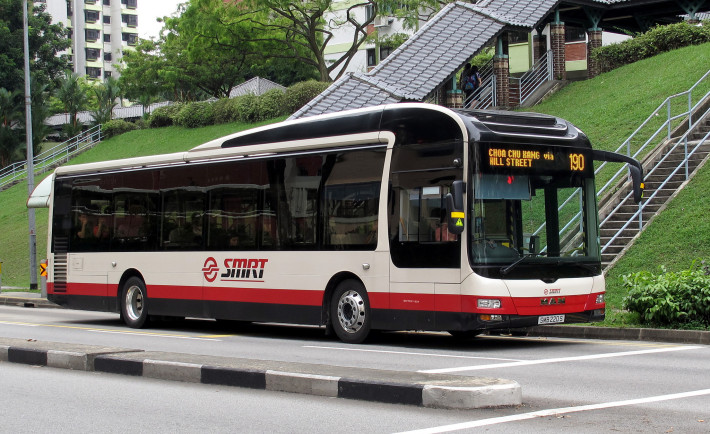
Singapore’s Public Transportation aids in the nation’s economic and environmental challenges. Most locals prefer to travel via train or bus just because it is safe, fast, and efficient. On that note, here are the background, tips, and benefits of traveling thru Public Transportation…
BACKGROUND
1. TRAIN OR MASS RAPID TRANSIT (MRT)
As most parts of Singapore are accessible by the MRT, it proves to be an affordable and convenient option. Get cheaper rates by traveling with a concession card (i.e., Child Concession Card, Student Concession Card, NSF Concession Card, and Senior Citizen Concession Card). In fact, Senior Citizen Concession Card get 25% off adult fares all day.
If you are a tourist, you are in luck! The MRT stations are made to be merely walking distance from the notable attractions such as the museums.
2. BUS
The buses provide the most picturesque view of the Lion City at budget-friendly fares ranging from S$1-3. All the children below 7 years old get to enjoy free travel. It is important to know that all commuters are charged based on their total distance traveled (i.e., no transfer costs) whether it is by bus or by train. So, the fares depend on your location and destination.
TIPS
1. MOVE TO THE CENTER OF THE TRAIN
Moving to the center of the MRT does not only help passengers to smoothly go in and out but it will also help you to get a seat.
2. CHECK YOUR BELONGINGS
Always take care of your valuables. Although your lost item can be retrieved, there is a slim chance that the finder may choose to keep it.
3. GET AN ESTIMATE OF YOUR DISTANCE FARE
Use the standard online calculator available here to estimate your travel costs. Find alternative routes to get the cheapest fare.
BENEFITS
1. SAVE CASH
It is no surprise that Public Transportation saves you more money as the price of owning a car here is overwhelming. Adding to that, going by bus or by train can help you beat the petrol price hike and the cost for maintaining a vehicle.
2. SAVE THE ENVIRONMENT
Public Transportation saves our environment as it reduces carbon emissions, petrol consumption, and congestion. Imagine if every family owns a car, given the scarcity of land, congestion will unfold.
Aside from preventing congestion, it is more energy efficient that private cars. According to the Land Transport Authority, the average carbon footprint per 10 km released by bus is 0.19kg while the by train is 0.13kg. This is smaller compared to the carbon footprint released by a private car (1.87kg)!
3. IMPROVE YOUR HEALTH
Access to Public Transportation enables you to walk to and from the bus or MRT station. That is a no-cost way to exercise! Also, it avoids the stress you may get from driving especially during rush hours.