6 points to note as more head back to the office from tomorrow (5 April)

Office workers at One Raffles Place

We hope everyone had a blessed Good Friday and a well-rested Easter weekend.

It’s time to face reality. For those who haven’t caught up with the news just yet, our government has made known last month of a shift in the style of working.

The co-chair of the COVID-19 multi-ministry task force Lawrence Wong said that instead of working from home as the default, Singapore would welcome a more “flexible and hybrid way” of working.

From tomorrow (5 April) onwards, more employees can return to the workplace and split team arrangements will not be compulsory. Here are some other points to note as we head back to the office from Monday.

#1: Different start times & flexibility in working hours

For those called back to the office, make sure that your boss is aware of the staggered start time requirements.

This is to make sure that there is no crowding at the office entrances or building lobbies before entry. The different start times will also ensure lesser jam-packed buses and trains.

In addition, your employer should be open to varied working hours, and as an employee, you hold the right to split your hours between working from home and clocking hours at the office.

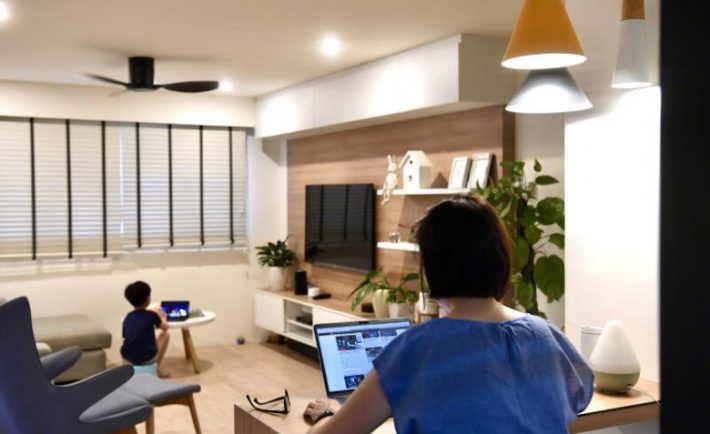
#2: Working from home still recommended

an asian woman using her laptop on a sofa

Image Credits: The Straits Times

At the moment, only 50% of employees are allowed to return to the workplace. From 5 April, the percentage will increase to 75% instead.

As the virus still lurks in the community, employers are encouraged to allow their employees to work from home as much as possible. Unless certain business operations demand in-person meetings or collaborations, working from home is still recommended.

To that, the Ministry of Manpower (MOM) added that companies should continue to keep to online meetings instead. The decision will minimise the number of people exposed at the workplace and avoid overcrowding in areas like the pantry.

#3: Vulnerable employees to be given extra notice

Folks who are 60 years old and above, be sure that your superiors are giving you special attention to lower your transmission risk at the workplace. This also applies to patients who are immunocompromised or suffering from other medical conditions.

If your job position allows you to work from home, then reporting to the office should not take priority. But for those who need to be at the workplace physically, you should be allowed to commute during off-peak periods.

Where necessary, you may also seek redeployment to another role within the company for the time being.

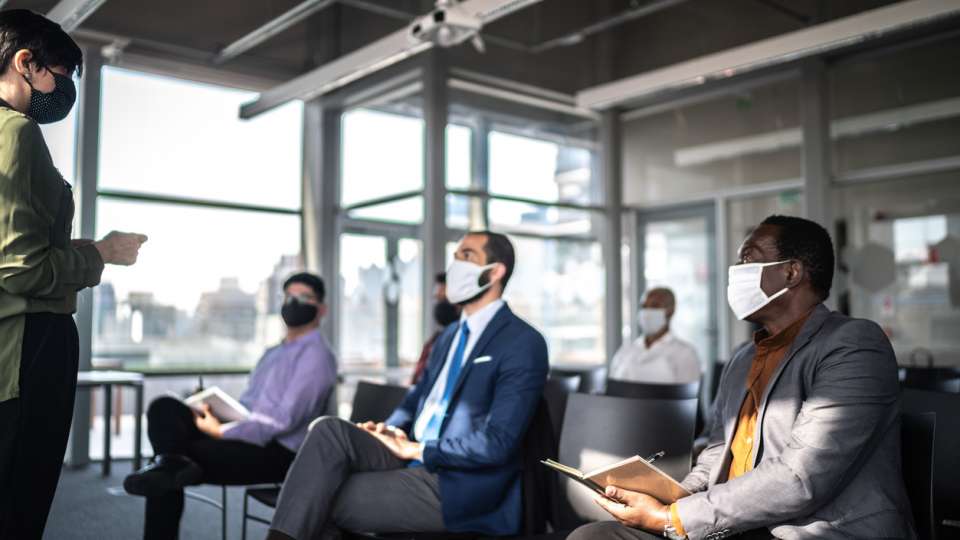
#4: 50’s the limit at work-related events
work event amid COVID-19

Image Credits: Vulcan Post

Work gatherings can only allow up to 50 people to guarantee the low risk of exposure to the virus. Attendees should also keep up with the 1m safe distancing measures when interacting with other individuals.

Sorry to disappoint, but food should not be served unless the occasion calls for it, for example, due to extended periods past lunch hour or dinner time. If there’s a need to provide food, each participant must be served while seated.

Mealtimes should also be watched such that people are masked up immediately after eating.

#5: Huat number 8’s still the limit for social meetings

Please note that work events are different from social meetings. Yes, that farewell lunch for an exceptional colleague is regarded as a “social and recreational gathering”, not a work-related affair. Our tiny red dot is still in the midst of phase 3, and only up to 8 people are allowed to gather.

Even for plans like team bonding, the rule still applies. This is regardless of it being in or out of the workplace’s boundaries. For a refresher, households can only welcome up to eight visitors at any one time as well.

#6: Face masks and disinfectants must be provided
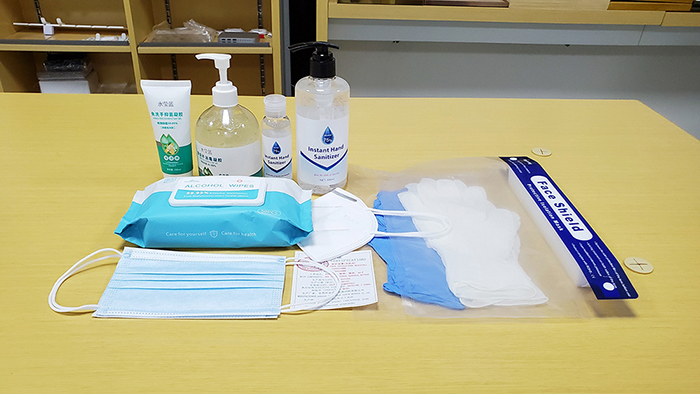
face masks and disinfecting agents

Image Credits: RECHI Retail

Peeps who’ve already been reporting to the office at alternate weeks or staggered schedules, we understand the pains of wearing a mask the entire workday. Especially those slogging without air-conditioners in humid conditions may find it necessary to change their masks more often.

Your employer should secure enough face masks for everyone in the company. “Where possible, employers should consider improving the working environment for employees to enable them to sustain wearing the masks,” said MOM.

There must also be sufficient handwashing soap and disinfectants such as sprays, cleansing wipes, hand sanitisers, and paper towels.

Final thoughts

For those who don’t have to return to the workplace from tomorrow (5 April), or at least not immediately, good for you if you’re enjoying it! With that said, you may be keen to check out our recently published article on “WFH tips to help you stay motivated”.

Working from home should not be a nightmare. Your boss ought to not take this as a chance to push you past your limits. Set boundaries between work and rest, so the lines are not blurred.

For both employers and employees reading this, you may want to heed the tripartite advisory on mental well-being formed by MOM, the National Trades Union Congress (NTUC) and the Singapore National Employers Federation (SNEF), together with HR professionals:
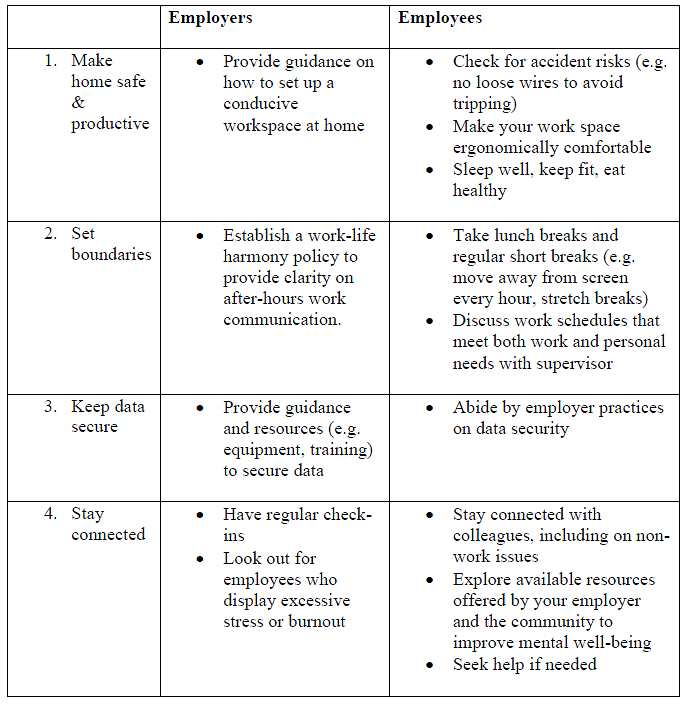
Tripartite Advisory on Mental Well-being at Workplaces

Image Credits: CNA

Health is wealth, so learn how to work when you need to and take that break when your body needs it.
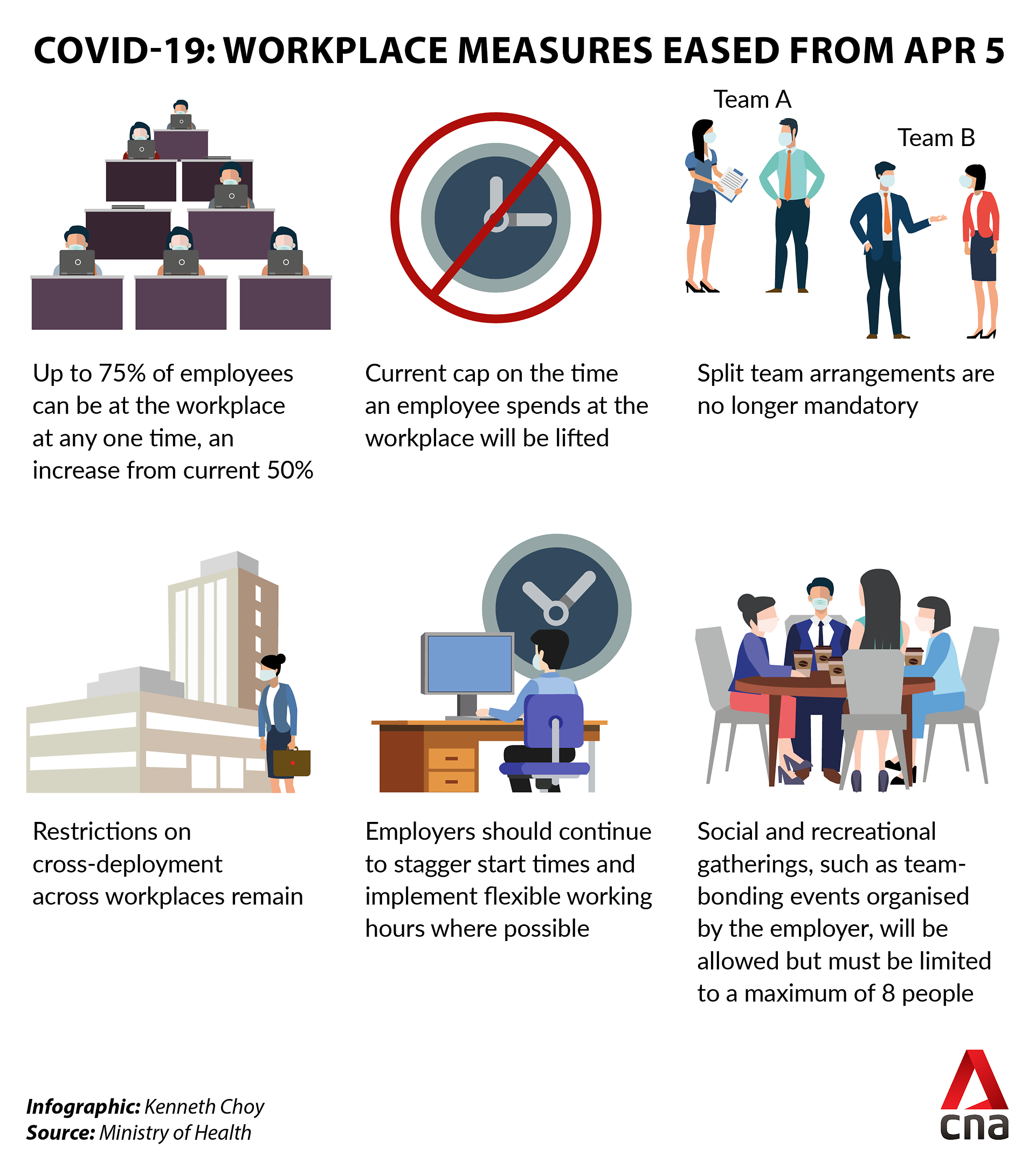
Singapore workplace measures eased from 5 April

Read More...

Are multi-page resumes acceptable?

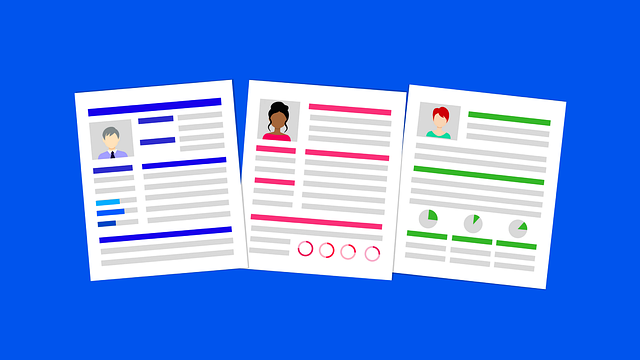
a sample resume

Anyone who’s ever written a resume knows that a fundamental rule is this: don’t go over a page.

Many recruiters may not even consider a resume more than one page and could even immediately disqualify the applicant. While other HR professionals simply don’t read past the first page and don’t take in any additional information beyond what’s easily accessible.

Keeping that in mind, the one-page resume is often the best approach for HR managers. It may even help you to stand out amid thousands of other applicants. However, it’s not always the golden standard.

Some work experiences are best suited for multiple-page resumes, particularly those requiring advanced and technical skills. When you’re applying for specific roles or trying to detail expertise in various fields, it may feel impossible to condense the most relevant information into one page.

If so, a multiple-page resume is your best bet for providing a comprehensive overview of your work experience. It can also present you as a prepared professional and highly qualified candidate.

Here are some instances where multi-page resumes are acceptable.

#1: Extensive work experience

If you’ve worked in a specific industry for many years or a decade long, your work experience can likely stretch over two pages.

Applying for positions in this same field and not including all of your career histories can be a form of short-selling. If that’s the case, go ahead and offer a complete glimpse of your talents and abilities to the hiring team.

While providing details on your most recent positions are essential, don’t be afraid to spill onto the second page if you have something substantial to flaunt regarding your past work achievements.

#2: Skilled in technicalities
Programmer at work

Image Credits: unsplash.com

Another example of a good time to pen multi-page resumes is when you have any technical skills to display.

Technical skills by nature take up more room on a page, especially if you have an extensive worth of episodes using certain technologies and software applications. You may also need to include information explaining the skills and programmes you’re familiar with, which can take up even more room.

Feel free to use an additional page but make sure that you include a brief list of technical tools and skillsets that best represent yourself.

#3: Engaged primarily in contract work

Contract work can take up page space to describe since they are usually only a year long.

When you’re covering different contracts and clients’ history, you can quickly fill up multiple pages on your resume. Recruiters likely know how contractors work, so they would be more accommodating when it comes to numerous pages of content on your resume.

But still, try to keep your main points clear and summarise the details where possible to create a weighty multi-page resume.

Final thoughts
interviewers going through a resume

Image Credits: unsplash.com

Two- to three-page resumes are likely the most a document should take up, and even then, it’s better to stick to two.

A three-page resume might be more reasonable for job seekers applying for a leadership position and have decades of experience to cover. But overall, the shorter and more concise your resume is, the higher chances it will be thoroughly read and considered.

Read More...

WFH tips to help you stay motivated

A mum working from home with a child

Working from home can be wonderful, and that’s why some professionals are hoping it won’t end. If you’re one of the lucky ones who don’t need to return to the workplace from 5 April, we’re glad for you!

While it can be difficult for parents with children, the comforts of being in one’s safe space can sometimes make it easier to focus. Who doesn’t love having the power to turn on their favourite tunes and adjust the air-conditioner to one’s desired temperature?

However, there are ugly truths to it. You would probably agree that your work-life balance has gone haywire and might make you even lazier than before. Not needing to be up early, dress up, or having eyeballs watching you surf the net mindlessly can make it easier to become demotivated.

If so, how can we enjoy the benefits of working from home while staying motivated enough to be productive? Here are some tips to help you stay motivated.

#1: Set a schedule

When working from home, it is easy to develop lousy scheduling habits.

The temptation to turn on your work laptop in bed or check your email from the couch after 6pm can be hard to resist. Thus, it is crucial to set boundaries around your work life and ensure that you work during specific hours and rest when it’s time.

Setting a regular schedule will also improve your sleep pattern and your health in general. 

#2: Get dressed before 9am
a man adjusting his tie

Image Credits: The Western Journal

Suppose that you start work at 9am, then dress up as you would if you were heading to the office.

Putting on a corporate outfit may help us refocus our mindset that it’s time to get the workday started. It’s almost the same theory as when you change to workout clothes before hitting the gym.

Treat this form of fashion as a boundary for yourself. When we have “work clothes” and “casual clothes” on, it can aid us to distinguish the kind of behaviour we should be engaging in.

#3: Separate your workspace

It is comfortable to work from our nice beds or comfy couches. However, humans are creatures of habit.

Associating our sleep areas with our work can interfere with sleep patterns. Similarly, working in a space we associate with relaxation can be a challenge for getting jobs done.

If you’ve been doing that, maybe it’s time you set up a dedicated, separate workspace to help you stay focus on completing your daily tasks.

#4: Work in chunks
a woman working at home with a table filled with documents

Image Credits: HRM Asia

Chunking is a strategy to take if you are often assigned large tasks. By breaking it down into smaller chunks, it is made more approachable and less discouraging.

For example, reading a lengthy report is hard, but reading one section can be a cinch. Instead of worrying that there is a detailed report to write this week, focus on completing a small unit within a stipulated time frame.

That is a much more achievable and far less daunting goal.

#5: Use the 30-minute technique

Speaking of breaking up big tasks into smaller ones, the 30-minute technique might go hand-in-hand.

We’re often faced with tasks that we find boring. Or perhaps you would rather prefer to be doing something else. Whatever the case may be, make yourself a deal when you find it hard to get started.

Tell yourself that you will work for 30 minutes and then take a short break. Most of the time, you might find that once you build a little momentum on a task, it’s easier to bring it to completion. Even if you don’t, working for 30 minutes is better than idling without getting anything done.

#6: Take a short walk before dabao-ing lunch
Singapore residents exercising

Image Credits: The Straits Times

Our brains need breaks. One of the best things to do on a one-hour lunch break is to go outside.

Instead of ordering in using GrabFood, foodpanda, or your go-to food delivery service, why not take a short walk before you go dabao your lunch?

Heading outdoors exposes us to sunlight and fresh air, which your body will thank you for. Plus, the change of scenery and pace is an excellent way to refresh your eyes and brain. Who knows, you might even gain new inspiration for an idea or project you’re stuck at?

#7: Give yourself a reward

Deciding to treat yourself to your favourite snack for dinner if you draw up that PowerPoint presentation for your boss can help push you to get started.

Or maybe you’ve been wanting to watch that latest launch on Netflix but haven’t started yet. If so, why not settle your job’s administrative work first and then tune in as soon as the clock strikes 6pm?

A little incentive as a nudge can go a long way to keep you moving.

Final thoughts
a woman working on her laptop

Image Credits: MSIG Singapore

Working at home can be an enriching and desirable lifestyle. But that lifestyle does bring unique challenges if we allow it to rule our lives.

If you need some motivation, try following some of the abovementioned tips to establish boundaries between your work and home life. This could help you manage your workload during the day and officially “knock-off” from work when you should.

Read More...

How To Cope With Job Loss

Speak from the heart and try to answer this question: “What do you do?”

Many of us may respond to this query by elaborating on our professions. I would do the same thing too. You see, our jobs are deeply integrated into our identities. Work helps us to satisfy our needs to earn money, to achieve goals, and to connect with others. It gives a sense of purpose and greatly affects our means of living. Therefore, job loss can be overwhelming.

It is common to feel like a part of you was lost. This loss can take a toll on your mental and physical health. As you through the process of adjustment, the next phase needs to be intentional. Let this article help you with that. Here are some of the steps that you may take after losing your job.

GIVE YOURSELF TIME TO GRIEVE AND ADJUST

The latest figures released by the Ministry of Manpower (MOM) showed an increase in the country’s annual unemployment rate. The overall Annual Average Unemployment Rate in 2020 was 3%, compared to 2.3% in 2019. Many people have experienced unemployment during the COVID-19 pandemic.

Adjusting to unemployment and grieving over job loss takes time. If you recently lost your job, it is important to accept that the process cannot be rushed. Rushing your feelings may lead to projecting unpleasant emotions during a job interview. Let everything simmer down first.

Losing your job may feel the same way as losing an integral part of yourself. You will undergo the grieving process and may feel the following stages: denial, anger, depression, bargaining, and acceptance. Do not be too hard on yourself. Accepting that these changes take time can help ease the healing process.

CHANGE YOUR MINDSET

There are two ways to perceive your current situation. In most cases, losing your job or your source of income is difficult. Whether it has something to do with your performance or with the current economic situation, it is normal to feel worried about the future after job loss.

You can either look at it as a career barrier or a temporary setback. If you look at things in a bird’s eye view, you will realize that success in life is measured by how we respond to its challenges and setbacks. It is up to you to alter your mindset.

PRIORITIZE SELF-CARE

At first, taking care of yourself is easier said than done. It is tempting to grab a bag of chips and wallow in self-pity as you sit in front of the television. The feelings you may experience in the first couple of weeks or months may be overwhelming. However, you must not neglect your own well-being.

The healing of your mental health requires physical resilience. It takes a lot of effort to take care of yourself and to build healthy habits that will keep your immune system strong. Start by being intentional with what you eat. You may even grow your own greens at home. Furthermore, you can plan out an exercise routine that will work best for you. Use your energy to fulfill productive tasks such as gardening and job hunting.

SEEK SOCIAL SUPPORT

As you are dealing with a range of emotions, refrain from isolating yourself. Having social support is crucial in times of struggle. It will help you overcome the loneliness you feel during the grieving process. Moreover, talking to someone about your current situation will help you acknowledge your feelings.

Talk to the people whom you trust. Your confidant does not have to offer upfront solutions, he or she just needs to be a good listener. Good listeners listen actively without passing judgment or being distracted. Alternatively, you may join support groups online.

ESTABLISH A DAILY ROUTINE

Maintaining a daily routine goes together with taking care of yourself. While it is possible for you to stay in bed the whole day, setting a regular schedule can help regulate your mood. Studies have shown that following a routine can help ward off depression. A routine will give you a sense of purpose and accomplishment as you complete your daily household tasks. Furthermore, not setting boundaries for yourself may lead to eating poorly or other unhealthy habits.

Write down the tasks that you aim to fulfill within the day. Maintain a body clock by setting up a timer. The timer will give you an external cue to wake up and to sleep on scheduled hours. This will help you create a sense of normalcy and prevent you from staying up all night. Additionally, you may incorporate your meal preparations, family visits, skin care regimens, and exercise plans within your daily routine. Remember that practicing self-care and maintaining good hygiene can help boost your mood.

SET LIMITS ON YOUR JOB SEARCH

Try not to add unnecessary pressure on yourself! You are already going through a lot. Despite how anxious you are to get a new job, spending all your time on job search can be stressful and frustrating. Know that you are doing your best.

Try setting aside a certain number of hours within a day for your job applications. The remaining parts of your day may be dedicated to self-care, taking care of your family, and to other productive tasks. The unexpected time off can be challenging, but you may use it as an opportunity to do something that you have always been busy for.

Image Credits: pixabay.com

What are some of the things that you have put aside because you were too busy with your job? Whether you want to learn a new language or to clean out your closet, find hobbies and projects that will occupy your time. Now is your chance to focus on the things you are passionate about!

Sources: 1, 2, 3, & 4

Read More...

You Need To Know These 7 Job-Hunting Tips

Due to the global economic shifts brought by the pandemic, the unemployment rate in Singapore raised to around 4.38 percent in 2020. Unemployment has forced many Singaporean workers to reinvent themselves and pursue different career paths. It does not necessarily mean that they will try to get back the job they once lost.

If you are one of this people, you may turn to technology for advice. As you dive into the pool of job vacancies, you will encounter a massive wealth of job-hunting advice online. It is easy to get lost in the pile of articles found in Google. Avoid overwhelming yourself.

Let me start by cutting down the list of timeless job-hunting tips to help you survive this complex process.

#1: TAILOR YOUR APPLICATION

When applying for a job online, it is highly likely that your Curriculum Vitae (C.V.) or resume will be screened by an applicant tracking system. The first human encounter your C.V. will encounter is from a recruiter or an entry-level HR officer. It is best to tailor your application to the company you are applying for. Make it obvious that you are fit for the job!

Start by studying the job description and all the available information about the vacancy. Then, mirror the words and phrases found in the job description. Showcase your strengths in the areas that are important to the role being filled. Connect your skills to what they are looking for.

#2: CONSIDER FACE-TO-FACE JOB SEARCH

While most companies accomplish the initial hiring process online and thru Zoom interviews, you must not limit yourself to online applications. Accelerate your chances of getting the job by dropping by the office and handing over the application in person.

Schedule informational interviews with would-be peers, if possible. You may also approach the internal recruiter and ask a few questions. This will get you on their radar. Remember that decision makers usually interview people who were recommended or referred. Letting the company know your genuine interest can help you set yourself apart.

#3: DO YOUR RESEARCH

Always come prepared. Do your research on your target companies. Once you know what you want, it is time to find out what the companies want.

A great tip is to find out the company’s culture and structure through their LinkedIn page and website. Figure out what questions they commonly ask during job interviews and discover the approximate amount of salary you may get.

#4: CURATE YOUR ONLINE BRAND

It goes without saying that modern recruiters search through the Web to find out who you really are. It is best to build a brand that showcases your expertise and passion. Most recruiters use LinkedIn as their primary search tool. Use it to your advantage!

Moreover, you must be cautious about you post online. It can make or break your chances of getting the job.

#5: ORGANIZE YOURSELF

During the early stages of job-hunting, you must gather all the documents supporting your claims. This includes Transcript of Records and Recommendation Letters. Ensure that your C.V. and cover letter are up to date. Then, determine how many hours per day will be dedicated to job-hunting or networking.

You can neatly compile all the professional email accounts and job interview schedules into a spreadsheet. This way, your job search process can be faster and easier.

#6: ASK PEOPLE FOR ADVICE

During the end of your job interview, it does not hurt to become vulnerable. It is alright to ask your interviewer for advice on how to build strong working relationships and how to succeed in the current vacant position. Do not forget to admire their company and the work they do.

#7: NOTICE YOUR BODY LANGUAGE

Carry yourself well during interviews. How many times have you heard this: “body language is vital in job interviews”? It is in your interest to take this advice seriously. Watch out for your posture, gestures, and non-verbal cues. These may either exude confidence or incompetence.

Image Credits: unsplash.com

Communication, much like dancing, is a two-way street. Pay attention to your interviewer’s body language too. This will help you know if you are on the right track.

Sources: 1 & 2


Read More...