Best questions to ask at the end of an interview

a woman having an interview

The interviewer will almost always ask whether you have any questions for them at the end of an interview session. Your response should always be yes because you should take this chance to pose a few relevant ones.

Remember that the purpose of the interview isn’t merely to make your future employer want to hire you. It’s also about determining whether or not you think highly of the company and if you would be a good match. You will send a strong signal that you’re engaged and serious about the position if you ask the right inquiries.

Here are some of the best questions to ask at the end of an interview.

How do you measure success?

It’s critical to understand how a firm gauges the performance of its workers. It will assist you in determining what it would take to grow your career there and whether the employer’s beliefs are compatible with your own.

Why did the previous person leave?

While addressing this may be awkward, it demonstrates that you are keen on the organization’s operations. It’s important to discover if the individual who had the position before you was dismissed, transferred, or departed on their own before you jump into the very same role.

What do you like about this company?
man and two women in a meeting

Image Credits: unsplash.com

Inquiring about your interviewer’s personal experiences can provide you further clarity into the team culture as well as assist you to establish a relationship with them. Furthermore, this inquiry may offer you an inside look at the top advantages of working for the organization.

What type of person tends to succeed here?

This question demonstrates to the recruiter that you are concerned about your future with the organization, as well as assists you in determining whether you are a suitable match for the role. Imagine the individual you will be speaking to once the interviewer reveals what he or she is searching for in an applicant. Is that somebody a close match, or is it too far from who you are?

Do you have any qualms about my qualifications?

This query throws you into a competitive disadvantage, but it also demonstrates that you are confident in your ability to tackle your shortcomings. Their response may also offer you insight into where you rank and allow you to resolve any reservations the interviewer may have while you have their undivided attention during the session.

Can you let me in on the daily responsibilities of this job?

Lastly, this question might help you understand the many facets of the job, notably if it’s a cross-functional post or a high team collaboration position. You will ideally have a better grasp of the work duties, which will aid you in deciding whether or not it’s a suitable position for you. You will also have a deeper understanding of the precise skillsets necessary.

Failure to prepare questions might give the impression that you are uninterested in the position, so consider what you can gain from the interview if you ask a few. It’s critical that you use these questions to determine whether the work is truly appropriate for you. Consider adding some of the abovementioned interview questions while creating your list and use the opportunity to convince the employer that you will be a valuable asset to the team.

Read More...

Don’t accept the job offer if you face these circumstances

job interview

Accepting an unsuitable job offer is a common blunder made by many job seekers. A large portion of this is attributable to the joy of receiving a contract in the first place. Finding out you’ve chosen the wrong job can be a self-searching or blaming experience later.

However, if you’ve been listening closely or questioning yourself in the right direction, you will notice warning signs along the way that point to a rotten egg. Here are some telltale indications that the job is a flop to help you avoid making a career-altering misstep.

High turnover rate

You don’t want to work for a corporation for less than a year, do you? While this is unfortunate, certain office environments are indeed unhealthy. Consider inquiring as to what happened to the former occupant of the same post. Start examining alternatives if your interviewer begins slamming past employees or mentions anything that suggests the organization has a high turnover rate.

Dodgy on inquiries

If an interviewer brushes off your questions, he or she may have something to conceal. Because an interview is a brief glimpse into what your life may be like at the organization, you should bring up both the exciting and challenging aspects of the job. Consider it a method of determining how open people at the company are. If the interviewer avoids answering any questions, it’s a warning indication that they’re intentionally concealing the facts.

Forced to compromise

Ask yourself ahead of time what attributes you want in a position, and then see if the proposed post meets all of your requirements. Don’t make a rash decision if you find yourself sacrificing on your must-haves and then justifying those sacrifices. You shouldn’t have to push yourself to fit the work in most case scenarios since it should be the other way round.

Unclear job requirements
a man drawing on a board

Image Credits: unsplash.com

The job description said that it was a marketing role when you applied. However, when you go for the job interview, you discover that it is a mixture of everything from PR to business development. Well, many current roles do combine several responsibilities into a single position.

However, gently decline the offer if your potential boss characterizes the work obligations so generically that it seems like three positions in one, and you believe they’re imprecise on essential specifics about the scope of the position.

Even if you need a position desperately, there are instances when you just have to decline and forgo those follow-up interview tests. Sometimes it’s a negative feeling, a shady interviewer, or something strange about the job requirements that give you the goosebumps. Though we can’t advise you not to accept a job because every occurrence is different, think about the above circumstances you could come across throughout your job hunt and make an informed choice before signing on the line.

Read More...

How to Deal with a Micromanaging Boss

Imagine watching a puppeteer manipulating an inanimate object for a show, except that show represents your professional life and the puppeteer is your boss. Isn’t it upsetting?

Having a micromanager as a boss can be a source of stress and frustration as it impacts your day-to-day life.

A micromanager tries to control every aspect of the work, no matter how small the detail can be. Employees can feel distrusted, dissatisfied, and disrespected. Prolonged control over all the aspects of an employee’s work may negatively affect his or her wellbeing and productivity. Quitting can be seen as a viable option if the employee can no longer deal with the situation.

However, it does not have to be this way!

#1: IDENTIFY THE TRIGGERS

Trying to understand the triggers for your boss’ micromanagement can help you be better equipped to deal with the situation. Start by identifying the reasons why he or she micromanages.

Often, micromanagers do not realize what they are doing. Perhaps, your boss micromanages because he is under a lot of stress, or he has a terrible experience with the previous employee.

Experts say that micromanaging can also be rooted from a personality trait. Individuals with strong organizational tendencies find it difficult to delegate tasks to others. These people find it hard to trust someone else to do the job as well as them, or to complete a task within their expected timeframe.

#2: ASK WHERE YOU CAN IMPROVE

Being polite and direct will serve you best. Ask your boss about the areas that you can improve on to address the company’s needs.

You can also be open about how your boss’ management behavior makes you feel by providing specific examples.

After sharing your thoughts on your intention to improve the collaboration and support, advise your boss that you are most productive when you are given the autonomy to meet those needs. You can also set weekly check-ins to alleviate the hovering.

#3: PROVIDE UPDATES REGULARLY

Micromanagers want to be in control. They want to check-in on your work to make sure that things are going smoothly to the schedule. Since micromanagers cannot do everything by themselves, they do their hardest to stay as involved as possible.

Try being proactive when sending regular updates before your boss has a chance to ask for these from you. List the things you want to accomplish within the day and email it to your boss. Regularly sending updates can serve multiple purposes.

Firstly, your boss knows exactly where your current workload stands. Questioning can be minimized. Secondly, your boss will realize how detail-oriented you are and that you can manage your own responsibilities without intervention. Lastly, it can help your boss address immediate concerns at one glance, which can reduce frequent check-ins.

#4: BUILD CONNECTION AND TRUST

Do you agree that trust is the key to any healthy relationship? Be it personal or professional, trust can build a solid foundation for you and your micromanaging boss.

When your boss does not trust your decisions and abilities, he or she will always monitor you. Developing synergy and building trust by creating time to connect and sharing what you are currently doing can help your situation. This allows your boss to create a space for growth.

Image Credits: unsplash.com

Shifting your micromanaging boss’ leadership style is not easy, and change is not immediate. As an employee, you can show your boss that you are trustworthy and responsible to inspire that change over time.

Sources: 1, 2, & 3

Read More...

Here’s how to quit your job properly

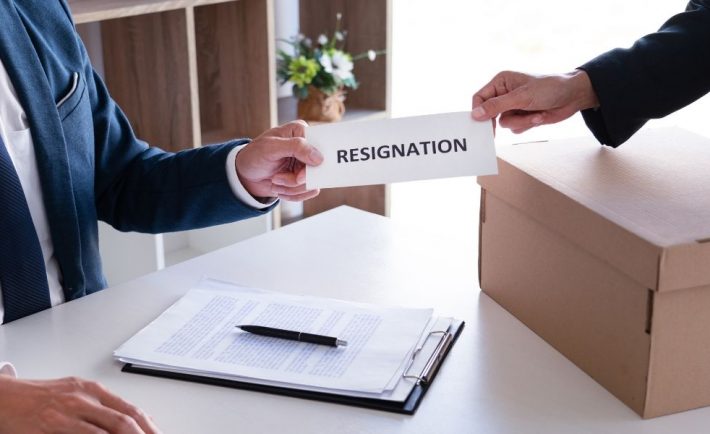
Resignation letter

Leaving a company on shaky terms can have long-term consequences, such as being shunned by other firms in your field or harming your professional image.

In Singapore, many industries are pretty small. It can be damaging to your next application process if people realize that you left your last job badly and on a sour note, or that you are quitting a freshly obtained position.

Here’s how to quit your job properly.

Set a meeting

A courteous approach is to set up a meeting with your superior. Managers are frequently packed, so emailing them a well-crafted meeting request in advance will assist you in setting up a swift meeting. Request a time slot on their schedule so you may speak with them face-to-face. Instead of quitting over an email, it’s best to have an honest chat.

Have your speech ready
a person writing something

Image Credits: unsplash.com

Organize your thoughts, then make a list of whatever you need to say to your boss before reading them aloud. This gives you an indication of how much time you will need to chat, which you will need to know when scheduling your meeting’s duration. Having prepared your speech also aids you in determining whether you require the participation of a third person in your discussion, such as an HR manager to assist you with an assertion.

Serve your required notice

A month is the typical notice period you should give a company before leaving. If you’ve entered an employment agreement, though, be sure you’re following any notice requirements. You may be content to remain longer than the standard one-month timeframe, based on your availability, more so if your new work doesn’t commence immediately. Whatever amount of notice you give, make sure you notify your organization as quickly as feasible and include your last day in your letter of resignation.

Do a proper handover before you leave
two women talking while using the laptop

Image Credits: unsplash.com

After notifying your workplace of your departure, you will most likely have some time remaining in your position before you formally leave. You should finish existing work and assignments and discuss with your manager to identify who should take over your current projects.

Keep track of your daily routines, where you’ve stored records in a database, and other relevant details that will help the next person taking over. This will guarantee a seamless transition for the new hire that takes your place. Your coworkers will also appreciate your professionalism if they have to be the ones who will share your workload for the time being.

Your business connections may help you find new possibilities in the future, and the way you leave a company creates a lasting impact. On your exit, don’t say anything negative about your boss. Make an effort to leave a favorable lasting impression, not just because it’s the respectful thing to do, but also because it can lead to chances down the road. You could end up working for the same firm, with the same coworkers, or for the same employer next time, so leave on a good note.

Read More...

How to know if I’m burned out at work?

a stressed man at work

Burnout is a condition that results from continuous working stress that has not been effectively controlled. It occurs when someone is exhausted from completing the work at hand, and the expectations placed on you surpass your capabilities.

Burnout is far more than a bad day or a terrible week since everyone has those in their jobs. Burnout occurs when you don’t have any days to rejoice for an extended length of time. You should be able to quickly grasp the situation when it’s something that has lasted more than a week or two. However, it might be difficult to shine the flashlight on yourself and notice when you are on the verge of becoming burned out at work.

Let’s look at a couple of the most prominent burnout symptoms to see if we can make things clearer for you.

Insomnia

Prolonged stress, according to research, disrupts the complex neurological and hormonal mechanism that controls sleep. It’s a downward spiral, because not sleeping causes the system to get even more out of balance. If you’ve discovered that you can’t snooze easily at night, you may be suffering from burnout.

Impatience

Perhaps you used to be a patient person who could participate in complex conversations with others. However, you’ve noticed that you’re growing increasingly annoyed with even the smallest request from your coworkers. In other words, your capacity to solve problems and interact productively with people has dramatically deteriorated.

Exhaustion
woman lying on bed

Image Credits: unsplash.com

Burnout is typically identified by weariness and a general sensation of depletion. You may experience not just physical tiredness, but also an emotional emptiness and exhaustion. So, if waking up in the morning and heading to the workplace each day is becoming more of a challenging task than usual, you might be on the verge of burnout.

Reduced professionalism

It may show itself as a refusal to speak with coworkers, tardiness in completing urgent duties, engaging in other tasks during work hours, or a lack of enthusiasm in professional development and upgrading current expertise. It could also be a sense of being misplaced or detached in work meetings and conferences.

Changes in eating habits

Burnout might also manifest itself in eating more or less than normal. People may eat less as a result of being too busy or fixated, or they may constantly need comfort foods that we all crave when we need something to lift our spirits. Hormonal changes may also impact appetite, making individuals feel fuller than normal while they’re under a huge amount of pressure and more famished than usual when the stress subsides.

Some of these subtler indications might be hard to detect, so consider the habits that are affecting your day-to-day life. Personal awareness is critical to keeping track of your health. Consider consulting a mental health expert if you’re suffering prolonged physical symptoms that might be signs of burnout to check if they’re caused by situational stress or anchored in other physical illnesses. Help is readily accessible; don’t dismiss the signs and symptoms as unimportant.

Read More...