Why content is important for SEO and how to optimize it

content for SEO

Content is crucial for SEO; without it, search engines will be unable to properly crawl your pages and assist you in ranking. In other words, it means your website’s content will never be discovered or circulated.

SEO material cannot just be any information; it must be of good quality and beneficial to the reader. The user experience is a big aspect of how Google selects which material should be at the top of the search results. To produce SEO content, you will need to understand a few basics.

Thus, let’s jump right into how to optimize it.

Target audience

Identify and communicate to the key audience that will be viewing your articles, regardless of what sector your website tackles. Identifying who your readers are and what you expect them to do after reading your article will aid in the development of your website approach.

Keyword research

Before you start writing blog posts, perform some keyword analysis on your offerings to see what your clients are looking for and what queries they have. Make sure you write content that revolves around those keyword phrases, and that the content is optimized for specific terms and expressions. You can achieve this by including the specific keywords in your article’s title, headings, meta description, and throughout the text.

Internal backlinking

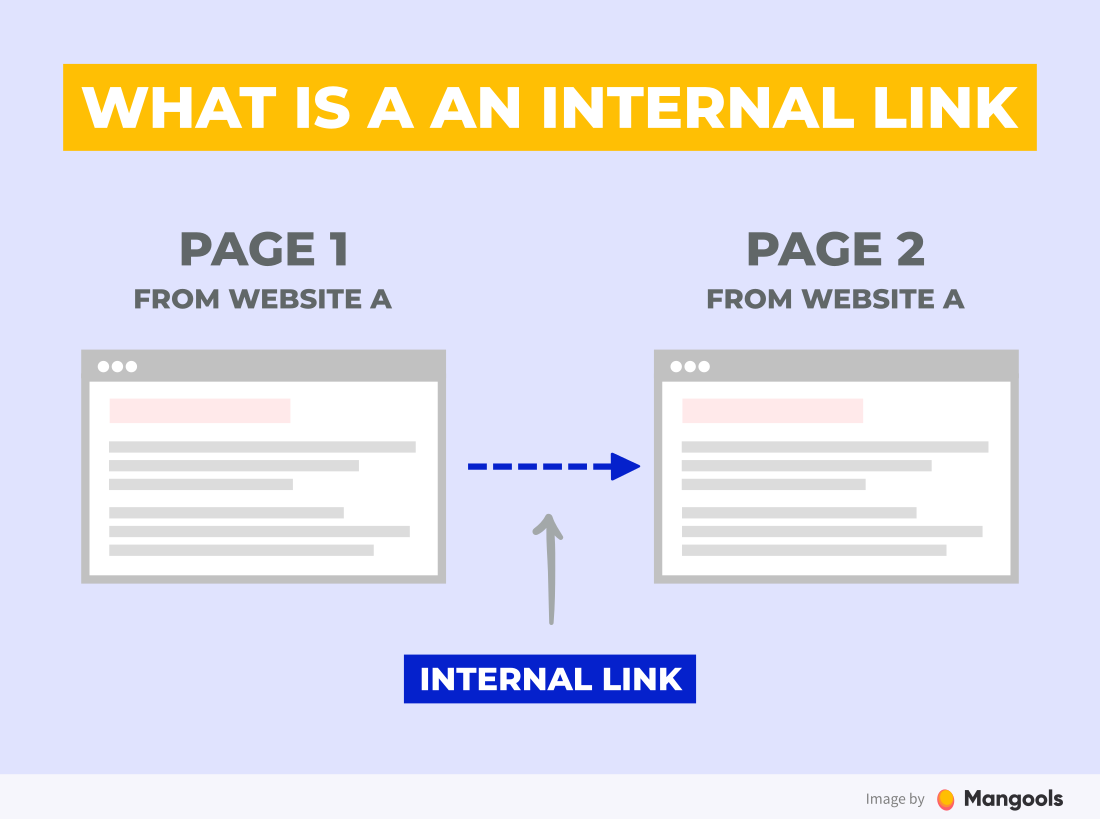
what-is-an-internal-link

One of the most significant SEO tactics is internal linking. It makes it easier for search bots to identify and evaluate your websites and allows human visitors to maneuver through your website, which improves retention and online experience.

Compile a list of similar content you already have for each new piece that could help you reinforce your thoughts or allow your viewers to investigate further. For example, if you already have an article about managing a monthly budget, linking it to another personal finance piece would be a sensible move.

Create high-quality content

The era of keyword stuffing helping you to rank well on Google’s first results page is pretty much gone. Nowadays, creative content is key, and if you want to reach your SEO objectives, you must publish high-quality entries.

The real concern now is how to continue producing high-quality content day after day. If you adopt the optimization concepts we outlined earlier, the process should be smoother, but there is still a bunch of work to be done. In essence, you should make sure that each piece helps your readers fix issues and is engaging overall.

All in all, if you want your site to show in search rankings and have more incoming traffic, you will need to ensure highly optimized material is published. Search engines don’t have enough data to effectively index and position your website pages if you don’t have enough proper content. So if you want your material to be seen online, have an SEO content plan in place.

Read More...

5 Reasons Why You Need to Learn English in Singapore

Learning English in Singapore has become an everyday staple, and it’s easy to see why. The language has become an internationally adopted and universal way of communication, both casually and professionally. It helps to be incredibly proficient since virtually every learning institution or professional field in Singapore may demand that you’re well-versed with the language. Here are the reasons you need to learn English in Singapore.

1. Positions You Better for Jobs

English has been a sought-after official language in Singapore since the 1970s. And apparently, most schools and workplaces use English to instruct, communicate and present written documents. Therefore, being well aware of the grammar, vocabulary, and perhaps the colloquialism will help you a notch. Employers usually test your English proficiency before giving you a job position, especially if it involves communicating daily. Therefore, learning English should be a no-brainer.

2. It Boosts Your Confidence in the Professional Capacity

If you’re well-rounded in the essential aspects of the English language, you’ll undoubtedly boost your confidence at the professional level. Hence, it’d be best to dedicate every resource and time to learning the language. Luckily, you don’t have to rely on the standard teaching in schools alone, but you can get a proficient online English tutor by visiting https://www.superstarteacher.com.sg/secondary-english-tuition. Learning English at the secondary school level prepares you early, and you’re likely to understand it better as you cruise through college.

3. You Can Travel Around the World and Communicate Better

Since English is a universal language used by almost the entire world, you stand a perfect chance to travel to numerous English-speaking countries and communicate without a hitch. You never know when an opportunity will present itself, allowing you to cross the borders to study or work abroad. In that case, learning English can be your added advantage, perhaps also in qualifying for college scholarships.

4. It’s a Proper Brain Tease

Learning English presents a perfect challenge to stretch your cognitive capacity to its limits. Sometimes, this language can be overly intricate, requiring a bit of wit and creativity to sound exciting or maybe professional. That way, it takes your brain for a challenge by pushing you to learn the numerous features of the language. After all, learning a new language helps deepen your intellectual capacity and improve critical thinking. Therefore, learning this language is worth the shot.

5. It’s Easy to Learn, After All

Learning English is an easy feat, contrary to popular belief. You only need to grasp the entire framework, including the figures of speech, punctuation rules, tenses, and grammar as the whole facet. These aspects of the English language are the foundation of learning the language to enable you to communicate coherently. Of course, with more practice, you’ll learn better and be the wizard you want to be!

Conclusion

Learning English is not only essential in Singapore but as easy as ABC. The language is a staple at the professional level and in everyday casual communication in Singapore. Luckily enough, you can get numerous online tutors to help you learn it better.


Read More...

6 Ways to Protect Your Business from Chargeback Fraud

A chargeback is quite annoying as it reduces the interests you’re supposed to enjoy from your business. It gets the more infuriating when you fight against a charge on your card and win but don’t get the money back. More so, you still get to incur chargeback fees.

There are laws such as the Fair Credit Billing Act (FCBA) of 1974 that protect people from fraud related to chargebacks. In this article, we’ll mention 6 ways that work in preventing chargebacks. Read on below for more information.

6 ways to protect your business from chargeback fraud

  • Use payment protocols with tight security

Payment protocols that are more secure usually have most of the following properties: AVS (address verification services), email verification methods, phone number reverse lookups, and order validation tools. Shopify e-commerce plug-ins are common examples of order validation tools.

Also, many cases of chargeback fraud result from transactions without cards. This is evident in a report, which shows that a large percentage of such complaints happen in CNP (card-not-present) transactions. This means that using cards for transactions can help reduce the cases of chargeback fraud.

  • Keep a record of all your transactions.

When disputing a chargeback, you’ll need evidence to make your claims more validated. You can easily misplace receipts, but that’s not very common with a book of important records. Luckily, your phone can serve as a handy notepad that you can access anywhere.

Also, you can keep pictures of receipts on your phone or Google drive for easy access. The records will also help you to retract your chargeback. Sometimes it could simply be that the customer forgot about the charge. The records will still serve you either way.

  • Put solutions in place to help you fight chargebacks

Sometimes, it is not just enough to have systems in place to help you prevent chargebacks. There are still chances of it happening in the long run. So, it is important to have solutions or strategies to help you fight against them. We recommend employing a payment processor to help you create and manage the solutions.

Some important solutions that can help you manage chargebacks are as follows:

    1. Make early reports so that you can fight the chargeback in time.
    2. Activating real-time merchant alerts that start from the first dispute.
    3. Make all of your data available on a single platform. This increases your efficiency.
  • Use BIN checks

BIN checks provide an increased level of security and make customers feel more confident when making transactions. BIN uses a database that verifies if cards are legitimate, using the first 6 digits of the card’s 16-digit pin. 

It does this irrespective of the kind of card, be it debit, credit, gift, or charge card. If you have any reason to question the authenticity of any order, you can do a bank BIN lookup. This allows you to take necessary measures to protect your business from chargeback fraud.

  • Create a simple billing descriptor

This may sound negligible, but it will go a long way in saving you from the harrowing experience of fighting a chargeback. Create billing descriptors that are precise and contain basic information such as transaction date, the transaction amount, and the merchant descriptor. Also, make sure to keep these records safe if chargeback issues surface.

  • Make your refund policy clear.

You could save yourself from a lot of trouble if you had your refund policy clearly stated before the transactions. This makes it a lot easier to protect your business’s reputation from the scandals associated with chargebacks.

Your refund policy must contain some key information such as restocking fees, exclusions, and time frame allowed in case of returns. More importantly, be specific with your terms and make them easily understandable.

Conclusion

Nobody likes the frustration that comes with a customer coming for chargebacks. Therefore, you must take measures to prevent them. More importantly, you must also have solutions to help you fight them.

Using payment protocols with a trusted level of security is very important – BIN checks are a worthy example. You can also reduce the chances of this happening if your refund policy is on your website or receipts. 

Read More...

How to Nail Your Exit Interview

Exit interviews are conducted by the employer or the HR personnel to learn more about the position and the reasons for turnover. The organization wants to know why you are leaving. Moreover, they want to take it as an opportunity to think critically about your experience. Use this to provide feedback and suggestions.

What did you learn from your position? How might the organization improve? Here are some things to keep in mind.

#1: PREPARE YOURSELF

Jobs play a huge role in our lives. Leaving a job can stir a pot of strong emotions. So, it is best to prepare. Treat the exit interview like any other interview by practicing your answers. Anticipate the questions and research the possible answers.

#2: FIND THE POSITIVE

Regardless of your experience, you need to find something good about it. Perhaps, you learned a new skill from your boss or had incredible workmates. This is the time to be specific about the people who helped you along the way.

#3: REVIEW COMMON QUESTIONS

Be honest and calculated when it comes to answering the exit interview questions. Consider the following sample answers.

a. Why are you leaving?

“I really enjoyed working here and learned a lot over the course of my employment. However, I found a job with more opportunities for growth. It is time for me to go in a different direction.”

b. How do you feel about the management?

“Overall, I am grateful and satisfied with how the management guided me with the position. However, there is always room for improvement. Management sometimes overlooked the ways they could utilize my role and I felt stagnant. You can empower the employees more by encouraging innovative ideas and providing new tasks that will ignite their creativity.”

c. Did you receive proper and adequate training?

“The best thing you can do for the new hires is to make sure that they understand their roles and supply them with tools to perform their job well. You can also incorporate the discussion of career enrichment in the onboarding process.

Personally, I did not always feel that the resources were enough for me to do the job well. I think new hires can benefit from more frequent training. To fully prepare new employees to meet the company’s expectations, management might consider additional training for them. Current employees may also get refresher courses to maximize their abilities.”

d. Would you recommend the company to others?

If your answer is yes, please explained why you want to genuinely endorse them to your friends and family members. If your answer is no, you can consider the sample answer below.

“If someone asked me if they should apply here, I would ask them to elaborate their background and preferred work environments. This organization may not be suitable for everyone, but it could really work well for certain people.”

Image Credits: pixabay.com

On an employee’s last day, the organization wants to gain context around why an employee is leaving.

End the exit interview conversation by wishing everyone well and by opening doors for (potential) return.

Sources: 1 & 2

Read More...

6 Tips to Cultivate Teamwork at Work

Why is teamwork vital in the workplace? Well, teamwork can lead to multiple benefits including greater efficiency, workforce productivity, increased innovation, higher employee morale, and improved retention.

Given that some or most of the staff are working remotely, fostering teamwork in the workplace is not easy. This article offers suggestions for cultivating teamwork both in virtual and physical settings.

#1: SET CLEAR GOALS

Describe what each employee is supposed to accomplish and not how they should accomplish it. Explain the expectations in terms of the outcomes and elaborate the team’s goals. How each employee meets these expectations will vary. You need to trust them.

#2: ENCOURAGE GIVING SUPPORT

Cultivating an environment were asking for help is not a sign of weakness. Getting the work done requires time and focus. When you need inspiration or support, ask for it. People who are experts on the field can teach you new ways to solve the issue at hand.

#3: DIVIDE THE LOAD

Teamwork does not mean everyone does one task together. It requires breaking each component into parts. Then, the team sorts out who will do each part according to availability and expertise. A credible project manager will help with the organization of these parts.

#4: CREATE A REVIEW PROCESS

Review meetings enable the team to be on the same page. It gives each team member the chance to politely critique the team’s work. Encourage the employees to question the project from different angles. Often, you will catch things that would otherwise get missed.

#5: CELEBRATE WINS TOGETHER

Appreciate the challenging work of each team member. Take time to extend your gratitude for the specific contributions to the team. Celebrate your wins together as you achieve a milestone towards your goal.

#6: HIGHLIGHT THE BENEFITS OF COLLABORATION

Teamwork does not only benefit the organization, but it can also boost camaraderie and increase job satisfaction. Working in teams provides employees more opportunities to unleash their creative ideas. Having a sense of belonging sure helps in reducing stress too. The dynamics and strength of your team directly affect business outcomes.

Sources: 1 & 2

Read More...