A climate activist says it’s impossible to tackle climate change solely on individual efforts

Singaporeans weathering the hot temperatures

Other than the ongoing pandemic, climate change’s the rage right now.

That’s why our country’s environment minister recently noted that Singapore is facing twin challenges from climate change. The problems Grace Fu is referring to are coastal floods and extreme rainstorms that could result in more intense inland flooding.

Some people may think it’s not something to worry about excessively at the moment, considering the trend to live in the present. But do you know the potential impact climate change can have on our lives?

Here’s a good look at some findings from the National Climate Change Studies:

Climate change in Singapore infographic

Live in Singapore long enough, and you would have constantly read or heard about attempts to reduce carbon footprint. This includes messages by the authorities or corporations to uphold the 3Rs and switch off lights when not in use.

But are individual efforts enough to tackle climate change? A climate activist begs to differ.

Governments can do more for cooling

One common method recommended by authorities to reduce carbon footprint is to reduce the usage of air-conditioners for cooling. But do you know that home air-conditioning only contributes to 2% of carbon emissions in Singapore?

Climate activist Ho Xiang Tian said in his commentary that there are alternative cooling methods to consider. For example, authorities can paint the exterior walls of buildings white to reduce heat gain. They can also plant more trees to bring down surrounding temperatures.

An individual simply can’t implement the above solutions alone.

Education efforts needed on recycling

Reducing our waste is also another familiar call by the authorities to do our part for the climate. Even so, one should be aware that domestic waste only accounts for a quarter of the total waste generated in Singapore.

Yes, we agree that 25% may be no considerable number, but it’s not tiny either. That’s why education efforts on recycling have to be increased. Just do a soul-search and ask yourself if you ever use the blue bin below your HDB block. Even if you do, are you using the proper method to recycle?

Just so you know, 40% of recyclables in these blue bins are contaminated and cannot be recycled. Thus, they are sent for incineration instead. This defeats the ultimate purpose of recycling from the start, isn’t it?

Maybe it’s about time for the government to review existing measures to increase recycling rates.

Biodegradable disposables aren’t any better

Biodegradable disposables

Image Credits: sea-trading.com.sg

There are numerous local shops and retailers offering biodegradable alternatives, all in the name of love for the environment.

But what these businesses and their consumers do not know is that waste is burned in Singapore, not buried in landfills. This means these products cannot degrade and aren’t very different from the impact of plastics, considering how waste in Singapore is managed.

According to a 2017 lifecycle analysis authorised by the National Environment Agency (NEA), biodegradable disposables that contain plastic and additives might do more harm than good.

This leads us to question if allowing the sale of biodegradable disposables in our little red dot is necessary.

Final thoughts

With all that mentioned above, while individual efforts contribute to a certain extent, living more sustainably is merely on a personal level. To scale this up and truly mitigate climate change, a bigger picture has to be considered.


Read More...

Here’s how to manage the parenting load with your spouse

an Asian family with young children

Marriage in itself is already a big challenge for many people out there.

Add on a child or two, or more, and your entire paradigm will shift. While some marriages change for the better with a new addition to the family, most couples find themselves with more arguments and disagreements to manage.

The parenting load can be overwhelming if the balance is off. Teamwork is what you need in this child care journey, and we’re here to let you in on some tips on managing the parenting load with your spouse.

#1: Think of it as a business

For those who’ve married over passionate love, shifting your mindset to the family as a business can be the least romantic thing to do. But that’s precisely what you should do to survive the parenting voyage. You see, in a typical setting, business partners don’t always share the same workload.

One might be handling the media and investors while the other gets his hand dirty in the daily operations. As Gary Neuman, a psychotherapist, rightly points out, “No marriage can be fifty-fifty all the time.” You can strive for fairness but don’t anticipate consistent, equal responsibilities every single day.

#2: List down the to-dos

It’s easy to fall into the trap of saying, “I’m doing more than you are.” To avoid that thought spiralling downwards into something even more toxic, be sure to list down the to-dos with your significant other.

“It’s keeping track of what it takes to run your family business. Each person thinks they are doing more than the other person realises,” noted Jenny Anderson, the co-author of It’s Not You, It’s the Dishes: How to Minimise Conflict and Maximise Happiness in Your Relationship. Drawing up the list of things to do can help both parties see if either one’s under or over participating.

#3: Rank and select your tasks

Once you’ve gotten your to-dos written down, it’s time to rank them accordingly. You can do so by heeding Neuman’s suggestion:

Level 1: I like doing this.

Level 2: I can do this but need help.

Level 3: I hate doing this.

This way, you and your spouse can pick and choose the tasks you like doing or don’t mind holding responsibility for. However, if both of you have ranked a particular chore at level 3, then it would make sense for the person who can complete it within a shorter time frame to do so. Well, simply because time is precious.

Final thoughts
a young couple talking

Image Credits: crello.com

Remember that communication is vital. A temporary sour feeling left to ferment and pile up can lead to resentment and emotional explosion in the long run.

If you need to discuss something with your spouse, schedule a time to sit down and talk. You can also consider a fixed weekly or bi-monthly short meeting to address impromptu changes in schedule. This will help both parties to always be in the loop for updates surrounding everyone’s needs.

Read More...

Don’t do these things during a recession

cosigning a loan

According to a senior economist from DBS bank, Singapore is very likely out of a full-fledged recession. To be exact, a recent news report in April this year revealed that our economy grew by 0.2% in the first quarter.

While it’s good news, it might be too early to rejoice over the numbers. Economists noted that the trend does not necessarily mean that the economy is doing well. But it’s on its baby steps to pre-pandemic levels.

Since COVID-19 has been with us for 1.5 years and will eventually become endemic, it’s always wise to prepare for rainy weather. If you share the same sentiments, don’t do these things during a recession.

#1: Accept the request to be a cosigner

Maybe your long-time best friend or a family member has requested your help to be a cosigner for a loan they’re planning to take. But in uncertain times, it’s better not to accept the plea.

No matter how much you can vouch for the person’s personality to repay the loan, nothing is an absolute guarantee. Just think about the possible consequences should the borrower disappears or is simply unable to pay back the loan due to sudden unemployment or downward spiralling financial status.

#2: Taking out a personal loan
a loan application form

Image Credits: fortunecredit.com.sg

Speaking of debts, it’s advisable that you don’t pick up a personal loan when the economy is terrible.

That new car you’ve been dreaming of having or that private housing you would like to own with your future spouse can wait. During a recession, you may lose your job on short notice, which will significantly affect your ability to repay your monthly loans. The worse thing is to be faced with bankruptcy should the situation aggravates.

#3: Slack on your job

Unless you’re planning to force your superior to fire you, now’s not the time to slack on your job. 

Yes, working from home is still the default as Singapore slowly moves to Phase 3 (Heightened Alert). But that doesn’t mean you can take this opportunity to produce mediocre work. If you want to prove that you’re worthy of the salary or position you’re holding, be sure to demonstrate that you’re an indispensable team member.

#4: Make sudden investments

It may be tempting to put your money into investments right now, considering that you don’t want to be working your arse off and still possibly be on the company’s chopping board when there’s an economic slowdown.

However, don’t make sudden investments without prior extensive research. Be sure that you’re able to weather the storm if your money’s gone up in a cloud of smoke due to unforeseen circumstances. Remember that the stock market will always be volatile. Don’t play the game just because everyone else is doing so.

Perhaps now’s apt to relook into your monthly budget or consider running a side business to boost income?

Read More...

Pocket-friendly solutions to soundproof your home

acoustic soundproof wall panels

From dawn to dusk and beyond those times, you’re facing unbearable noise thanks to your inconsiderate neighbours.

With working from home as the default for many at the moment, it’s starting to get on your nerves. You’re unable to sleep well, and now you have to put up with the excessive giant thumping footsteps and dragging of furniture during the day.

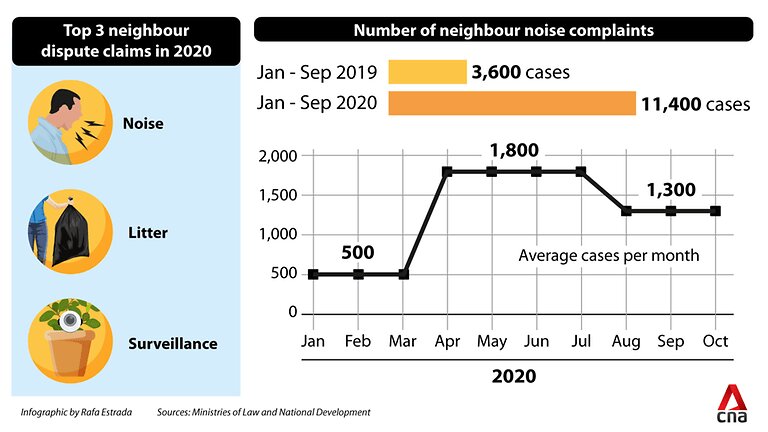
And guess what? You’re not alone. Based on official numbers by the Ministry of Law and National Development, neighbourly disputes rose significantly last year compared to 2019.

Have a look:

neighbourly disputes Singapore

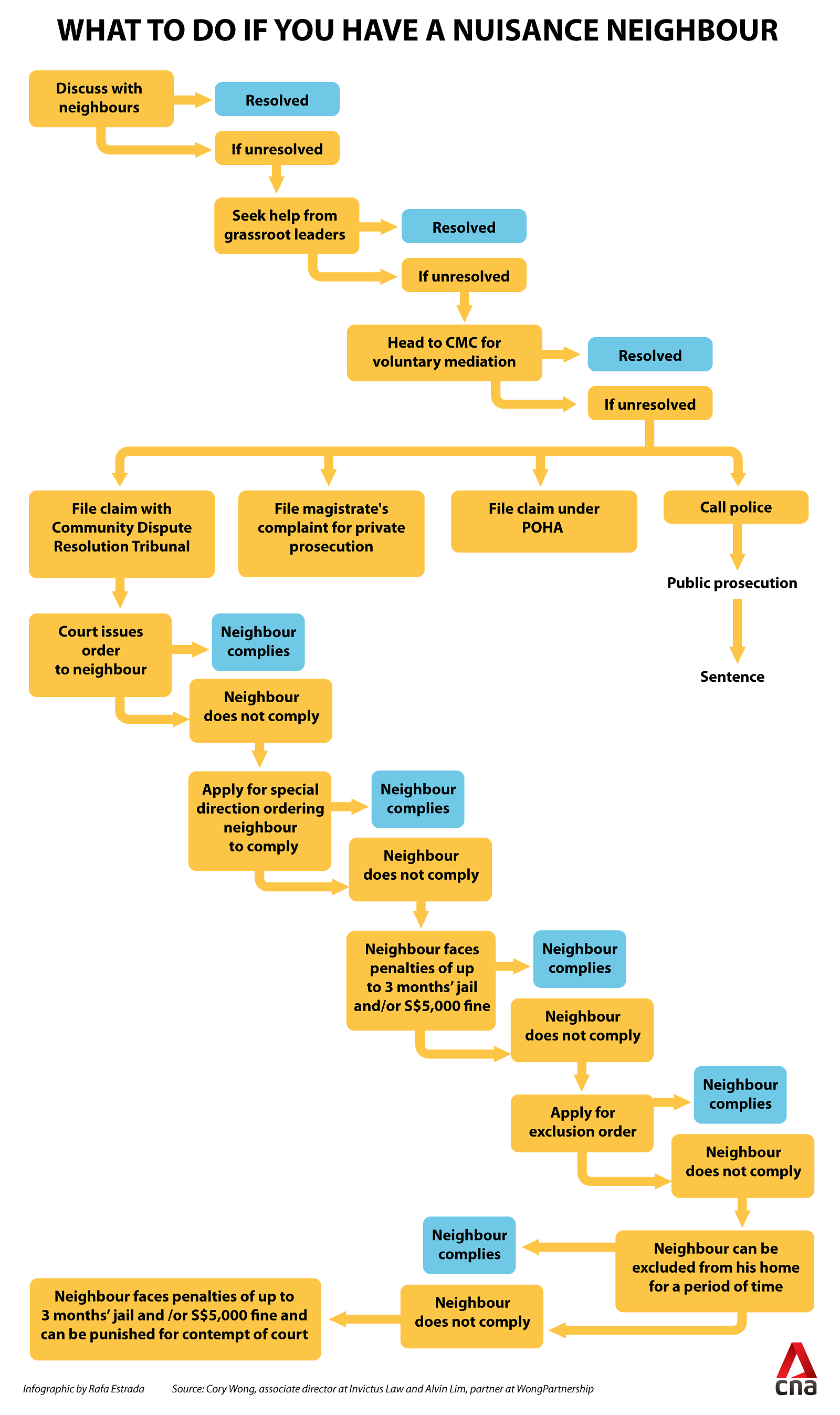
Want to know the “proper” way to get back at your neighbours? Here it is, but just remember it’s going to be a long and tedious process:

flow chart on how to solve neighbourly disputes

Maybe a more intelligent way is to consider some pocket-friendly solutions to soundproof your home while you seek resolutions from the authorities.

#1: Fill air gaps

Holes and cracks on your walls and floor could be the very reason for your restless days and sleepless nights. Check that you’ve covered them with sealant or gap fillers so noise won’t be able to enter. It’s also a relatively straightforward operation to do on your own so you can save your money on labour costs.

#2: Install wall panels

We’re sure you’ve been to studios and noticed the thick panels stuck to the wall. Yes, those will help absorb sounds both from noise disturbances from outside and within the confines of your walls. You can easily purchase them online from Shopee, Lazada, or Amazon and self-install them using spray glue or double-sided tape.

#3: Put up dense curtains
soundproof curtains

Image Credits rollingstone.com

Maybe it’s about time you give your home curtains a new look. But this time around, don’t go for the standard types you can buy from the supermarket. You want to invest in a soundproof curtain that is dense enough to reduce noise. Unsure of how to get those? Head down to the stores and ask to be introduced to curtains made from triple-weave fabric.

#4: Buy sound-dampening door strips

If you have the budget to spare, go ahead and replace your doors and windows. But since we’re looking at pocket-friendly solutions in this article, a better way is to purchase sound-dampening foam or rubber door strips. A one-metre long piece is usually under S$10, and you can cut it accordingly to fit your home doors.

#5: Add rugs and carpets

As we come to a close, do you know that sound waves can bounce off walls and floors? Sometimes, it may seem like the noise is coming from your neighbours above, but the primary source could from the apartment below you. Hence, an excellent way to counter it is to buy furry rugs or those with frays to help absorb unnecessary noise. Get them from Ikea; they won’t cost a lot.

Read More...

Use the SQ3R method to read more effectively

a person reading a book

Have you heard of the SQ3R method? It’s an acronym for this five-step process: survey, question, read, recite, and review.

There are many learning methods out there, and you’ve probably heard of a few during your school days. But live long enough, and you will realise learning doesn’t stop even as we graduate.

In fact, there are multiple situations at work where we have to speed read documents and reports to draw up presentations. For folks who often have to research and comprehend, the SQ3R method will come in handy to help you read more effectively.

#1: Survey

The SQ3R method was first mentioned more than 70 years ago in a book by education psychologist Francis P. Robinson. If you want to study any written content the intelligent way, start by surveying the text.

In short, do a quick scan before you jump right into chapter one. Whether it’s a physical book or an e-publication, check out the table of contents to get an idea of the outlines, chapters, and layouts. Then run through the pages to note any imagery or words emphasised in bold and italics.

#2: Question

Once the foundation is laid, it’s time to ask yourself some questions. It would be wise if you have your goal written down somewhere visible. In other words, the reason behind you reading a particular research paper.

When you have your purpose all set, return to the contents table and take a good look at the chapter titles. Grab a pen or pencil and turn those titles into questions. Examine your knowledge of the stated topics by jotting down what you already know.

This step will allow you to understand the author’s intent. When you have a good idea of what the book wants to convey, you can choose the sections you need to read to gain relevant information for your tasks ahead.

#3: Read
A woman taking notes on a book

Image Credits: unsplash.com

Now’s the time to get started. A standard method for many is to take a highlighter and ink the important parts as they go. But a more ingenious plan is to read actively by penning down additional questions by the margin. Then, diligently find those answers to your questions.

When you keep up with active reading, your brain goes through a systematic cycle of processing information. This will help your mind to segregate the chunks of content into Q&As. You will then find it easier to recall information at a later stage.

#4: Recite

Let your voice be heard at this phase, even if you’re alone. The idea here is to return to step two’s questions and try your best to answer them. Instead of regurgitating from the text, use your own words to explain.

Another way to check your understanding is to try explaining it to someone or an imaginary person. For those who find it awkward to talk to themselves and have the time to spare, you can attempt to write a summary of what you’ve read instead.

#5: Review

We’ve finally arrived at the last step of the SQ3R method. It is recommended that you revise a day after you’re done completing the first four steps. Give your brain some time to let the information sink in before you review it.

You may also think of this step as a memory challenge. Unless you’re a genius, no average person can retain information forever by just reading any content once. Keep referring back to the Q&As you’ve built in step 3 or the summary you’ve written in step 4.

Final thoughts

Beginnings are always tricky. But with consistent practice, you will quickly master the SQ3R method and be well on your way to read more effectively in the future! Time is precious, so be sure to optimise it whenever you can.

Read More...