The Comparative Asset: “SEO vs. SEM in Singapore: Where Should You Spend Your First $5,000?

Navigating the Digital Marketing Landscape in Singapore: SEO vs. SEM

Singapore’s bustling digital marketplace demands strategic decision-making when allocating marketing budgets, particularly for businesses looking to gain a foothold. The debate between investing in search engine optimisation (SEO) and search engine marketing (SEM) is ever-present. With enterprise-level SEO services in Singapore offering robust strategies for organic growth, it becomes essential to dissect which avenue — SEO or SEM — would be the most fruitful for spending your initial $5,000.

Understanding SEO and SEM

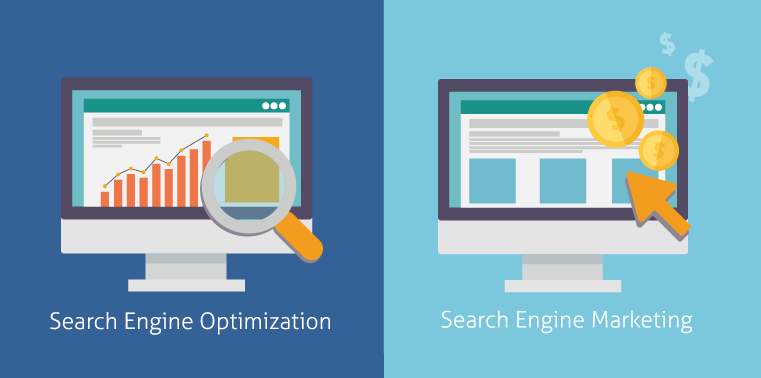
SEO focuses on optimising your website to improve its ranking in organic search results. By enhancing the content, structure, and usability of your site, SEO aims to increase your site’s visibility on search engine results pages (SERPs) over time. SEM, on the other hand, is a paid strategy that involves purchasing advertising space in search engine results. This method can drive immediate traffic to your website, but it requires ongoing budget allocation.

Both methods have distinct advantages and serve different business needs, and understanding these can help businesses allocate their marketing budgets more effectively.

The Case for SEO in Singapore

Investing in SEO can be particularly advantageous in Singapore’s diverse and tech-savvy market. SEO can enhance brand authority and credibility, which is crucial in a digital landscape. Singaporean consumers often perform detailed online research before making purchases, making a strong organic presence valuable.

  1. Long-Term Benefits: Unlike SEM, which provides short-term results, SEO builds sustainable growth. Once a website achieves high rankings, it tends to maintain that position with regular upkeep.
  2. Cost-Effectiveness: While SEO requires an initial investment, the ongoing costs decrease as the site’s authority increases, making it a cost-effective option for businesses looking toward long-term growth.
  3. Localisation: Singapore’s market is unique due to its linguistic and cultural diversity. SEO strategies can be tailored to target the local audience more accurately than the generic approach of SEM. This includes utilising local keywords and culturally relevant content.
Macro Of The Words SEO, SEM And SEA On Three Keyboard Buttons Macro Of The Words SEO, SEM And SEA On Keyboard Buttons seo vs sem stock pictures, royalty-free photos & images

The Power of SEM in Singapore

SEM should not be discounted for businesses eager to make a splash in Singapore’s competitive market. It offers distinct advantages that make it a worthy consideration.

  1. Immediate Visibility: One of the primary benefits of SEM is the potential for immediate results. By bidding on relevant keywords, a business can secure top positions in search engine results instantly.
  2. Precise Targeting: SEM allows for advanced targeting options, enabling businesses to focus on specific demographics, locations, and even devices. This precision ensures that marketing efforts directly reach potential customers.
  3. Budget Control: SEM campaigns can be tailored precisely to fit a budget. Businesses can set daily limits, adjust spending based on performance, and scale campaigns to match capacity.

Weighing the Options: SEO vs. SEM

When deciding between SEO and SEM, consider the specific aims, budget constraints, and timelines of your business. Both methods require a nuanced understanding of the market and customer behaviour in Singapore.

  • Budget Considerations: If immediate results are crucial and budget flexibility exists for ongoing support, SEM is a viable option. For firms looking for a return on investment over an extended period, SEO offers depth and durability.
  • Market Entry vs. Market Growth: New businesses might benefit from SEM’s rapid impact as they establish themselves. Conversely, established brands looking to cement their presence might find value in the slow-burning power of SEO.
  • Industry Specific Needs: Certain industries, such as fashion or consumer electronics, might see more benefit from rapid SEM campaigns due to high competition and fast-paced markets. Conversely, sectors like professional services or niche markets might benefit more substantially from the authority-building aspect of SEO.

Strategic Decision-Making for Singaporean Businesses

When determining the first $5,000 spend in digital marketing, an integrated approach can often yield the best results. This means potentially investing in both SEO and SEM. Such an approach allows businesses to capitalise on both immediate visibility and long-term growth, significantly enhancing their presence.

Understanding your market position, potential for growth, and customer base will better inform this decision. Moreover, engaging with digital marketing experts familiar with Singapore’s landscape ensures strategies are not only theoretically sound but also practically effective.

In summary, the delicate balance between SEO and SEM lies at the heart of an effective digital strategy, especially within Singapore’s competitive landscape. Each method comes with its own set of benefits, and careful consideration of these will lead to the most efficient and successful use of a $5,000 marketing budget.

 

Read More...

Employ SEO and SEM to rake in more revenue for your business

SEO vs SEM main image

If you’re involved in the business field, there’s a likelihood you’ve heard of SEO and SEM. These terminologies are commonly tossed around, but what do they mean exactly? Is there a difference between the two?

Although the distinction can be minimal, if you understand how to execute them effectively and correctly, they can lead the organisation to extremely high traffic and growth.

Let’s look at the difference between SEO and SEM and how they can be game-changers for your company. Ready for results? Let’s plunge into this integral part of marketing for your business.

An overview before we begin
seeing an overview

Image Credits: Inc. Magazine

The average person will most definitely click on the top few links in a typical search on Google, right?

That’s why the first page on Google search is where you want your website to appear. These days, human attention is short, and it’s essential to be the first few to grab your target customers’ attention before your rivals do. Here’s where SEO and SEM come to play.

They’re ways to promote the company so that your potential customers can access them on search engines, such as Google or Bing. If your company has a website rival, SEO and SEM are essential for more traffic to be guided to your domain.

Let’s explore their primary purposes to grasp these promotional tools better.

SEO otherwise referred to as search engine optimisation, is a concept that lets you organically appear in search results. While SEM, known as search engine marketing, depends on paid strategies to get you ranked on search engines.

Here’s a more insightful look into both approaches.

The four parts of SEO
  • Technical SEO – This focuses on improving your website’s technical aspects and constructing it to provide a fantastic user experience. It’s also part of on-page SEO.
  • On-page SEO – Involves tweaking the web pages themselves so that search engines can understand your title tags, content, internal links, and URLs.
  • Content SEO – Your content needs to match what the searcher intends to find. This is one of Google’s most important factors for its rankings. Consider these: keyword strategy, site structure, and copywriting.
  • Off-page SEO – Connect your website to other trustworthy and high-authority webpages through hyperlinks, PR, or different strategies, and the search engines will push you up the ranks over time.

Now, moving on to SEM.

SEM and PPC

SEM includes PPC ads instead of organic growth. PPC is also better known as pay-per-click. In the form of embedded advertisements, Google or other search engines can showcase your website and display them to your prospective customers.

Not all campaigns, however, are expected to yield results. To make your advertising stand out so that you get the best bang for your buck, you will have to see what your rivals are doing and choose your keywords wisely.

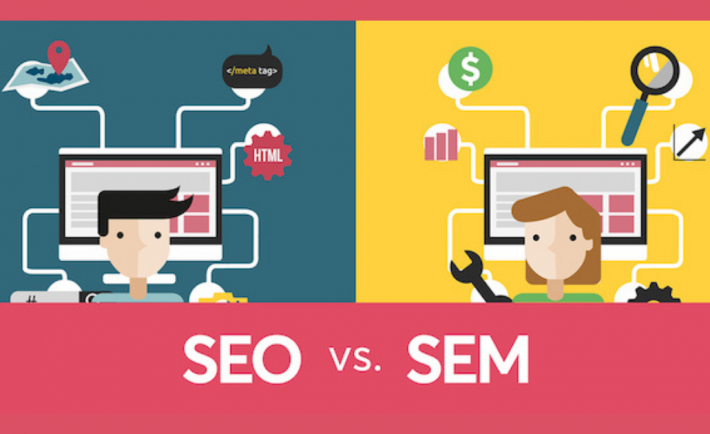
SEO vs SEM
SEO-vs-SEM

Image Credits: Matchcraft

  • With every click your SEM ad gets, you have to pay.
  • In the form of clicks, SEM usually has immediate effects, while SEO takes much longer.
  • SEM advertisements give you more control over how they appear. This doesn’t apply much for SEO.
  • SEM provides you with data specifics so that you can quickly tweak your advertising for instant results. When it comes to SEO, that’s a bit more challenging.
  • Over time, SEO visibility expands, so the impact snowballs as you progress. With SEM, exposure comes to a halt as soon as you disable your advertisements.
Is one better than the other?

There is no straightforward answer as it falls on how your organisation is structured and what priorities you have at hand. But here are a few pointers to note:

  • What is your objective? You want to go for SEM if it’s a short-term one.
  • How is your current SEO health? SEM can be a great backer if it is already substantial.
  • Go with SEM if you expect that your company would have a higher consumer lifetime value. SEO could be ideal if it’s the opposite.
  • Did you have your sales and profits assessed? See if making a profit from SEM is practical for you. Go with SEO if it’s not urgent.

When it comes to driving traffic, either SEO or SEM is useful for your company. But why not use both? Most of the time, having the financial capacity to combine them will allow you to reap the benefits of both.

Here are some of the benefits of implementing both strategies:

  • Do you recall how we mentioned data was available only for SEM but not for SEO? Well, now you can use SEM as a tester for your SEO strategy.
  • Through incorporating remarketing strategies within your SEM plan, you will make your SEO efforts go the distance to convert those who didn’t buy before into paying customers in the future.
Final thoughts

Now that you know what SEO and SEM are all about, you can use your new-found insights to refine your competition strategy and make the best of both worlds to conquer the organic and paid regions. All the best in ranking your company site at the top of search engines!

Read More...

9 Things You Will Learn From The Google Digital Garage

The increasing demands of Digital Marketing in corporations, agencies, and small businesses paved way for the creation of digital marketing professionals. There is an increase interest in this field, which is fueled by competition. If you want to claim a coveted spot in the Digital Marketing scene, this Google Course is for you.

Simply go to learndigital.withgoogle.com/digitalgarage to create an account. Apart from that, here are some things you may want to know.

#1: GOOGLE DIGITAL GARAGE IS FREE

The best thing about Google Digital Garage is its non-profit nature. Everything from the courses down to the tests and certificates are FREE. Brush up your digital skills to grow your career, business, or self-esteem by setting up a learning account. Anyone can benefit from this, regardless of their educational background and skill level.

#2: GOOGLE DIGITAL GARAGE IS FOR EVERYONE

The Digital Garage has a user-friendly interface whereby the learner will go through hours of lecture and self-administered tests on his or her own pace. You can easily watch the video tutorials with subtitles and transcript. You may want to take it in a span of a week or two. No one will pressure you. An expert may refresh his or her learning, while a novice will expand his or her knowledge with this.

#3: YOU CAN SKIP PARTS YOUR WELL-VERSED IN

If you are well-versed in a particular topic, you may skip the tutorial videos and go directly to the short multiple choice test. You need to complete each lesson by completing the test perfectly. Otherwise, you will have to watch all the tutorial videos again. If you are confident enough, give it a shot!

#4: YOUR MOBILE DEVICES ARE POWERFUL

Whether you admit it or not, one of the first things that you do on a daily basis is to check your phone for notifications. More people are inclined to using their mobile devices on a daily basis. That being said, you need to turn your website or page into a mobile-friendly space. Check whether your website or page is mobile-friendly through the Google’s Mobile-Friendly Test tool. This tool shall take you a minute or less to assess whether your website or page is good to go. Go to search.google.com/test/mobile-friendly to find out more.

#5: YOU CAN TAKE MORE THAN ONE MODULE AT A TIME

Because Circuit Break entails that we are the masters of our own schedule, you may take as many modules as you want. You can begin with some topics you like and move on to another module. It is up to you to finish the first module when you are ready. A progress indicator on your course landing page will help you track your progress.

#6: THERE IS A DIFFERENCE BETWEEN SEO AND SEM

SEO stands for Search Engine Optimization and SEM stands for Search Engine Marketing. The former focuses on organic results. While, the latter encompasses both organic results and paid tactics. SEM involves paid advertisements in order to be displayed in a page. Both processes aim to increase the visibility of a brand in search engines.

#7: KEYWORDS ARE IMPORTANT

Keywords are the words and phrases that people type in search engines such as Google. The goal is to ensure that your page’s keywords are relevant to what people are searching for. This increases the chances of them stumbling across your content. You may use tools such as Google’s Keyword Planner or Bing’s Keyword Research Tool.

#8: YOU CAN GET ALERTED WHEN YOUR WEBSITE IS SEARCHED

Google Alerts is a notification service powered by Google. Alerts sends emails to the user when it finds new results that match the user’s search term. For instance, I dedicated a notification to the term “Miss Psychobabble” to track when people are searching for my Psychology blog. I receive emails from Google whenever readers are searching through newspaper articles, web pages, podcasts, or other scientific research that match my term.

#9: CAN GOOGLE CERTIFICATE HELP YOU GET THE JOB

As I said, the completion of a module entails you to get a certificate. I, for one, finished my Digital Marketing course of 107 lessons and several multiple choice tests. A Google certificate can help you land the job by increasing your skills. It is attractive to see Google in one’s C.V.

Image Credits: unsplash.com

It can help you flourish in a field if you learn all the courses properly. Work on yourself by expanding the knowledge and applying it in the future. Learn the best ways to sell resume or brand – digitally at least.

Read More...