5 Clever Ways To Save Money on Coffee

Personal Finance Consultants may argue that the money you spend on small purchases (e.g. cup of Starbucks coffee) add up together and redirect towards a huge expenses. Assuming it costs $5 per cup, you are spending over $70 in a week. This is why you can save thousands of dollars in two years if you reduced your caffeine expense.

5 Clever Ways To Save Money on Coffee…

1. DO NOT EQUATE PRICE TO QUALITY

A blind taste test by New York Magazine’s Adam Platt showed that people prefer the inexpensive Dunkin Donuts coffee to the upscale Starbucks coffee. Even though it is expensive, it does not mean it tastes good. So, try the small coffee shops across your office.

Image Credits: Cherrysweetdeal via Flickr

Image Credits: Cherrysweetdeal via Flickr

2. MAKE YOUR OWN BREW

Coffee beans are cheaper than Starbucks; try to make your own to save a significant amount of money. If you are feeling creative, buy black coffee and add your own mixture of milk, cream, and sugar.

3. GIFT CARDS

Fish for discounted gift cards on Ebay or Carousell. This may not be worth your time if you are an occasional coffee drinker. But, if your caffeine habit is emptying your pocket, this tip will save you quite a bit.

4. LOOK FOR COFFEE DEALS ONLINE

Discover coffee or coffee maker deals online. Deals Singapore is currently having a 33% off deal on CEO Lingzhi Coffee while Groupon is having a 30% off deal on Philips Coffee Maker.

Image Credits: Alan Levine via Flickr

Image Credits: Alan Levine via Flickr

McDonalds may have “free coffee Mondays” so follow them on Facebook or Twitter.

5. REDUCE YOUR CAFFEINE INTAKE

Lastly, one sure-fire way to help you save a significant amount of money is to reduce your coffee intake. I know it takes a lot of willpower at first but it gets better as time passes.

Do it gradually, you cannot force this process or you will experience symptoms of withdrawal (i.e., headache, depression or nausea). Eliminate a cup per day.

Reducing your caffeine intake will not only increase your savings but it will also increase your survival. It decreases your risk of hypertension and increases calcium absorption to help keep your bones and teeth strong.

Read More...

5 Ways to Teach Kids About Saving Money

Money gives people, of all ages, the decision-making opportunities they need. Educating your kids to make wise money decisions earlier on will affect their finances in the long run.

The most important thing you must do is to make saving money as fun as can be. Here are 5 Ways to Teach Kids About Saving Money…

1. MONEY INTRODUCTION

Once your children can count and discriminate, introduce them to the different denominations of money. Take a conscious effort in providing them information about money and savings and be ready in answering their countless questions.

Watch this cool way to introduce money and its values:

2. SET UP BUYING GOALS

Setting up realistic goals is the foundation to learning about the value of money and saving. Ask your children what they want to buy with their money. For instance, the toys, video games, and stationery items are the things they shall save money for. These goals will help the children learn to become more responsible.

3. USE A PIGGY BANK OR A MONEY JAR

After identifying the short-term goal, provide your child with a small piggy bank or a money jar where they can fill up their savings with. Have your child draw the picture of the specific toy on the side of the piggy bank or the money jar. Through this, they will be motivated to get what they want.

You may also want to help your child understand that some items will take longer than others to save for. For these long-term goals (e.g., going to Universal Studios), provide them with a bigger money jar.

4. ENCOURAGE SAVING

Be the good example to your children by putting some of your coins into their money jar. Since most young children want to be like their parents, seeing you do it will provide them with inspiration to save.

Aside from this, you may give them money in denominations that encourage saving. For example, give your children a $6 allowance that consists of three 2 dollar bills. Tell them to set aside $2 for their money jar.

5. PLAY GAMES INVOLVING MONEY

Image Credits: Rich Brooks via Flickr

Image Credits: Rich Brooks via Flickr

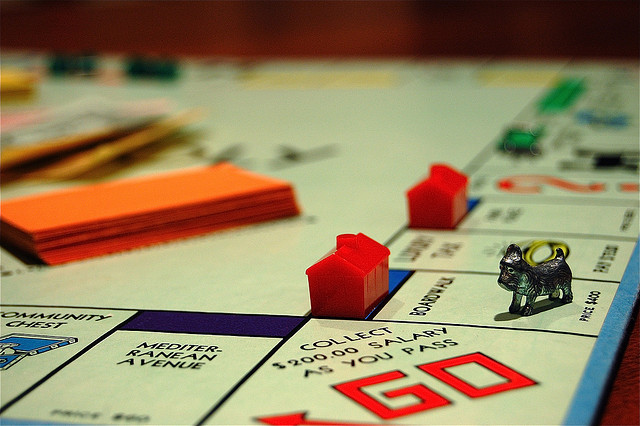
As I said, the most important thing you must do is to make saving money as enjoyable as can be. Play games that teach children about financial concepts. Such games include Monopoly and The Game of Life. They will not only have fun but it will also shape their money management skills.

Sources: Money Crashers and Family Education

Read More...

4 Ways to Boost Your Travel Fund

How can you pay for trips if your budget is too tight? Certainly, saving for travel money is not an easy task, which is why a sparkle of effort is needed to turn your dreams into reality.

Here are 4 Ways to Boost Your Travel Fund…

1. SELL YOUR UNWANTED OR UNUSED ITEMS ONLINE

Anything that is still in good condition and has a credible brand name will be flocked over by buyers. Even your old furniture can be sold in online sites such as Carousell and Gumtree. Nonetheless, you can always sell your precious items to your close family and friends through a Facebook group.

Rules on selling include: be honest with the product’s flaws, have a simple and accurate description, and charge right for postage.

The popular and safe websites (or mobile apps) for selling are:

a. eBay
b. Gumtree
c. Carousell
d. Facebook

2. INDULGE ON AIR MILEAGE CREDIT CARDS

Some companies such as Citibank or Virgin offer a significant amount of air miles every time you purchase. Once you have an air mileage credit card and use it abundantly (within your needs), you may even book your flight for free!

Image Credits: William Cho via Flickr

Image Credits: William Cho via Flickr

3. CONTROL YOUR UNNECESSARY BUYING INSTINCTS 

Stop buying useless things that you do not need. Rethink if buying overpriced coffee rather than making your own coffee at work saves you more. Instead of buying lunch, pack your own lunch for at least 2 months. It will not only save more money, but it will reduce waste. It may seem simple, but these unnecessary expenses add up.

4. BE PATIENT

If you need to purchase something for your trip, wait for sale to come around or buy the last season’s model. When selling your items, you must be okay to accept an item price for less. You must practice the virtue of patience, as you wait for the right time before you may be able to travel.

Read More...

5 Expert Money Saving Tips

It is the beginning of a new journey entitled “2015”. There is a long way ahead and the worst is behind us. The future looks so much brighter! As you lay out your plans for the New Year, why don’t you take on the important goal of saving money?

Here are 5 Money Saving Tips from the Experts

1. GET POSITIVE MOTIVATION FROM FRIENDS AND FAMILY

Bob Weinschenk, the CEO of “SmartyPig.com”, believes that saving money is a group activity in many cultures. By sharing your financial goals to your trusted partner, family or friends, they can be able to support you and even donate a few bucks. Having someone by your side that share the same goal will surely motivate you to continue this positive saving behavior.

Image Credits: Ken Teegardin via Flickr

Image Credits: Ken Teegardin via Flickr

2. TAKE THE SHOPPING DEALS ONLY IF YOU NEED THE PRODUCT

Donna Freedman, a writer for “Get Rich Slowly” and “Money Talk News”, said, “Coupons plus sales can easily tempt you to buy something you don’t truly need”. Do you really need to buy a bulk of toothpaste just because you have coupons and vouchers for it? Simply, when you see an item on sale think deeply if you will purchase that item on its original price.

3. LIVE WITHIN YOUR MEANS

Purchase within your means by balancing what you need and what you want.

Miranda Marquit, the founder of “Planting Money Seeds”, highlights that by knowing that you have enough purchasing power may turn into comfortable spending without keeping the best options for your finances. So, just because you can afford something, does not mean that you should buy it.

4. THINK TWICE WHEN BUYING PERISHABLE GOODS IN BULK

Jeff Yeager, the author and host of “The Cheap Life”, said “it’s not a good deal if it goes bad before you use it”.

This is why he stresses the importance of making a shopping list and sticking to it.

5. LASTLY, LEAVE YOUR CREDIT CARDS IN THE HOUSE

Stacy Johnson, the President of “Moneytalksnews.com”, said, “we’re more likely to overspend with pieces of plastic than real money”. Personally, when I shop, I only carry cash that I am willing to spend so I won’t go over budget. This prevents impulse buys.

Sources: Reader’s Digest and GoBankingRates

Read More...

Starting A New Family? Here’s 4 Tips

It’s not easy starting a new family. While you might be busy dreaming about the warm and fuzzy moments you’re going to have in the future with your spouse and your children, there are some pressing financial issues you would need to face right now. How are you going to use your money wisely on a daily basis? How are you going to safeguard your family future? Don’t fret, we’ve brought to you a few tips, so you can better manage your family finances

Keep Your New Expenses In Mind

Maybe you’ve thought of getting that new TV you’ve been eyeing for a while. Maybe you’ve saved just the amount of money needed to get that massage chair that’s always been at the back of your head. Well, did you take into account all the new expenses you’re going to have to pay for, now that you’re starting a family?

You’re no longer just earning for two, you’re going to have to provide for three, or more (if you struck the twins or triplets lottery). There’s plenty of child related expenses you’re going to have to take note of, such as baby food, diapers and immunisations. It’s best if you lay out all the expenses you would need to care for your baby, so you know for sure what you’re getting into, and to allow you to better budget for the future.

Set Up A Savings Plan

If you hadn’t already done so, you should set up a savings plan so you can better provide for your child’s future. Savings plans are more easily set up compared to investments or bonds. The basic idea is a simple automatic, monthly deduction of funds which will go into a special account, which can only be accessed once your child reaches a certain age. It might be hard to consistently set aside money on your accord, which is why a savings plan would be great as you don’t even have to think about it once you set it up. The “pain” of having less income per month isn’t felt so strongly this way.

Get Life Insurance and Medical Insurance

You always need to be prepared for the unexpected. Insurance acts as a safety net, so you and your family can be protected should anything happen to any one of you. Medical insurance is important as there are many medical issues which your child or any family might face which would require a hefty bill. The presence of a medical insurance plan would help you cover these expenses should the need arise.

Although many modern families are dual-income families, this does not mean the early demise of you or your spouse would not result in a heavy financial burden on your family. Life insurance helps your family deal with the financial needs that would be definitely be harder to attend to with the absence of you or your spouse.

Teach Your Child Good Financial Habits

Financial habits are ingrained from a young age, so make sure your child adopts the right habits that will put him in good stead for a financially stable future. Managing family finances is a team effort which involves every single member of the family, including your children. Little things such as not buying toys they don’t need, turning off the lights, and putting aside a small sum of money each day help your family make better use of your finances.

Read More...