Dangerous Misconceptions That Singaporeans Have About Money

Being trapped into the majority’s preconceived beliefs about money is easy. However, debunking these misconceptions will help you to reach your financial goals.

#1: ALL THE SHOPPING MALLS IN SINGAPORE ARE EXPENSIVE

Potential Danger: Risk of diving into debt as you only frequent the high-end shopping centers.

Because of the harmony between the East and West, Singapore offers endless shopping opportunities for its inhabitants. There is a wide array of products sold at the stores. There is a place for traditional and contemporary tastes as well as for foreign luxury and locally-manufactured goods. You can find just about anything in Singapore.

If your perception of shopping was boxed in the hefty category then, you must be frequenting the Orchard Road a lot! Consider heading to the funky flea markets that are starting to boom in the recent years. One of its most popular markets is the MAAD: Market of Artists and Designers.

Image Credits: museum.red-dot.sg/maad

Image Credits: museum.red-dot.sg/maad

MAAD houses pet-friendly and budget-friendly items for the whole family. Their innovative creators are from independent and are known for artsy fashion and artisan stationary pieces. Here you will find plush toys, handmade jewelry, and paintings. The price range starts from S$10 to S$50.

Related Article: Score Great Deals At Flea Markets In Just 5 Steps

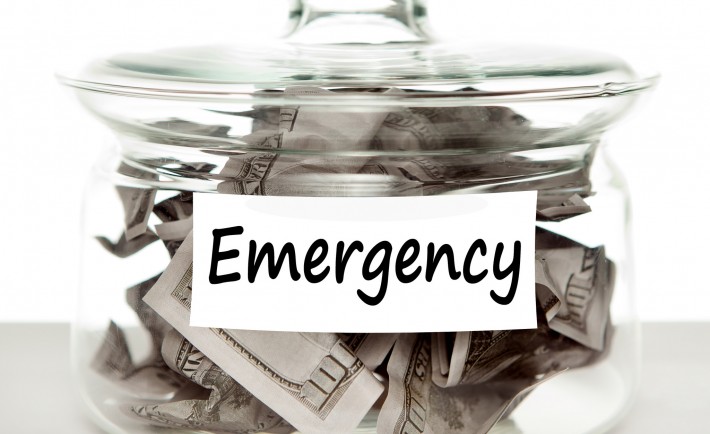
#2: START WITH A HUGE EMERGENCY FUND

Potential Danger: Risk of setting yourself up for failure.

Emergency fund is an account utilized to set aside money in the event of personal financial dilemma such as unemployment or theft. Most financial planners suggest to build an emergency fund worth at least 6 months of your income. This is tough to accomplish if you are living from paycheck to paycheck.

For instance, your household spends S$5,000 each month. You managed to eliminate 10% of your expenses. Building a 6-month stash can set you back by nearly 5 years. This is too long! A better route is to start small by aiming for an emergency fund of S$1,000. This will help you cover minor financial hiccups. Once you are on track with your debts and retirement account, focus on growing your emergency fund.

#3: ONE’S CPF SAVINGS IS ENOUGH TO COVER RETIREMENT

Potential Danger: Risk of enduring an insufficient fund due to the over-reliance on a single welfare system.

Contrary to the popular belief, your Central Provident Fund (CPF) savings may not be enough to sustain the lifestyle you envision during retirement. Your CPF account is essentially a basic safety net to cushion the minimum standard of living during your golden years. Aim for other streams of income that can help grow your nest. Why?

For starters, your CPF savings depends on how much you earn during your working years. If your income is relatively low throughout the years then, you can expect to receive lesser payouts than your “higher earning” colleagues.
Furthermore, you may use your CPF savings to pay for your present necessities. If you exhausted your account to purchase an HDB flat then, you shall expect to receive lesser payouts.

Image Credits: pixabay.com

Image Credits: pixabay.com

Stop making excuses! Plan strategically for retirement, now.

Read More...

Four Financial Mistakes And How To Beat Them

Recognizing these wrongful money decisions is a vital step to improving your financial health:

#1: NOT SAVING FOR EMERGENCIES

Image Credits: pixabay.com

Image Credits: pixabay.com

Skipping an emergency fund can be one of your deadliest money moves. You see, our lives are full of pleasant and unpleasant surprises. Can you fork out a sufficient amount of money to cushion the urgent costs due to unemployment or loss?

Building a fund for these types of events shall be one of your financial priorities to avoid getting into debt or even into bankruptcy.

Solution: Having an emergency fund allows you to build a breathing space to deal with life’s highs and lows. It is recommended to keep about 6 months’ worth of salary inside your emergency fund. Start gradually by aiming for S$400 in the first month. Increase this amount as months pass by.

#2: EATING OUT CONSTANTLY

Image Credits: pixabay.com

Image Credits: pixabay.com

It is no secret that Singaporeans love to munch! We are blessed with a myriad of cuisines that one cannot resist the temptation of eating out. As with everything that is good, too much can be a sin too. You may feel that eating out during lunch or dinner daily does not make a difference. But, all your costs add up.

Solution: The cost of one restaurant meal may be equivalent to three home-cooked meals. Consider packing lunch from home as it is almost always cheaper.

#3: PURCHASING UNNECESSARY THINGS

Image Credits: pixabay.com

Image Credits: pixabay.com

Many shoppers in Singapore experience mindless sprees when the Great Singapore Sale is on. People purchase unnecessary items just because they are on sale! However, you must not bury yourself in a pile of debt due to the irrational thought that you cannot live without a discounted Prada bag.

Solution: Examine if you are willing to purchase the item in its full price. If not, you probably do not need it after all. Saving up for a new designer bag is better than having to loan money for it. Seek a balance between your debts and your savings.

#4: NOT SAVING FOR RETIREMENT

Image Credits: pixabay.com

Image Credits: pixabay.com

The “HSBC’s Future Of Retirement: Generations And Journeys” report found that the average Singaporean begins saving for retirement at age 32 and continues it for another 29 years. Despite having the advantage of saving for a longer period of time than their ancestors, 41% of the participants wished that they had started to save earlier. The perceived insufficient fund may be influenced by the higher cost of living in the recent years.

Solution: You must save a fraction of your salary for retirement while you are employed. There will come a time when you will not be earning money, but you still need to support yourself. Read about building an efficient retirement plan. Seek the help of a financial adviser if necessary.

Read More...

Clever Ways To Build A Sufficient Emergency Fund

Emergency fund is an account utilized to set aside funds in the event of personal financial dilemma such as unemployment or theft. It is a safety net that will cushion emergency expenses against high interest debts and bankruptcy. It is not entirely for you as you can use it to provide for your family members who are in need.

In a fast-paced nation such as Singapore, a sufficient emergency fund is worth at least 6 months of your income. Build that by following some (or all) of these savvy ways:

TWICE THE CHARM

One of the major roadblocks to a workable emergency fund is your monthly salary. Earning below the minimum wage makes it difficult to save. Not to mention, you need to consider the CPF deductions. To leap through the hurdle by seeking a part-time job or additional sources of income.

Making extra hundreds on the side is enough to make a difference. You may work as a weekend receptionist or as an Uber driver. Use your creativity to grow your fund. You can even try pet sitting.

RELAX, IT’S AUTOMATED

As the age-old saying goes: “out of sight, out of mind”.

Avoid committing much of your willpower toward deciding whether to save or to spend by automatic your finances. Some institutions allow the employer to automate your salary in a bank account that is solely for your savings. Patronizing this method will lessen the temptation of immediate spending. Be able to grow the size of your bank account that is solely for emergency fund by embracing the power of technology.

BRING BANK THE COIN BANK

I, for one, dislike carrying a heavy wallet filled with coins. They just add a significant weight on my purse and my shoulder. Fortunately, my sister understands the value of loose change because she cultivated a coin bank. I started to contribute for my sister. We put all the unexpected cash (e.g., S$2 found in her pants) and the small change (e.g., S$0.50 from the Kopitiam) inside the jar. After 6 months of dedication, the jar is full!

Do the same thing for your prize winnings, rebates, and bonuses. You will be delighted to see your emergency fund grow as the weeks pass by.

SELL WELL ONLINE

Stop hoarding unnecessary items! Start selling these underused or unwanted items on online marketplaces instead. Gather them together and decide whether you want to toss, donate, or sell each one. Put all the cash that you will earn into your emergency fund.

If you want, you can host a garage sale this weekend!

WHAT SSB?

Once you have established an emergency fund, consider keeping it under the Singapore Savings Bonds (SSB). If you maintained your emergency fund for 10 years, you will earn about 2.6% per year. SSB allows you to cash out the money without losing the accumulated interest. Qualify for SSB by opening a bank account with DBS, POSB, UOB, or OCBC. Also, you need to have an individual CDP Securities account linked to any of your bank accounts through direct crediting service.

For more information, please visit: sgs.gov.sg.

INFORMATIVE SHORT

Learn the basics of emergency fund by watching this informative video:

Sources: 1, 2, 3, & 4

Read More...

When Shall You Ask Your Parents For Financial Help?

I cannot deny the fact that there is a wealth of financial information available in the Internet. However, the most underused financial support may be located at the comfort of your own home. Admitting you need the financial help of your beloved parents is not a simple task, but it is crucial in specific cases.

Know when to ask your parents for financial help and when not to.

DO’S: DO ASK FOR MONEY WHEN YOU ONLY NEED A RELATIVELY SMALL AMOUNT.

You are days away from receiving your coveted paycheck. The only problem is, you end up spending more than you meant. It happens! If you are lacking a few bucks to get through the days, you can call your parents to ask for a small loan. An extra S$50-S$100 can make all the difference at the end of the pay period.

This relatively small amount will be easy to return. Furthermore, it will not pose too much strain to the finances of your parents.

DON’TS: DO NOT ASK MONEY FOR A VACATION.

It is totally acceptable to ask your parents for pocket-money in order to fund your school excursions. However, it is not appropriate to ask your parents for travel fund if you are employed on a full-time basis. Reaching your dream vacation comes with a bag of determination and a realistic budget. Like a mature adult, plan to save the necessary amount and earn extra money if you have to.

DO’S: DO ASK FOR MONEY WHEN YOUR EMERGENCY FUND ISN’T ENOUGH.

Unforeseen events can spiral at any moment and you will not be able to handle every situation on your own. No one can predict that a vehicular accident may strike even if an individual safely cruises his or her car everyday. This may entail a significant medical procedure that the insurance company cannot cover. When your emergency fund and your back-up financial plan cannot cover all your expenses, it is acceptable to ask your parents for support.

DON’TS: DO NOT ASK THE IGNORANT FOR ADVICE.

My friend grew up with a silver spoon. His family had multiple properties and threw multiple parties. Basically, they purchased whatever they wanted. His parents’ mindset was that their money will last forever. Since his parents highlighted on the short-term wants rather than the importance of the long-term financial goals, my friend copied their spending patterns.

No money management skills were shaped during his younger years. He carried this out as a young adult. His parents appeared to have everything in order. But if you look closely, you will realize that his parents did not handle their financial responsibilities well. Decades went by and my friend’s family lost everything they once owned.

Image Credits: pixabay.com

Image Credits: pixabay.com

If your parents are clearly not displaying financial discipline, do not mimic them. Educate yourself about the importance of savings, investments, and retirements plans. Sometimes, it is better to do things on your own.

Sources: 1 & 2

Read More...

6 Strategies To Control Your Urges To Spend

Self-control is one of the virtues that a savvy Singaporean can cultivate. Having a sense of self-control helps you to manage the seemingly irresistible urge to spend money. While, people who lack it have a tendency to instantly gratify their “itch” to splurge.

Combat this dilemma against your willpower by employing these strategies:

TRACK YOUR SPENDING

I know how cliché this sounds but, awareness is the key. You must note down how much money comes in and goes out. Previous literature displayed that this act of tracking your spending is an efficient tool to control one’s urges to spend. Start by keeping a daily list of your expenses.

IMPOSE LIMITS 

To prevent accidents and to maintain order in the streets, authorities impose speed limits. Apply the same idea to your finances by imposing monetary limits.

It easy to create tangible boundaries to some services such as postpaid and bundle plans. However, this is not always the case. This is why Professor and TED Speaker Dan Ariely highlighted that it is important to dictate your own boundaries. Doing so was proven to help increase self-control. Furthermore, sharing your self-determined limitations to other people urges you to stick to it more.

MAKE ONE DECISION AT A TIME

The shiny distractions all over the shopping mall are designed to confuse your mind and to open your wallets. You see, findings showed that strain in cognition (thinking) depletes self-control. This is why shops are graced with flashy signs, vibrant colors, loud songs, and bright wall decor.

Conquer the distractions by making one financial decision at a time. This strategy is not only limited to shopping. Divide your financial decisions instead of overwhelming your mind.

SAVE AUTOMATICALLY

Avoid committing much of your willpower toward deciding whether to save or to spend by automatic your finances. Some institutions allow the employer to automate your salary in a bank account that is solely for your savings. Patronizing this method will lessen the temptation of immediate spending.

Image Credits: pixabay.com

Image Credits: pixabay.com

TAKE TIME TO DECIDE

With my background in Psychology, I can attest to the idea that the emotional states affect the way you spend. Anxiety was shown to decrease the likelihood of taking risks and sadness was shown to increase spending. Emotions influence your self-control in complex ways.

This is why I encourage you to take sufficient time for contemplation before buying something. Wait for a few hours or a few days, especially for huge and expensive purchases. Many people have submitted to this efficient strategy. Be one of them!

PREVENT TEMPTATION

A surefire way to stay on top of finances is to avoid temptation at all costs. Reduce your time spent on shopping malls and invest it in more productive matters. Alternatively, you may leave your plastic cards (i.e., credit and debit) at home. Simply carry the amount of cash that you can confidently afford.

Image Credits: pixabay.com

Image Credits: pixabay.com

These six strategies share one goal and that is to take control of your finances again. May these aforementioned help you to reclaim what was rightfully yours.

Sources: 1 & 2

Read More...